Connect with us
Anglostratits

Energy

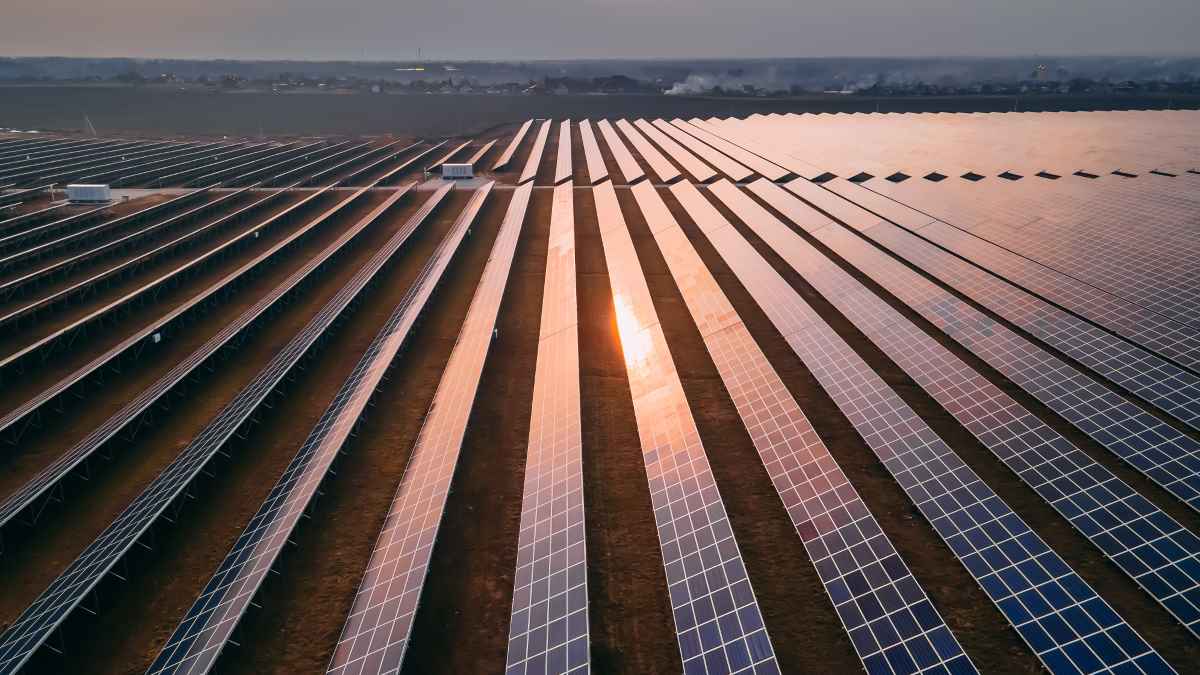
SolarAfrica secures R1.5 billion to deliver more reliable, affordable power to South African businesses

Published

on

SolarAfrica

By combining utility-scale renewable generation with a more flexible delivery via wheeling, SolarAfrica is helping companies access greener energy without the upfront capital outlay traditionally associated with on-site solar systems

JOHANNESBURG, South Africa, February 10, 2026/APO Group/ —

  • SolarAfrica reaches financial close on SunCentral 2, unlocking the next 114 MW of its utility solar development that will have a total 1 GW at full scale.
  • The R1.5 billion investment, provided by FirstRand Bank Limited (acting through its Rand Merchant Bank division) and Investec Bank Limited (acting through its Corporate and Institutional Banking Division), fast-tracks the delivery of reliable, cost-effective clean energy to SA businesses, with first power expected in 2026.
  • The project strengthens the national grid through continued investment in SunCentral’s Main Transmission Substation.


SolarAfrica (https://SolarAfrica.com) has secured financial close on R1.5 billion to build SunCentral 2, the next 114 MW plant of its flagship utility-scale solar development in the Northern Cape. The new funding, provided by RMB and Investec Bank Limited, is another significant step in boosting access to affordable and clean energy for South African businesses, with first power expected in 2026.

SunCentral 2 will follow SunCentral 1, which reached financial close at the end of 2024, also at 114 MW. Together with SunCentral 3, these projects form Phase 1 of the broader SunCentral vision, totalling 342 MW. At full scale, SunCentral is planned to reach 1 GW, positioning it as one of the country’s largest solar initiatives designed specifically for one-to-many, bilateral wheeling.

Businesses want power they can trust – clean, affordable and predictable – and SunCentral is being built exactly for that purpose

David McDonald, CEO at SolarAfrica, says: “Businesses want power they can trust – clean, affordable and predictable – and SunCentral is being built exactly for that purpose. It’s encouraging to see the confidence from our funding partners as we move into the next stage of delivery.

“More than a big solar project, SunCentral is a long-term infrastructure investment that gives companies the ability to manage their costs, cut emissions, and reduce their reliance on utility power that is often vulnerable to unpredictable tariff hikes. This next step gets us closer to bringing that value to even more South African businesses.”

As with the first plant, SunCentral 2 includes dedicated community-upliftment initiatives, ensuring local residents share in the social and economic benefits created by the project. Job creation, education, local procurement and skills development will continue to form a core part of the programme, supporting economic activity around the site in partnership with the project’s principal contractors.

SunCentral is also a key pillar of SolarAfrica’s overall wheeling pipeline – totalling 3 GW – which is currently under development across the country. By combining utility-scale renewable generation with a more flexible delivery via wheeling, SolarAfrica is helping companies access greener energy without the upfront capital outlay traditionally associated with on-site solar systems.

A portion of funding from each SunCentral plant is allocated directly to the development of the project’s Main Transmission Substation (MTS). Engineered for up to 2 GW of green-power evacuation capacity, the MTS strengthens the national grid while enabling future renewable generation to connect more efficiently.

“With wheeling, we have a model that puts control back into the hands of commercial and industrial customers. Instead of just surviving tariff hikes, it allows companies to plan for growth with a cleaner, more dependable energy mix,” says McDonald.

Distributed by APO Group on behalf of SolarAfrica.

Energy

Oil & Gas Arbitration in Africa Moves Up the Investor Agenda at African Energy Week (AEW) 2026

Published

on

African Energy Chamber

A dedicated Upstream E&P Forum panel will examine how resource nationalism, ESG requirements and geopolitical disruption are reshaping dispute resolution across Africa’s oil and gas sector

CAPE TOWN, South Africa, September 2, 2026/APO Group/ –As African governments seek greater state participation, higher local content and a larger share of resource revenues, the terms governing oil and gas investments are changing across the continent. Since 2014, 31 African countries have reformed their mining and petroleum codes, creating new commercial and regulatory considerations for international investors. The resulting environment is placing greater emphasis on how upstream agreements anticipate regulatory change, protect investments and resolve disputes when commercial assumptions shift.


African Energy Week (AEW) 2026, taking place October 12–16 in Cape Town, will bring this issue into focus through a dedicated session at the Upstream E&P Forum: Resource Nationalism, ESG and Investor Protection: The New Frontier of Oil and Gas Arbitration in Africa. Sponsored by Africa-focused legal and advisory firm CLG, the panel will bring together operators, investors, legal practitioners and government representatives to examine how commercial agreements can be structured to manage disputes before they escalate.

Nigeria provides a clear example of how the legal architecture around upstream investment is evolving. The Petroleum Industry Act, enacted in 2021, overhauled the country’s petroleum fiscal and regulatory framework, changing the terms governing production-sharing contracts, joint ventures and other upstream arrangements. Nigeria has also strengthened its dispute-resolution framework through the Arbitration and Mediation Act of 2023, while the Nigerian Upstream Petroleum Regulatory Commission has promoted an Alternative Dispute Resolution Center designed to provide a sector-specific mechanism for resolving upstream disputes.

You cannot do a deal in Africa today without thinking seriously about how you would resolve a dispute if the terms change

Senegal illustrates another dimension of the challenge. Following first oil at the Sangomar field in 2024 and a rapid production ramp-up, the government established a commission to review existing oil and gas contracts with operators including Woodside and bp. While governments retain the sovereign right to review their resource agreements, such processes can alter the commercial assumptions underpinning investments and raise questions around stabilization provisions, production-sharing terms and other contractual protections.

Across parts of West Africa, political transitions, security disruptions and changes to mining and petroleum legislation are adding further uncertainty for investors. At the same time, geopolitical shocks and shifting global energy policies are testing agreements that were negotiated under very different market conditions. For companies committing billions of dollars to long-life upstream projects, the ability to anticipate and manage those changes has become an increasingly important component of investment decisions.

Arbitration remains a central tool. A review by Nigerian law firm OAL found that by 2025, most cross-border oil, gas and power agreements in Africa expressly identified arbitration as the preferred dispute-resolution mechanism. At AEW 2026, the Upstream E&P Forum panel will examine why arbitration continues to dominate cross-border energy contracts and how bilateral investment treaties, domestic legislation, ESG obligations and changing regulatory requirements interact when disputes arise.

“You cannot do a deal in Africa today without thinking seriously about how you would resolve a dispute if the terms change. We’re increasingly seeing arbitration planning as part of the commercial conversation from the start, and rightly so,” said NJ Ayuk, Executive Chairman of the African Energy Chamber. “That commercial focus is central to AEW 2026, which brings governments, investors, operators and legal experts together to address the practical conditions required to unlock the continent’s next wave of energy investment.

The Resource Nationalism, ESG and Investor Protection session will examine the intersection of contractual protections, regulatory change, political risk and the technical complexities of energy projects, giving investors and governments a practical forum to consider how stronger dispute-resolution frameworks can support Africa’s next generation of oil and gas investment.

Distributed by APO Group on behalf of African Energy Chamber.


Continue Reading

Energy

Africa Finance Corporation Joins African Energy Week (AEW) 2026 as Gold Partner Amid Record Capital Deployment Across Africa

Published

on

African Energy Chamber

AFC brings $19 billion in infrastructure financing firepower to AEW 2026 as a Gold Partner

CAPE TOWN, South Africa, September 1, 2026/APO Group/ –The Africa Finance Corporation (AFC) has joined African Energy Week (AEW) 2026 as a Gold Partner, reinforcing the event’s role as a meeting point for the institutions financing Africa’s energy and infrastructure buildout. The partnership comes as the Pan-African multilateral finance institution completes a record capital deployment cycle spanning refining, transport, power generation and upstream oil and gas.

AFC has shown consistently that African infrastructure and energy projects can attract serious capital when the structuring is right


AFC’s 2026 deal flow demonstrates the depth and breadth of that capital. In August, the institution led investors into a $2.5 billion private placement for the Dangote Petroleum Refinery and Petrochemicals complex in Lagos, the largest publicly disclosed primary equity private placement in African history. The deal was oversubscribed 3.7 times. In July, AFC reached financial close on the $753 million Lobito Corridor Railway Project in Angola alongside the U.S. International Development Finance Corporation (DFC) and the Development Bank of Southern Africa (DBSA), a 1,300 km cross-border rail rehabilitation linking the Port of Lobito with the DRC border. AFC financing also supported what will become Burkina Faso’s largest power plant.

AFC raised a record $2 billion syndicated loan in June, upsized from an initial $1.6 billion target, drawing lenders from Asia Pacific, Europe, the Middle East and Africa. In July it raised $500 million through a Eurobond at the tightest pricing in its history, and in August it became the first African institution to issue a digital bond, raising CHF 350 million on a regulated Swiss digital exchange. AFC’s assets now exceed $19 billion, while its membership spans 48 African countries. The institution holds A-level investment-grade ratings from both S&P and Moody’s.

AFC’s Gold Partnership gives AEW 2026 delegates direct access to an institution that operates across the full infrastructure and energy value chain, from project development and advisory through to equity, debt and risk mitigation. The corporation’s State of Africa’s Infrastructure Report 2026, launched in Nairobi in April, found that Africa’s non-bank domestic capital pools now exceed $2 trillion and argued that the priority has shifted from raising capital to deploying it productively. AEW 2026 is built around that challenge, and AFC’s presence strengthens the event’s ability to connect bankable projects with the institutions prepared to finance them.

“AFC has shown consistently that African infrastructure and energy projects can attract serious capital when the structuring is right and the institutions behind them are credible. Having them at AEW strengthens the conversation between project sponsors and the financiers who can move deals forward,” says NJ Ayuk, Executive Chairman of the African Energy Chamber.

Distributed by APO Group on behalf of African Energy Chamber.


Continue Reading

Energy

Mozambique Confirms Minister Pale’s Participation at African Energy Week (AEW) 2026 as Gas and Power Investment Accelerates

Published

on

African Energy Chamber

Estêvão Tomás Rafael Pale, Minister of Mineral Resources and Energy of Mozambique will showcase investment opportunities within Mozambique’s energy value chain at African Energy Week, taking place from October 12 – 16 IN Cape Town

CAPE TOWN, South Africa, September 1, 2026/APO Group/ –Estêvão Tomás Rafael Pale, Minister of Mineral Resources and Energy of Mozambique, has been confirmed to participate in African Energy Week (AEW) 2026 on behalf of H.E. Daniel Francisco Chapo, President of the Republic of Mozambique. His participation provides investors with direct access to the government leadership overseeing Mozambique’s efforts to monetize its world-class gas resources, expand electricity access and position the country as a major regional energy hub.


AEW is timely with Mozambique advancing its National Electrification and Just Energy Transition strategies, leveraging natural gas and renewables to expand electricity access from 60% to universal coverage by 2030.

Central to these strategies is a concerted push to accelerate the development of Mozambique’s 160-plus trillion cubic feet of natural gas through strategic international partnerships. Flagship developments – including TotalEnergies’ $20 billion Mozambique LNG, ExxonMobil’s Rovuma LNG Phase One, and Eni’s Coral North FLNG – are cementing the nation’s position as a vital regional and global gas supplier.

In a major step forward for the Chapo administration’s energy agenda, ExxonMobil issued a letter of intent to McDermott for engineering and procurement services on the Rovuma LNG Phase One project. The award signals accelerating momentum ahead of an anticipated final investment decision (FID) later this year.

Mozambique is a blueprint for how rich oil and gas resources, a favorable business environment, and strong government resolve combine to optimize energy development

Further driving this momentum, Technip Energies secured an engineering and procurement contract in June for the Eni-led Coral Norte FLNG project. This follows the African Development Bank’s $150 million financing approval earlier this year, underscoring robust institutional confidence in Mozambique’s gas sector. Capitalizing on this growth, Eni has launched an international tender for a third FLNG platform at the Rovuma project to help meet global energy demand.

TotalEnergies’ January restart of the Mozambique LNG project marked a major turning point for the nation’s energy sector. Set to create over 17,000 jobs during construction, the development will strengthen energy security, boost government revenues, and drive local workforce development.

These gas developments will be pivotal in enhancing domestic energy reliability, directly supporting Mozambique’s goal to expand clean cooking access from 17% today to 54% by 2030. Against this backdrop, AEW provides an ideal platform for Minister Pale to highlight these flagship projects, present policy reforms designed to fast-track discoveries, and showcase high-yield opportunities for global investors across the supply chain.

Mozambique’s investment potential extends well beyond oil and gas. To reinforce grid security following a recent El Niño drought that reduced hydropower capacity by 25%, the country is actively expanding its power infrastructure and targeting an 80.6% renewable energy share by 2032. Key developments driving this transition include the 450 MW Temane Thermal Plant and the 1,500 MW Mphanda Nkuwa Hydroelectric Project.

To position itself as a regional power hub, Mozambique is also constructing a 400 kV transmission backbone to connect its Northern, Central, and Southern regions while expanding cross-border interconnectors. With the country seeking $18.6 billion to fund its broader power sector reforms, AEW 2026 offers Minister Pale an ideal platform to negotiate deals and secure strategic investor partnerships.

“Mozambique is a blueprint for how rich oil and gas resources, a favorable business environment, and strong government resolve combine to optimize energy development,” stated NJ Ayuk, Executive Chairman of the African Energy Chamber. “The country’s gas sector offers immense potential to create jobs for youth and enable local businesses to thrive.”

At AEW, Minister Pale will participate in high-level panel discussions and exclusive networking sessions, connecting global investors directly with emerging opportunities across Mozambique’s energy sector.

Distributed by APO Group on behalf of African Energy Chamber.


Continue Reading

Trending