Connect with us

Energy

SolarAfrica secures R1.5 billion to deliver more reliable, affordable power to South African businesses

Published

on

SolarAfrica

By combining utility-scale renewable generation with a more flexible delivery via wheeling, SolarAfrica is helping companies access greener energy without the upfront capital outlay traditionally associated with on-site solar systems

JOHANNESBURG, South Africa, February 10, 2026/APO Group/ —
  • SolarAfrica reaches financial close on SunCentral 2, unlocking the next 114 MW of its utility solar development that will have a total 1 GW at full scale.
  • The R1.5 billion investment, provided by FirstRand Bank Limited (acting through its Rand Merchant Bank division) and Investec Bank Limited (acting through its Corporate and Institutional Banking Division), fast-tracks the delivery of reliable, cost-effective clean energy to SA businesses, with first power expected in 2026.
  • The project strengthens the national grid through continued investment in SunCentral’s Main Transmission Substation.


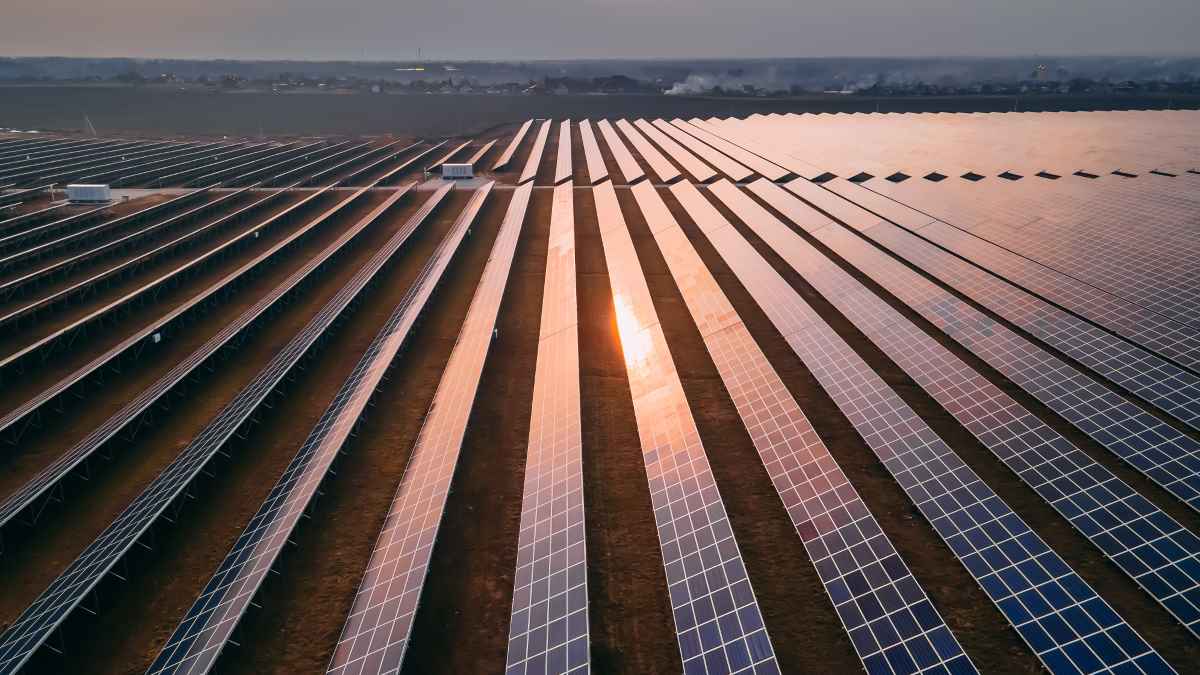
SolarAfrica (https://SolarAfrica.com) has secured financial close on R1.5 billion to build SunCentral 2, the next 114 MW plant of its flagship utility-scale solar development in the Northern Cape. The new funding, provided by RMB and Investec Bank Limited, is another significant step in boosting access to affordable and clean energy for South African businesses, with first power expected in 2026.

SunCentral 2 will follow SunCentral 1, which reached financial close at the end of 2024, also at 114 MW. Together with SunCentral 3, these projects form Phase 1 of the broader SunCentral vision, totalling 342 MW. At full scale, SunCentral is planned to reach 1 GW, positioning it as one of the country’s largest solar initiatives designed specifically for one-to-many, bilateral wheeling.

Businesses want power they can trust – clean, affordable and predictable – and SunCentral is being built exactly for that purpose

David McDonald, CEO at SolarAfrica, says: “Businesses want power they can trust – clean, affordable and predictable – and SunCentral is being built exactly for that purpose. It’s encouraging to see the confidence from our funding partners as we move into the next stage of delivery.

“More than a big solar project, SunCentral is a long-term infrastructure investment that gives companies the ability to manage their costs, cut emissions, and reduce their reliance on utility power that is often vulnerable to unpredictable tariff hikes. This next step gets us closer to bringing that value to even more South African businesses.”

As with the first plant, SunCentral 2 includes dedicated community-upliftment initiatives, ensuring local residents share in the social and economic benefits created by the project. Job creation, education, local procurement and skills development will continue to form a core part of the programme, supporting economic activity around the site in partnership with the project’s principal contractors.

SunCentral is also a key pillar of SolarAfrica’s overall wheeling pipeline – totalling 3 GW – which is currently under development across the country. By combining utility-scale renewable generation with a more flexible delivery via wheeling, SolarAfrica is helping companies access greener energy without the upfront capital outlay traditionally associated with on-site solar systems.

A portion of funding from each SunCentral plant is allocated directly to the development of the project’s Main Transmission Substation (MTS). Engineered for up to 2 GW of green-power evacuation capacity, the MTS strengthens the national grid while enabling future renewable generation to connect more efficiently.

“With wheeling, we have a model that puts control back into the hands of commercial and industrial customers. Instead of just surviving tariff hikes, it allows companies to plan for growth with a cleaner, more dependable energy mix,” says McDonald.

Distributed by APO Group on behalf of SolarAfrica.

Energy

Zimbabwe Enters the Global Critical Minerals Conversation with Purpose

Published

on

Zimbabwe Mining Week is designed to move the mining conversation beyond extraction and exports, and towards ecosystem-led growth

HARARE, Zimbabwe, February 9, 2026/APO Group/ –Zimbabwe has officially announced the launch of Zimbabwe Mining Week, a new annual international conference and exhibition designed to position the country as a purposeful and competitive participant in the global critical minerals economy.


Hosted by the Ministry of Mines and Mining Development, Zimbabwe, and organised by VUKA Group, in partnership with founding partner Nzuri Communications, Zimbabwe Mining Week will take place from 17–19 November 2026 at Rainbow Towers Hotel & Conference Venue, Harare.

The platform is established as the official national meeting place for government, mining companies, investors, financiers and solution providers committed to unlocking Zimbabwe’s mineral wealth through processing, industrialisation, energy integration and sustainable value- added economic development.

Zimbabwe Mining Week is designed to move the mining conversation beyond extraction and exports, and towards ecosystem-led growth — addressing the full mining value chain including local processing and refining, downstream industrialisation, rising energy demand, infrastructure enablement, ESG integration and long-term economic resilience.

Zimbabwe is one of Africa’s most geologically endowed mining jurisdictions, with resources spanning gold, PGMs, lithium, chrome, nickel, coal and industrial minerals, and mining contributing approximately 13% of national GDP. Against a backdrop of policy reform, global re- engagement and accelerating demand for battery and critical minerals, the country is entering a decisive phase in aligning its mineral endowment with national development outcomes.

Endorsing the launch, Honourable Minister of Mines and Mining Development, Zimbabwe, Dr Polite Kambamura, said:

“The launch of Zimbabwe Mining Week is a critical step in positioning Zimbabwe as a competitive global mining destination. By bringing together decision-makers, investors and operators, this platform supports transparency, policy consistency and sustainable investment, while helping translate our mineral wealth into inclusive growth, job creation and long-term national development.”

VUKA Group’s purpose is to connect Africa to the world’s best to influence sustainable progress, and Zimbabwe Mining Week reflects that ambition in action

Speaking on the strategic intent behind the platform, Tichaona Mawoni, CEO of Nzuri Communications and Founding Partner of Zimbabwe Mining Week, said:

“The launch of Zimbabwe Mining Week is a strategic move to place Zimbabwe at the centre of the global critical minerals dialogue. As founding partners with VUKA Group, we have created a world-class platform that stands alongside its sister summits in the DRC and Nigeria.

Zimbabwe is moving beyond the outdated narrative of simply extracting resources. Our focus is on building a robust mining ecosystem that prioritises domestic processing, industrialisation and value addition, ensuring the real benefits of our mineral wealth are retained within our borders.

By convening global investors and policy leaders, we are not just discussing the future — we are architecting it. Zimbabwe holds the resources essential to the green energy transition, and we are positioning the country not just to participate, but to lead.”

Commenting on the launch, David Ashdown, CEO of VUKA Group, said:

“We have long recognised Zimbabwe’s exceptional mining potential, alongside opportunities across other strategic industry verticals, and its capacity to ignite sustainable economic growth. VUKA Group’s purpose is to connect Africa to the world’s best to influence sustainable progress, and Zimbabwe Mining Week reflects that ambition in action.

With the support of the Ministry, our founding partners, and VUKA Group’s portfolio of award- winning conference and media platforms, we are confident in our ability to connect people and organisations to information — and to each other — in ways that drive investment, enable industrialisation and unlock long-term opportunity for Zimbabwe.”

Zimbabwe Mining Week will deliver unparalleled access to policymakers, project developers, investors and international partners, providing a platform where policy meets capital, processing meets power, and mineral wealth is translated into sustainable economic value.

More information is available at www.ZimMiningWeek.com.

Distributed by APO Group on behalf of VUKA Group.

Continue Reading

Energy

African Mining Week (AMW) 2026 Puts African Mining at the Center of Global Supply Chains

Published

on

African Mining Week 2026 takes place under the theme ‘Mining the Future: Unearthing Africa’s Full Mineral Value’ from October 14-16 in Cape Town

CAPE TOWN, South Africa, February 9, 2026/APO Group/ –Africa holds 30% of the world’s critical mineral reserves, positioning the continent at the center of the global energy transition and industrial supply chain realignment. With global mineral demand set to increase four-fold by 2050, this position becomes increasingly strategic – and it is within this context that African Mining Week (AMW) 2026 emerges as a critical platform to convert geological potential into investable projects, partnerships and value-chain development across the continent.


Taking place October 14-16 in Cape Town, AMW 2026 returns with a sharpened focus on partnerships and transactions that advance Africa’s mineral value chain. This year’s event takes place under the theme Mining the Future: Unearthing Africa’s Full Mineral Value, reflecting a growing emphasis on project bankability, downstream beneficiation and cross-border collaboration as Africa seeks to strengthen its position in increasingly competitive global minerals markets.

Rising Mineral Output, Strengthened Global Trade Flows

Africa hosts some of the world’s largest reserves of cobalt, platinum group metals, chrome, coltan and manganese, placing the continent at the forefront of global minerals essential to electrification, clean energy deployment and industrial expansion. As demand for these resources accelerates and commodity prices are expected to remain elevated through 2026, Africa’s role as a strategic supply partner is becoming increasingly pronounced. Within this context, AMW 2026 will examine how African producers can move beyond volume-led growth to capture greater value across mining, processing and trade.

International Partnerships Drive Production

AMW 2026 is designed to bring project developers, governments and international investors into the same room to accelerate transactions that move Africa’s mining sector

Across the continent, mineral producers are scaling-up production, leveraging international partnerships to secure capital and technical expertise. The Democratic Republic of Congo (DRC) – Africa’s largest copper producer and the world’s leading cobalt supplier – recently partnered with the U.S to leverage technical expertise and financing to unlock an estimated $24 trillion in untapped mineral potential. Speaking at AMW 2025, the country’s Minister of Mines Louis Watum Kabamba, underscored the level of opportunity that remains in the country, explaining that “Opportunities across the mining sector in the DRC are huge, with 90% of our resources awaiting greenfield exploration.”

Similarly, Guinea – home to the world’s largest bauxite reserves – is enhancing cooperation with global investors to maximize its mineral value chain under the Simandou 2040 – an international cooperation and national development strategy. Securing $20 billion in international investments for the Simandou iron ore project, Guinea is leveraging this global partnership model to expand bauxite production and processing, corelating to a 25% increase in bauxite exports in 2025.

Zambia, Africa’s second-largest copper producer, is positioning its copper sector as a catalyst for economic expansion, GDP growth and employment creation. The country is actively engaging international investors to achieve its 2031 production target of 3.1 million tons per annum, reinforcing Africa’s role in future copper supply chains.

Balancing Exports with Local Value Addition

As global mineral demand rises, African governments are increasingly prioritizing local beneficiation to retain value, deepen domestic supply chains and unlock broader economic growth. Ghana, Africa’s largest gold producer, recently signed an agreement with South Africa’s Rand Refinery to expand domestic gold processing capacity. Mali is developing a 200-ton-per-annum gold refinery in partnership with Russian investors. Meanwhile, Zimbabwe, Africa’s largest lithium producer, is working with Chinese investors to expand lithium processing capacity ahead of its 2027 ban on lithium concentrate exports. These moves signal a broader shift form export-centered development models to strategies that prioritize domestic markets.

As global competition for critical minerals intensifies, Africa’s ability to align production growth with beneficiation, investment readiness and policy coherence will define its long-term position in global supply chains. AMW 2026 will serve as a focal point for advancing the partnerships and transactions needed to translate mineral wealth into sustainable economic value across the continent.

“AMW 2026 is designed to bring project developers, governments and international investors into the same room to accelerate transactions that move Africa’s mining sector from potential to production and value creation,” stated Rachelle Kasongo, Event Director, AMW.

AMW 2026 serves as a premier platform for exploring the full spectrum of mining opportunities across Africa. Sponsors, exhibitors and delegates can learn more by contacting sales@energycapitalpower.com.

Distributed by APO Group on behalf of Energy Capital & Power.

Continue Reading

Energy

African Energy Chamber (AEC) Endorses Kigali’s Africa CEO Forum as the Continent’s Strategic Hub

Published

on

With thousands of executives, investors and policymakers gathering in Rwanda this May, the African Energy Chamber is urging the energy industry to support African-led platforms that tackle energy poverty, mobilize investment and drive the continent’s economic future

KIGALI, Rwanda, February 6, 2026/APO Group/ –The African Energy Chamber (AEC) (https://EnergyChamber.org) has formally endorsed the upcoming Africa CEO Forum in Kigali, positioning the May 2026 gathering as a critical platform for investment, partnership and policy dialogue across the continent. Scheduled for May 14-15 in Rwanda’s capital, the forum is expected to convene approximately 2,800 CEOs, heads of state, ministers and business leaders, reinforcing its status as the largest annual meeting of Africa’s private sector.


For the AEC, Kigali represents a strategic venue where African decision-makers, global investors and industry leaders can align around practical solutions to the continent’s most pressing challenge: ending energy poverty while accelerating economic growth. By bringing together stakeholders from more than 90 countries alongside hundreds of government representatives and journalists, the forum creates a rare environment capable of translating dialogue into bankable projects and long-term partnerships.

Africa’s energy future should be defined by Africa – and platforms such as the Africa CEO Forum are strategic opportunities to advance Africa’s energy narrative

This positioning aligns with the Africa CEO Forum’s core mission: highlighting the driving role of the private sector in Africa’s development through high-level networking, deal-making opportunities and strategic analysis from leading institutions. Participants gain access to decision-makers, insight into emerging investment projects and direct engagement with public authorities seeking public-private partnerships.

Energy remains central to these discussions. Despite Africa’s vast natural resources, over 600 million still lack access to reliable electricity and 900 million to clean cooking solutions, constraining industrialization, job creation and social development. The AEC maintains that addressing this crisis will require sustained investment across oil, gas, power and emerging low-carbon technologies – supported by regulatory certainty and African financial leadership.

“Africa’s energy future should be defined by Africa – and platforms such as the Africa CEO Forum are strategic opportunities to advance Africa’s energy narrative. The Forum in Kigali provides the platform where investors, governments and industry can engage directly, mobilize capital at scale and build partnerships that deliver reliable, affordable power to African citizens,” states NJ Ayuk, Executive Chairman of the African Energy Chamber.

Kigali also reflects a broader shift in confidence toward African economic leadership. Rwanda’s rise as a hub for high-level continental dialogue shows how stable governance, investment-friendly policies and regional connectivity can position African cities at the forefront of global business discussions. Ultimately, Africa’s journey toward energy security and prosperity will be defined by partnerships forged on the continent itself.

As momentum builds toward May, the AEC is calling on energy stakeholders across the value chain to engage actively in Kigali – bringing projects, financing solutions and long-term commitment. Participation ensures that Africa’s economic and energy future is not merely discussed abroad, but designed, financed and delivered where it matters most.

Distributed by APO Group on behalf of African Energy Chamber.

Continue Reading

Trending

Exit mobile version