Connect with us
Anglostratits

Business

Reserve your seat at the 9th edition of the highly anticipated Africa Early Stage Investor Summit 2022 (#AESIS2022)
Published

on

AESIS2022

#AESIS2022 brings together investors and senior business leaders from angel networks, VC funds, impact investors, accelerators, corporate venture divisions, industry associations, and the public sector

AMSTERDAM, Netherlands, August 16, 2022/APO Group/ — 

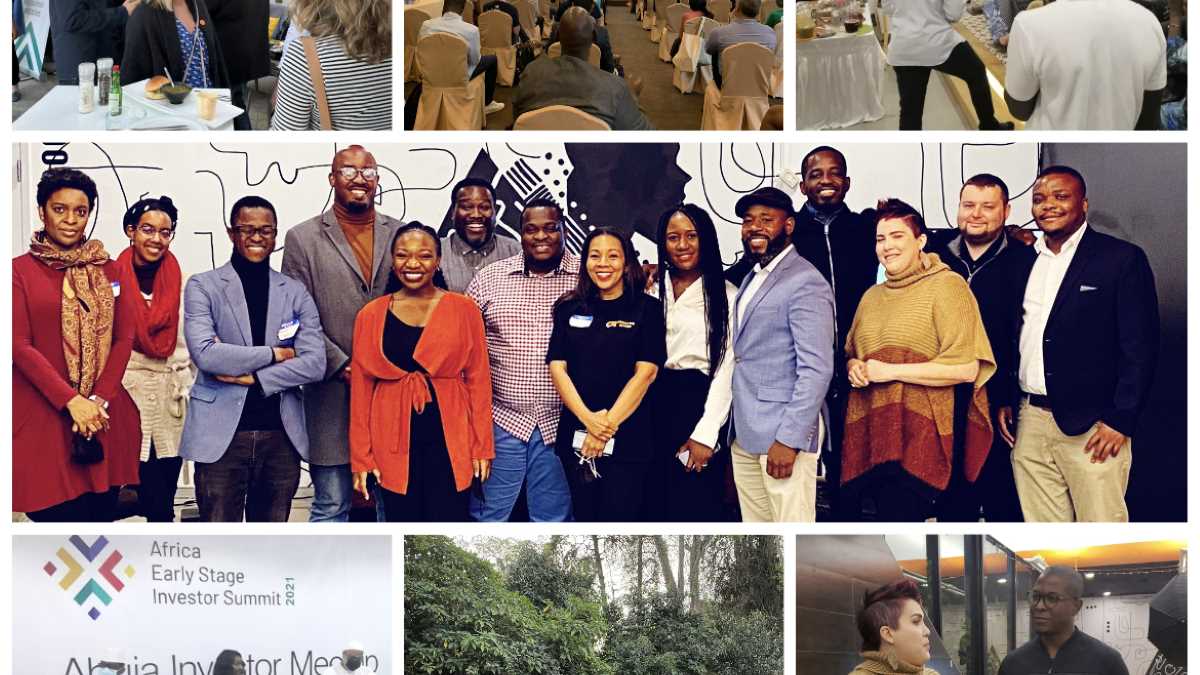
The largest gathering of Africa-focused early stage investors is back for its 9th edition taking place from 2 – 4 November, 2022. This year the three-day Summit will be a mix of virtual components and in-person Investor meetups in over 25 cities all over the world. The Africa Early Stage Investor Summit 2022 (#AESIS2022) is once again joined by renowned investors, industry associations, policy makers and ecosystem support partners in the true sense of for investors, by investors.

#AESIS2022 is the annual, exclusive, must attend assembly proudly brought to you by VC4A and ABAN. Each year, the hosts bring a unique theme and approach to challenges, trends and insights on shaping the future of the investment scene on the continent. The two main themes this year are “Investing with a Gender Lens” and “Climate/Green Tech”.

Anticipate a dynamic mix of online and in-person activities

#AESIS2022 brings together investors and senior business leaders from angel networks, VC funds, impact investors, accelerators, corporate venture divisions, industry associations, and the public sector. Here are the highlights coming up at #AESIS2022:

  • 25+ Investor Meetups hosted by investor organizations happening simultaneously on the evening of November 2nd. Want to become a host in your own city? Indicate your interest before August 29th here (https://bit.ly/3C7iOaa);
  • For the virtual Summit, the focus on Thursday November 3 will be on (pre-)Seed investments and Friday November 4 around Series A and later stage startups;
  • Meet the 14 companies selected for the 2022 VC4A Venture Showcase: Women Founder edition. Venture Showcase alumni have been able to raise 500M+ USD so far;
  • New this year: #AESIS2022 welcomes accelerator and ecosystem support organizations (ESOs) to participate in an ecosystem side event. Investors take the hot-seat in a reverse pitch to bridge the gap between views on being Investment ready. ESOs will hear directly from investors, their views on priority value-add brought to prospective investees through interventions. In addition, they will engage in workshops around their own financial sustainability as pipeline providers. This, and more in the afternoon (CAT) of Wednesday, November 2nd. 

In-Person Investor Meetups

Connect with the investor community right where you are. Investor Meetups at #AESIS2022 are locally-led events supported and organized by investor community members in 25+ cities. You don’t want to miss this opportunity to network with peers in an informal setting. Due to limited space, please keep an eye out on the event website to reserve a seat as of mid-September. If you would like to become a host you can register your interest here (https://bit.ly/3C7iOaa).

The 2022 VC4A Venture Showcase Africa: Women founder edition

With over 2000 attendees expected and 80+ speakers from diverse verticals, the stage for #AESIS2022 is the premier meeting place for facilitating rich dialogue with stakeholders

Out of $4.5B+ invested in African startups and scaleups last year, only 7% went to female founders [1]. That’s $1 for every $15 raised going to women-led ventures. In addition to creating awareness, VC4A launched the Venture Showcase Africa: Women founder edition (https://bit.ly/3w9Pk7T) as a concrete way to engage investors and drive capital support to outstanding women led companies. These high-impact, high-growth companies represent the best investment opportunities on the continent today, looking to raise Seed and Series A rounds of between $250K and $10M.

Building on the discussions at #AESIS2021

From the thought-provoking #AESIS2021 keynote delivered by David S. Rose, renowned Entrepreneur and Angel Investor, he remarked ‘The industry is being driven by a young and growing population that is tech-savvy and eager to start a business. Africa’s population is increasingly well connected and eager to consume digital solutions.’ These trends feed a growing interest in the continent and ensure continued investment and support for Africa’s entrepreneurs.

Mathew Marsden, coFounder at GetLion concluded, ‘The event brought together leading minds in African investing, and in summary, the future is bright. Investment appetite is growing, more funds and angel syndicates are emerging, a diverse array of ecosystems are booming and even more “exits” are anticipated. The message for investors… get in or get left behind!’

In 2021 alone, Africa saw some of the biggest deal-flow successes till date, smashing the ceiling and closing $4.5B+ in investments across 740+ deals [1}. Despite the gaps and challenges plaguing the ecosystem, the trend is picking up momentum once again with startups accumulating $2.25B in the first four months of 2022 [2].

With over 2000 attendees expected and 80+ speakers from diverse verticals, the stage for #AESIS2022 is the premier meeting place for facilitating rich dialogue with stakeholders and a burst of power-packed networking opportunities throughout.

Join the discussion at #AESIS2022

Visit AfricaInvestorSummit.com (https://bit.ly/3w6bJTw) and make sure to block November 2-4 in your agenda. Successful registration will give you exclusive access to our community of investors representing over 90% of capital being invested into startups on the African continent. Approved investors get access to highly curated deal flow with the most investable ventures from emerging markets.

For media requests and partnership and sponsorship opportunities, please contact the organizers by email: team@AfricaInvestorSummit.com.

References:

  1. ‘Africa’s Investment Report 2021’, Briter Bridges, https://bit.ly/3C5hm8f 
  2. ‘African startups raise $2.25bn in first four months of 2022’, BusinessDay Nigeria, https://bit.ly/3pp2Cd4

Distributed by APO Group on behalf of VC4A.

Business

Afreximbank Africa Trade Report shows Africa can turn geopolitical disruptions into long-term growth opportunity

Published

on

Afreximbank

The report highlights Africa’s continued growth resilience despite significant headwinds occasioned by escalating geopolitical tensions and ensuing economic shifts

CAIRO, Egypt, June 24, 2026/APO Group/ –African Export-Import Bank (Afreximbank) (www.Afreximbank.com) has launched the 2026 edition of its flagship African Trade Report themed “Leveraging Geopolitics for Trade and Industrialisation in Global Africa.” The report presents a comprehensive review of trade and economic developments across Africa and globally in the context of the 2025 operating environment, while outlining available strategic options for Africa to transform ongoing geopolitical tensions and associated supply chain disruptions into long-term resilience for growth and shared prosperity across the continent.


The report highlights Africa’s continued growth resilience despite significant headwinds occasioned by escalating geopolitical tensions and ensuing economic shifts. Reflecting the continent’s growth resilience, the report shows that while global economic growth slowed to 3.4 percent in 2025 and is projected to further ease to 3.1 percent in 2026, Africa’s real GDP growth strengthened from 3.4 percent in 2024 to 4.5 percent in 2025. This performance not only surpasses the global average but also highlights the continent’s improving economic fundamentals in a fractured world economic order.

Africa’s merchandise trade also delivered strong performance, expanding by 6.1 percent to reach approximately US$1.5 trillion, while aggregate inflation declined sharply from 21.6 percent in 2024 to 13.1 percent 2025. These outcomes reflect the stabilising effects of prudent macroeconomic management, ongoing policy and institutional reforms, and the countercyclical interventions of development finance institutions across the continent.

Commenting on the Africa Trade Report’s findings, Dr Yemi Kale, Group Chief Economist and Managing Director of Research and Trade Intelligence at Afreximbank, said:

By strategically leveraging these shifts, Africa can build a more resilient, competitive and inclusive economic future

Africa stands at a critical juncture. Geopolitical tensions and economic fragmentation are reshaping global trade patterns, but they also present a historic opportunity for the continent. By strategically leveraging these shifts, Africa can build a more resilient, competitive and inclusive economic future.

Afreximbank

“It is imperative for the continent to act decisively to strengthen regional value chains, deepen industrial capacity, expand access to trade finance, and accelerate continental integration. Through coordinated policy action, strategic infrastructure investment, and stronger development finance institutions, Africa can build a more resilient, inclusive, and value-added trade ecosystem. Africa cannot afford to delay.”

The report further highlights that Africa’s export performance remains constrained by a persistent trade finance gap, estimated at approximately US$74 billion in 2025. The challenge is exacerbated by limited foreign exchange liquidity and the continued decline in correspondent banking relationships, factors that restrict the continent’s capacity to fully realise its trade and industrial potential.

At the same time, evolving shipping routes and prolonged disruptions to global logistics networks continue to extend delivery timelines and increase freight and trading costs. These pressures are particularly acute for African economies that remain heavily reliant on imported inputs and external markets, even as global supply chains increasingly reconfigure toward resilience, diversification, and emergence of alternative production hubs.

The report also outlines several strategic priorities, including the accelerated implementation of the African Continental Free Trade Area (AfCFTA), the expansion of digital payments infrastructure through the Pan-African Payment and Settlement System (PAPSS), and coordinated reforms to the global financial architecture. It further underscores the growing role of African financial institutions in strengthening economic resilience. Afreximbank, a founding member of the Alliance of African Multilateral Financial Institutions (AAMFI), disbursed US$17.5 billion in 2024 and is working to double intra-African trade finance by 2026. Meanwhile, Pan African Payment and Settlement System (PAPSS) is already helping to reduce transaction costs and lessen reliance on foreign currencies across the continent.

As geopolitical tensions continue to reshape global supply chains and trade patterns, the continent’s ability to leverage these shifts will depend on strengthening industrial ecosystems, expanding intra-African trade, and sustaining coordinated financial support. Ultimately, a combination of adaptive policy frameworks, strategic trade positioning, and robust direct foreign investment interventions will be central to driving a resilient, inclusive, and sustainable industrialisation pathway for Global Africa. The imperative now is to act with ambition and urgency. This would require accelerating the implementation of the African Continental Free Trade Area (AfCFTA), expanding intra-African trade finance, strengthening transport and logistics infrastructure, and deepening digital payment systems through the Pan-African Payment and Settlement System (PAPSS).

The full report can be downloaded here:  https://apo-opa.co/4xNkbFx

Distributed by APO Group on behalf of Afreximbank.


Continue Reading

Business

Islamic Development Bank (IsDB) Institute Strengthens Global Partnerships through Strategic Bilateral Engagements at 2026 Group Annual Meetings

Published

on

IsDBI

The meetings reaffirmed IsDBI’s commitment to advancing Islamic economics and finance as a catalyst for sustainable development, innovation, financial inclusion, and economic transformation across Member Countries and beyond

BAKU, Azerbaijan, June 24, 2026/APO Group/ –The Islamic Development Bank Institute (IsDBI) (https://IsDBInstitute.org/) successfully conducted a series of bilateral meetings with government institutions, multilateral organizations, financial regulators, academic institutions, development agencies, and industry leaders on the sidelines of the 2026 IsDB Group Annual Meetings in Baku, Azerbaijan.


The meetings reaffirmed IsDBI’s commitment to advancing Islamic economics and finance as a catalyst for sustainable development, innovation, financial inclusion, and economic transformation across Member Countries and beyond.

The engagements covered a wide spectrum of strategic themes, including Islamic finance ecosystem development, regulatory and legislative reform, capacity building, sukuk market development, Islamic social finance, digital transformation, fintech, sustainable finance, waqf innovation, and knowledge partnerships.

Among the key engagements were discussions with representatives from the Governments of Tajikistan, Libya, Maldives, Türkiye, Ethiopia, and Sierra Leone on strengthening Islamic finance ecosystems through technical assistance, regulatory enhancement, and institutional capacity development.

The Institute also met with leading international organizations and standard-setting bodies, including the Islamic Financial Services Board (IFSB), AAOIFI, the Eurasian Development Bank, and the Islamic Microfinance Development Fund (FDMI). The meetings explored avenues for collaboration in research, standards development, capacity building, and strategic initiatives aimed at broadening the global reach and impact of Islamic finance.

Several meetings focused on innovation and emerging opportunities, including discussions with Rosatom State Corporation on sustainable financing solutions and sukuk structures, Islamic Money Australia on digital Islamic banking models, and INCEIF University on Islamic social finance data, waqf tokenization, and applied research collaboration.

The Institute also explored partnerships with organizations from Brazil, Palestine, Somalia, Senegal, Djibouti, and the private sector to advance knowledge dissemination, capacity-building programs, blended Islamic finance solutions, cash waqf digitalization initiatives, and investment-related research.

Commenting on the outcomes of the engagements, the Institute’s team, led by Acting Director General, Dr. Sami Al-Suwailem, noted that the meetings reflected the growing global interest in leveraging Islamic economics and finance to address contemporary development challenges and unlock new opportunities for inclusive and sustainable growth.

The discussions generated a pipeline of follow-up initiatives, including technical assistance programs, joint research projects, capacity-building activities, policy advisory support, and collaborative knowledge-sharing platforms.

The 2026 IsDB Group Annual Meetings provided a valuable platform for strengthening existing partnerships, establishing new strategic relationships, and advancing the Institute’s mission of promoting innovative, impactful, and development-oriented Islamic economics and finance solutions worldwide.

Distributed by APO Group on behalf of Islamic Development Bank Institute (IsDBI).


Continue Reading

Energy

Nigeria Accelerates $750B Mining Vision Ahead of African Mining Week (AMW) 2026

Published

on

Etu Energias

African Mining Week will showcase opportunities within Nigeria’s mining value chain as the country seeks capital to unlock its $750 billion worth of untapped mineral deposits

CAPE TOWN, South Africa, June 24, 2026/APO Group/ –Nigeria’s mining sector is entering a new phase of growth as regulatory reforms, downstream investments and international partnerships strengthen investor confidence in one of Africa’s largest untapped mineral markets. The country’s solid minerals sector has secured approximately $3 billion in investments over the past three years, reflecting growing investor confidence as the West African nation seeks to bridge the financing gap hindering large-scale mining development.


The investment milestone comes as Nigeria deepens engagement with investors to unlock its estimated $750 billion in untapped mineral resources. The country is targeting an increase in mining’s contribution to GDP to 10%, creating lucrative investment opportunities for global mining industry players.

These developments come as African Mining Week (AMW) 2026 – Africa’s Most Influential Mining Conference, taking place in Cape Town from October 14-16 – prepares to showcase Nigeria’s expanding project pipeline and investment opportunities. Through dedicated country sessions, project showcases and executive networking, the event will connect international investors with Nigerian policymakers, mining companies and service providers driving the country’s mining transformation.

Nigeria’s expanding investment pipeline is a testament to its drive to strengthen partnerships. In June 2026, indigenous company Romulus Mining announced plans to increase investments across its gold and lithium portfolio from approximately $50 million to $150 million over the next three years, underscoring growing private sector confidence in the country’s mining outlook.

A partnership deal signed with Turkey in May 2026 is expected to support cooperation in geological exploration, mining technologies, digitalization and capacity building, while creating new opportunities for Turkish investment and technical expertise across Nigeria’s mining value chain.

Meanwhile, the advancement of several downstream projects – including a $600 million lithium processing facility in Nasarawa State and a $200 million lithium processing plant in Abuja – underscores Nigeria’s commitment to boosting mineral production and supporting industrialization.

Amid these developments, AMW 2026 provides a timely platform for investors seeking to capitalize on one of Africa’s most promising mining markets. The event will facilitate strategic partnerships that support exploration, mineral processing and long-term industry growth, reinforcing Nigeria’s ambition to develop a $1 billion economy by 2030 on the back of its mining industry.

Distributed by APO Group on behalf of Energy Capital & Power.

Continue Reading

Trending