Connect with us
Anglostratits

Business

Repsol Outlines Plans to Shape the Future of Energy Exploration in Libya, Targeting 350,000 Barrels Per Day (BPD) by 2025

Published

on

Repsol

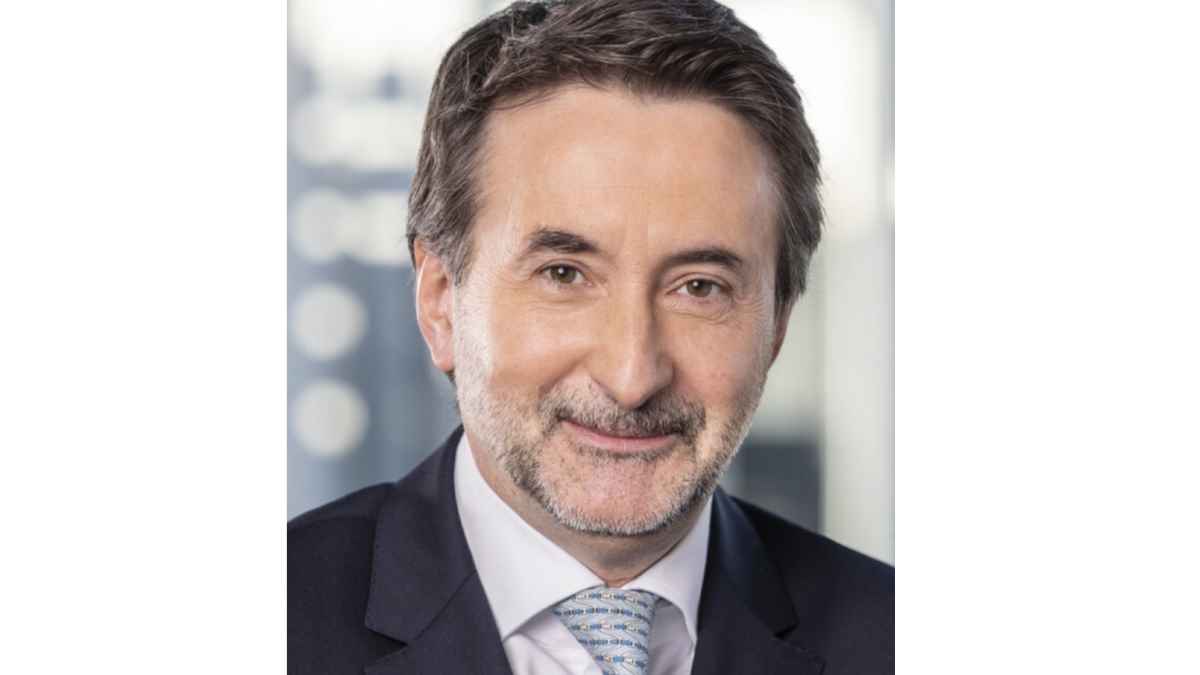
In an exclusive interview with Energy Capital & Power, Josu Jon Imaz, CEO of Repsol, shares insights on the company’s production growth strategy, a nine-well exploration drilling campaign and its involvement in Libya’s upcoming bid round

TRIPOLI, Libya, January 17, 2025/APO Group/ — 

Repsol has been deeply involved in Libya for nearly three decades. How do you see your role evolving in the country over the next decade, particularly as Libya aims to increase its oil production significantly?

Repsol is dedicated to maintaining a lasting and meaningful presence in Libya, a country that has played a key role in our history and growth. Since 1994, we have operated continuously in Libya, demonstrating our strong commitment. However, our connection with the country began much earlier. In 1965, our predecessor, Hispanoil (La Sociedad Hispánica de Petróleos S.A.), was established with a vision to expand oil and gas exploration beyond Spain. By 1966, Hispanoil started its first operations in Libya’s Sirte Basin, beginning a partnership based on cooperation and shared success.

Over the years, our involvement in Libya has grown and strengthened, becoming a core part of our work. Today, we contribute to Libya’s energy sector through Akakus Oil Operations, our trusted local operator, managing licenses NC115 and NC186. These activities are essential not only to our company, but also to Libya’s economic development and energy stability. By providing valuable resources, we help support the country’s progress and improve the quality of life for its people, underscoring our role as a partner in Libya’s growth.

Looking to the future, we are preparing to take part in the 2025 Bid Round, the first since 2007, an event of great importance for Libya and the global energy industry. Securing new exploration opportunities is essential to maintaining our operations and continuing to contribute to the country’s future. Success in this process will allow us to meet Libya’s energy needs, promote local development and strengthen our relationship with the Libyan people.

Our vision extends beyond business. We are committed to Libya’s long-term success by supporting its communities and driving sustainable growth. Through innovation and collaboration, we aim to strengthen Libya’s energy sector, create economic opportunities and enhance the well-being of its citizens. With deep respect for Libya’s potential, we are proud to stand as a trusted partner, working together to build a brighter future for generations to come.

Repsol’s ambitious exploration campaign in Libya plays a central role in its strategy. Could you provide an update on the progress of this campaign, particularly the drilling of nine wells planned through November 2025? How are exploration activities progressing in contract blocks NC115 and NC186?

Our exploration campaign is both ambitious and strategically significant, reflecting our commitment to unlocking Libya’s energy potential. With a plan to drill nine wells consecutively, we have adopted an intensive approach to ensure the success of this initiative. Given the tight timeframe leading up to the November 2025 deadline, we have made the decision to deploy two drilling rigs to expedite the process. The first rig commenced operations in December 2024, spudding the initial exploration well, while the second rig is scheduled to begin activity in February this year, reinforcing our ability to meet the campaign’s ambitious goals.

The scope of this campaign is diverse, encompassing a carefully selected portfolio of prospects. These range from conventional exploration opportunities to innovative stratigraphic plays that hold the potential to redefine exploration in the Murzuq Basin. The inclusion of these new stratigraphic targets represents a bold step toward expanding our understanding of the region’s geology and could pave the way for an entirely new exploration model within this key area.

We are committed to integrating sustainable energy practices into Libya’s long-term development by aligning our efforts with both the country’s economic and social priorities

We are highly optimistic about the results of this campaign, as it represents not just an opportunity to enhance our resource base, but also a chance to contribute to the advancement of exploration techniques in the Murzuq Basin. The outcomes of this work have the potential to shape the future of energy exploration in the region, aligning with our broader mission to drive innovation and create long-term value in Libya’s energy sector.

What is the current status of Repsol’s production enhancement plan in Libya, and how are you progressing toward the targets 300,000 BPD by December 2024 and 350,000 BPD by December 2025?

The Production Increase Plan has been a remarkable achievement driven by the power of teamwork. It represents the hard work and dedication of several key groups: our partners at the National Oil Corporation (NOC), Repsol and its Second Party partners (TotalEnergies, OMV and Equinor) and our Operating Company, Akakus Oil Operations. Each of these teams brought their unique expertise and skills to the table, working seamlessly together to transform a clear vision into a successful reality. It is this collaboration that allowed us to navigate the complex challenges involved and find effective solutions.

As with any great success, the foundation lies in the strength of the teamwork behind it. It is through the combined efforts of all these stakeholders that we have been able to reach our goal of 300,000 barrels of oil per day (bopd) by December 2024. This milestone is a clear indication of the capabilities and commitment of everyone involved, as we not only met our target but did so according to the plan.

We are now focused on the next phase of the project, which is to increase production to 350,000 bopd by the end of 2025. This is an ambitious but achievable target. With a robust portfolio of opportunities and an effective strategy in place, we are confident that we will meet this new goal. We have established a solid foundation during the first phase, and this momentum will carry us forward.

Looking beyond our immediate target, our efforts are also contributing to Libya’s broader production goals. The national plan aims to boost production to 2 million bopd by 2026, and we are proud to be part of this larger vision. By reaching our target of 350,000 bopd, we are playing an important role in helping Libya achieve this ambitious goal. Our continued collaboration, focus and expertise will be key to supporting the country’s energy ambitions in the coming years.

The success we’ve achieved so far is a direct result of effective teamwork, technical expertise and a shared commitment to reaching our production goals. As we move into the next phase, we are confident that, together, we will continue to exceed expectations and contribute meaningfully to Libya’s growing oil production capacity.

Repsol has highlighted its strong collaboration with the NOC and local stakeholders. How are you integrating sustainable energy practices with Libya’s economic and social priorities to support the country’s long-term development?

At Repsol, we are committed to integrating sustainable energy practices into Libya’s long-term development by aligning our efforts with both the country’s economic and social priorities. In this context, we are actively collaborating with the NOC and local renewable energy authorities to advance sustainable energy solutions. We are also focused on reducing gas flaring in our operations. By capturing and using the associated gas, we can power turbines and generate electricity, providing a more sustainable energy solution. Furthermore, we are working on a project at the FEED (Front End Engineering Design) stage to establish a plant in Ubari that will supply Liquefied Petroleum Gas (LPG) to the local population, improving energy access and supporting the community’s development.

Through these initiatives, we are not only contributing to Libya’s energy transformation, but also supporting its long-term social and economic growth by providing more sustainable energy solutions.

Distributed by APO Group on behalf of Energy Capital & Power.

Business

Aurionpro expands its multi-country transaction banking engagement with Diamond Trust Bank (DTB)

Published

on

Aurionpro

Aurionpro’s upgraded iCashpro platform for DTB delivers a unified digital experience across payments, trade, virtual accounts, and real-time reporting, enhancing straight-through processing, visibility, and control for both the bank and its corporate customers

MUMBAI, India, April 30, 2026/APO Group/ –Aurionpro Solutions Limited (www.AurionPro.com) (BSE: 532668 | NSE: AURIONPRO)a global leader in banking technology, announced the expansion and upgrade of its transaction banking engagement with Diamond Trust Bank (DTB), to modernize and enhance the bank’s corporate transaction banking capabilities across multiple countries.

Download Document: https://apo-opa.co/4edHUaC

This multi-country transaction banking upgrade covering Kenya, Uganda, and Tanzania aligns with DTB’s intent to enhance customer experience, streamline operations, and support growing transaction volumes as it expands its regional corporate banking footprint. DTB continues to focus on building a more agile, ‘digital-first’ banking experience, particularly around payments for its corporate customers across Africa, and is now well positioned to scale these capabilities. As part of its broader transformation agenda, the bank has been steadily investing in platforms that enhance scale, reliability, and service consistency across markets.

Through this partnership, we are proud to lead the next era of transformation in transaction banking, helping DTB enhance operational agility

Aurionpro’s upgraded iCashpro platform for DTB delivers a unified digital experience across payments, trade, virtual accounts, and real-time reporting, enhancing straight-through processing, visibility, and control for both the bank and its corporate customers. By enabling DTB to standardize and scale its transaction banking operations across countries, the platform ensures consistent service levels, stronger control, and improved efficiency. It also supports enhanced user experience, advanced security, and the flexibility to introduce new features as DTB expands its regional transaction banking footprint.

Murali Natarajan (https://apo-opa.co/48trPdk), Managing Director & CEO, DTB Kenya   commented: “We are delighted to strengthen and broaden our partnership with Aurionpro Solutions as part of DTB’s ongoing digital transformation journey across multiple markets. Our focus on innovation, operational excellence, and customer-centricity continues to guide our technology investments. This upgrade strengthens our transaction banking capabilities, enabling us to deliver greater value to our customers through robust digital channels and seamlessly integrated experiences.”

Ashish Rai, Group CEO, Aurionpro Solutions, commented: “We are pleased to deepen our multi-country engagement with Diamond Trust Bank and support the next phase of its transaction banking modernization. As DTB continues to scale across markets, platform resilience and consistency become paramount. Through this partnership, we are proud to lead the next era of transformation in transaction banking, helping DTB enhance operational agility, deliver superior experiences to corporate customers, and create long-term value across geographies.”

He added, “Aurionpro’s iCashpro lays a strong digital foundation for transaction & wholesale banks across the globe to grow their corporate and SME client portfolio today, while creating a clear roadmap for next- generation capabilities in AI-driven insights, advanced automation and API-led connectivity for businesses in Kenya and across Africa.”

Distributed by APO Group on behalf of Aurionpro Solutions Ltd.


Continue Reading

Business

Minerals Council Chief Executive Officer (CEO) Joins African Mining Week (AMW) as South Africa Improves Sectorial Investment Climate

Published

on

Energy Capital

Minerals Council CEO to share insights on policy, infrastructure and investment trends shaping South Africa’s mining industry

CAPE TOWN, South Africa, April 30, 2026/APO Group/ –The upcoming African Mining Week (AMW) conference will feature Mzila Mthenjane, CEO of the Minerals Council of South Africa, as a speaker. Scheduled for October 14 – 16, 2026 in Cape Town, the event will bring together global investors, policymakers and industry leaders, with Mthenjane’s participation highlighting the council’s commitment to engaging international stakeholders and promoting investment across South Africa’s mining sector.

His participation comes at a critical moment as the Minerals Council works closely with government on finalizing the Mineral Resources Development Bill 2025, a policy framework aimed at strengthening the country’s mining investment climate and the sector’s contribution to GDP. According to the council, the revised legislation will support new investment across the value chain as South Africa seeks to mobilize R2 trillion over the next five years to unlock its critical minerals potential.

The policy reforms come amid shifting production trends in the sector. In 2025, South Africa recorded declines in gold and platinum group metals output of 1.9% and 4.1%, respectively. The new regulatory framework is expected to strengthen public-private partnerships and stimulate investment, enabling South Africa to increase production and capitalize on strong global commodity prices. Increased private sector investments is crucial with South Africa seeking targeting to unlock an estimated R40 trillion in untapped iron ore potential as well as maintain its position as the world’s leading producer of chrome and manganese.

At AMW 2026, Mthenjane is expected to outline these trends, providing insights into how the council is contributing to addressing challenges disrupting the sector. Infrastructure and energy costs remain key concerns for industry players. To support the energy-intensive sector, South Africa approved a 35% reduction in electricity tariffs for major ferrochrome producers, helping stabilize an industry that has faced significant cost pressures after electricity prices surged by roughly 900% since 2008.

Logistics constraints are also a priority area for reform. South Africa’s economy is losing an estimated R1 billion per day due to inefficiencies across rail and port infrastructure. As a result, the government is considering measures supported by the Minerals Council to increase private sector participation in logistics. Planned reforms include rail modernization initiatives targeting 250 million tons of freight capacity by 2029, alongside port upgrades and private operator participation aimed at strengthening mineral exports and improving supply chain efficiency.

Beyond infrastructure and policy reforms, the Minerals Council is advocating for stronger exploration investment to support long-term industry growth.

At AMW, Mthenjane is expected to highlight these developments and outline the steps required to reinforce South Africa’s position in the global minerals supply chain. His insights will offer investors and stakeholders a timely perspective on opportunities within the country’s mining sector.

Distributed by APO Group on behalf of Energy Capital & Power.

Continue Reading

Energy

Seychelles Targets Energy Investment Push as Minister Jérémie Joins African Energy Week (AEW) 2026 as a Speaker

Published

on

African Energy Chamber

Seychelles energy minister will speak at AEW 2026, positioning her to highlight reforms, renewable projects and investment opportunities as the island nation advances its transition toward a diversified energy system

CAPE TOWN, South Africa, April 29, 2026/APO Group/ –Marie-May Jérémie, Minister of Environment, Climate, Energy and Natural Resources for Seychelles will participate as a speaker at this year’s African Energy Week (AEW) 2026, taking place from October 12–16 in Cape Town. Her participation underscores the country’s growing role in shaping Africa’s small-island energy transition agenda.

Minister Jérémie’s presence at AEW 2026 comes at a critical time as Seychelles accelerates efforts to reduce its heavy reliance on imported fossil fuels. The event provides a platform to attract investment, strengthen policy alignment and showcase bankable projects, positioning the country as a viable destination for private-sector participation in island energy systems.

Seychelles is demonstrating how policy reform and innovation can unlock investment in constrained environments

In May last year, international finance institution the World Bank approved the Renewable Energy Acceleration Program, a seven-year initiative aimed at modernizing the grid and increasing renewable energy penetration to 15% by 2030. The program focuses on unlocking private capital while strengthening transmission infrastructure to accommodate variable renewable energy sources.

Project development is gaining traction in the country, particularly in innovative technologies suited to Seychelles’ land constraints. The 5.8 MW Seysun Lagoon floating solar PV project, developed by independent renewable power producer Qair, is under construction and expected online in 2026.

Alongside renewables, Seychelles continues to pursue upstream opportunities to diversify its economy. The government approved new exploration entrants in 2025 and extended exiting petroleum agreements, while securing an infrastructure partnership with China. Multilateral estimates suggest over $800 million in investment will be required over the next 25 years.

Regulatory reform is central to this transition, with Seychelles introducing an independent power producer framework to open the market to private developers. Standardized power purchase agreements, grid access reforms and strengthened public-private partnership structures are being implemented to improve transparency, reduce risk and accelerate project bankability across solar, storage and emerging wind opportunities.

“Minister Jérémie’s participation highlights the strategic importance of island nations in Africa’s broader energy transition,” says NJ Ayuk, Executive Chairman, African Energy Chamber. “Seychelles is demonstrating how policy reform and innovation can unlock investment in constrained environments. Her insights will be critical to advancing dialogue on resilient, low-carbon energy systems across the continent.”

Distributed by APO Group on behalf of African Energy Chamber.

Continue Reading

Trending