Connect with us
Anglostratits

Business

Redhill Cancer Hospital, Siemens Healthineers to create Africa’s most comprehensive Cancer Center and Research Park in Nairobi, Kenya

Published

on

Redhill Cancer Hospital

Through the integrated approach across the cancer pathway, Redhill Cancer Hospital will provide a one-stop solution for patients from across the region

NAIROBI, Kenya, July 2, 2024/APO Group/ — 

Memorandum of Understanding signed to elevate quality and expand coverage of cancer care in Kenya; Vision to improve regional access to cancer care beyond country limits; Long-term Value Partnership including consulting services, diagnostics and imaging solutions, cancer therapy, maintenance and education programs.

Redhill Cancer Hospital, under the umbrella of RVL Healthcare Ltd, and Siemens Healthineers are partnering to improve essential cancer care across Eastern Africa. To the backdrop of rising cancer cases globally and especially in Africa – with forty-five thousand new cancer diagnoses and almost thirty-thousand cancer-related deaths in Kenya alone per year (Global Cancer Observatory 2022) – the two parties agreed to collaborate in building an integrated Cancer Center and Research Park in Nairobi, Kenya. The Memorandum of Understanding was signed during the recent US-Kenya Business Forum held in Washington, D.C. between Dr. Leela Prasad Pamidimukkala, Founder and CEO of RVL Healthcare Ltd, and Vivek Kanade, Managing Director of Siemens Healthineers, Middle East & Africa, in the presence of His Excellency Dr. William Samoei Ruto, President of Kenya, and Ambassador Meg Whitman, United States Ambassador to Kenya.

Dr. Leela Prasad Pamidimukkala, Founder and CEO of RVL Healthcare Ltd., commented: “Our vision is to build Africa’s most comprehensive Cancer Center and Research Park focused on offering high quality diagnosis services, cancer treatment and groundbreaking research. As an institution, our mission is to provide affordable cancer services to our people and to people in Africa. With Siemens Healthineers as our partner, we are on a journey of reshaping Africa’s oncology landscape by using modern technologies and innovative solutions to provide affordable cancer care for the wider region, while making a significant contribution to achieving Kenya’s goals for Universal Health Care.”

We are on a journey of reshaping Africa’s oncology landscape by using modern technologies and innovative solutions to provide affordable cancer care for the wider region

The understanding comprises not only of advisory services for the initial construction of the facility, but also includes the provision of state-of-the-art diagnostics, imaging and treatment equipment along the entire oncology pathway. Siemens Healthineers will also support the healthcare facility’s sustainable long-term growth strategy with capacity building programs, from physical trainings to remote engagements and AI-based services. The educational programs will be a key contributor to countering the shortage of skilled healthcare professionals in Africa, helping to elevate and future-proof the local healthcare infrastructure.

Vivek Kanade, Managing Director of Siemens Healthineers, Middle East & Africa, added: ”Together with Redhill Cancer Hospital, we follow the vision of creating a world without fear of cancer. We are pleased and humbled to be working on this monumental facility with RVL Healthcare, which we envision will bring a ray of hope to the lives of millions of patients and their families. By joining forces to build this unique Cancer Center and Research Park, we will be one step closer to realizing the vision of making essential cancer care more accessible, which ties into our company’s purpose of making healthcare more affordable and accessible for everyone, everywhere.”

Through the integrated approach across the cancer pathway, Redhill Cancer Hospital will provide a one-stop solution for patients from across the region, significantly improving access to care, while reducing the number of people traveling abroad for treatment, consequently supporting the local economy.

For the Research Park, which will be directly linked to the hospital, the two parties will collaborate with educational institutions and pharmaceutical companies, creating a nexus for cutting-edge research in oncology and a hub for training and education of current and future healthcare professionals.

Construction for the unique facility, which aims to conduct up to 200,000 cancer screenings and 4,000 surgeries per year, is planned to start in August 2024. The facility is set to open its doors to patients by the end of 2025.

Distributed by APO Group on behalf of Siemens Healthineers.

Business

Hainan economic, trade delegation visits Hong Kong for investment promotion, 2 cooperation memoranda signed

Published

on

Hong Kong

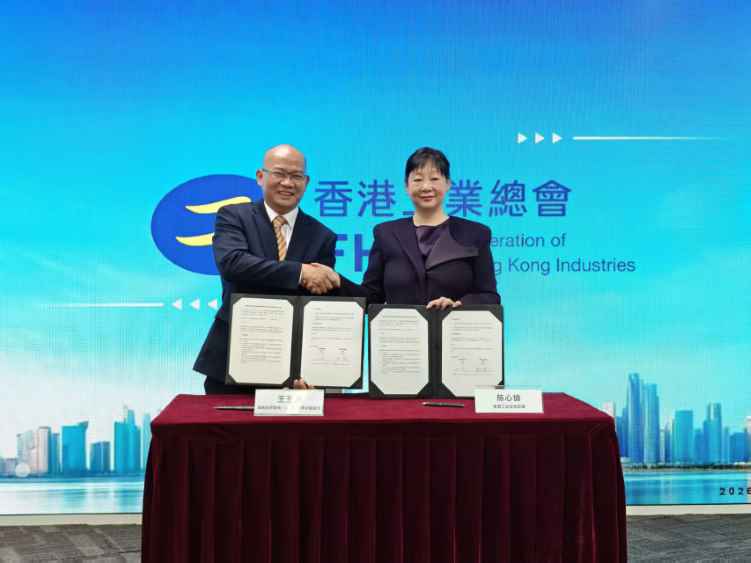
HONG KONG SAR – Media OutReach Newswire – 29 October 2026 – From October 19 to 20, an economic and trade delegation from Hainan Province paid a visit to Hong Kong. The delegation signed memoranda of cooperation respectively withThe Chinese Manufacturers’ Association of Hong Kong (CMA)and the Federation of Hong Kong Industries (FHKI) to advance pragmatic cross-border collaboration between Hainan and Hong Kong in trade and investment, manufacturing industrial chains and professional services.


During its stay in Hong Kong, the delegation visited the CCPIT Representative Office in Hong Kong. It held discussions with CMA and co-hosted the Hainan Free Trade Port (Hong Kong) Economic and Trade Cooperation Exchange Meeting with FHKI. The event showcased the policies, key industrial layout and investment opportunities of the Hainan Free Trade Port (FTP), and arranged one-on-one business matchmaking between Hainan and Hong Kong enterprises.

Wang Yuyuan, Vice President of the China Council for the Promotion of International Trade Hainan Sub-council (CCPIT Hainan) and China Chamber of International Commerce Hainan Chamber of Commerce, noted that since the official launch of island-wide special customs operations at the Hainan FTP on December 18, 2025, 174,000 new enterprises have been registered, representing a year-on-year surge of 95.9 percent. Newly established foreign-invested enterprises rose by 35.8 percent year on year. In the first half of this year, inbound and outbound tourist arrivals exceeded 70 million, up 28 percent year on year, with the number of visa-free entry countries expanding to 88. From January to August, the province’s total goods import and export volume hit 250 billion yuan, growing by 61.5 percent year on year. Hainan is rapidly emerging as a critical gateway connecting China with the rest of the world and a prime channel for two-way investment.

According to CCPIT Hainan, Hong Kong ranks as a major source of foreign investment for Hainan. In the first half of this year, Hainan registered 1,303 new foreign-invested enterprises, an increase of 38.62 percent year on year, with Hong Kong-funded enterprises accounting for the lion’s share. Hainan has issued offshore RMB local government bonds in Hong Kong for four consecutive years, with a cumulative issuance volume reaching 18 billion yuan.

CMA is one of Hong Kong’s most representative non-profit industrial and commercial bodies, with around 3,000 member enterprises. It has long provided members with business services including exhibitions, brand promotion, testing and certification. FHKI, one of Hong Kong’s four major chambers of commerce, has approximately 2,000 corporate members. It focuses on boosting the sustained development of Hong Kong industry and manufacturing through policy advocacy, business matchmaking, certification services and youth talent cultivation.

The two memoranda explicitly stipulate that the two sides will establish a regular liaison mechanism, build a long-term cooperation platform covering information sharing, business matchmaking, exhibition collaboration and professional services, and provide solid support for pragmatic business cooperation between Hainan and Hong Kong enterprises.

Source: China Council for the Promotion of International Trade Hainan Provincial Committee (CCPIT Hainan)


Continue Reading

Business

Africa gains governance momentum in the 2026 Chandler Good Government Index, but sustaining progress is the real test

Published

on

Africa

Across Africa, average scores improved in six of the seven CGGI pillars over the past year, with the strongest gains in Helping People Rise and Financial Stewardship

This signals that stronger government capabilities are beginning to translate into tangible improvements in people’s lives

KIGALI, Rwanda, October 29, 2026/APO Group/ –Africa was the second best-performing region for governance progress in the 2026 Chandler Good Government Index (CGGI), with 71% of the African countries assessed in both 2025 and 2026 achieving higher overall scores. However, the continent remains the lowest-scoring region overall, highlighting the challenge of translating improvement in government capabilities into better outcomes for citizens.


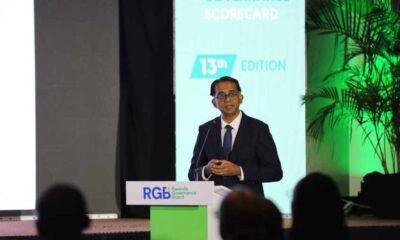
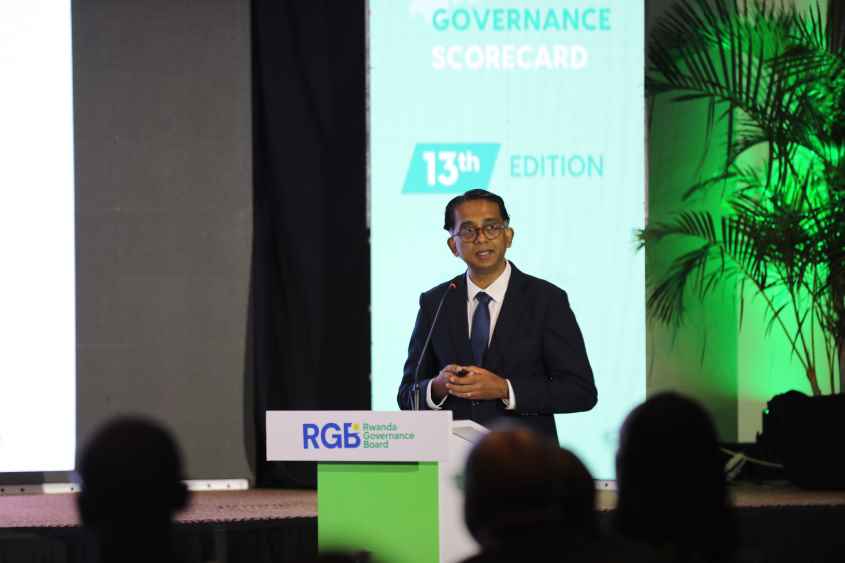
These findings were highlighted by the Chandler Governance Group (CGG) at a joint session with the Rwanda Governance Board (RGB) to launch the 13th edition of the Rwanda Governance Scorecard at the Kigali Serena Hotel on Thursday, 22 October 2026.

“This year, Africa’s strongest gains came in Financial Stewardship, followed by Helping People Rise, the CGGI’s outcomes pillar. This signals that stronger government capabilities are beginning to translate into tangible improvements in people’s lives, from access to quality education and healthcare to the public finances that fund them. The task now is to sustain that progress over the coming years,” says Dinesh Naidu, Director (Knowledge) at CGG.

Now in its sixth edition, the CGGI assesses government capabilities and effectiveness across 133 countries representing 94% of the world’s population, up from 120 countries in 2025. It measures 35 equally weighted indicators across seven pillars, providing governments with a framework to benchmark performance, identify gaps and learn from the experience of other countries.

Globally, the findings point to improving governance performance. Of the 120 countries assessed in both 2025 and 2026, 61% recorded higher scores, representing the highest annual share of countries improving since the Index launched in 2021. However, longer-term progress has been less consistent, with only 43% of the 104 countries tracked since 2021 recording an overall improvement.

Africa’s leading governments

Mauritius remains Africa’s highest-ranked country, placing 55th globally, followed by Rwanda (62nd), Botswana (70th), Morocco (79th) and Tanzania (80th). South Africa ranks sixth on the continent, in 85th place globally.

Rwanda features prominently in the discussion, ranking 11th globally for Leadership & Foresight and emerging as the highest-ranked low-income country in the Index. It ranks 61 places above where its income alone would predict. Across the Index, government capabilities track citizen outcomes more closely than national wealth does, suggesting that strengthening government capabilities matter in delivering better outcomes for citizens.

The joint session brings together the CGGI’s international benchmarks and the Rwanda Governance Scorecard’s assessment of governance in the Rwandan context, creating an opportunity to consider both global perspectives and country-specific priorities.

Progress across key governance pillars

Across Africa, average scores improved in six of the seven CGGI pillars over the past year, with the strongest gains in Helping People Rise and Financial Stewardship. These improvements point to progress in areas associated with public services, including healthcare and education, as well as the management of public finances.

Longer-term trends also highlight areas of progress. Between 2021 and 2026, nearly every African country assessed across the period improved its Data Capability score, with Morocco recording the largest gains. Ghana’s overall score improved in 2026, supported by stronger Financial Stewardship, while South Africa continues to show relative strength in Robust Laws & Policies, ranking 44th globally, and Attractive Marketplace, ranking 48th.

Despite these gains, the scale of the challenge remains clear. Africa’s regional average is still below its 2021 level, 23 of the 35 African countries in the 2026 Index rank outside the global top 100, and none is in the top 50. Seven African countries joined the Index this year: Chad, the Democratic Republic of Congo, Gambia, Guinea, Lesotho, Liberia and Togo.

“Rankings provide a useful starting point, but the broader value of the CGGI lies in helping governments understand where they are making progress and where further work is needed. Sustained improvements depend on the ability to strengthen institutions, manage resources responsibly and turn policy into meaningful outcomes for citizens,” says Naidu.

A tool for learning and improvement

The CGGI is designed as a practical diagnostic tool, helping governments identify gaps, track progress over time, and learn from peers facing similar constraints. The collaboration with the RGB brings international benchmarking together with locally grounded assessment.

“Every country faces its own governance challenges and is driven by varying priorities. Governments that are willing to take stock of the evidence and learn from peers to strengthen their institutions are well placed to achieve real improvements,” concludes Naidu.

Distributed by APO Group on behalf of Chandler Governance Group.


Continue Reading

Business

Spiro brings electric motorcycles and battery-swapping technology to Ghana, expanding its pan-African footprint

Published

on

Spiro

The integrated offering aims to reduce daily operating costs and minimise downtime, with battery swaps completed in just two minutes and potential savings of up to USD 2 per day compared with petrol-powered motorcycles

ACCRA, Ghana, October 29, 2026/APO Group/ —

  • Spiro’s entry into Ghana introduces the Ekon 450 M1 V3 electric motorcycle and its battery-swapping solution, bringing a new mobility option to commercial riders and delivery fleets.
  • The integrated offering aims to reduce daily operating costs and minimise downtime, with battery swaps completed in just two minutes and potential savings of up to USD 2 per day compared with petrol-powered motorcycles.
  • Test rides and product demonstrations across Greater Accra will support the rollout and help riders experience the benefits of electric mobility.


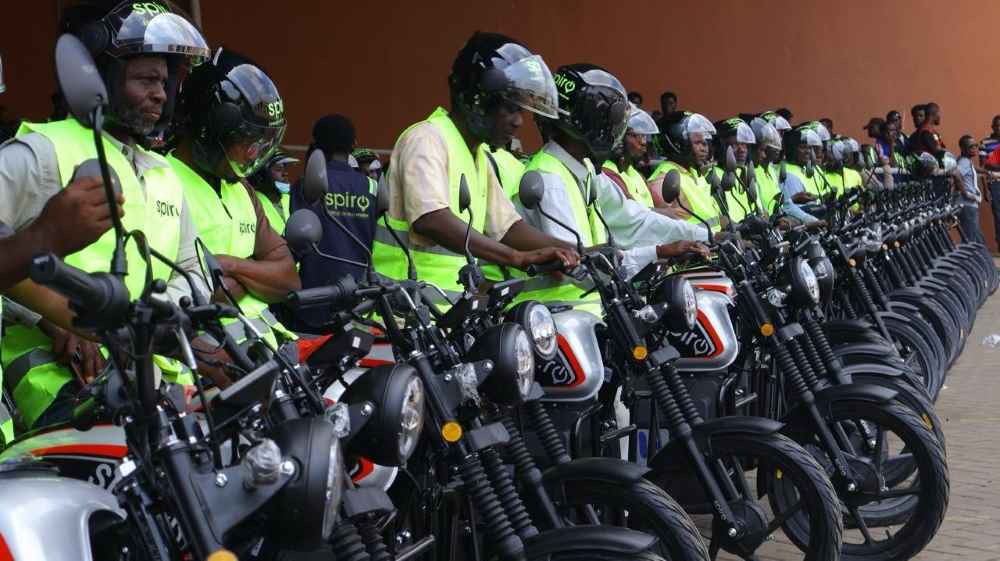
Spiro (www.Spironet.com), Africa’s largest electric mobility company, is expanding its footprint in Ghana with the introduction of the Ekon 450 M1 V3 electric motorcycle and its battery-swapping solution. Combining electric two-wheelers with access to charged batteries, Spiro aims to make everyday transport more affordable and practical for riders while supporting Ghana’s transition towards sustainable mobility.

For commercial riders and delivery fleets, fuel expenses and time spent off the road directly affect daily earnings. Spiro’s integrated offering addresses both challenges: riders can exchange a depleted battery for a charged one at a Spiro battery-swapping station in just two minutes, while potentially saving up to USD 2 per day in operating costs compared with conventional petrol-powered motorcycles.

Ghana represents a major opportunity for electric mobility, with a rapidly growing two-wheeler market and increasing demand from commercial riders and delivery fleets

Designed to meet the everyday mobility needs of African riders, the Ekon 450 M1 V3 offers an alternative to petrol-powered motorcycles. Supported by Spiro’s battery-swapping technology, it allows riders to get back on the road without waiting for their motorcycle to recharge.

Auroasish Choudhuri Managing Director Central and West Africa, commented: “Our entry into Ghana is an important step in strengthening Spiro’s presence in West Africa. Our focus is on building a local ecosystem that riders can rely on, combining electric motorcycles with convenient access to battery swapping. By working closely with local partners and listening to riders’ needs, we aim to support the long-term adoption of electric mobility in Ghana.”

Kaushik Burman, CEO Mobility of Spiro said: “Ghana represents a major opportunity for electric mobility, with a rapidly growing two-wheeler market and increasing demand from commercial riders and delivery fleets. By bringing the Ekon 450 M1 V3 together with our battery-swapping solution, we are addressing two key barriers to adoption: operating costs and access to charging infrastructure. Our ambition is to build a strong foundation for electric mobility to scale across Ghana.”

To support its rollout, Spiro is engaging with prospective customers through test rides, product demonstrations and live demonstrations of its battery-swapping technology across Greater Accra. These activities give riders the opportunity to experience the Ekon 450 M1 V3 and understand how battery swapping can fit into their daily routines.

Mr Maxwell Dodd, Managing Director of Spiro Ghana, said: “For riders in Ghana, the value of electric mobility lies in what it can deliver every day: lower operating costs, less downtime and more time on the road. Through the Ekon 450 M1 V3 and our battery-swapping solution, we want to make those benefits accessible and support riders as they make the transition to electric motorcycles.”

Ghana forms part of Spiro’s wider expansion across Africa. Building on its recent USD 270 million equity funding round and an additional USD 18 million in debt financing from the Africa Go Green Fund, the company is scaling its electric mobility ecosystem with the ambition of establishing a presence in 20 African markets. Spiro is also preparing to enter new countries, including Ethiopia, Malawi, Mali and the Democratic Republic of Congo.

Distributed by APO Group on behalf of Spiro.


Continue Reading

Trending