Connect with us
Anglostratits

Business

Radisson Hotel Group opens its 14th South African hotel in Durban
Published

on

Radisson Hotel

This opening brings the Group’s portfolio in one of its key African markets, South Africa, to fourteen hotels in operation and two under development

DURBAN, South Africa, June 7, 2022/APO Group/ — 

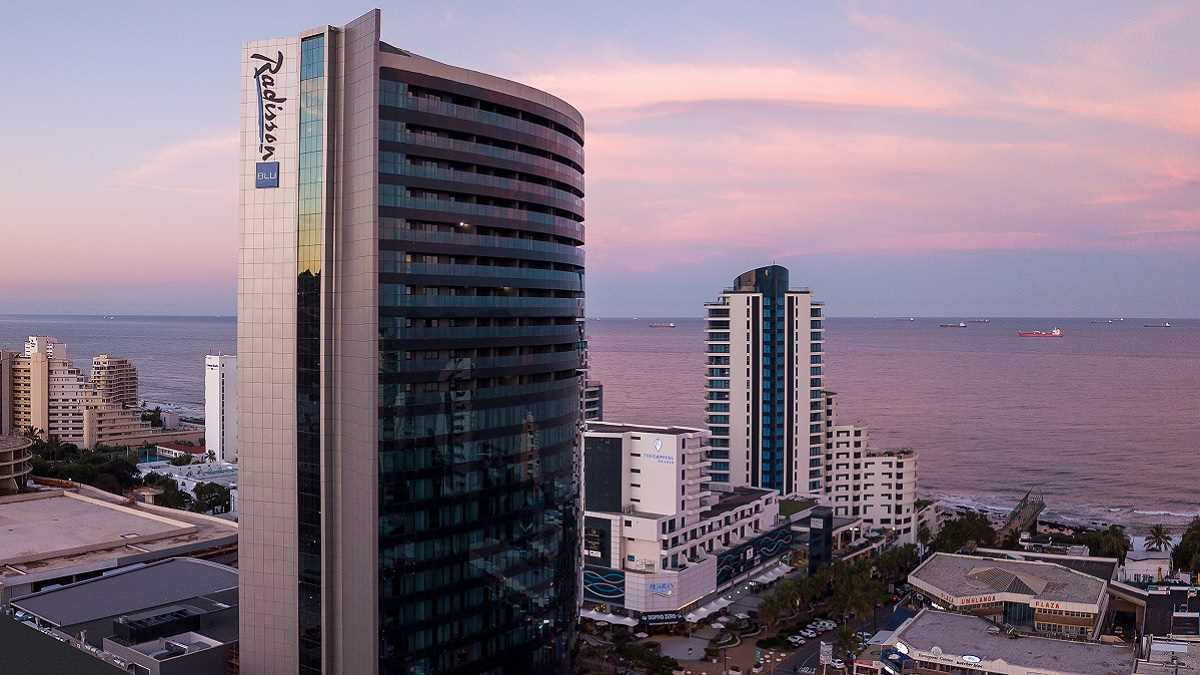
Radisson Hotel Group (www.RadissonHotels.com) is proud to announce its entry into its fourth South African city, Durban, with the opening of Radisson Blu Hotel, Durban Umhlanga. This opening brings the Group’s portfolio in one of its key African markets, South Africa, to fourteen hotels in operation and two under development.

Radisson Blu Hotel, Durban Umhlanga (https://bit.ly/3NWylwq) is located on the eastern coast of South Africa’s vibrant city of Durban, in its most affluent residential and entertainment hub, Umhlanga. The hotel has easy access to several popular beaches and is within walking distance of the three-kilometer Umhlanga Beach Promenade. Durban has become a must-visit for local and international travelers because of its vast and enchanting landscapes and ideal year-round weather. Radisson Blu Hotel, Durban Umhlanga is close to the Durban ICC with direct access to the luxury Oceans Mall, which boasts a variety of international brands and is just 5 minutes from King Shaka International Airport.
Radisson Hotel Group opens its 14th South African hotel in Durban

Tim Cordon, Area Senior Vice President, Middle East & Africa at Radisson Hotel Group, says: “We are thrilled to make our debut in the welcoming city of Durban and cement our presence in our fourth South African city. South Africa continues to be a key market for us on the continent and we are proud to celebrate our 14th hotel opening milestone with the entry into Durban as we open a flagship property of this caliber. With its prime location overlooking the ocean adjacent to the exclusive Oceans Mall, this property will enhance Durban’s vibrant offering and we hope that we will be welcomed warmly into the local community.

With its prime location overlooking the ocean adjacent to the exclusive Oceans Mall, this property will enhance Durban’s vibrant offering

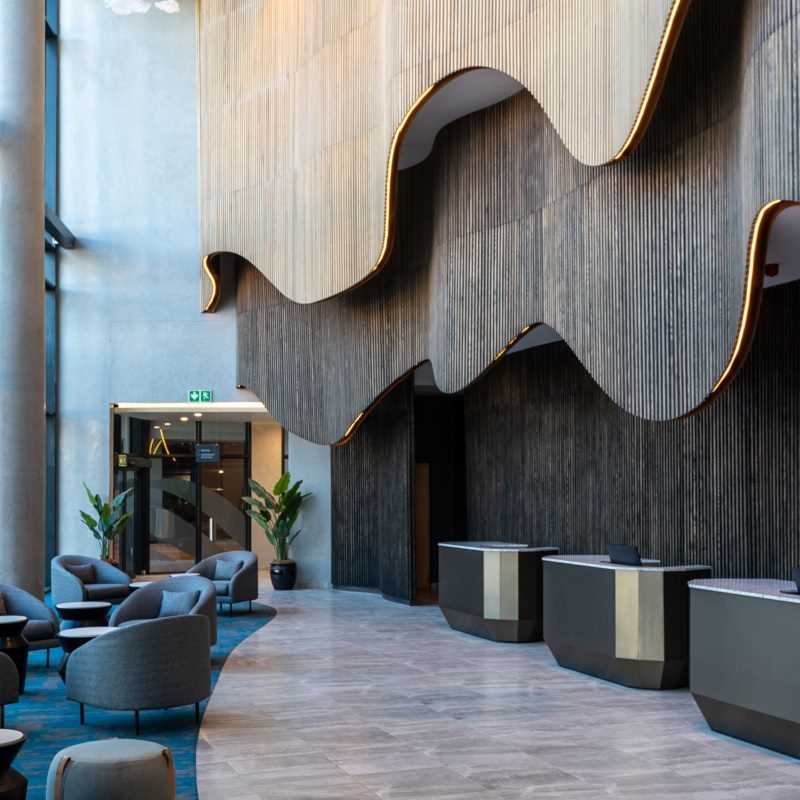
With mesmerizing ocean views and 206 stylish and well-appointed rooms ranging from luxury suites, junior suites, and rooms for business travelers, to accessible rooms and family rooms, this upscale hotel caters to all travelers with a variety of amenities, including an outdoor pool, a kids play area, an executive business lounge, and a fitness center. 

FireLake Grill House & Cocktail Bar on the 6th floor will serve North American styled/inspired open flame cuisine and offer a variety of beers and beverages, master-crafted cocktails, and a curated collection of South African wines. Guests can visit the Coffee Lounge on the ground floor for freshly brewed coffee and homemade baguettes from the in-house bakery. The Pool Bar is the perfect location to relax, unwind, and soak up the sun while tasting a selection of light snacks and refreshing cold drinks and enjoying the spectacular views of the Indian Ocean.

Marius Earle, General Manager, Radisson Blu Hotel, Durban Umhlanga, says: “It is an honor to open and lead this flagship hotel. There is great excitement and anticipation in the city about this world-class property and I am delighted to welcome guests to experience our personalized service and stylish spaces, as we aim to make every moment matter for our guests and showcase Durban hospitality at its best.”

Radisson Hotel Group opens its 14th South African hotel in Durban 

The meetings and events area comprises eight elegant meeting and conference venues fitted with state-of-the-art equipment, including video conferencing capabilities and free high-speed Wi-Fi. The ballroom seats 600 guests in cinema style and leads into a foyer with access to an outdoor terrace which can cater up to 340 guests, perfect for any big or small occasion.

With the health and safety of guests and team members as its top priority, Radisson Blu Hotel, Durban Umhlanga is implementing the Radisson Hotels Safety Protocol (https://bit.ly/3mloOTL) program. The in-depth cleanliness and disinfection protocols were developed in partnership with SGS, the world’s leading inspection, verification, testing and certification company, and are designed to ensure guest safety and peace of mind from check-in to check-out. 

Distributed by APO Group on behalf of Radisson Hotel Group.

Business

Hainan FTP marks 6-month milestone of special customs operations, signs deals during Hong Kong visit

Published

on

Hong Kong

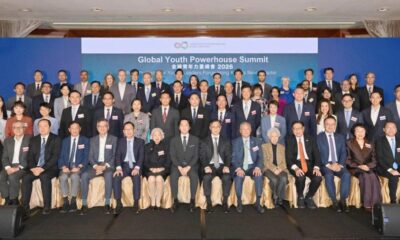
HONG KONG SAR – Media OutReach Newswire – 29 June 2026 – As the Hainan Free Trade Port (FTP) marked the six-month milestone since the launch of its full special customs operations, a Hainan provincial delegation wrapped up a three-day visit to Hong Kong. During the visit, the delegation signed deepened cooperation agreements with several major local chambers of commerce and promoted the latest policies introduced since the island-wide special customs operations took effect.

According to data released by Hainan Province during the visit, Hainan’s foreign trade has surged since the launch of special customs operations. As of June 17, the province’s total goods imports and exports reached RMB 173.98 billion (approximately US$24 billion), up 54.6% year on year. Imports of zero-tariff goods hit RMB 2.645 billion, a 120% jump that generated tariff savings of RMB 440 million. A total of 172,100 new market entities were registered—a 61% increase—including 1,240 foreign-invested enterprises. Zero-tariff items now account for 74% of all tariff lines, benefiting more than 12,000 market entities.

During the Hong Kong visit, China Council for the Promotion of International Trade Hainan Provincial Committee (CCPIT Hainan) signed separate deepened cooperation MOUs with the Chinese General Chamber of Commerce, Hong Kong and the Hong Kong General Chamber of Commerce. Under the MOUs, the parties will establish a regular liaison mechanism for the periodic exchange of economic and trade information, and will promote collaboration in areas including professional services, green finance, the digital economy, supply chain management, and cultural tourism. Mutual enterprise service desks will be set up to provide consulting services regarding policies and projects. The parties will leverage their complementary strengths to help Chinese mainland enterprises access overseas markets via Hong Kong, while facilitating Hong Kong companies’ entry into the Chinese mainland through Hainan.

The delegation also held talks with the British Chamber of Commerce in Hong Kong and the American Chamber of Commerce in Hong Kong, exploring ways for British and American businesses to leverage Hainan’s value-added processing tariff exemptions and multifunctional free trade accounts to position themselves in regional supply chains and cross-border investment and financing. HSBC, De Beers, and other British firms are already active in Hainan, and the UK served as the Guest of Honor country at the 2025 China International Consumer Products Expo.

According to industry analysts, amid the shifting international trade landscape, Hainan is leveraging Hong Kong’s “super-connector” role to accelerate its integration with global capital and business networks, while simultaneously offering the Hong Kong business community a policy testing ground for entering the Chinese mainland market.

Continue Reading

Business

Africa’s Grid Constraints Come into Focus as Regional Markets Push Toward Integration

Published

on

Africa

Regional power pools are advancing and renewable pipelines are growing, but the regulatory and financial architecture needed to connect them remains the continent’s most critical infrastructure gap – an issue central to the Power Africa Today conference at AEW 2026

CAPE TOWN, South Africa, June 25, 2026/APO Group/ –Africa’s electricity demand is projected to nearly double to 2,291 TWh by 2050, requiring an estimated $30 billion in transmission and grid infrastructure investment to unlock and integrate new generation capacity. Yet across the continent, grid systems are struggling to keep pace with rapidly expanding supply pipelines and rising demand.

In Nigeria, repeated nationwide grid collapses as recently as February 2026 underscore the fragility of aging transmission infrastructure. In East Africa, tower failures along the 428 km Loiyangalani-Suswa line temporarily stranded output from Lake Turkana Wind Power – Africa’s largest wind installation. Meanwhile, demand growth pressures are accelerating across North Africa, where electricity consumption is expected to rise by around 50% by 2035, driven by urbanization, desalination projects, and climate-related temperature increases.

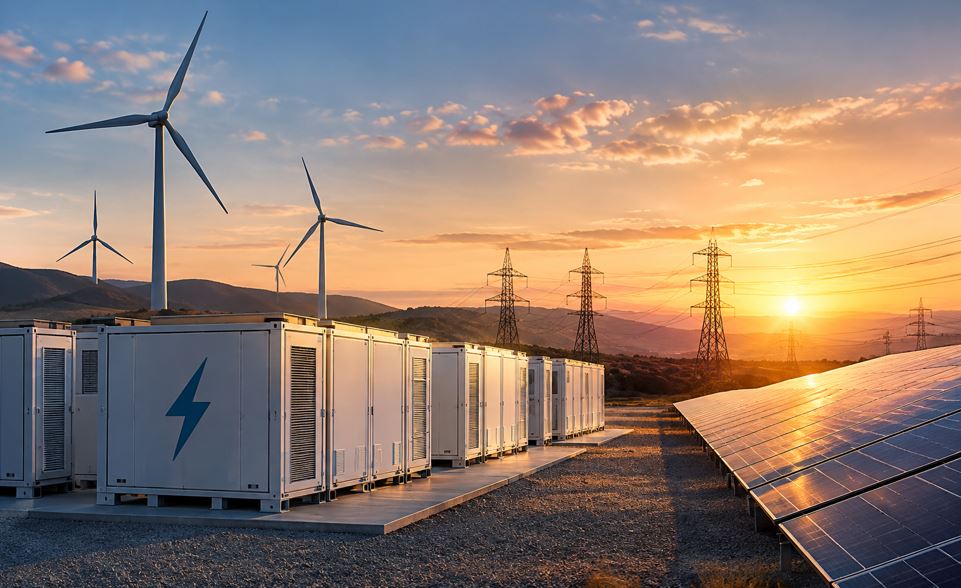
Despite these constraints, generation investment continues to accelerate across Africa, particularly in renewables, gas-to-power and hybrid systems. However, without equivalent investment in transmission and interconnection, much of this new capacity risks being underutilized or stranded. This growing imbalance between generation and grid capacity is driving a sharper focus on system-wide planning and regional market design – issues that will be central to the newly launched Power Africa Today conference at African Energy Week 2026. The platform will bring together policymakers, utilities, investors and developers to explore how regional interconnection, cross-border trading frameworks and financing structures can better align generation growth with grid expansion.

Power Markets Experiment with Reform

Alongside infrastructure challenges, Africa’s electricity sector is undergoing gradual – but uneven – market reform. Most countries still operate vertically integrated systems dominated by state utilities, but a growing number are introducing competitive frameworks to attract private capital and improve efficiency.

Zimbabwe opened its electricity market to full private participation across generation, transmission and distribution in 2025, targeting $9 billion in new investment. South Africa is advancing one of the continent’s most ambitious grid expansion programs, with plans for 14,500 km of new transmission lines and 133,000 MVA of transformer capacity by 2034, alongside mechanisms designed to crowd in private financing. Kenya, meanwhile, has introduced open access regulations enabling independent power producers to wheel electricity directly to multiple off-takers, reshaping how generation assets interface with the grid.

Interconnected electricity markets are the foundation of Africa’s industrial future

Regional Integration Remains Fragmented

Efforts to connect Africa’s fragmented power systems are progressing, though at different speeds across regions. In Southern Africa, the World Bank’s RETRADE SAPP program, approved in 2025, is deploying $12 million to strengthen renewable integration and transmission capacity across 12 member states. In East Africa, the Ethiopia–Kenya–Tanzania Electricity Highway is now in trial operations at up to 2,000 MW, marking a significant step toward a more interconnected regional grid.

West Africa is also moving toward deeper integration, with permanent synchronization of the West Africa Power Pool expected in 2026. Analysts, including the African Finance Corporation, argue that such synchronization is critical to unlocking large-scale hydropower potential and industrial demand across the region. Longer term, full synchronization between the Eastern and Southern African power pools – targeted for the end of 2026 – could create one of the world’s largest cross-border electricity trading corridors.

Building Bankable Financial Architectures

While interconnection is advancing, infrastructure alone is not enough to create investable electricity markets. Investors consistently cite the lack of standardized offtake structures, creditworthy counterparties, and cross-border payment guarantees as key barriers to scaling capital deployment.

New models are emerging to address these constraints. Africa GreenCo, operating across Zambia, Namibia and South Africa, is helping to aggregate independent power producers under a single creditworthy intermediary, standardizing power purchase agreements and reducing counterparty risk. At a broader level, AUDA-NEPAD estimates that Africa requires around $30 billion in additional investment to complete priority transmission corridors and establish three fully interconnected regional trading blocs by 2030.

“Interconnected electricity markets are the foundation of Africa’s industrial future,” said NJ Ayuk, Executive Chairman of the African Energy Chamber. “The question at Africa Energy Week is not whether integration is possible – the evidence is already there. The question is which regulatory frameworks and financial structures will get projects to financial close, and which markets will be ready when capital is looking to move.”

The Power Africa Today conference will run alongside AEW 2026, taking place October 12–16 in Cape Town, and will focus on the regulatory, financial and infrastructural architecture needed to build interconnected electricity markets capable of attracting institutional capital and delivering reliable, cross-border power at scale.

Distributed by APO Group on behalf of African Energy Chamber.

Continue Reading

Business

African Development Bank Group and La Francophonie Sign Partnership Agreement to Promote Youth Employment in Francophone Africa

Published

on

Remove term: African Development Bank African Development Bank

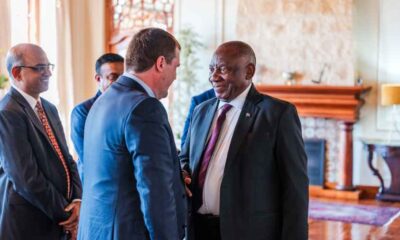
The agreement was signed during a meeting between the Secretary General of La Francophonie, Louise Mushikiwabo, and African Development Bank Group President, Dr Sidi Ould Tah in Paris, France

PARIS, France, June 25, 2026/APO Group/ –The African Development Bank Group (www.AfDB.org) and The International Organization of La Francophonie (OIF) on Wednesday entered a strategic partnership to strengthen digital skills, employability, and entrepreneurship of young people and women in five African countries: Benin, Cameroon, Guinea, the Democratic Republic of the Congo and Madagascar.


The agreement was signed during a meeting between the Secretary General of La Francophonie, Louise Mushikiwabo, and African Development Bank Group President, Dr Sidi Ould Tah in Paris, France. The agreement will address a major challenge faced by countries in the Francophone world and across Africa: providing young people with access to opportunities offered by the digital economy and fostering the emergence of a new generation of entrepreneurs.

The partnership calls for the implementation of training programs in digital professions and entrepreneurship, in fields such as web and mobile development, cybersecurity, artificial intelligence, and data analysis. Participants will also receive guidance toward employment and self-employment, as well as support for innovation and business creation, notably through training camps, prototyping activities, and partnerships with incubators and accelerators.

The African Development Bank Group and OIF will also work with national authorities in these five countries and training institutions to sustainably strengthen local capacities and promote ownership of the programs by national stakeholders. An initial pilot phase, lasting 12 to 24 months, will be rolled out in the five partner countries, followed by a gradual expansion to other member states depending on the results achieved.

The African Development Bank Group is pursuing a bold agenda based on “Four Cardinal Points” developed by Dr Ould Tah, the third of which is ‘Turning Demographics into a Dividend.’ This is about strategically converting Africa’s rapidly growing and youthful population into a decisive engine of inclusive growth, productivity, and innovation through large-scale investment in human capital—particularly youth and women.


It sees Africa’s growing young population not as a risk, but as a major asset. With the right policies and investments, this potential can create jobs, help small businesses grow, bring more informal businesses into the formal economy, and equip young people with the skills needed for the future. By investing more in education, science and technology, vocational training, entrepreneurship, finance, and digital tools, Africa can help its people drive economic transformation, stay competitive, and build lasting, resilient growth.

The OIF said the agreement marked the first concrete step in its initiative to mobilize innovative and additional funding for its most impactful projects.

Distributed by APO Group on behalf of African Development Bank Group (AfDB).

Continue Reading

Trending