SHENZHEN, CHINA – Media OutReach Newswire – 22 October 2026 – Leading global smart device brand OPPO today announced the global launch of its latest flagship smartphones, Find X10 and Find X10 Pro Max. Built to be a “Hasselblad True-to-Life Camera,” Find X10 Series brings major advances in camera hardware and computational photography to deliver a more true-to-life imaging experience. Beyond imaging, the series introduces refined designs, upgraded displays, larger batteries, flagship performance and the new ColorOS 17.
“Find X Series has always been driven by our commitment to push mobile imaging forward and help people effortlessly capture the beauty of life,” said Pete Lau, SVP and Chief Product Officer at OPPO. “With Find X10 Series, we are making one of our biggest leaps yet in mobile imaging. From an industry-first Triple 200MP Camera System on Find X10 Pro Max to the next-generation LUMO True Image Engine, Find X10 Series is built to reproduce the world as you see it and keep every shot true to the moment.”
Industry-First Triple 200MP Camera System
Find X10 Series introduces a new-generation camera system co-developed with Hasselblad. Find X10 features a Dual 200MP Camera System, while Find X10 Pro Max pushes further with a Triple 200MP Camera System, bringing 200MP resolution across all three rear cameras.
On Find X10 Pro Max, the Hasselblad 200MP Ultra-Wide Camera features a large 1/1.56-inch sensor that captures twice as much light as the previous generation, paired with a 124° ultra-wide autofocus lens. The Hasselblad 200MP Ultra HDR Main Camera uses the new 1/1.28-inch ISOCELL HPC sensor, jointly developed by OPPO and Samsung and featuring DeepPix technology for breakthrough HDR performance. Completing the system, the Hasselblad 200MP Telephoto Camera combines an ultra-fast f/2.1 aperture with a 10cm minimum focusing distance, enabling cleaner low-light telephoto shots while also doubling as a telemacro camera.
Making this high-resolution hardware more practical for everyday use, Find X10 Series introduces industry-first 26MP default capture from ultra-wide through 9.9x. This delivers substantially more detail than conventional 12MP capture while keeping file sizes manageable. For maximum resolution, users can switch to Hasselblad Hi-Res Mode to capture 50MP or 200MP images on supported cameras.
To reach even further, the OPPO Hasselblad Teleconverter extends the capabilities of the 200MP telephoto camera on both Find X10 and Find X10 Pro Max. With 3.28x optical magnification, it opens up new possibilities for capturing distant subjects, from concerts and cityscapes to wildlife.
LUMO True Image Engine: True-to-Life Imaging
Building on its breakthrough camera hardware, Find X10 Series debuts OPPO’s next-generation computational photography solution, LUMO True Image Engine. By combining OPPO’s latest imaging expertise with a more natural approach to image processing, LUMO True Image Engine is designed to preserve true-to-life color, tone and detail, helping photos stay faithful to the original scene.
Accurately reproducing color can be especially challenging under complex or mixed lighting. Find X10 Series features a New-Generation True Color Camera to capture richer multispectral color information from the surrounding environment. With this additional data, LUMO True Image Engine can reproduce colors more accurately across different lighting conditions, from subtle landscape tones to natural-looking skin tones.
For tonal rendering, LUMO True Image Engine brings the distinctive tonal approach of Hasselblad Master Mode into the default Photo mode. Rather than aggressively brightening every part of an image, it preserves the natural relationship between light and shadow, helping retain depth and atmosphere in challenging scenes such as backlit portraits.
LUMO True Image Engine also takes a more restrained approach to detail processing. By reducing excessive sharpening, noise reduction and AI-generated detail, it preserves more of the genuine texture and optical detail captured by the camera.
Combining LUMO True Image Engine with the 200MP camera system, which captures richer optical information at the source, Find X10 Series delivers images that stay true not only to the scene itself, but to the richness of the moment as it was experienced.
Professional Video Across Every Focal Length
Find X10 Series brings major upgrades to video. Find X10 supports 4K 60fps recording across all rear cameras, with its 200MP main and telephoto cameras additionally supporting 4K 120fps and 8K 30fps. Find X10 Pro Max takes this further, with all three 200MP rear cameras supporting 4K 60fps, 4K 120fps and 8K 30fps, delivering consistently high-quality video across focal lengths.
On Find X10 Pro Max, DeepPix technology on the 200MP main camera enables up to 17 stops of dynamic range, preserving more information across highlights and shadows in demanding scenes. Whether shooting a backlit portrait, illuminated signs in a city nightscape or fireworks against a dark sky, creators can retain more detail across both the brightest and darkest parts of the frame.
For more advanced production workflows, Find X10 Series supports Dolby Vision, ACES-certified O-Log2 and, for the first time on an OPPO smartphone, Open Gate Capture. Open Gate uses the full imaging area of the sensor to capture more of the original frame, giving creators greater flexibility to crop and reframe the same footage for different aspect ratios during post-production.
OPPO has also worked closely with Blackmagic Design to bring key Find X10 Series capabilities directly into Blackmagic Camera[1], including Dolby Vision, O-Log2 and Open Gate Capture, giving creators greater flexibility within a familiar professional shooting workflow.
For Find X10 Pro Max, the dedicated Tilta Khronos Creator Kit further extends its capabilities for professional shooting. The kit includes an additional handle, a 67mm filter adapter, an adapter for the OPPO Hasselblad Teleconverter, and an active cooling fan to help manage device temperature during extended video recording. Together, these accessories better equip creators for longer and more demanding shoots.
OPPO has also worked closely with Meta to optimize the video-sharing experience on Instagram. With Find X10 Series, users can now enjoy near-lossless video quality from capture to share, helping preserve the detail, color and overall look of the original footage when shared on Instagram.
Refined Design with BT.2020 Displays
Find X10 Series carries forward the Find X Series’ clean and sophisticated design language. Its all-new Borderless Design features One-Piece Sculpted Glass that flows seamlessly into the camera module, softening the visual impact of the camera bump for a clean, cohesive look.
Find X10 will be available in Glacier Blue, Glow Coral and Mist Grey, with Find X10 Pro Max offered in Titanium Grey and Luna White. Inspired by classic cameras, Luna White combines a silver LUMO Camera Island, a signature matte orange accent ring on the camera module and a distinctive two-tone finish.
Find X10 Series also offers comprehensive durability, with IP66, IP68 and IP69 water and dust resistance[2], alongside SGS Five-Star Drop Resistance Certification.
Both models feature flagship displays with ultra-thin symmetrical bezels. Find X10 combines a compact 6.59-inch display with an easy-to-hold form, while Find X10 Pro Max features a larger 6.78-inch display. Both support up to a 144Hz LTPO adaptive refresh rate and 3,600 nits peak brightness, with Dolby Vision certification. For more comfortable viewing in low light, the displays can dim to just 1 nit and support up to 3,840Hz high-frequency PWM dimming to help reduce visible flicker.
Thanks to a new generation of OLED light-emitting materials, Find X10 and Find X10 Pro Max are also among the first smartphones to support the BT.2020 color gamut. Compared with DCI-P3, BT.2020 covers around 40% more color space and is widely used in professional film production. When displaying HDR content, Find X10 Series can reproduce a broader range of colors, particularly in scenes with bright, saturated elements such as fireworks and vivid natural landscapes.
Massive Battery, Flagship Performance
Both Find X10 and Find X10 Pro Max feature up to an 8,000mAh OPPO Silicon-Carbon Battery[3], delivering a substantial upgrade in battery life. Whether capturing photos, recording video, gaming or simply getting through a busy day, the larger battery gives users greater confidence to keep going without constantly worrying about power.
Both models support 80W SUPERVOOC™ wired charging and 50W AIRVOOC™ wireless charging, enabling fast and convenient top-ups whenever needed.
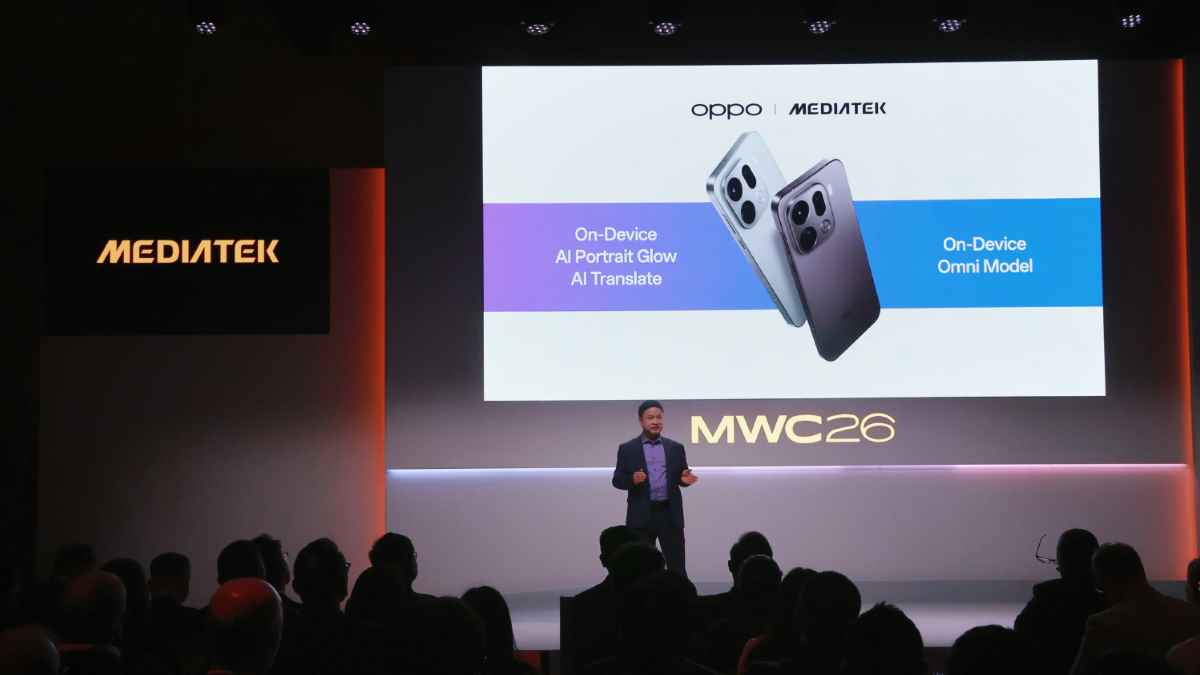
Find X10 is powered by the 3nm MediaTek Dimensity 9600M. Find X10 Pro Max steps up to the flagship 2nm MediaTek Dimensity 9600 Pro. Both are paired with advanced vapor chamber cooling to help sustain performance under demanding workloads. The result is fast, sustained performance across imaging, AI, gaming and everyday multitasking.
ColorOS 17: Silky Smooth. Flow with AI
Find X10 Series debuts ColorOS 17, delivering a new level of smoothness alongside more intelligent, system-level AI capabilities.
The new Living Flow Design makes interactions feel more natural, continuous and responsive across the system. Luminous Effect adds softer visuals and greater depth, Fluid Motion enables interface elements to move and transform seamlessly, while Flexible Feedback makes controls respond more naturally to touch.
Powering this ultra-smooth experience, the Luminous Rendering Engine improves rendering efficiency, while the Laminar Flow Engine intelligently coordinates system resources to maintain fast and responsive performance. Compared with ColorOS 16, app launch stability improves by 55%, Gallery thumbnails load up to 50% faster on first launch, and ColorOS 17 can keep over 25% more apps running in the background for smoother multitasking[4].
ColorOS 17 also brings more capable system-level AI experiences. AI Mind Pilot with Agent Mode allows users to ask AI to work directly with photos and files stored on the device, search across information and coordinate multiple steps to complete more complex tasks, from organizing files and planning trips to creating presentations and webpages. Through OPPO’s collaboration with Manus, AI Mind Pilot with Agent Mode combines Manus’ agentic capabilities with ColorOS 17’s system-level integration.
AI Photo Agent makes advanced photo editing more intuitive while staying true to the natural look of the original scene. It can analyze a photo and recommend suitable adjustments based on the scene and subject, apply targeted edits through natural-language instructions, or use Style Match to understand the color palette, tone and overall mood of a reference image before applying a similar look to the user’s own photo[5].
Privacy and security remain at the core of ColorOS 17. AI Call Guard uses on-device AI to detect emerging fraud risks such as synthetic voices and AI face swaps during calls[6]. OPPO’s Private Computing Cloud protects cloud-based AI processing with end-to-end encryption and new post-quantum security capabilities.
OPPO Find X10 and Find X10 Pro Max Availability
OPPO Find X10 and Find X10 Pro Max will be available globally beginning in late October. The devices will be offered through official OPPO stores, authorized retailers and partner carriers across global markets. For detailed information about pre-orders and launch promotions, visit oppo.com/global or follow OPPO’s official social media channels.
[1] The version of Blackmagic Camera optimized in collaboration with OPPO is scheduled to be available in November.
[2] This product is water-resistant and dust-resistant under normal usage conditions. Under controlled laboratory conditions, it has been tested to achieve IP66, IP68, and IP69 ratings in accordance with GB/T 4208-2017 (China) / IEC 60529-2013 (International) standards.
IP66 test conditions: (i) nozzle inner diameter: 12.5 mm; (ii) water flow: (100±5) L/min; (iii) water pressure: adjusted per specified flow; (iv) main water flow center: circular area of approx. 120 mm diameter at 2.5 m from nozzle; (v) nozzle-to-enclosure distance: 2.5–3 m; (vi) test duration: 3 minutes; (vii) water temperature difference from sample ≤ 5K.
IP68 test conditions: (i) still fresh water, depth 1.5 m; (ii) test duration: 30 minutes; (iii) water temperature difference from device ≤ 5 °C.
IP69 test conditions: (i) turntable speed: (5±1) r/min; (ii) nozzle angles: 0°, 30°, 60°, 90°; (iii) flow rate: (15±1) L/min; (iv) water temperature: (80±5) °C; (v) test duration: 30 seconds per position; (vi) device placement: horizontal, screen facing upward.
Do not charge the phone while wet. Real-life scenarios differ from laboratory conditions; do not immerse the phone in water or expose it to seawater, beverages, or other liquids. After rain, immersion, or splashing, liquid may block the microphone, earpiece, or speaker, causing abnormal sound performance. Drying naturally after shaking off excess water may restore functionality. Water and dust resistance may decrease due to normal wear and tear.
[3] Battery capacity varies by country and region. In certain markets, Find X10 Series comes with a dual-cell 7,150mAh battery.
[4] Data from OPPO Lab.
[5] AI Photo Agent will roll out gradually across multiple countries. Monthly usage limits apply and vary by country or region. This feature supports static images only.
[6] Available in Indonesia, India and Thailand.


















 Business5 days ago
 Energy4 days ago
 Business4 days ago
 Business5 days ago
 Business4 days ago
 Sports5 days ago
 Business4 days ago
 Business3 days ago