Connect with us
Anglostratits

Business

One Week to Go Until Investors Unite at African Energy Week (AEW): Invest in African Energy 2024

Published

on

African Energy Week

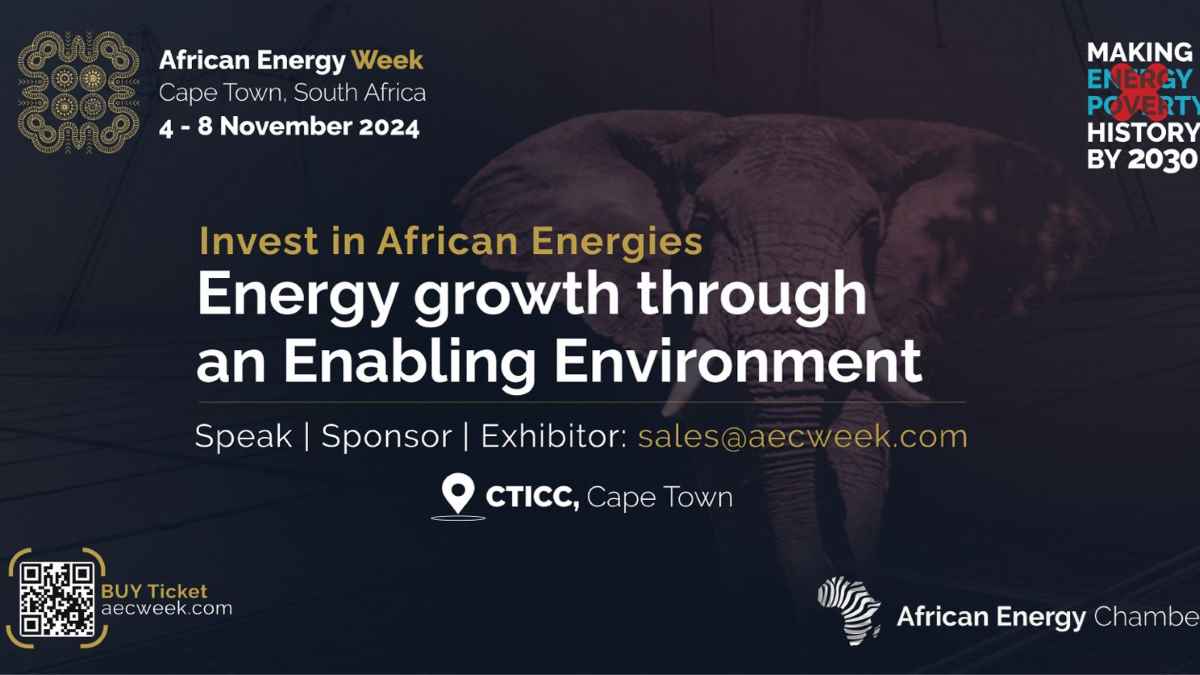
African Energy Week: Invest in African Energy 2024 takes place from November 4-8 in Cape Town, South Africa

CAPE TOWN, South Africa, October 29, 2024/APO Group/ — 

The largest gathering of energy stakeholders on the African continent is gearing up to welcome global and African energy stakeholders for five days of dialogue and deals. African Energy Week (AEW): Invest in African Energy 2024 – dubbed the premier event for the African energy sector – will take place from November 4-8 in Cape Town, South Africa. The foremost platform to sign deals and further the agenda towards making energy poverty history by 2030, the conference will feature seven stages, including five content stages, two technical hubs and a full day of pre-event workshops.

With over 125 million barrels of proven oil reserves, 620 trillion cubic feet of natural gas and abundant opportunities in solar, wind and green hydrogen, Africa has the potential to become a global hub for energy. African energy demand is projected to more than double by 2050, with fossil fuels anticipated to account for up to 60% of the continent’s energy mix by 2040. As such, this year’s conference promises to drive a new wave of investment across the African energy sector, with industry experts and thought-leaders, African governments and national oil companies (NOCs), and energy investors leading discussions on the challenges and opportunities found on the continent.

AEW: Invest in African Energy is the platform of choice for project operators, financiers, technology providers and government, and has emerged as the official place to sign deals in African energy. Visit www.AECWeek.com for more information about this exciting event.

Africa’s energy industry is both the backbone of the continent’s economy and a catalyst for sustainable growth worldwide. As such, the AEW: Invest in African Energy 2024 conference will feature a series of pre-event interactive workshops, providing an opportunity for companies to share in-depth knowledge and exchange ideas with a targeted group of delegates. The workshops, hosted by companies such as Rystad Energy, NCDMB, CLG, Energeo Alliance and S&P Global Commodity Insights, will cover various topics including energizing Africa amid the global energy transition; legislative and regulatory context for promoting investment in exploration; and facilitating investments and mergers and acquisitions across the continent.

AEW 2024 stands at the center of African energy and provides an unparalleled platform to forge partnerships, share knowledge and drive progress in the continent’s energy sector

A high-level opening ceremony will kick off at the Cape Town International Convention Center (CTICC) on the first day of the event. The opening ceremony will feature addresses from Angola’s Minister of Mineral Resources and Petroleum Diamantino Azevedo and South Africa’s Minister of Electricity and Energy Kgosientsho Ramokgopa, and discussions with the likes of Dr. Omar Farouk, Secretary General of the African Petroleum Producers’ Organization and Chairman and CEO of upstream oil company Kosmos Energy Andy Inglis. The AEW: Invest in African Energy 2024 opening will kick off a week of intense dialogue on the future of the African energy industry. The opening will also feature a number of panel discussions focusing on the vital role Africa plays in addressing global energy security, as well as keynote addresses from the heads of some of the largest energy companies in the world.

Representing the entire energy value chain from oil and gas to renewable energy to power and infrastructure, AEW: Invest in African Energy 2024 will feature a massive slate of regional ministers with the aim of unpacking the continent’s strategies to make energy poverty history by 2030. Ministers from Libya and Algeria are poised to showcase North Africa’s ambitious production targets while aiming to plug Europe’s energy gap and enhance domestic energy access. Southern Africa’s ripe opportunities in energy and mining will be put on display by ministers from Mozambique, Angola, South Africa, Zambia and Namibia while West African ministers from the MSGBC region, Nigeria, Ghana and Burkina Faso will provide updates on ongoing projects. With major producers such as Equatorial Guinea, Gabon and the Republic of the Congo (ROC) inviting investors to support diversification efforts in production and refining, regional ministers from Central Africa will share insight into available opportunities in oil and gas, mining and infrastructure. Meanwhile, as a frontier market, East Africa is incentivizing exploration in both on- and offshore basins while driving infrastructure and field development projects forward and will be represented by energy and mining ministers from Ethiopia, Uganda, and South Sudan.

Africa is accelerating the pace of upstream projects with the aim of boosting production and intra-African petroleum distribution. Across both mature and emerging hydrocarbon markets, investment opportunities continue to emerge, and as such, AEW: Invest in African Energy 2024 will feature a strong lineup of VIP speakers from energy supermajors Eni, bp, Chevron and TotalEnergies. The event will also feature representatives from some of the continent’s most important energy players including Azule Energy, ReconAfrica, Etu Energias, Africa Oil Corp., Wood Mackenzie and Adarco Energy, among many more. The oil industries of African countries will be represented by NOCs from Angola, Namibia, South Africa, Tanzania, Uganda, among others.

With two technical hubs on the exhibition floor of the CTICC, the conference serves as a prime platform for companies to provide presentations on various industry-leading technical themes. The AEW: Invest in African Energy 2024 technical track features a dedicated stage for asset owners, engineers and technology innovators to present projects, provide deep insights into cutting-edge solutions, and share best practices to foster knowledge. Attendees will gain valuable insights into the future of energy and learn about ground-breaking projects while discovering new opportunities for collaboration and investment. An exclusive exhibition-only pass grants delegates access to both the innovative exhibition floor and the technical track.

Rounding off AEW: Invest in African Energy 2024’s strong program, a series of technical excursions and site visits across Cape Town offer participants the unique opportunity to gain insight into ongoing projects and developments in South Africa. A guided tour of the Hydrogen Project at the University of the Western Cape will focus on industry technology and development. The tour will also take delegates to the South African Renewable Energy Technology Center at the Cape Peninsula University of Technology, which stands as the country’s inaugural sustainable energy development technology facility. The excursion will feature a tour of the Atlantis Special Economic Zone, which stands as a promising landmark in Africa’s energy landscape while showcasing advancements in sustainable energy solutions, economic development and innovation. Rounding off the site visits, the tour will also take participants to the Eskom Palmiet Power Station, a hydroelectric pumped storage facility that plays a key role in stabilizing the national power grid.

“AEW 2024 stands at the center of African energy and provides an unparalleled platform to forge partnerships, share knowledge and drive progress in the continent’s energy sector. It is our collective responsibility to prioritize energy poverty alleviation and sustainable development, ensuring a brighter future for all Africans. We look very much forward to kicking off this exciting event and welcoming hundreds of delegates from all over the world to drive Africa’s energy needs,” states NJ Ayuk, Executive Chairman of the African Energy Chamber.

During the AEW: Invest in African Energy 2024 conference, delegates will be exposed to project updates, industry highlights, investment opportunities and strategies that address the continent’s goals for eradicating energy poverty and promoting environmental sustainability. With one week to go, the conference is already stacking up to become the foremost energy event of its kind once again on the African continent.

Distributed by APO Group on behalf of African Energy Chamber.

Business

South Sudan’s Finance Ministry, Stanbic Bank, Trade and Development Bank (TDB) and Capium Partners Headline Investment Dialogue at South Sudan Oil & Power (SSOP) 2026

Published

on

SSOP

Senior representatives from regional financial institutions and the government will examine project bankability, investment risks and financing opportunities across South Sudan’s energy sector

JUBA, South Sudan, November 21, 2026/APO Group/ –South Sudan’s Ministry of Finance and Planning will join representatives from Stanbic Bank, the Trade and Development Bank (TDB) and Capium Partners at South Sudan Oil & Power (SSOP) 2026 to examine financing solutions for the country’s oil and gas sector. Taking place November 24–25 in Juba, the conference will bring together government officials, commercial banks, development finance institutions and investors to explore opportunities across upstream development, petroleum infrastructure and local energy services.


Held under the theme Resource Renaissance – Energy-Fueled Growth for a New Generation, SSOP 2026 will feature dedicated discussions on project bankability, risk mitigation and financing structures to support South Sudan’s energy investment ambitions.

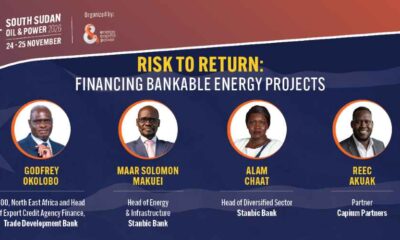
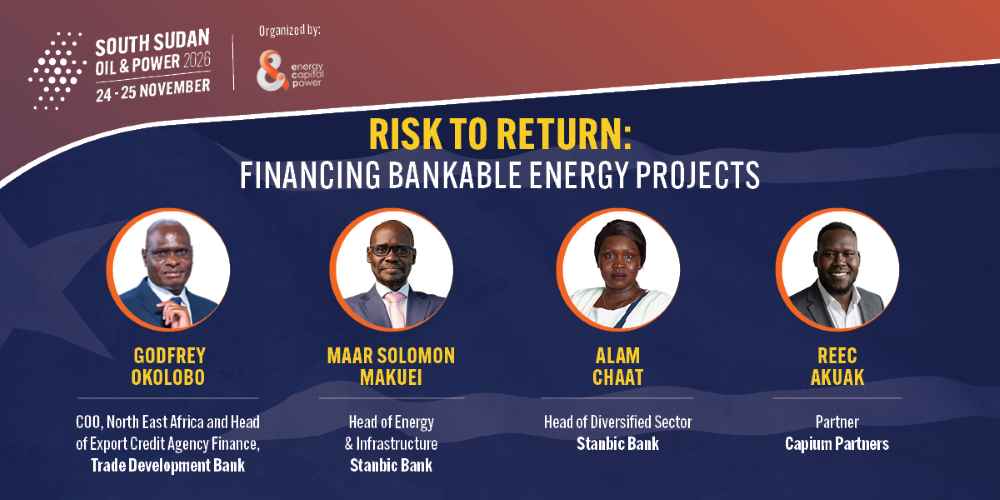
Speakers include Godfrey Okolobo, COO, North East Africa and Head of Export Credit Agency Finance at TDB; Maar Solomon Makuei, Head of Energy & Infrastructure at Stanbic Bank; and Reec Akuak, Partner at Capium Partners at the event. They are scheduled to participation in the Risk to Return: Financing Bankable Energy Projects panel.

Alam Chaat, Head of Diversified Sector at Stanbic Bank, also joins the event and will participate in the Juba Declaration: Building East Africa’s Next Energy & Industrial Frontier session, bringing financial-sector perspectives to discussions on commitments from financing institutions, legal stakeholders and public-sector partners to support South Sudan’s energy and petroleum expansion agenda.

Both discussions are expected to examine how blended financing instruments and partnerships between domestic, regional and international capital providers can accelerate investment across South Sudan’s energy value chain. Speakers are expected to explore financing structures that improve project bankability, mitigate investment risks and expand access to capital for local service providers.

SSOP 2026 comes as South Sudan seeks to maximize production from its existing brownfield assets while attracting investors to greenfield opportunities. With 14 exploration blocks available for investment, the country is targeting an increase in crude production from approximately 174,000 barrels per day (bpd) to 230,000 bpd. Its estimated 3.5 billion barrels of proven oil reserves offer substantial potential for additional upstream development, with much of the resource base yet to be developed.

These opportunities extend beyond exploration and production. As operators expand activities and new oilfield services companies enter the market, demand for working capital, equipment financing, guarantees and trade finance is expected to create additional opportunities for commercial banks and regional financing institutions. Midstream and downstream infrastructure also present investment prospects as South Sudan seeks partners to expand crude storage capacity, develop refining infrastructure and strengthen petroleum logistics.

SSOP 2026 provides a platform for connecting capital providers with government authorities, project developers and emerging investment opportunities. Through high-level discussions, project showcases and exclusive networking sessions, SSOP 2026 will support deal signings and partnership formation aimed at mobilizing investment and driving the next phase of growth in the country’s energy sector.

For more information, visit www.southsudanoilpower.com (www.SouthSudanOilPower.com).

Distributed by APO Group on behalf of Energy Capital & Power.


Continue Reading

Business

Beyond 2030: How Morocco Is Catalysing a New Wave of Hospitality and Real Estate Investment

Published

on

Morocco’s hospitality sector is expanding in line with national targets of over 30 million annual tourists and over 60 000 additional hotel beds by 2030

CASABLANCA, Morocco, November 20, 2026/APO Group/ —

  • Morocco is investing at unprecedented scale in transport infrastructure, hospitality assets and real estate megaprojects ahead of the 2030 FIFA World Cup.
  • Over 300 local and global hospitality, tourism and real estate leaders gather in Casablanca on 26 November for Morocco Showcase Summit, to unpack the opportunities and sustain the momentum for decades to come.


Ahead of co-hosting the 2030 FIFA World Cup, Morocco is posting record public and foreign direct investment. The Finance Ministry set aside a record MAD380 billion ($38bn) for public investment in 2026, while FDI receipts of MAD56bn ($5.6bn) in 2025 were also an all-time high.

Infrastructure due for completion before 2030 include a MAD15bn ($1.5bn) upgrade to Casablanca’s Mohammed V airport terminal (lifting annual capacity from 14 million to 35 million passengers) and a MAD96bn ($9.6bn) rail programme. These come on top of stadium upgrades and the new 115 000-seat Hassan II Stadium in El Mansouria, which includes a three-way commuter railway line connecting to the airport.

The infrastructure being delivered today, from airports to high-speed rail, is permanently changing the economics of Moroccan real estate

“Supported by stable and positive outlooks from global ratings agencies, healthy capital markets, strong FDI inflows and record-breaking tourism numbers, the platforms have been laid for growth well past 2030. Morocco Showcase Summit convenes with this in mind, bringing together the top local and global investors and roleplayers in hospitality, tourism and real estate to jointly harness opportunities for the decades to come,” says API Events Managing Director Murray Anderson.

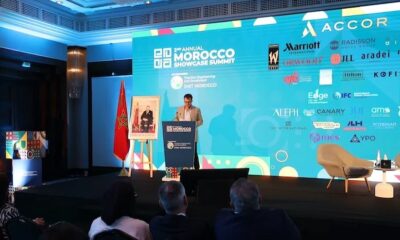
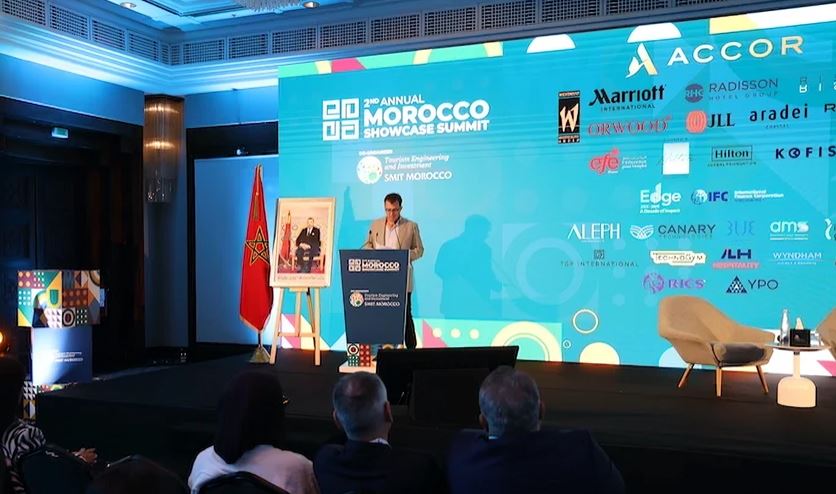
The summit takes place at the Marriott Casablanca Hotel under the theme “Momentum 2030: Catalysing Morocco’s Investment Journey”, in partnership with the Société Marocaine d’Ingénierie Touristique (SMIT) and the Confédération Nationale du Tourisme (CNT).

Driss Fassi Fihri, Co-founder and Managing Partner of independent real estate private equity firm ÆDGE Partners, stressed that the projects and investment inflows for 2030 were a catalyst, not a finish line.

“The infrastructure being delivered today, from airports to high-speed rail, is permanently changing the economics of Moroccan real estate and opens a unique window of opportunity for investors,” said Fassi Fihri.

Scale-up of local operators, international brands and capital markets

Morocco’s hospitality sector is expanding in line with national targets of over 30 million annual tourists and over 60 000 additional hotel beds by 2030, driving rapid scaling of local operators and global brands, both in the spotlight at the summit.

In January 2026, Casablanca-listed hotel operator and summit sponsor RISMA raised MAD450 million ($45 million) to fund a long-term expansion plan to reach 28 hotels by 2030. The raise was massively oversubscribed, reflecting strong institutional interest.

International brands partnering with the summit, including Marriott, Wyndham, Hilton, Accor and IHG, are all targeting Morocco as a key market in their Africa expansion plans, and will discuss opportunities in luxury, midscale and branded residences.

“Morocco continues to be an important growth market for Marriott International, supported by strong tourism momentum and significant investment in the country’s hospitality sector. We see exciting opportunities across a range of segments and look forward to joining owners, investors and industry partners at the Morocco Showcase Summit to discuss the next chapter of growth in the market.” said Shady Hassan, Marriot’s VP | Lodging Development, North Africa

Programme highlights

​Six themes run through the day, with a matchmaking room open in the afternoon to connect real estate and hospitality investors, developers, operators and owners. The programme covers:

  • Foreign capital and local equity. Why stability and delivered infrastructure are drawing international investors.
  • Listings and liquidity. What CSE depth means for developers, and how Gulf, European, diaspora and family office money is moving.
  • Deals and the capital stack. How banks, DFIs and international debt close transactions, equity against debt across asset classes, OPCIs and sale-and-leasebacks.
  • Hotel performance and brands. Occupancy, ADR and RevPAR against global cities, what mega-events do to demand, and luxury, midscale and branded residences.
  • Beyond hotels. Mixed-use viability, leisure and entertainment, boutique and eco-tourism, and design-led destinations.
  • Return on investment after the tournament. And the logistics and financing behind megaprojects.

A pre-cocktail function at Novotel Casablanca City Center on 25 November and a cocktail after the main programme bookend the event.

For more details and to register: https://apo-opa.co/4zRCn1k

Distributed by APO Group on behalf of API Events.


Continue Reading

Business

Trust, talent and accountability define final day of Africa Tech Festival 2026

Published

on

Africa Tech Festival 2026

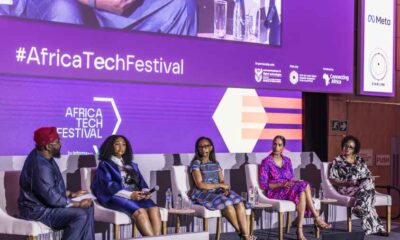
Africa Tech Festival, the continent’s longest-running and most influential technology gathering, concluded its 29th edition at the Cape Town International Convention Centre, welcoming more than 15,000 delegates over the three days

CAPE TOWN, South Africa, November 20, 2026/APO Group/ –AI is opening up opportunities for African businesses to improve performance, develop new revenue streams and equip young people for a changing workplace. This was a central theme as Africa Tech Festival (www.AfricaTechFestival.com) 2026 concluded in Cape Town yesterday, with industry leaders sharing how digitalisation is changing the way companies operate, create jobs and broaden access to digital services.


Providing an enterprise perspective, Frederik Zietsman, Group CEO of Takealot, opened the final day’s headline programme in conversation with Tomiwa Aladekomo, CEO of Big Cabal Media. Their discussion explored the realities of building a profitable e-commerce business in South Africa, including the importance of customer trust and investment in the infrastructure needed to reach consumers. “It starts and ends with trust. Because if you don’t have trust, then ultimately, you fail,” said Zietsman. He described how Takealot has invested in its own delivery infrastructure and developed a network of approximately 20,000 personal shoppers to help consumers in underserved communities access online retail.

Turning to Africa’s role in the AI economy, Hardy Pemhiwa, President and Group CEO of Cassava Technologies, discussed how to make innovation more accessible and help local ideas reach wider markets. “I really would love to see an Africa where innovation is not limited by traditional education,” he said, noting that AI could help overcome language barriers that have historically prevented promising ideas from being commercialised. Martin Manniche, CEO of AXON Networks, considered the role of automation and cloud-native technologies in modernising telecommunications infrastructure to support sophisticated digital services.

As technology changes how businesses operate, it is also changing the skills employers need and the opportunities available to young people. Charles Murito, Regional Director, Government Affairs and Public Policy, Sub-Saharan Africa at Google; Tiara Pathon, AI Skills Director at Microsoft; and Ziyad Cassim, Group CEO of UVU Africa, examined the implications for Africa’s workforce. Murito asked how young people can move from being job seekers to value creators, advocating entrepreneurship and new sources of employment. Pathon challenged conventional approaches to training, saying that “organisations like ours need to stop treating learners as beneficiaries of learning, and see them as participants and creators.” Cassim warned that “the biggest risk we’re seeing right now is young people losing that first opportunity to work,” calling on employers to give young talent opportunities to gain practical experience.

Africa Tech Festival provides a platform for these different perspectives to come together, forging connections and partnerships that will help drive the industry forward

However, the growing use of AI also raises questions about accountability when technology fails. Lawrence Matemba, Chief Policy Analyst and Deputy Director-General in the South African Presidency, and Geoff Okao, Chief Digital Officer and Deputy Director, Digital Impact at UNICEF, examined who should be held accountable when automated decisions cause harm. Matemba argued that organisations providing services must accept responsibility for failures, emphasising that citizens must remain central to the design and delivery of those services. Okao cautioned that “a risk register does not by default protect the person who’s harmed”, calling for safeguards that consider the people affected, not just the risks facing organisations.

Access to finance was another area of discussion, with SME funding among dozens of topics explored across the festival’s nine content stages. On the fintech stage, executives from Makko Brothers Credit Limited, Nomba, Edge Growth and Absa Corporate and Investment Bank examined alternative lending models, transaction-based credit assessments and ways to improve access to working capital.

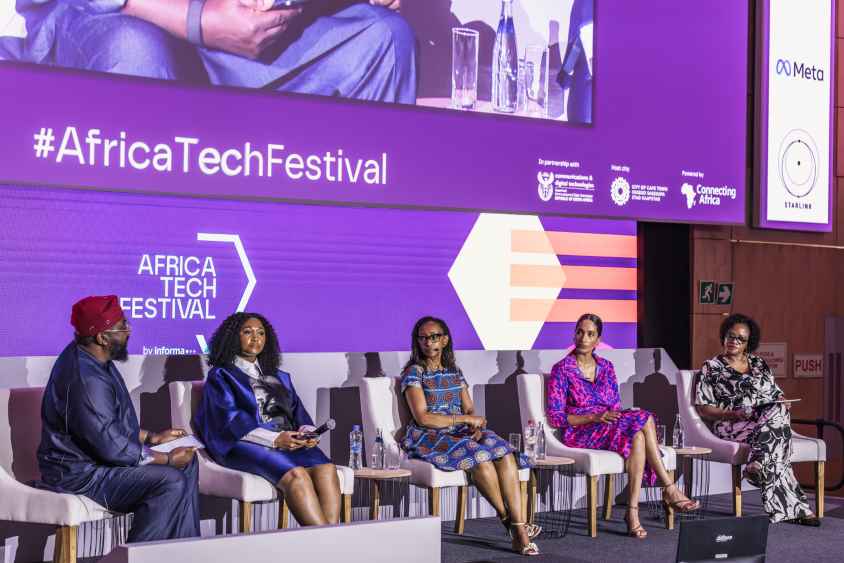
Africa Tech Festival, the continent’s longest-running and most influential technology gathering, concluded its 29th edition at the Cape Town International Convention Centre, welcoming more than 15,000 delegates over the three days.

“This week we’ve heard from government leaders, technology companies, investors and entrepreneurs on issues ranging from digital sovereignty and infrastructure investment to AI governance, business growth and skills development. Africa Tech Festival provides a platform for these different perspectives to come together, forging connections and partnerships that will help drive the industry forward,” said David Monaghan, Vice President, Africa Tech Festival.

Africa Tech Festival returns to Cape Town from 16–18 November 2027 for its landmark 30th edition, celebrating three decades at the heart of Africa’s technology industry.

Pre-register for 2027: https://apo-opa.co/3XkVGBI

Distributed by APO Group on behalf of Africa Tech Festival.


Continue Reading

Trending