Connect with us
Anglostratits

Business

Oando Production Hits 42,985 boepd as Revenue Grows 9% in 9M 2026

Published

on

Oando

Gross profit increased by 483% to ₦174.5 billion, compared with ₦29.8 billion in the corresponding period of 2025, reflecting improved production efficiency with a reported facility uptime of 96.1% compared to 85%

LAGOS, Nigeria, October 31, 2026/APO Group/ –Oando PLC (https://OandoPLC.com/), Africa’s leading indigenous energy solutions provider listed on both the Nigerian Exchange and Johannesburg Stock Exchange, has published its unaudited results for the nine months ended 30 September 2026. The Group recorded a 9% increase in revenue to ₦2.78 trillion, reflecting higher crude oil liftings, increased gas and Natural Gas Liquids (NGL) sale volumes, and improved average realised prices. Operating performance also strengthened, with the Group moving from an operating loss of ₦109.7 billion in 9M 2025 to an operating profit of ₦159.7 billion in 9M 2026.


Gross profit increased by 483% to ₦174.5 billion, compared with ₦29.8 billion in the corresponding period of 2025, reflecting improved production efficiency with a reported facility uptime of 96.1% compared to 85%.

Commenting on the results, Wale Tinubu CON, Group Chief Executive of Oando PLC, said: “Our performance in the first nine months of 2026 demonstrates how diligent execution under our operatorship, supported by our renewed investment drive, is delivering greater efficiency, improved reliability, lower unit costs and ultimately higher production across our expanded upstream portfolio. Production averaged 42,985 boepd, up 14% year-on-year, while facility uptime improved to 96.1% and production operating costs declined by 22% to US$15.39 per boe. These gains were achieved with zero fatalities and zero lost-time injuries across approximately 14.9 million hours worked.”

Average daily production of the Group’s upstream subsidiary increased from 37,614 boepd in 2025 to 42,985 boepd in 2026, with growth across crude oil, gas and NGLs. Crude oil production rose 12% to 12,193 barrels per day, gas production increased 13% to 28,689 boepd, and NGL production grew 53% to 2,103 barrels per day in 2026.

Crude oil liftings rose 43% to 3.97 MMbbl, while natural gas sales rose 5% to 34.01 billion standard cubic feet (Bscf). NGL sales increased by 90% to 0.57 million barrels. In total, E&P sales volumes rose by 21% to 10.21 million barrels of oil equivalent (MMboe).

Our commitment remains to realise the full potential of our substantial resource base and deliver lasting value for our shareholders

Operational improvements further strengthened performance. Production operating costs declined by 22% to US$15.39/boe, reflecting cost optimisation across transport, logistics, services, and information and communications technology, alongside higher production across a largely fixed field cost base. Oando recorded zero fatalities and zero lost-time injuries across approximately 14.9 million hours worked during the period, an increase of 55% in total hours worked from the corresponding period of 2025. Its improved facility uptime also strengthened the reliability of production and evacuation infrastructure, supporting the Group’s capacity to handle additional volumes as its development programme progresses.

Total borrowings declined to ₦2.16 trillion, 22% below the peak recorded at the end of 2024, while cash generated from operations reached ₦285 billion. The Group also invested ₦110.7 billion in capital expenditure, primarily directed towards drilling across OMLs 60–63.

The Group’s seven-well drilling programme for 2026 has progressed across its operated assets. Idu 6ST and Idu 15 have been completed and brought on stream, while workovers at Samabri 4T and Samabri 7T have been completed. Drilling is ongoing at Idu T and Samabri A50, with the final well, Ogbainbiri, scheduled to spud in December 2026.

On completion, the drilling campaign is expected to add approximately 16,000 to 20,000 boepd (gross) of production, helping to sustain output and offset natural field decline across the operated portfolio and support its medium-term ambition of approximately 100,000 boepd in the next four to five years.

In clean energy, electric buses deployed through Oando’s electric mobility partnership with the Lagos Metropolitan Area Transport Authority (LAMATA) recorded more than 212,000 passenger journeys in the first nine months of 2026, with average capacity utilisation of 73%. An additional 11 electric buses – the first batch of a planned 50 – arrived in Lagos, bringing the fleet to 13. The expanded fleet is expected to enter service in the fourth quarter, with LAMATA operating the buses on behalf of Lagos State.

Oando enters the final quarter of 2026 focused on completing its drilling programme, sustaining operational performance and advancing its capital management initiatives. The Group has narrowed its full-year production guidance to 40,000–45,000 boepd and expects full-year capital expenditure of approximately US$90 million to US$100 million, focused on high-impact, short-cycle upstream activities.

Commenting on the Company’s outlook, Mr Tinubu said: “For the remainder of 2026, our priorities are to progress the seven-well development programme, sustain operational reliability and strengthen shareholders’ funds through our impending equity raise. These initiatives are intended to reduce leverage, enhance our capacity to fund growth and support future shareholder distributions. We have demonstrated what we can achieve across our strategic assets and are confident in the opportunities ahead. Our commitment remains to realise the full potential of our substantial resource base and deliver lasting value for our shareholders.”

With production growth, improved operational efficiency and a stronger cash flow position, Oando is focused on sustaining its operational momentum, advancing its drilling programme, and strengthening its financial position to support long-term growth and shareholder value.

Distributed by APO Group on behalf of Oando PLC.


Business

Afreximbank Country Brief Charts Côte d’Ivoire’s Rise as a Regional Growth Leader in West Africa

Published

on

Afreximbank

Home to 33.5 million people and with nominal GDP forecast at USD116.9 billion in 2027, the country has sustained average real GDP growth of around 6.5% per year between 2021 and 2024, accelerating to an estimated 6.6% in 2025

CAIRO, Egypt, October 31, 2026/APO Group/ –African Export-Import Bank (Afreximbank) (www.Afreximbank.com) has released its Côte d’Ivoire Country Brief, providing an in-depth examination of the West African nation’s macroeconomic outlook, regional and international trade dynamics, financial sector development and debt sustainability profile.


The brief highlights Côte d’Ivoire as one of Africa’s fastest-growing economies. Home to 33.5 million people and with nominal GDP forecast at USD116.9 billion in 2027, the country has sustained average real GDP growth of around 6.5% per year between 2021 and 2024, accelerating to an estimated 6.6% in 2025. Growth is forecast to moderate to 5.8% in 2026 before rebounding to 6.2% in 2027, supported by rising crude production, continued infrastructure investment and resilient domestic demand.

The brief also points to a notably improved near-term macroeconomic environment. Inflation fell sharply to just 0.1% in 2025, supported by easing commodity price pressures and government measures to stabilise fuel and food prices, with the CFA franc’s euro peg providing a durable exchange rate anchor. The fiscal deficit narrowed to 3% of GDP in 2025, meeting the West African Economic and Monetary Union (UEMOA) ceiling, backed by stronger revenue collection and ongoing reforms to tax administration and VAT digitalisation.

Côte d’Ivoire is consolidating its position as a leading West African growth and trade hub

On trade, this edition charts a significant expansion. Total trade surged from USD26 billion in 2018 to USD57 billion in 2025, anchored by Côte d’Ivoire’s status as the world’s largest cocoa producer, commanding around 40% of global supply, alongside growing exports of cashew nuts, rubber, gold and hydrocarbons. The February 2026 Calao South gas condensate discovery and rising output from the Baleine field signaled a broadening export base over the medium term. Strategically positioned on the Gulf of Guinea, with the ports of Abidjan and San Pedro acting as principal gateways into Francophone West Africa, Côte d’Ivoire is deeply embedded in regional trade networks, with African markets accounting for around 22% of its goods trade in 2025.

The brief further notes Côte d’Ivoire’s financial sector strength. The country holds the largest banking sector in UEMOA, accounting for more than a third of regional banking assets. Regulatory reforms, including the adoption of Basel II and Basel III standards, have strengthened supervision and resilience, while the launch of the Central Bank of West African States’ (BCEAO) interoperable instant payment platform in September 2025 is broadening access to digital financial services across the economy.

As this edition notes, Côte d’Ivoire “has moved from a period of rapid debt accumulation and elevated debt service pressure towards a more stable debt profile, supported by fiscal consolidation, active debt management and continued multilateral engagement.”  This is a trajectory that positions the country to fully capitalise on the ambitious targets of its 2026-2030 National Development Plan.

Afreximbank’s Group Chief Economist & Managing Director Research commented: “Côte d’Ivoire is consolidating its position as a leading West African growth and trade hub. Its expanding energy sector, world-class agricultural base, regional port infrastructure and increasingly sophisticated financial system offer a strong foundation to attract investment, scale value addition and deepen trade links across Africa.”

Read more in the Afreximbank Country Brief on Côte D’Ivoire here https://apo-opa.co/4BRcYX8

Distributed by APO Group on behalf of Afreximbank.


Continue Reading

Business

Visa and Senegal join forces to accelerate digital transformation and the development of digital payments

Published

on

Visa

This two-year memorandum of understanding establishes a framework for strategic collaboration on digital payments, financial innovation, cybersecurity and the modernisation of public services

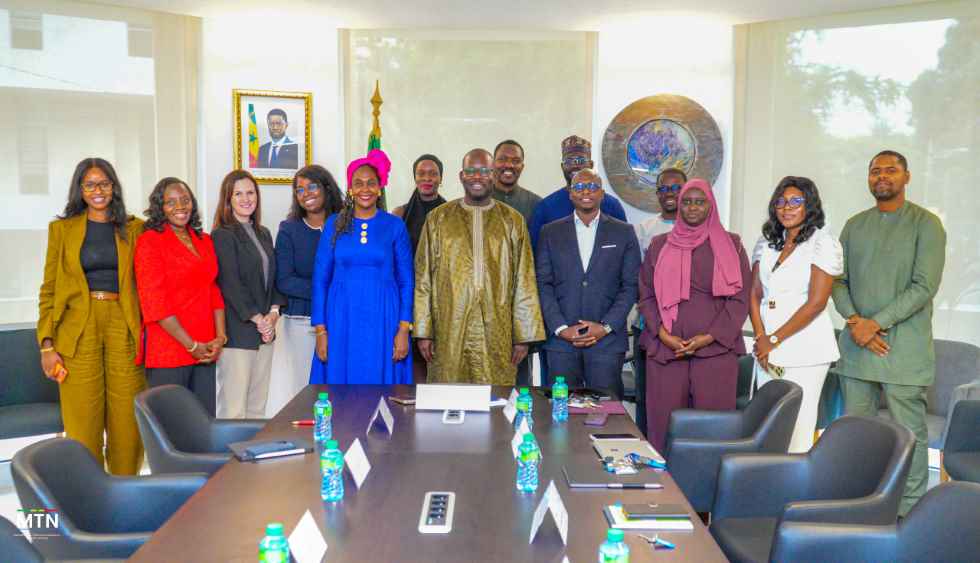
DAKAR, Senegal, October 30, 2026/APO Group/ –Visa (www.Visa.com) and Senegal’s Ministry of Telecommunications and Digital Affairs have signed a Memorandum of Understanding (MoU) establishing a two-year framework for strategic collaboration to support Senegal’s digital transformation ambitions. This partnership will foster cooperation on digital payments, financial innovation, cybersecurity and regulatory matters, while enabling the exploration of high-impact use cases that could help modernise public services and expand access to digital financial services.


This MoU is the first of such partnership signed between Visa and a government institution in Senegal. It is built on structured public-private dialogue and the sharing of expertise to identify collaboration opportunities aligned with national priorities.

We are proud to bring Visa’s expertise to bear in support of Senegal’s ambitions

Visa and Senegal’s Ministry of Telecommunications and Digital Affairs will explore, among other areas, payments from individuals to government (P2G, Person-to-Government) and payments from government to individuals (G2P, Government-to-Person). This work will seek to identify how digital solutions could facilitate interactions between citizens and public services. Knowledge sharing on cybersecurity and financial innovation will complement this work, with the aim of promoting broader access to digital financial services in a secure and resilient environment.

““This strategic partnership with Visa marks a decisive step forward in our efforts to accelerate the New Deal Technologique. Now is the time for action: we must be fully operational and move from intent to tangible results by deploying practical, secure and inclusive solutions that directly address the everyday needs of Senegalese citizens.”
said — Mr. Samba Diouf, Minister of Telecommunications and Digital Affairs,”

“We are proud to bring Visa’s expertise to bear in support of Senegal’s ambitions. Together with the Ministry, we aim to identify tangible opportunities to facilitate access to digital services and support the long-term development of the payments ecosystem in Senegal,” said Aminata Kane, Sr. Vice President and Group Country Manager for Visa Western & Central Africa.

By bringing together national priorities and Visa’s expertise, this cooperation framework will help identify initiatives tailored to Senegal’s needs, encouraging digital payment use cases grounded in local realities to simplify citizens’ everyday lives.

Distributed by APO Group on behalf of Visa Inc..


Continue Reading

Business

Afreximbank Country Brief Explores Gabon’s Reform Momentum and Diversification Drive

Published

on

Afreximbank

Infrastructure investment is also identified as a key driver underpinning this transformation

CAIRO, Egypt, October 30, 2026/APO Group/ –African Export-Import Bank (Afreximbank) (www.Afreximbank.com) has released its Gabon Country Brief, offering a comprehensive analysis of the Central African nation’s macroeconomic outlook, trade performance, financial sector development and debt sustainability profile.

The brief highlights Gabon as one of Africa’s wealthier economies, with real GDP per capita, estimated at about USD8,641 in 2026. Home to 2.7 million people, Gabon is strategically located on the Atlantic Coast of Central Africa, with direct access to global shipping routes through the ports of Owendo and Port-Gentil. The nation commands a distinctive profile as a commodity-rich economy with expanding industrial ambitions. Real GDP growth is forecast to accelerate to 3.3% in 2026, supported by stronger hydrocarbons receipts, while inflation is expected to hold at a contained 2.3%, comfortably within the Economic and Monetary Community of Central Africa (CEMAC) regional threshold.


The findings of the brief demonstrate how Gabon’s economic story has been driven by its significant resource base. The brief notes that the country is one of the world’s largest producers of manganese, a key material in demand for steel and electric vehicle batteries. While manganese ore is rapidly growing in strategic importance as an export earner and a magnet for foreign investment, exports remain concentrated in crude oil. Total goods and services trade recovered strongly from USD9.1 billion in 2020 to USD17.4 billion in 2024, with the trade balance remaining consistently in surplus throughout.

This edition goes on to explore Gabon’s forward-looking diversification agenda. It notes that the government is deploying special economic zones to catalyse private investment in higher value-processing and manufacturing, such as the flagship Nkok SEZ near Libreville. Complementary zones at Inkolo and Mpassa-Lebombi, alongside a planned site near Port-Gentil, signal a broadening industrial base across timber, mining and logistics. Most ambitiously, a planned ban on raw manganese exports from January 2029 is designed to accelerate local value addition.

Gabon’s resource endowment, strategic Atlantic location and commitment to higher-value local processing present important opportunities to deepen trade and investment

Infrastructure investment is also identified as a key driver underpinning this transformation. The brief notes that the government committed USD197 million to infrastructure projects in 2025, more than double the USD81 million allocated in 2024. Planned road construction and rehabilitation, including the 166km Kougouleu-Medouneu corridor, will strengthen domestic connectivity and regional trade flows. Growing multilateral support, including USD150 million in World Bank financing signed in April 2026, underscores rising international confidence in Gabon’s economic trajectory, and the Plan National de Croissance et de Développement 2026-2030 sets out an ambitious roadmap prioritising macroeconomic stability, infrastructure and private sector participation.

This edition further highlights the deepening of Gabon’s financial sector, with a December 2025 partnership with the United Nations Capital Development Fund to modernise digital financial services marking a significant step towards broader financial inclusion.

The full Country Brief offers a timely and detailed portrait of an economy in transformation, capturing the resource wealth, industrial ambition and growing multilateral confidence that make Gabon one of Central Africa’s most compelling economic stories.

Dr. Yemi Kale, Afreximbank’s Group Chief Economist and Managing Director: Research noted: “Gabon’s resource endowment, strategic Atlantic location and commitment to higher-value local processing present important opportunities to deepen trade and investment. The country’s diversification agenda, including special economic zones, infrastructure development and expanded manganese processing, can help strengthen industrial capacity, create value-added exports and broaden economic activity beyond hydrocarbons.”


Read more in the Afreximbank Country Brief on Gabon here (https://apo-opa.co/3UaY5xU):

Distributed by APO Group on behalf of Afreximbank.


Continue Reading

Trending