Connect with us
Anglostratits

Business

New Research Shows Mobile Finance Can Increase National Gross Domestic Product (GDP)

Published

on

Mobile Finance

This GDP per capita growth implies that countries with successful mobile money adoption could reduce poverty by around 2.6%

KIGALI, Rwanda, October 27, 2022/APO Group/ — 

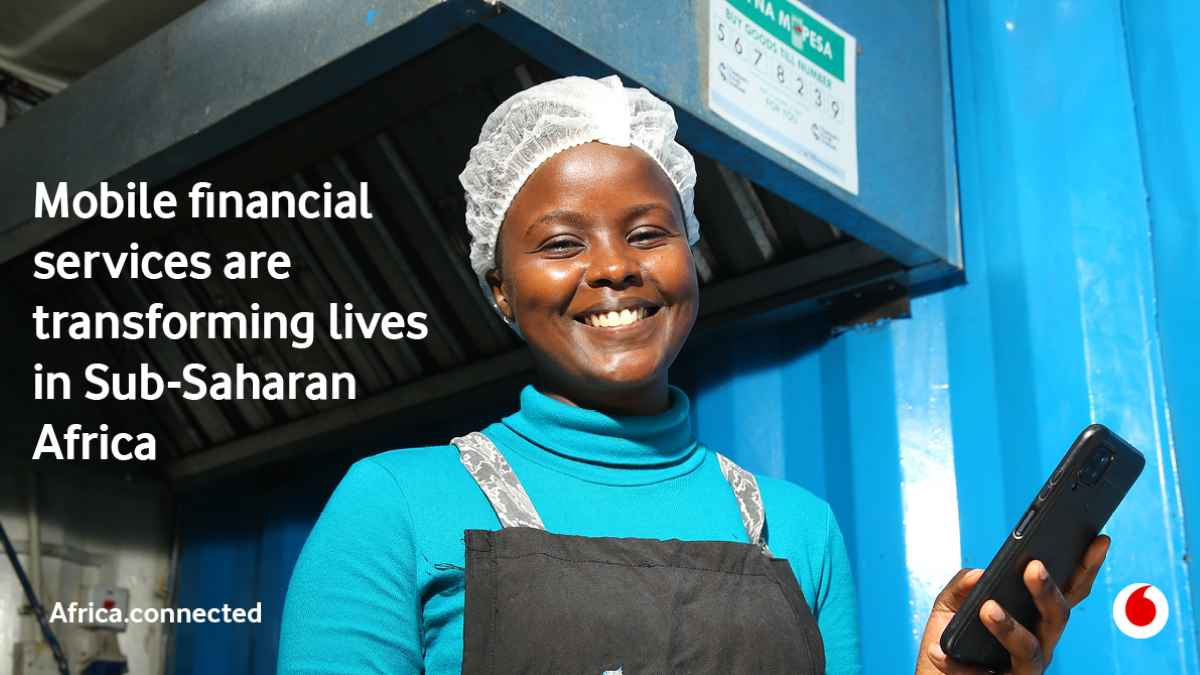
New research from Vodafone Group, Vodacom Group (https://www.Vodacom.com/), Safaricom, and the United Nations Development Programme (UNDP) indicates that the successful deployment and adoption of mobile financial services is associated with a positive impact on GDP growth in developing markets as it helps businesses to reduce cost, access credit to invest, and to connect with consumers that were previously excluded from financial services.

The econometric modelling research[1] – which examined 49 countries in Africa, Asia, and Latin America – found that countries with successful mobile money services had an annual GDP per capita growth rate up to 1 percentage point higher than countries where mobile money platforms had not been successful or not introduced.

Based on previous World Bank research on the relationship between economic growth and reductions in the number of people living in poverty[2], this GDP per capita growth implies that countries with successful mobile money adoption could reduce poverty by around 2.6%.

The analysis was conducted as part of the companies’ Africa.Connected (https://bit.ly/3SGqW6l) campaign, an initiative to drive sustainable development through collaboration and help close the divides that prevent progress in Africa’s key economic sectors. The findings are part of a new research paper, Digital Finance Platforms to Empower All, the fourth research paper developed and released under the Africa.Connected umbrella.

Sitoyo Lopokoiyit, CEO of M-Pesa Africa and Chief Financial Services Officer at Safaricom, said:

Mobile financial services platforms like M-Pesa are vital drivers of financial inclusion in society which can improve individual life chances

“Mobile financial services platforms like M-Pesa are vital drivers of financial inclusion in society which can improve individual life chances and enable enterprises to launch and expand, bringing wealth and jobs into developing economies. There remains though barriers both to accessing platforms – including digital literacy and smartphone accessibility – and to developing them – with an un-level regulatory playing field for non-traditional financial services providers in many countries.” 

As part of the Africa.Connected research, consumer surveys were conducted focusing on users of M-Pesa in Kenya and Tanzania, and results were extrapolated to Ghana and Mozambique. A business survey was also conducted in Kenya. The resulting research underpinned the continuing importance of the world’s first mobile money service 15 years after it launched in 2007. The researchers estimated that:

  • 17.6 million current users in the four countries did not have access to any formal financial services before using M-Pesa;
  • 98% of businesses surveyed said that M-Pesa helps them to do business, with the main benefits of M-Pesa being its facilitation of faster and safer payments and enabling the sale of goods and services online; and 
  • 95% of businesses surveyed indicated that they use M-Pesa for at least half of their business transactions.

Ulrika Modeer, UN Assistant Secretary-General and Director of the Bureau of External Relations and Advocacy at UNDP, said:

“Financial inclusion is both a pre-condition and a key enabler for meeting many of the UN’s Sustainable Development Goals, including reducing poverty, boosting economic growth, promoting market access and championing investment in key sectors like education, agriculture, and healthcare. But more importantly, it is about putting people at the center, empowering them with more agency over their money and increasing their resilience. Eliminating financial exclusion in Africa, and across the globe, must be a priority if we are to deliver on inclusive, sustainable prosperity for all on a healthy planet.”

Click here to read the full Africa.connected financial inclusion paper:https://bit.ly/3U4QAmp


[1]The econometric model made use of data covering the period 2003 – 2019. More recent data was not included in the modelling due to the effects of the pandemic.

[2] Adams, 2003, Economic Growth, Inequality, and Poverty: Findings from a New Data Set. World Bank. Available online:  https://bit.ly/3TQWoQi

Distributed by APO Group on behalf of Vodacom Group.

Business

PAC Capital Limited Secures Seven Prestigious International Awards, Reinforcing Leadership in Investment Banking and Advisory

Published

on

PAC Capital’s recognition reflects its extensive footprint across key African markets, supported by strong partnerships with multilateral institutions, global investors, and strategic allies

We are proud of this milestone and even more excited about the opportunities ahead

LAGOS, Nigeria, May 21, 2026/APO Group/ –PAC Capital Limited (www.PACCapitalLtd.com), a leading investment banking and financial advisory firm in Nigeria, has been honoured with seven distinguished awards across two globally recognised platforms, further solidifying its position as a market leader in capital markets, advisory, and cross-border investment solutions.


At the Gazet International Awards 2026, PAC Capital Limited emerged winner in five categories:

  • Best Investment Banking & Financial Advisory Firm – Nigeria 2026
  • Excellence in Capital Markets & Fundraising Solutions – Nigeria 2026
  • Best Debt & Equity Capital Advisory Firm – Nigeria 2026
  • Excellence in Cross-Border Investment & Capital Solutions – Africa 2026
  • Outstanding Infrastructure & Project Finance Advisory Firm – Africa 2026

In addition, the firm was recognised by World Business Outlook Awards 2026 with two major honours:

  • Most Preferred Investment Banking Firm Nigeria 2026
  • Best Investment Banking and Advisory Firm Nigeria 2026

These recognitions underscore PAC Capital’s strong institutional capacity, robust regulatory foundation, and consistent delivery of innovative financial solutions across Equity Capital Markets, Debt Capital Markets, and specialised finance and advisory services.

Commenting on the achievement, Humphrey Oriakhi, Managing Director stated:
“This multi-award recognition is both humbling and affirming. It reflects the deliberate strategy we have pursued to build a resilient, full-service investment banking platform capable of delivering complex, high-impact transactions across markets. As we continue to deepen our footprint in Africa and expand across Global Africa, our focus remains on creating sustainable value for our clients and stakeholders through innovation, discipline, and strong execution.”

PAC Capital’s recognition reflects its extensive footprint across key African markets, supported by strong partnerships with multilateral institutions, global investors, and strategic allies. The firm’s involvement across diverse sectors—including oil and gas, power and energy, infrastructure, aviation, information technology, and the public sector—demonstrates its versatility and depth in delivering tailored financial solutions.

Bolarinwa Sanni, Executive Director, PAC Capital Limited:
“These awards speak to the strength of our client relationships and our ability to consistently deliver tailored financial solutions in an increasingly dynamic market environment. We have built a reputation for excellence across capital markets, advisory, and project finance by staying responsive to client needs and maintaining the highest standards of professionalism. We are proud of this milestone and even more excited about the opportunities ahead.”

As a founding member of Nigeria’s OTC securities trading platform and a registered Issuing House and Bonds Listing Member with FMDQ, PAC Capital continues to uphold some of the highest regulatory and governance standards within the Nigerian financial services industry.


Distributed by APO Group on behalf of PAC Capital Limited.


Continue Reading

Business

How the Product Leadership Accelerator (PLA) is Re-Engineering African Enterprises for a Digital-First Economy

Published

on

Leadership

As Africa looks to technology for the next wave of economic evolution, the PLA stands at the center of that journey, turning the SVPG Product Operating Model into a reality for the continent’s most innovative and ambitious enterprises

LAGOS, Nigeria, May 20, 2026/APO Group/ –As the global community celebrates World Product Day, a profound shift is taking place across Africa’s enterprise landscape. The Product Leadership Accelerator (PLA), www.AfricaPLA.com, an initiative of the Innovate Africa Foundation, is officially setting a new gold standard for how value is created and scaled, in Africa, by transforming African enterprises from traditional service providers into high-velocity, “product-led” engines of growth.


The PLA is bridging the gap between legacy business models and the modern Product Operating Model. This methodology, practiced by global companies like Apple, Netflix and Amazon, is now being localized, through the PLA, to ensure African enterprises and startups alike solve the continent’s toughest challenges through relentless innovation and de-risked execution.

Building a Pan-African Product Management Talent Pipeline

The PLA is currently powering its 2026 Accelerator Program, a rigorous 12-week program featuring 48 product managers from 13 African countries, including Nigeria, Egypt, Ghana, South Africa, and Kenya. In a significant move for gender equity in tech, the cohort maintains a female representation of about 54%, ensuring the future of African product leadership is as diverse as the markets it serves.

As the fellows tackle real-world problem statements across diverse industries during the 12 week accelerator program, they are mentored by an elite roster of practitioners who have built products at enterprises such as Interswitch, Netflix, Amazon, Microsoft, Paystack, and mPesa. They also receive strategic, high-level guidance from global product legends Marty Cagan and SVPG Partner Christian Idiodi.

“Building in Africa requires a distinct level of empathy, adaptability, and mastery of the product operating model,” explains Nkem Nweke, Lead at the PLA. “We empower leaders and enterprises to harness tools like AI while offering them strategic product management advisory. Our goal is to support companies in adopting a product-led culture which drives sustainable economic growth. By mitigating risks before investing significant capital or public resources, we help both enterprises and startups create solutions that truly meet market and consumer needs.”

Enterprise Transformation and Proven Outcomes

Our goal is to raise product leaders who are deeply versed in the mechanics of discovery and delivery

The impact of the PLA extends deep into the corporate sector through its specialized Product Management Advisory. Organizations reliant on technology spanning telecoms, FMCG, commerce, retail, finance, and government, are increasingly seeking to leverage the PLA’s expertise to shift their product teams from traditional project-based approaches to outcome-driven product cultures that drive growth.

The effectiveness of the PLA’s approach is best seen through its corporate partnerships. Afrinvest, a leading financial institution, serves as a primary example of how the PLA’s advisory services drive immediate corporate value.

“The PLA didn’t just upskill one individual; it has been a game-changer for our internal innovation culture, sparking a ripple effect of outcome-driven progress throughout our entire product department. “says Victor Ndukauba, Deputy MD, West Africa Afrinvest. “Seeing the speed at which our team can now identify and solve real consumer problems is why we’ve increased our participation this year.”

This sentiment is echoed by partners like Insight7, One Cluster and Agile Product Management, who view the PLA as the engine room for the continent’s digital maturity.

Central to this transformation is integrating tools like Artificial Intelligence (AI), enabling product managers to achieve world-class standards, driving efficiency, and ensuring African businesses set the pace for global innovation.

De-Risking African-Built Solutions

For founders, the stakes have never been higher. “Our goal is to raise product leaders who are deeply versed in the mechanics of discovery and delivery, ” notes Osa Awani, Head of Program at the PLA. “We see the shift happening in real-time as our fellows move from theoretical knowledge to building solutions that address market friction with surgical precision.” When founders and Product Managers master the product operating model, they stop guessing; and with a commitment to solving real problems, African product leaders will not only compete globally they will lead.”

Impact by the Numbers

  • 13 Countries: Active representation in the 2026 cohort, including Nigeria, South Africa, Ghana, Egypt, Kenya, Rwanda, Zimbabwe, Cameroun, Egypt and more.
  • 54%+ Female Representation: Leading the charge in inclusive tech leadership.
  • Scores of Scholarships: The Innovate Africa Foundation has provided scholarships to dozens of African product managers to attend prestigious SVPG Masterclasses, resulting in career promotions, career pivots to executive leadership, and the launch of new tech ventures.
  • 3-City Product Tour: Recently concluded engagements with product leaders across Lagos, Nairobi, and Cape Town.

A Future Defined by Innovation

Founded by Christian Idiodi, (partner at the globally renowned Silicon Valley Product Group),  the PLA is rooted in the belief that the intersection of world-class tools such as Artificial Intelligence (AI) and strategic product management is essential to mastering the craft of creating exceptional products for Africa; thereby unlocking Africa’s economic potential. By offering cutting-edge tools, a robust network, and the innovative mindset of the world’s most successful organizations, the PLA ensures Africa’s challenges are addressed with future-ready, world-class solutions.

Distributed by APO Group on behalf of Product Leadership Accelerator (PLA).


Continue Reading

Business

Congo’s Minister Onanga to Fast-Track Deals, Drive Local Content and Expand Floating Liquefied Natural Gas (FLNG) in New Investment Push

Published

on

Congo

High-level talks between the Republic of Congo’s Minister of Hydrocarbons Stev Simplice Onanga and the African Energy Chamber focused on accelerating deal flow, strengthening local content and SNPC, and advancing FLNG expansion to position the country as a regional gas hub

BRAZZAVILLE, Republic of the Congo, May 20, 2026/APO Group/ –The African Energy Chamber (AEC) (www.AfricanEnergyChamber.org) has reinforced its strategic partnership with the Republic of Congo following a high-level meeting between Executive Chairman NJ Ayuk and newly appointed Minister of Hydrocarbons Stev Simplice Onanga in Brazzaville this week, setting the stage for a renewed push to accelerate investment, strengthen local capacity and expand the country’s LNG footprint.


Held shortly after Minister Onanga’s appointment, the meeting underscored a shared commitment to faster, more efficient deal-making across Congo’s oil and gas sector. Both sides emphasized that reducing delays in project approvals and execution will be critical to maintaining Congo’s competitiveness and attracting new capital into upstream and gas development.


A key focus of discussions was the development of a stronger local industry. Minister Onanga outlined a clear ambition to see Congolese companies grow beyond traditional service roles to become operators, license holders and regional players capable of competing across African markets. This includes building companies that not only support domestic projects, but can also export expertise and services beyond Congo.


The AEC welcomed this vision, committing to work closely with the Ministry to help develop a new generation of competitive Congolese firms. This effort will focus on strengthening technical capacity, expanding access to opportunities in field development and drilling, and ensuring local companies are positioned to participate more meaningfully across the value chain.


In parallel, Minister Onanga called for enhanced collaboration to strengthen Société Nationale des Pétroles du Congo (SNPC), with the goal of transforming it into one of Africa’s leading national oil companies. The vision is for SNPC to evolve beyond its current partnership model with international oil companies to take on a more operational role – managing assets, leading projects and driving exploration and production both domestically and, over time, internationally.


“Congo is focused on building a stronger national energy ecosystem from the ground up,” said Ayuk. “We agreed with the Minister on the need to develop Congolese companies into competitive players that can scale beyond borders. Strengthening SNPC is central to this, so it becomes a more active operator, managing and developing assets. This is about building long-term capacity in-country and positioning Congo as a leading force in African energy.”

With Minister Onanga, we’re seeing a real commitment to getting things done – moving deals faster, empowering Congolese companies and scaling LNG


Beyond local industry development, the meeting reinforced Congo’s broader ambition to strengthen its position within Africa’s energy landscape. Minister Onanga highlighted his intention to align national strategy with continental priorities, drawing on his experience as former Chair of the African Petroleum Producers’ Organization (APPO) Board of Governors. Continued engagement with institutions such as APPO and OPEC will remain central to this approach.


Gas development – particularly floating LNG (FLNG) – emerged as another key pillar of the discussion. Congo has already made significant progress through projects such as Eni’s Congo LNG development, where the 0.6 mtpa Tango FLNG and the upcoming Nguya FLNG facility are expected to increase the country’s LNG export capacity to around 3 mtpa.


Building on this momentum, discussions pointed to the potential for additional FLNG developments. With ongoing conversations around new projects and favorable conditions aligning, a future FLNG expansion could further scale production and reshape Congo’s role in the regional gas market. Expanding capacity would not only strengthen export revenues, but also support domestic gas utilization and industrial growth.


“With Minister Onanga, we’re seeing a real commitment to getting things done – moving deals faster, empowering Congolese companies and scaling LNG,” added Ayuk. “The stars are aligning for Congo to lead the continent in floating LNG. If this momentum continues, there’s no doubt the country can position itself as one of Africa’s leading gas hubs.”


With a renewed focus on fast-tracked investment, local industry development and LNG expansion, the AEC’s engagement with Congo signals a more execution-driven phase for the country’s energy sector – one aimed at building in-country value, strengthening regional influence and delivering long-term growth.


Distributed by APO Group on behalf of African Energy Chamber.

Continue Reading

Trending