Connect with us

Business

New report by African Development Bank, partners finds that 37 African countries have industrialized in last decade

Published

on

African Development Bank

Top performers not necessarily those with the biggest economies, but countries that generate high manufacturing value-added per capita

ABIDJAN, Ivory Coast, November 25, 2022/APO Group/ — 

Thirty-seven of 52 African countries have become more industrialized over the past eleven years, according to a new report from the African Development Bank (www.AfDB.org), the African Union and the United Nations Industrial Development Organization (UNIDO).

The Africa Industrialization Index (AII) report provides a country-level assessment of 52 African countries’ progress across 19 key indicators. The report will enable African governments to identify comparator countries to benchmark their own industrial performance and identify best practices more effectively.

The African Development Bank, the African Union and UNIDO jointly launched the inaugural edition of the AII on the sidelines of the African Union Summit on Industrialization and Economic Diversification in Niamey, Niger.  

Scoring industrialization across a range of metrics 

The Index’s 19 indicators cover manufacturing performance, capital, labor, business environment, infrastructure, and macroeconomic stability.  The index also ranks African countries’ industrialization across three dimensions: performance, direct determinants and indirect determinants.  Direct determinants include such endowments as capital and labor and how these are deployed to drive industrial development. Indirect determinants include enabling environmental conditions such as macroeconomic stability, sound institutions and infrastructure.

South Africa maintained a very high ranking throughout the 2010-2021 period, followed closely by Morocco, which held second place as of 2022. Rounding out the top six over the period are Egypt, Tunisia, Mauritius, and Eswatini.

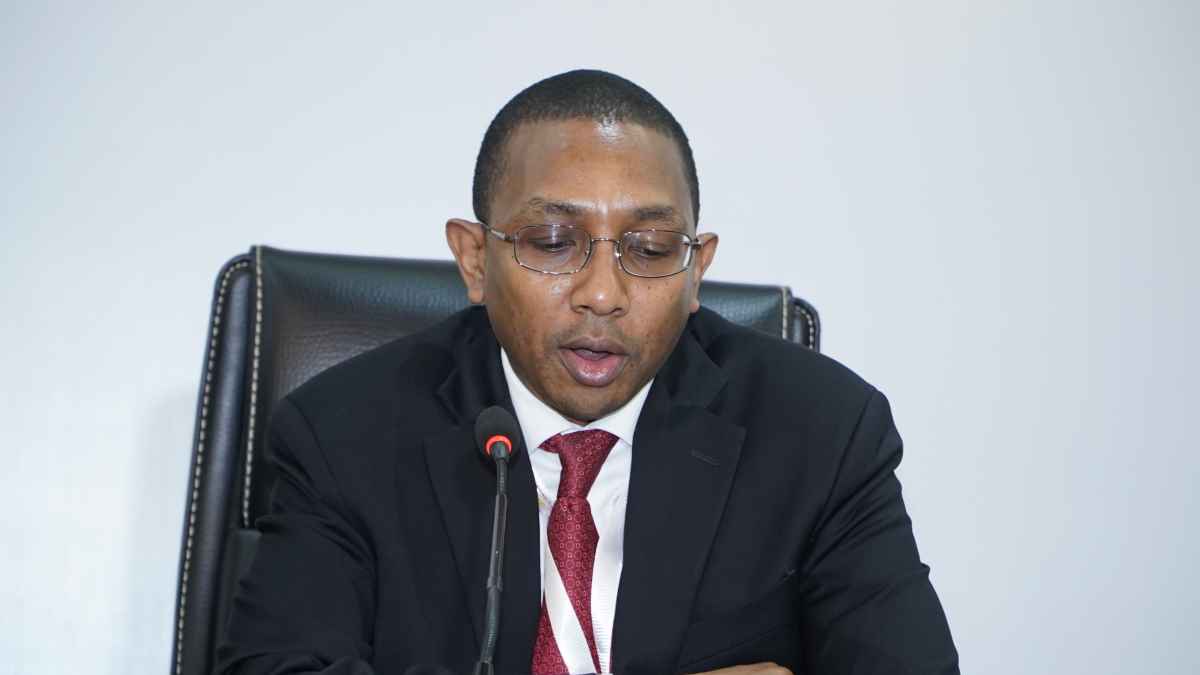
Abdu Mukhtar, African Development Bank Director for Industrial and Trade Development, represented the institution at the launch event.  He said that while Africa had shown encouraging progress in industrialization over the 2010-2022 period, the Covid-19 pandemic and Russia’s invasion of Ukraine had set back its efforts and highlighted gaps in production systems. “The continent has a unique opportunity to sort out this dependency by further integrating and conquering its own emerging markets.”

He added: “The African Continental Free Trade Area is creating a once-in-a-lifetime single market opportunity of 1.3 billion people and total aggregate consumer and business spending of up to $4 trillion creates an opportunity to enhance their trade and production linkages and finally reap industrial competitiveness from regional integration as other regions have done.”  

In the pharma sector alone, we intend to spend at least $3 billion by 2030

The African Development Bank has invested up to $8 billion over the past 5 years under its Industrialize Africa High-5 priority. “In the pharma sector alone, we intend to spend at least $3 billion by 2030,” Mukhtar said.  

Building productive industry will be integral to Africa’s development, offering a path to accelerated structural transformation, creating formal jobs at scale and inclusive growth. However, Africa’s share of global manufacturing has declined to the current level of less than 2%. More proactive industrial policies are seen as critical to reversing the trend, but these are knowledge-intensive and require a detailed understanding of the constraints and opportunities that each country faces.

Manufacturing value-added more important than size of economy

Among the report’s other key findings:

  • During the coverage period,  Djibouti, Benin, Mozambique, Senegal, Ethiopia, Guinea Rwanda, Tanzania, Ghana, and Uganda all improved by five or more places in the rankings. 
  • The top performers are not necessarily those with the biggest economies, but those countries that generate high manufacturing value-added per capita, with a substantial proportion of manufacturing goods bound for export;
  • North Africa remains the most advanced African region in industrial development, followed by Southern Africa, Central Africa, West Africa and East Africa.

Synergies with the African Industry Observatory

The Africa Industrialization Index was one of two new tools presented during the event. The second—and complementary— African Industry Observatory, unveiled by UNIDO and the African Union, will serve as a central online knowledge platform to collect, analyze and consolidate the quantitative data needed for qualitative analyses of national, regional and pan-continental industry trends, forecasts and comparisons.  

Chiza Charles Chiumya, the African Union Commission’s Acting Director for Industry, Minerals,  Entrepreneurship & Tourism, said, “These tools are going to greatly enhance our industrial policymaking as well as help to bring in the required focus that industrialization needs both from policymakers as well as the private sector, who will now clearly see where the continent has opportunities.”  Chiumya was representing AU Commissioner for Trade and Industry Albert Muchanga.

“The African Industry Observatory and the Africa Industrialization Index will help consolidate cross-institutional cooperation, strengthen each institution’s policy dialogue influence for accelerating industrial development and an enhanced knowledge of industrial development dynamics,” said Victor Djemba, Chief of UNIDO’s Africa division.

The African Union Extraordinary Summit on Industrialization and Economic Diversification and  African Union Extraordinary Session on the African Continental Free Trade Area are currently taking place in Niamey, Niger,  through 25 November 2022. The  Summit’s theme is: Industrializing Africa: Renewed Commitment towards Inclusive and Sustainable Industrialization and Economic Diversification.

Download the report in English (http://bit.ly/3OywD5M) or French (http://bit.ly/3gAropK)

Distributed by APO Group on behalf of African Development Bank Group (AfDB).

Business

Critical Mineral Projects to Watch Ahead of Invest in African Energy (IAE) 2026

Published

on

The Uganda Chamber of Energy and Minerals, with both its CEO and governing council chairperson confirmed for Paris, will serve as the primary interface for investors seeking access to Uganda’s licensing framework and project pipeline

CAPE TOWN, South Africa, March 26, 2026/APO Group/ –Governments from West, Central and Southern Africa, with delegations confirmed for the Invest in African Energy (IAE) Forum in Paris next month, are each advancing critical mineral projects that span processing deals, development-stage assets and frontier exploration plays, giving investors a range of entry points across the minerals value chain.

Nigeria – Alumina Refinery & Lithium Processing

Nigeria struck a $1.3 billion deal with the Africa Finance Corporation in early March covering three components: construction of a one-million-ton-per-year alumina refinery, a national geoscience mapping program, and a joint investment vehicle to accelerate exploration and production across priority leases. Projected at 95% utilization over 20 years, the refinery is expected to add $1.2 billion to GDP annually and generate approximately $8 billion in foreign exchange earnings over its lifespan.

Separately, a $600 million lithium processing plant in Nasarawa State is at the commissioning stage, backed by ongoing mapping of lithium-bearing pegmatite belts across Kwara, Ekiti and Kaduna states. New mining licenses now require a local processing commitment covering at least 30% of output before export, a condition that directly shapes the investment structures available to foreign partners. Nigeria’s energy minister is among the confirmed delegations at IAE in Paris.

Zambia – Copperbelt Expansion & Cobalt Refinery


Copper output in Zambia is on course to clear one million tons in 2026, supported by First Quantum Minerals’ completed $1.25 billion S3 plant expansion at Kansanshi and Barrick Gold’s $2 billion program to double output at Lumwana by 2028. Several additional projects, including Sinomine’s Kitumba Mine and KoBold Metals’ Mingomba deposit, are also coming online this year, making Zambia one of the few places globally adding significant incremental copper supply in the near term.

Africa’s first cobalt sulfate refinery is targeting commissioning in Zambia in 2026, adding downstream processing capacity alongside the copper ramp-up. The Lobito Corridor, backed by a $553 million US Development Finance Corporation loan for Angola’s Benguela rail link, reduces export costs across the Copperbelt and improves project bankability for both mines and processing facilities seeking long-term offtake commitments.

Senegal – Falémé Integrated Iron Project

Senegal’s Falémé iron district in the Kédougou region holds over 600 million tons of probable reserves, including oxide ore at around 59% iron content and primary magnetite at roughly 45% Fe. The government launched the Falémé Integrated Iron Project as a phased program targeting 15 to 25 million tons per year at peak output, with national iron ore company MIFERSO conducting ongoing reserve verification.

The mineral export port at Bargny is operational and rail rehabilitation linking Kédougou to the coast is progressing under the Emerging Senegal Plan. The project is actively seeking a technical development partner. With port and rail infrastructure advancing independent of any single mining operator, Falémé carries lower logistics risk than comparable iron ore projects requiring greenfield corridor construction, which affects how financiers assess project bankability and timelines to first revenue.

Equatorial Guinea – Rio Muni Mineral Exploration

Equatorial Guinea’s Rio Muni mainland offers early-stage exposure to gold, bauxite, base metals, coltan and iron ore across largely underexplored onshore territory. The Ministry of Mines and Hydrocarbons has been opening the sector since its first public tender in 2019, with exploration contracts now in place and state geological mapping advancing in partnership with Rosgeo. Minister Antonio Oburu Ondo will address investors at IAE, with the minerals program expected to feature in bilateral meetings.

Uganda – Rare Earths & Minerals Sector Opening

Uganda holds rare earth deposits in ionic adsorption clay formations — a deposit type the IEA has flagged for low capital intensity relative to hard rock alternatives — alongside gold mineralization across greenstone belts in the West Nile, Karamoja and Mubende regions. The Uganda Chamber of Energy and Minerals, with both its CEO and governing council chairperson confirmed for Paris, will serve as the primary interface for investors seeking access to Uganda’s licensing framework and project pipeline, at the same time as the country’s Tilenga and Kingfisher oil developments move toward first oil.

Distributed by APO Group on behalf of Energy Capital & Power.

Continue Reading

Business

APO Group Takes Gold at 2026 SABRE Awards – Second Consecutive Win Across Different Clients and Sectors

Published

on

Recognition spans technology, global sport, and culture, reflecting APO Group’s cross-sector communications performance across Africa

JOHANNESBURG, South Africa, March 26, 2026/APO Group/ –APO Group (www.APO-opa.com), the pan-African communications consultancy integrating advisory, execution, and proprietary news distribution, has won gold in the Northern Africa category at the 2026 Africa SABRE Awards for its campaign, GITEX Africa Morocco 2025: A Media-Fuelled Journey for Tech Excellence.


Delivered for GITEX Africa, the campaign generated more than 3,600 media clippings across African and global outlets, positioning the event as the continent’s leading technology and startup platform, while reinforcing Morocco’s emerging status as a regional technology hub.

Being honoured at the SABRE Awards is particularly meaningful because it reflects the impact of communication designed specifically for how African markets work

APO Group was a finalist in two additional categories for campaigns delivered for international organisations operating across Africa:

  • The Africa Flag 2025 Tournament: Raising the Game in Cairo – National Football League (Media Relations category)
  • Broadcasting Greatness: Elevating African Hoops and Culture at BAL 2025 – Basketball Africa League (BAL) (Media, Arts & Entertainment category)

The SABRE Awards recognise excellence in branding, reputation management, and engagement across the global communications industry. This latest accolade adds to APO Group’s growing record at these prestigious awards, following its win in 2025 for a campaign delivered for Canon Central and North Africa, as well as multiple finalist placements for campaigns supporting leading institutions such as GITEX Africa, Africa’s Business Heroes, and the Global Africa Business Initiative.


“Being honoured at the SABRE Awards is particularly meaningful because it reflects the impact of communication designed specifically for how African markets work,” said Bas Wijne, Chief Executive Officer at APO Group. “Successful pan-African campaigns combine strategic planning and strong local execution, together with a clear understanding of how different markets, media environments, and audiences connect with a story. It’s about designing communications that deliver measurable outcomes and help organisations engage effectively and confidently across Africa’s diverse media landscape.”

In addition to its SABRE Awards success, APO Group has received multiple major industry honours over the past year, including Gold and Bronze at the Davos Communications Awards for excellence in strategic communications and campaign execution. The company was also named Africa’s Leading PR Agency – 2025 by Brands Review Magazine and Best Public Relations & Media Consultancy Agency of the Year – 2025 by World Business Outlook.Operating across 54 African countries, APO Group provides communications advisory services, public relations, and media distribution through its proprietary newswire, Africa Newsroom, which places content on more than 250 Africa-focused news platforms worldwide.

Distributed by APO Group on behalf of APO Group.

Continue Reading

Business

Sierra Leone’s PDSL to Host Strategic Investor Roundtable at Paris Energy Forum

Published

on

The Petroleum Directorate of Sierra Leone will lead a targeted roundtable at Invest in African Energy 2026, spotlighting upstream potential and cross-regional partnerships

PARIS, France, March 24, 2026/APO Group/ –The Petroleum Directorate of Sierra Leone (PDSL) is set to convene an investor roundtable at Invest in African Energy (IAE) Forum 2026 in Paris, underscoring growing interest in West and North African energy markets and the need for deeper capital engagement across exploration, renewable and offshore services. The session reflects a strategic effort by Sierra Leone to connect its emerging upstream prospects with established operators and project developers as the country moves to unlock the full potential of its emerging oil and gas industry.


Sierra Leone is increasingly positioning itself as a frontier oil and gas market with significant offshore potential, and part of the PDSL’s mandate is to catalyze investment interest in its offshore acreage through direct engagement with global capital. Recent data suggest the country holds estimated recoverable resources in the tens of billions of barrels, backed by discoveries and extensive multi‑client seismic datasets that prospective investors are evaluating. The PDSL is actively promoting licensing opportunities and drilling plans, emphasizing fiscal terms and exploration readiness to attract strategic partners.


A cornerstone of this strategy is the anticipated launch of the country’s sixth licensing round. Offering a rare early-entry opportunity into a largely untapped deepwater terrain with considerable upside, the upcoming bid round is backed by fresh 3D datasets which de-risk exploration and support new drilling campaigns. Just this month, GeoPartners announced that the final Pre-Stack Time Migration data for its recently acquired 3D multi-client seismic survey in the country was complete and is now available for licensing. The dataset provides a 3D window into the hydrocarbon potential of the underexplored northern Sierra Leone region.


Sierra Leone’s licensing drive comes as major operators advance exploration activities. In 2025, Eni signed a Reconnaissance Permit Agreement with the PDSL, securing rights to conduct reconnaissance and technical evaluation activities across offshore blocks G113, G129, G130, G131 and G132. The acreage covers 6,790 square kilometers within Sierra Leone’s territorial waters. Nigeria’s F.A. Oil Limited is pursuing drilling following its award of six offshore blocks through the country’s fifth licensing round in 2023. The company is currently seeking a farm-in partner to advance the project from exploration to production, offering a 40% stake in each of the G Blocks 53, 54, 55, 71, 72 and 73.


As these development unfold, the upcoming roundtable at IAE 2026 offers a unique opportunity for operators and policymakers to engage potential investors. The IAE 2026 Forum has become a strategic bridge between African upstream opportunities and global investors, with sessions like the PDSL roundtable designed to foster deeper dialogue and provide clarity on project pipelines and investment prerequisites. Discussions are expected to cover mechanisms for de‑risking exploration activity, optimizing fiscal and contractual frameworks and identifying synergies between hydrocarbon investment and renewable energy commitments.


For investors seeking differentiated exposure to African energy markets, the Sierra Leone roundtable represents both a focused exploration of frontier oil potential and a broader conversation about regional infrastructure, partnerships and the evolving demands of energy capital in the years ahead.


IAE 2026 (www.Invest-Africa-Energy.com) is an exclusive forum designed to connect African energy markets with global investors, serving as a key platform for deal-making in the lead-up to African Energy Week. Scheduled for April 22–23, 2026, in Paris, the event will provide delegates with two days of in-depth engagement with industry experts, project developers, investors and policymakers. For more information, visit www.Invest-Africa-Energy.com. To sponsor or register as a delegate, please contact sales@energycapitalpower.com


Distributed by APO Group on behalf of Energy Capital & Power.

Continue Reading

Trending

Exit mobile version