

Business
New Channels, New Powers: Are You Up to Speed with Customer Communications? (By Tushar Vashnavi)

Consumers have more power than ever, and businesses will need to accept and embrace this to attract and, more importantly, retain them
DURBAN, South Africa, June 22, 2023/APO Group/ —
By Tushar Vashnavi, Director of Strategic Planning, Canon EMEA
Not all the changes of the past two years are here to stay. But one area that has transformed is customer communications.
Every output from every customer communications management system is a customer experience, and each of those experiences is part of a customer journey – and that journey has changed. A digital-first, personalised approach is expected, and the ‘new’ ways of working are no longer new. Consumers have more power than ever, and businesses will need to accept and embrace this to attract and, more importantly, retain them.
Not only that, much of the digital transformation that took place at the beginning of the pandemic were short-term measures. In a world of unpredictability, businesses now need to look at removing these sticking plasters and replacing them with future-proofed solutions.
Digital first, not digital only
The circumstances surrounding the pandemic prompted a digitisation of business processes, including customer communications. Indeed, digital transformation was accelerated by several years[1]. Customers accepted a digital-first approach and now expect it, along with a high level of personalisation; both consumers and B2B buyers have an expectation that businesses know their specific needs[2].
Essential to personalisation is channel preference. There was a massive shift of communications spend to digital in the two years pre-pandemic[3], but that potentially overlooks the power of print. Studies have found that print is the most highly trusted medium available to marketers today, while website advertising, particularly through social channels, is the least trusted[4].
When planning their customer communications strategy, businesses should also bear in mind generational differences. Younger generations typically prefer digital-first methods such as text and live chat to phone and have embraced self-service and chatbots[5]. The pandemic has pushed older generations towards digital too, but organisations should be supportive and understanding of these new adopters as well as those who remain offline. In England, for example, this is nearly half of those aged over 75[6] – a significant proportion of a potential customer base who risk being lost via a digital-only strategy.
It’s not just missing the mark in terms of channel that could lose an organisation customer. Research by Quadient, a specialist in customer experience management software, found that 70 per cent of UK consumers would blacklist a company for failures in their customer communication, ranging from basic personal information errors, to using the pandemic as an excuse for delivering poor customer service, to sending spam[7]. One-third said they have stayed with businesses which offered poor customer service during the pandemic but will be moving to competitors when things return to normal.

Futureproofing for success
So, the customer communications landscape has changed, consumers have newfound power and organisations need to get up to speed quickly. But how do they adapt and achieve cut-through?
The key is a strategic, holistic approach that spans every line of business, ensuring each element is customer centric. Budgetary silos can mean organisations are not aligned across departments, resulting in a failure to meet expectations. For instance, if a customer calls the billing department to report a change of address, they will assume that change would be made across marketing and sales too. If it isn’t, they could be switching to a competitor. Customer communications solutions that do not replicate changes throughout the data flow, or do not automate such tasks, have the potential to create more problems than they solve.
Many organisations who made knee-jerk purchases prompted by the pandemic are now finding they are not fit for purpose long-term. Businesses may need to reconfigure or entirely replace them – otherwise they are simply a stopgap solution that could ultimately fail.
To be fully future-proofed, look also to the cloud. Traditionally customer communications solutions have been on-premises, but businesses should invest in a solution that is both on-site and accessible via the cloud with the ability to switch from one to the other – an approach that meets the needs of a hybrid workforce.
Hybrid working is now the norm across many parts of the globe[8]. It’s clear that for staff to complete customer communications work efficiently and effectively they need seamless access wherever they are located. As well as affecting customer relations, mistakes here could risk losing employees. ‘The Great Resignation’ reflects a greater ability for people to leave jobs which don’t meet their personal needs[9], or where they encounter obstacles to their productivity in their chosen location.
The uncertain future
Customer communications solutions typically have a lifespan of ten, and in some cases, up to 20 years. That’s a weighty consideration for anyone charged with the responsibility of making such investments. And, if the pandemic has shown us anything, it’s that nothing is certain.
However, we can make some forecasts. Quadient predicts customer services will continue to fragment and multiply in volume and reiterates that meeting fast-evolving customer expectations isn’t possible unless organisations are joined up internally from a process and technology perspective[10]. Lines of business need to work together and consolidate data from different stages of the customer journey, making every aspect customer centric.
With that in mind, organisations should look at the changes that need to be made now. How can accurate personalisation be assured? How can departments work more efficiently together? What are the issues in the current workflow? Answer those questions today to invest in a successful tomorrow.
[1] https://apo-opa.info/3NIsOMI
[2] https://apo-opa.info/46jRhyU
[3] Canon Insights report 2020 ’Creating Customer Value’
[4] https://apo-opa.info/3PqhGFu
[5] https://apo-opa.info/46i1H1Z
[6] https://apo-opa.info/4454Ws4
[7] https://apo-opa.info/3JOFLST
[8] https://apo-opa.info/3NFx9jG
[9] https://apo-opa.info/3CJ3Lma
[10] https://apo-opa.info/3CJnPVu
Distributed by APO Group on behalf of Canon Central and North Africa (CCNA).









Business
AFRICLOUD Opens Lagos Region and Local-Currency Payments in African Markets
The company’s third African region keeps Nigerian workloads in Nigeria, and customers from Abidjan to Nairobi can now pay in the currency they earn, without an international card

Download document (1): https://apo-opa.co/4Ardfz9
Download document (2): https://apo-opa.co/46FWH8Y
Buying cloud infrastructure in Africa has meant living with three compromises: traffic that leaves the continent and comes back, payment in dollars behind a card many businesses do not hold, and data sitting under somebody else’s law.
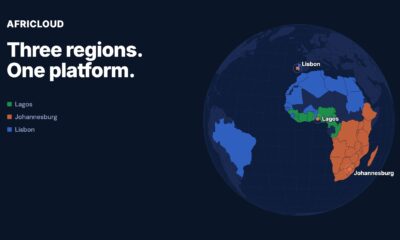
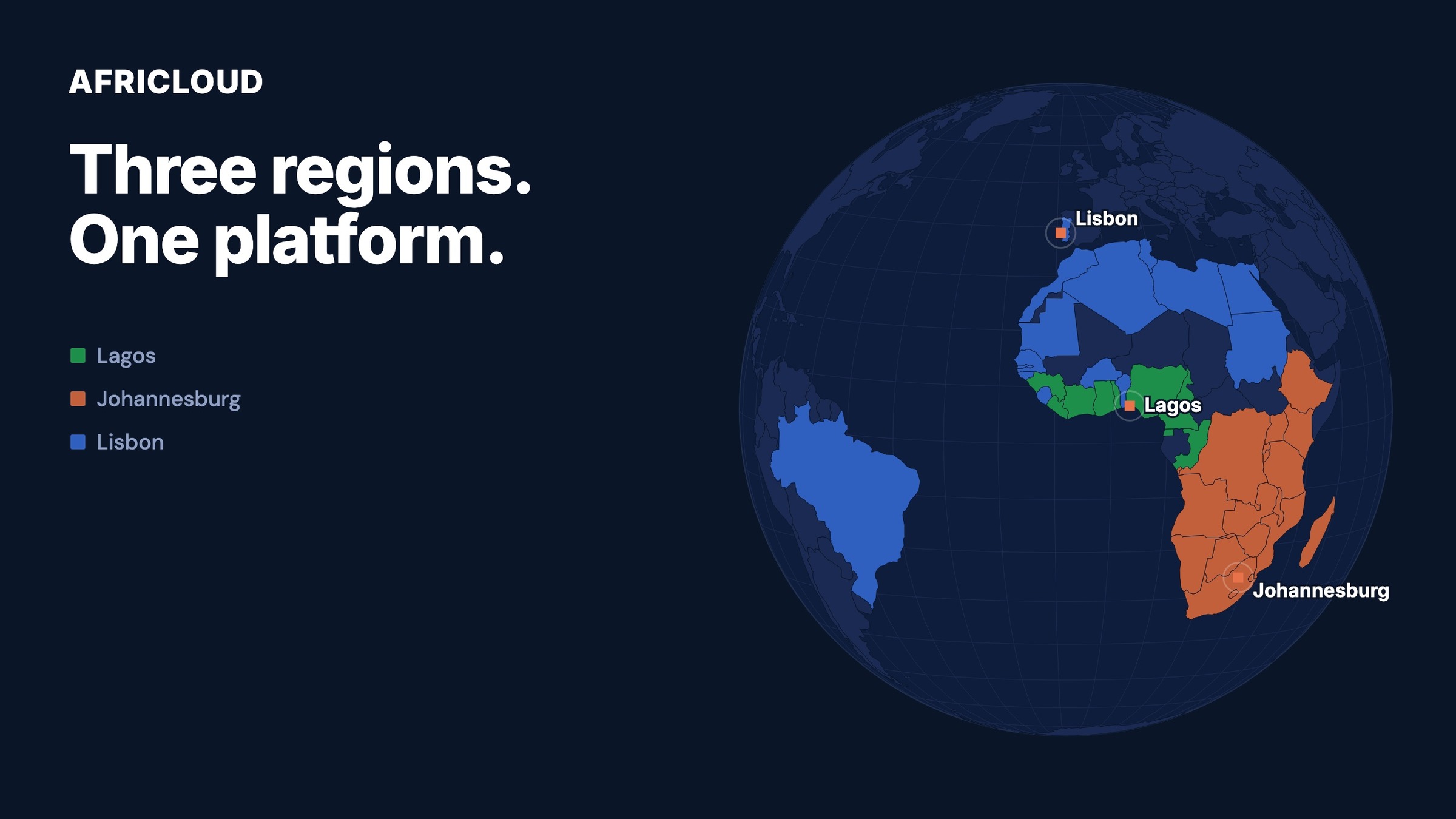
Lagos answers the first. Compute and storage for Nigerian customers stay in Nigeria, and the region also serves Accra, Abidjan, Lome, Douala and Ouagadougou. Traffic from landlocked West Africa that once reached comparable infrastructure by way of Europe now stays on terrestrial West African fibre. Johannesburg serves Southern and East Africa. Lisbon serves North Africa and Europe, and reaches Brazil over a direct subsea route. Across the three regions, AFRICLOUD’s own continent-wide measurements place 42 of the 53 African countries measured within a best-case round trip of 70 milliseconds, countries home to about 1.28 billion people.
A company in Accra or Abidjan now reaches West African infrastructure without leaving the region, and pays for it in the currency it earns
Payment answers the second. Customers across West, Central, East and Southern Africa pay in their own currency, including the naira, the cedi, the shilling and the CFA francs, by local card, bank transfer, USSD or mobile money, with no international card needed. Mobile money is live in twelve African countries, and cards, PayPal and more than 300 cryptocurrencies are accepted everywhere. The GSMA reports that 74 per cent of the world’s mobile money activity by transaction count took place in Africa in 2024.
Residency answers the third. Nigerian data runs under the Nigeria Data Protection Act, South African data under POPIA and European workloads under EU law, chosen server by server from the same dashboard.
“African businesses have been asked to choose between infrastructure that is close, infrastructure they can actually pay for, and infrastructure that keeps their data under their own law,” said Oluniyi Ajao, Founder of AFRICLOUD. “Removing that choice is the reason we built this.”
“Lagos is the piece that completes the map,” he said. “A company in Accra or Abidjan now reaches West African infrastructure without leaving the region, and pays for it in the currency it earns.”
All three regions run the same platform: AMD EPYC processors with all-NVMe storage, IPv4 and IPv6 on every server, and a new server online in about two minutes. Dedicated Servers are built to order in all three regions. Support is available around the clock by chat and email.
Cloud Servers are available now at https://AFRICLOUD.com.
Distributed by APO Group on behalf of AFRICLOUD LLC.
Business
Hong Kong outlines strategies for deepening development of the Guangdong-Hong Kong-Macao Greater Bay Area and enhancing green transformation

Business
Alamein Africa Forum to bring together key political and business leaders

-

 Business3 days ago
Afreximbank, Ghana Infrastructure Investment Fund (GIIF) and Ghana’s 24-Hour Economy Authority launch project preparation partnership to accelerate 24H+ projects
-

 Events3 days ago
Huawei Cloud Rolls Out Enterprise AI Products Across the Board, Building an Open Agentic Cloud
-

 Business2 days ago
Hong Kong sets out strategies to enhance the appeal and add value to the city’s tourism industry
-

 Business2 days ago
Former DAMAC Senior Vice President Paulo J. Cruz Appointed Founding CEO of African Collaboration Group (ACG) to Spearhead Sports and Entertainment District Development Across Africa
-

 Energy3 days ago
Deals, Drilling and New Entrants Define Angola Oil & Gas 2026
-

 Business2 days ago
Africa Makes its Case for a Bigger Role on the Global Stage
-

 Business2 days ago
Hong Kong sets out initiatives to secure long-term development of pillar industries
-

 Business2 days ago
South Africa’s water challenges are reshaping how businesses plan for resilience