Connect with us
Anglostratits

Energy

Navigating South Africa’s energy challenges: insights for the Commercial and Industrial (C&I) sector

Published

on

commercial

In South Africa’s commercial and industrial (C&I) landscape, energy-intensive industries face mounting pressures from rising costs and the push toward sustainability. As the country grapples with transitioning from chronic energy insecurity to greater independence, sectors like mining, manufacturing and heavy industry are pivotal in driving economic resilience. Investments in renewables, storage solutions and innovative infrastructure are not just operational necessities but catalysts for broader growth, enabling companies to mitigate risks, reduce their carbon footprint and enhance competitiveness amid changing global trade dynamics.

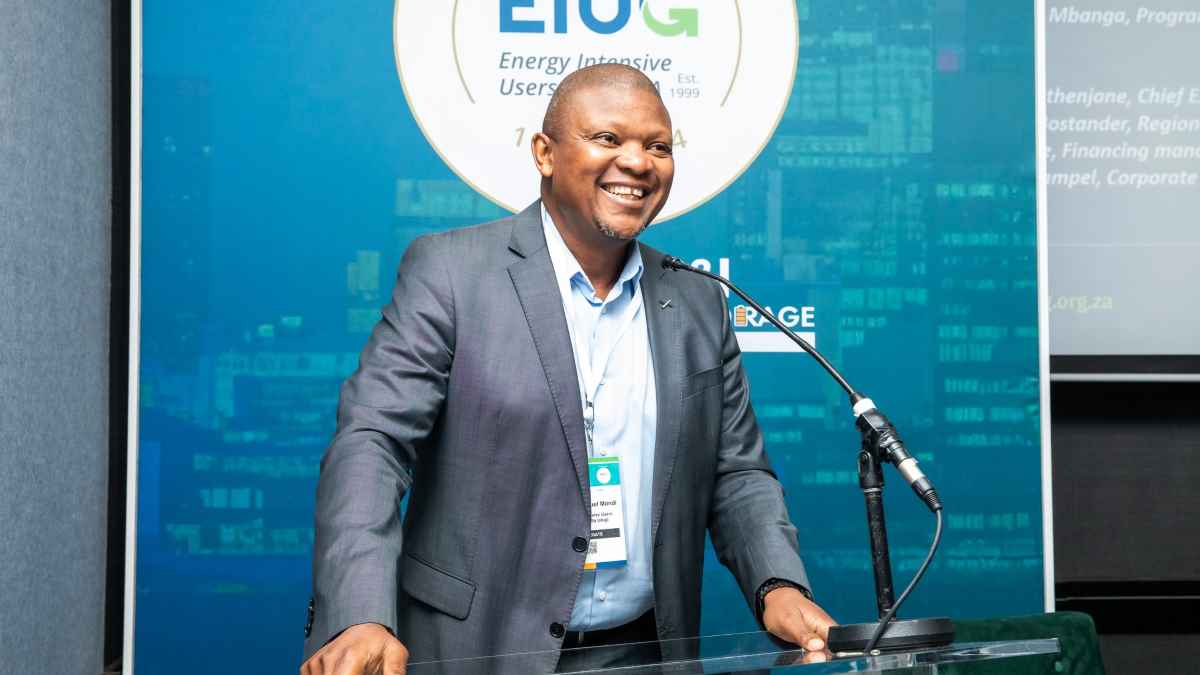
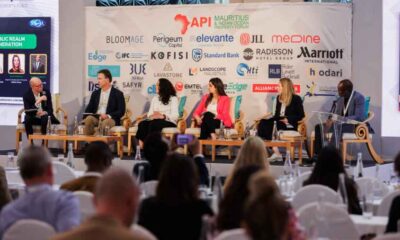
Against this background, the EIUG Conference 2025 (https://apo-opa.co/47i0Ujc) emerges as a key platform for unpacking this evolving energy ecosystem. In the context of South Africa’s electricity market reforms, the event delves into strategies for achieving reliable and affordable power. For instance, discussions on the next phase of market liberalisation—led by figures like Monde Bala, CEO of the National Transmission Company of South Africa (NTCSA)—offer clarity on how C&I players can navigate regulatory changes and unlock grid capacity.

“South Africa must accelerate its transition from energy insecurity to energy independence,” says Fanele Mondi, CEO of the EIUG. “The C&I sector plays a catalytic role in this shift – not only through investment and innovation, but by creating a resilient foundation for economic growth. This event convenes the right people, ideas and capabilities to make that transition a reality.”

Showcasing real-world advancements, the conference highlights transformative projects that demonstrate pathways to decarbonisation and grid stability. Examples include large-scale solar wheeling initiatives alongside investments in data centres and renewable developments. These case studies illustrate how C&I-led innovations can scale up, offering answers to questions around technical feasibility, financing and integration with existing infrastructure.

South Africa must accelerate its transition from energy insecurity to energy independence

Download the programme (https://apo-opa.co/4ockMv2)

Exploration of emerging technologies further equips attendees with options for diversifying the energy mix. Sessions on corporate energy storage, Small Modular Reactors (SMRs) and Gas-to-Power—drawing from leading organisations like CSIR, SANEDI, NECSA and the South African Oil & Gas Alliance (SAOGA)—break down viable alternatives, helping companies evaluate which solutions best align with their sustainability goals and cost constraints.

Leadership perspectives underscore the shift from viewing energy as a risk to a strategic enabler. A leader’s panel reframes energy security as a growth driver, while deeper dives into market design and power trading tackle how to foster a competitive environment amidst all the change.

Global influences, such as the EU Carbon Border Adjustment Mechanism (CBAM), add another layer of complexity for export-oriented sectors like iron, steel, aluminium and cement. Input from TIPS, The Manufacturing Circle and various EIUG members explore trade implications and adaptive responses, providing context for C&I entities on policy alignment and corporate strategies to maintain market access.

The keynote focus lies in integrating interconnected risks, such as water and energy management, where industries are increasingly adopting holistic frameworks to build operational resilience. The panel discussion provides practical perspectives on balancing these elements, addressing common queries from C&I firms about optimising resources in constrained environments.

Distributed by APO Group on behalf of VUKA Group.

Home  Facebook

Energy

ESI Africa 2026 Finance & Investment Insights: Charting the Path to Africa’s $4.2 Trillion Infrastructure and Energy Opportunity

Published

on

Investment

The report, Finance & Investment Industry Insights Volume 1 2026, provides a strategic roadmap for investors, utilities, and policymakers navigating funding of the continent’s infrastructure landscape

CAPE TOWN, South Africa, March 26, 2026/APO Group/ –ESI Africa releases the definitive 2026 Finance & Investment Industry Insights Volume to navigate Africa’s infrastructure transition and South Africa’s R4.2 trillion funding gap.

The report, Finance & Investment Industry Insights Volume 1 2026, provides a strategic roadmap for investors, utilities, and policymakers navigating funding of the continent’s infrastructure landscape.

As African economies face macroeconomic stress from global geopolitical volatility and rising energy prices, the need for structural investment is now more urgent than ever.

The publication arrives at a critical juncture, specifically addressing the R3.6 trillion to R4.2 trillion funding gap South Africa must bridge to achieve energy security and Net-Zero commitments by 2050.

“From the analysis in this Volume, there is no doubt that South Africa faces a critical capital ‘hump’ between 2025 and 2030,” notes Nicolette Pombo-van Zyl, Editor-in-Chief.

“Success here depends less on the global availability of money and more on the country’s internal ability to implement regulatory efficiency. However, regardless of closing the funding gap, end users must prepare themselves for higher electricity bills.”

Key Insights from Volume 1 2026:

From the analysis in this Volume, there is no doubt that South Africa faces a critical capital ‘hump’ between 2025 and 2030

Electricity market reform and tariffs
The volume provides a deep dive into how shifting to multi-market structures and wholesale trading is reshaping electricity bills. It explores the “tightrope” of achieving grid stability while moving toward cost-reflective tariffs, which in South Africa have already doubled in the last five years.

The evolution of sustainable finance
With the green debt market exceeding $800 billion globally, the publication distinguishes between “Green Finance,” for established solutions, and the emerging “Transition Finance” pillar for hard-to-abate sectors.

Carbon markets as an asset class
Driven by corporate net-zero commitments, the carbon credit market is projected to grow to nearly $24 billion by 2030. The magazine examines how “pricing the invisible” can make marginal projects bankable in emerging markets.

Venture capital & innovation
Despite an “AI shadow” that saw some non-specialist funds pivot away from energy, the report highlights the rise of “patient capital” and a 91% surge in venture debt value to $1.8 billion in 2025.

Critical minerals and “friend-shoring”
Following the 2026 Critical Minerals Ministerial in Washington, the report analyses how new tariffs and strategic supply-chain alliances are redrawing the map for African producers.

“The time of a single electricity provider is ending,” states the publication. “The new system is moving toward a market with more players, more pricing options, and clearer decisions about who pays and how.”

Next investable projects
The volume also features an Investable Project Pipeline, showcasing high-impact initiatives such as the 394,000-hectare Rubeho Mountains Carbon Project in Tanzania, forest restoration in Nigeria, and innovative mineshaft pumped hydro storage in South Africa.

“The common thread through all these insights is a move toward maturity. Whether it is through smarter revenue collection, more nuanced sustainable finance, or using minerals as leverage, Africa is increasingly positioning itself as a strategic, rather than just a reactive, player in the global energy transition,” says Pombo-van Zyl.

Finance & Investment Industry Insights, Volume 1 2026 is now available for download at https://apo-opa.co/4sCPZKi

Distributed by APO Group on behalf of VUKA Group.

Continue Reading

Energy

Delegations from Nigeria, Senegal, Zambia and Djibouti to Meet Investors at Invest in African Energy (IAE) 2026 in Paris

Published

on

Energy Capital

Senior delegations from Nigeria, Senegal, Djibouti and Zambia will attend IAE 2026 in Paris, offering investors insights into Africa’s growing oil, gas, power and renewable energy markets

PARIS, France, March 26, 2026/APO Group/ –With Africa’s energy landscape accelerating toward new frontiers in gas, power and renewables, the continent is drawing unprecedented investor attention. Senior delegations from Nigeria, Senegal, Djibouti and Zambia are confirmed to attend the Invest in African Energy (IAE) 2026 Forum in Paris, providing a unique platform for investors to engage directly with policymakers and project developers at a time of major energy expansion and infrastructure transition. Their participation highlights the continent’s drive to secure capital, scale domestic production and advance regional energy integration.


Nigeria: Gas Expansion and Export Growth
Nigeria’s energy sector continues to benefit from high-growth dynamics under the Petroleum Industry Act and its strategic pivot toward natural gas. The country’s Dangote Petroleum Refinery, with a 650,000-barrel-per-day capacity, reached full operation in February and has begun exports to countries including Ivory Coast, Ghana and Tanzania. Key infrastructure projects include the near-complete Ajaokuta-Kaduna-Kano gas pipeline and the Nigeria-Morocco Gas Pipeline. The 2025 Oil Licensing Round remains active, offering 50 blocks and attracting projected investment of $10 billion.

Senegal: Offshore Oil and LNG Growth
Senegal has achieved commercial production of offshore oil and LNG. The Sangomar field produced 36.1 million barrels in 2025, exceeding expectations, while the Greater Tortue Ahmeyim project’s Phase 1 delivered its first LNG cargo in April 2025. Senegal’s Karpowership LNG-to-power facility began supplying the domestic grid in mid-2025. Future developments include Sangomar Phase 2 and GTA Phase 2, alongside ongoing renewable energy projects under the Just Energy Transition Partnership.

Zambia: Diversifying Power Generation
Zambia is reducing reliance on hydropower, with solar, coal and petroleum projects scaling up. Notable initiatives include the $1.1 billion Ndola refinery, Chisamba and Itimpi II solar plants, and Maamba Collieries Phase II coal expansion. Reforms such as open access for independent power producers and fast-track approvals aim to unlock investment toward the government’s 10 GW generation capacity target by 2030.

Djibouti: Renewables and Regional Energy Hub
Djibouti imports most of its energy but is advancing renewable generation, including the 60 MW Ghoubet Wind Farm and the Grand Bara Solar Plant. Geothermal development at Lake Assal targets 50 MW of continuous power. Electrification currently covers roughly 65–70% of the population, with the government aiming for full access by 2030–2035. Djibouti also functions as a critical logistics hub for regional fossil fuel flows, particularly for Ethiopia.

The confirmed participation of these senior delegations reinforces the IAE 2026 Forum as a strategic platform for investors seeking verified, high-potential opportunities in Africa’s rapidly evolving energy sector, across oil, gas, power and renewable infrastructure. Their presence provides a direct line to key decision-makers and ongoing developments, offering insight into market dynamics, investment pipelines and regional energy growth.

IAE 2026 (www.Invest-Africa-Energy.com) is an exclusive forum designed to connect African energy markets with global investors, serving as a key platform for deal-making in the lead-up to African Energy Week. Scheduled for April 22–23, 2026, in Paris, the event will provide delegates with two days of in-depth engagement with industry experts, project developers, investors and policymakers. For more information, visit www.Invest-Africa-Energy.com. To sponsor or register as a delegate, please contact sales@energycapitalpower.com

Distributed by APO Group on behalf of Energy Capital & Power.

Continue Reading

Business

Sierra Leone Set to Showcase Offshore Ambitions with Petroleum Directorate of Sierra Leone (PDSL) Joining African Energy Week (AEW) 2026 as Strategic Partner

Published

on

African Energy Chamber

Sierra Leone is advancing offshore exploration, preparing a new licensing round and finalizing the formation of a new national oil company ahead of its Strategic Partnership with AEW 2026

CAPE TOWN, South Africa, March 26, 2026/APO Group/ –The Petroleum Directorate of Sierra Leone (PDSL) has joined African Energy Week (AEW) 2026 – scheduled to take place in Cape Town from October 12–16 – as a Strategic Partner. The Directorate will be positioned to leverage the event to highlight its open acreage, competitive fiscal framework and upstream integration plans to international investors, signaling Sierra Leone’s emergence as a frontier exploration hotspot in the MSGBC basin and across the wider Gulf of Guinea.


Italian energy major Eni and other international players have engaged in detailed geological studies across Sierra Leone’s offshore basin, underscoring rising confidence in the country’s hydrocarbon potential. Backed by enhanced 3D seismic reprocessing and basin-wide prospectivity studies, the PDSL is accelerating data-led de-risking efforts to unlock prospects such as Vega and attract fresh upstream capital.


A central focus for investors is the anticipated resumption of offshore drilling in 2026 – the country’s first campaign in nearly a decade. Following the conclusion of its fifth licensing round, which offered 56 offshore blocks, Sierra Leone is preparing to drill new wells targeting an estimated multi-billion-barrel resource base, supported by improved subsurface imaging and strengthened regulatory oversight.


PDSL’s participation at AEW 2026 reflects Sierra Leone’s serious commitment to unlocking its offshore potential through transparency, strong fiscal terms and data-driven de-risking

Sierra Leone is also in the final stages of establishing its first state-owned national oil company, which will hold a mandatory 10% carried interest in all exploration licenses. The government is targeting an overall 25–30% participation in projects, balancing national value capture with competitive terms for international operators.


Downstream integration is also gathering pace, with the 105–126 MW Nant gas-to-power plant in Freetown, developed by Anergi Group and TCQ Power, expected to nearly double national generation capacity when it comes online in 2027. In parallel, PDSL is spearheading plans for Sierra Leone’s first refinery to reduce reliance on roughly 15,000 barrels per day of imported refined products.


“PDSL’s participation at AEW 2026 reflects Sierra Leone’s serious commitment to unlocking its offshore potential through transparency, strong fiscal terms and data-driven de-risking,” said NJ Ayuk, Executive Chairman, African Energy Chamber, adding, “Their strategic vision aligns with Africa’s broader push for energy security, industrialization and investor partnership.”


With drilling set to resume, a national oil company nearing launch and integrated gas-to-power and refining projects advancing, Sierra Leone is entering a defining phase. At AEW 2026, PDSL is expected to present a clear message: the basin is open, the data is ready, and the opportunity is real.

Distributed by APO Group on behalf of African Energy Chamber.

Continue Reading

Trending