Connect with us
Anglostratits

Business

Namibia and Equatorial Guinea Youth-Focused Local Content, Gas Monetization a Boost for Intra-African Energy Growth

Published

on

Energy Growth

Following an agreement forged during the Namibian International Energy Conference in 2022, a youth training initiative launched by Namibia and Equatorial Guinea has set the tone for an ambitious local content drive that will position Namibia as a competitive hydrocarbon producer

JOHANNESBURG, South Africa, January 4, 2023/APO Group/ — 

Namibia, as an upcoming hydrocarbon producer, and Equatorial Guinea, as one of Africa’s top natural gas producers, have taken the lead towards positioning Africa as a globally competitive oil and gas producer, leveraging intra-African partnerships and cooperation to scale up the local workforce.

Following sizable oil and gas discoveries made in Namibia in 2022, the two countries forged an agreement during the Namibian International Energy Conference (NIEC) 2022 that saw four Namibian engineers receive training at the Equatorial Guinea Liquefied Natural Gas (EG LNG) facility. This program has been significant, both for Namibia’s future oil and gas industry and for Africa’s energy sector at large, and the African Energy Chamber (AEC) commends both countries on this bold initiative. 

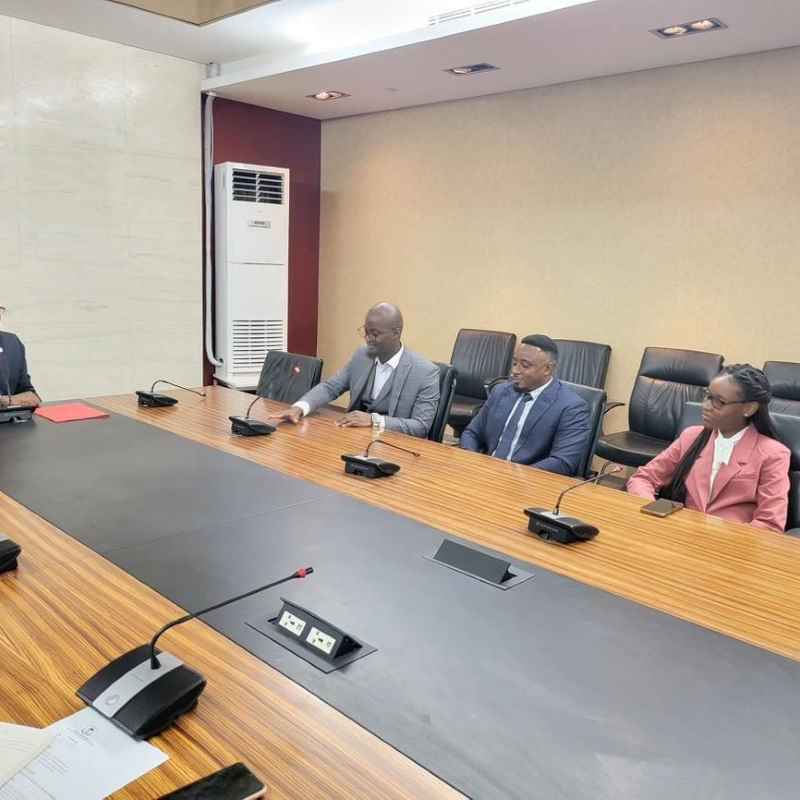
During the NIEC 2022, Hon. Tom Alweendo, Namibia’s Minister of Mines and Energy, announced the training partnership with H.E. Gabriel Mbaga Obiang Lima, Equatorial Guinea’s Minister of Mines and Hydrocarbons. Hon. Minister Alweendo visited Equatorial Guinea and worked with his counterpart to kick off the training of Namibians.

To date, four Namibian engineers have received training at EG LNG, owned by Marathon Oil, Chevron and the Equatorial Guinean government. In addition to receiving exploration and production training at the facility, the engineers were trained at the associated Methanol Facility and the Turbo Gas Facility at the Punta Europa Complex.  

It is good to see energy companies in Equatorial Guinea taking the lead in the training and development of Namibian youth
The Namibian engineers also received training on various operational matters from British independent Trident Energy, known for operational efficiency and production improvements. Trident is the operator of Block G, which includes the producing Ceiba and Okume Complex fields — made up of six oil fields in the Gulf of Guinea, in shallow and deep water in the Rio Muni basin.

This training has not only signaled a new era of intra-African energy collaboration and partnerships but has opened up significant opportunities for Namibia to position itself as a globally competitive oil producer on the back of south-south cooperation. 

With both countries having placed local content at the center of their developmental strategies, this training initiative marks the start of a new era of hydrocarbon growth in Africa on the back of cooperation and collaboration. Long-term, Equatorial Guinea is committed to establishing itself as a regional energy hub, leveraging ambitious local content initiatives to develop a strong and competitive hydrocarbon market in-country. Similarly, Namibia, at the start of its hydrocarbon journey, has recognized the role local content will play in making energy poverty history while kick starting industrialization and economic prosperity. As such, the country has introduced proactive local content policies, with the Equatorial Guinean training initiative only furthering this agenda.

“It is good to see energy companies in Equatorial Guinea taking the lead in the training and development of Namibian youth. EG LNG, Trident Energy, Chevron, Marathon Oil should be given huge credit, incentive and encouraged to do more. It is important for young Africans. Energy companies are our partners, and we must support them as we push for Namibian energy growth,” stated NJ Ayuk, Executive Chairman at the AEC.

The training initiative followed Shell’s Graff-1 discovery and TotalEnergies Venus discovery made merely weeks apart in February 2022, unlocking up to four billion barrels of recoverable reserves combined. The discoveries were significant, with their associated developments set to double Namibia’s GDP by 2040. Shortly thereafter, the country took a proactive approach to get advanced training from U.S. and regional firms, with the government eager to bring these projects online as soon as possible. In this scenario, Equatorial Guinea emerged as the obvious partner, with the country hosting a suite of global energy majors and large-scale hydrocarbon developments alike.

Owing to sizeable domestic oil and gas reserves, as well as an accelerated drive by the government to monetize regional untapped reserves, Equatorial Guinea has put in motion a series of large-scale projects such as the Punta Europa LNG Terminal – comprising Train 1, producing 3.7 million tons per annum (mtpa) of LNG, and Train 2, set to produce up to 4.4 mtpa once completed – the wider Punta Europa Gas Complex – comprising Methanol and Turbo Gas Facilities – and the Central African Pipeline System. These projects have enabled the country to export gas worldwide, with Equatorial Guinea serving as a key supplier of gas to Europe in the ongoing gas crisis. In this scenario, companies such as Marathon Oil, Sonagas, ExxonMobil and Panoro have been key, and offer Namibia unparalleled insight into developing and operating large-scale projects.

“What Minister Alweendo and Obiang Lima have done should be commended. They have demonstrated the role that intra-African energy cooperation will play in Africa’s energy future. Equatorial Guinea, with its expertise as an oil and gas player, offers Namibia the knowledge and training that the country needs to develop a thriving domestic oil and gas industry. Through this training initiative, both countries have prioritized local content, developing the local industry and getting young people ready to lead oil and gas exploration and production. At the AEC, we are proud to see what Namibia and Equatorial Guinea are doing and want to see more African states following suit,” concluded Ayuk.

Distributed by APO Group on behalf of African Energy Week (AEW).
Business

Afreximbank Posts Robust Q1 2026 Results with 25% Growth in Net Income and Improved Profitability

Published

on

Afreximbank

The results demonstrate continued resilience, disciplined balance sheet management and strong deal execution despite a challenging global operating environment

The growth in net interest income and profitability demonstrates the strength of our operating model and the continued relevance of our mandate

CAIRO, Egypt, May 22, 2026/APO Group/ –African Export-Import Bank (“Afreximbank” or the “Bank”) (www.Afreximbank.com) and its subsidiaries (the “Group”) announced its results for the three months ended 31 March 2026. The results demonstrate continued resilience, disciplined balance sheet management and strong deal execution despite a challenging global operating environment.


The Group continued to expand its lending activities in Q1 2026, resulting in total credit exposure growing by 2% to reach a portfolio of US$42 billion, up from US$41 billion as of 31 December 2025. This performance reflects Afreximbank’s leading role as a Development Finance Institution (DFI) in financing trade and trade-enabling infrastructure, and its strategic contribution to economic resilience across Africa and the Caribbean.

Average loans and advances for Q1 2026 stood at US$32 billion, up 8% compared to the same period in the prior year, driving the recorded growth in interest income. The Group’s liquidity position remained strong, with cash and cash equivalents of US$5.6 billion, representing 14% of total assets, consistent with FY2025 and above the Bank’s strategic minimum.

Asset quality also remained strong, with the non-performing loan (NPL) ratio at 2.40%, broadly in line with 2.43% at FY2025 and below industry average.

Shareholders’ funds increased to US$8.6 billion at 31 March 2026, up from US$8.4 billion at FY2025, supported by internally generated capital of US$268.9 million and new equity investments received during the quarter, underscoring the Bank’s continued ability to mobilise capital from its shareholders in support of its growth and development mandate.

The Group delivered strong profitability during the quarter.  Notwithstanding declining benchmark rates, total interest income rose by 14% year-on-year to reach US$813.6 million, while net interest income increased by 24% to US$510.0 million, compared with US$411.2 million in the first quarter of 2025. The Group’s cost-to-income ratio remained contained at 19%, well within the Group’s strategic ceiling of 30%. As a result, Profit for the period increased to US$268.9 million, up from US$215.4 million in Q1 2025.

The Group continued to maintain a strong capital position, with a capital adequacy ratio of 23% as at 31 March 2026, in line with the Bank’s long-term capital management targets.

During the quarter, Afreximbank continued to demonstrate its counter-cyclical role in response to external shocks. In March 2026, the Bank launched a US$10 billion Gulf Crisis Response Programme to help member countries mitigate adverse spillover effects from the Gulf crisis. The facility is designed to support liquidity, stabilise trade and payments, and address supply-side disruptions, particularly in energy, tourism and aviation, fertilisers, food and other critical imports.

The Bank also continued to deploy targeted financing and advisory support to strengthen trade flows, industrial capacity and economic resilience across Africa and CARICOM. Regional integration received further momentum following South Africa’s ratification of the Bank’s Establishment Agreement in February 2026, bringing one of Africa’s largest and most diversified economies into the Bank’s membership and giving the Bank full continental coverage.

Highlights of the results for Afreximbank Group are shown below:

Financial Performance Metrics

Q1’2026

Q1’2025

Gross Income (US$ million)

874.1

784.9

Net Income (US$ million)

268.9

215.4

Return on average equity (ROAE)

13%

12%

Return on average assets (ROAA)

2.62%

2.38%

Cost-to-income ratio

19%

16%


Financial Position Metrics

Q1’2026

FY’2025

Total Assets (US$ billion)

41.7

42.3

Total Liabilities (US$ billion)

33.0

33.9

Shareholders’ Funds (US$ billion)

8.6

8.4

Non-performing loans ratio (NPL)

2.40%

2.43%

Cash/Total assets

14%

14%

Capital Adequacy ratio (Basel II)

23%

          23%


Mr. Denys Denya, Afreximbank’s Senior Executive Vice President, commented:

“Against a backdrop of continued global uncertainty, heightened geopolitical risks and tight financial conditions, the Group delivered a resilient first-quarter performance, underpinned by disciplined balance sheet management, sound asset quality and strong capital and liquidity buffers. The growth in net interest income and profitability demonstrates the strength of our operating model and the continued relevance of our mandate. Our swift launch of the US$10 billion Gulf Crisis Response Programme further underscores Afreximbank’s counter-cyclical role in supporting member countries during periods of disruption. We remain focused on stabilising trade flows, easing liquidity pressures and advancing the industrial and economic transformation of Africa and the Caribbean.”

Distributed by APO Group on behalf of Afreximbank.

Continue Reading

Business

Via Licensing Alliance Expands Voice Codec Program with New Licensee, New Licensors, Publishes Comprehensive Pool Rate Structure

Published

on

Via Licensing Alliance

SAN FRANCISCO, CALIFORNIA, UNITED STATES – Media OutReach Newswire – 22 May 2026 – Via Licensing Alliance (Via) today announced continued momentum for its Voice Codec patent pool, including the addition of a new unnamed licensee and new licensors, NovaVoice Limited and Cordial IP, further growing the program’s patent stack and market penetration from its initial five, large global licensors.

The addition of the new licensee, unnamed at this time, reflects growing industry adoption of the collaborative licensing pathway Via’s Voice Codec program creates for accessing IP rights to critical voice technologies. This addition reflects a growing market uptake of advanced voice technologies, including EVS and IVAS, driven by rising demand as 5G and 5G-Advanced technologies are adopted worldwide.

Additionally, Via continues to prioritize transparency and has published its full rate structure for the Voice Codec pool, providing further clarity and predictability for implementers and to the broader market. For implementers, the full rate structure allows for complete visibility as they consider the appropriate royalty structure to choose from to meet their product level costs, evaluate future growth paths for their product lines, or plan their geographical expansion plan needs. This level of disclosure not only reduces uncertainty in licensing decisions but also enables more consistent benchmarking, reinforcing confidence in fair, market-aligned SEP licensing practices. The program’s royalty rates are listed on Via’s website at https://www.via-la.com/licensing-programs/voice-codec/#license-fees.

The addition of the new licensors indicates increased interest from patent holders in licensing their voice technology SEPs through highly efficient, aggregated licensing vehicles such as patent pools. Future growth in both the licensor list and the number of patents consolidated through the pool license will continue to enhance the value of the Voice Codec License for implementers. Via’s Voice Codec program licensors are listed here: https://www.via-la.com/licensing-programs/voice-codec/#licensors.

Via’s Voice Codec pool covers Enhanced Voice Services (EVS), which supports voice communications across more than one billion and growing active devices globally, as well as Immersive Voice and Audio Services (IVAS), which will play a central role in next-generation voice and spatial audio applications.

“We are pleased to welcome these new entrants to our pool, which signal continued growth and momentum our Voice Codec program,” said Kevin Mack, President of Via Licensing Alliance. “This pool license offers strong value relative to other market options and represents the only collaborative licensing solution for EVS and IVAS technologies, making it a smart and efficient pathway for companies seeking to license critical voice capabilities.”

EVS remains a foundational technology for high-quality voice communications in 5G and 5G-Advanced networks, with adoption continuing to expand as 5G, 5G-Advanced and future network iterations reach global scale. As spatial audio and advanced voice technologies expand into 6G and a broader range of non-cellular devices, the importance of IVAS technologies is expected to increase, with Via’s pool offering an early and effective licensing pathway.

For more information about the Voice Codec patent pool, including information for prospective licensees, please visit https://www.via-la.com.

About Via Licensing Alliance:
Via Licensing Alliance is the collaborative licensing leader, dedicated to accelerating global technology adoption, fostering participation, and generating return on innovation with balanced licensing solutions for innovators and manufacturers of all sizes around the globe. Via has operated dozens of licensing programs for a variety of technologies. Via is an independently managed company owned by industry-leading participants with over 25 years of intellectual property licensing leadership. For more information about Via, please visit https://www.via-la.com.


Continue Reading

Business

Joint statement welcoming the Republic of Togo’s announcement on Visa facilitation for African nationals

Published

on

Togo

The AfCFTA Secretariat and Afreximbank commend the Government and people of the Republic of Togo for hosting Biashara Afrika 2026 and for their continued commitment to advancing Africa’s economic integration agenda

LOMÉ, Togo, May 21, 2026/APO Group/ –The AfCFTA Secretariat and African Export-Import Bank (Afreximbank) (www.Afreximbank.com) welcome the announcement by the Government of the Republic of Togo, under the leadership of H.E. Faure Essozimna Gnassingbé, President of the Council of the Republic of Togo, regarding measures to facilitate visa-free entry for all nationals of African States holding valid passports, as announced by the Minister of Security on 18 May 2026.

The announcement was made in Lomé on the sidelines of Biashara Afrika 2026, the continent’s premier trade and business platform, which has brought together policymakers, private sector leaders, investors, and stakeholders from across Africa to advance dialogue on intra-African trade, investment, and regional integration.

Throughout the engagements, participants underscored the importance of facilitating the movement of African citizens, entrepreneurs, and investors as an important enabler of intra-African trade and economic cooperation. Against this backdrop, the announcement reflects the growing continental momentum towards strengthening connectivity and deepening African integration.

The AfCFTA Secretariat and Afreximbank, to which Togo is a State Party and a Member State, envision a continent where goods, services, capital, and people move more freely across borders in support of an integrated African market. Measures that facilitate mobility and connectivity continue to contribute towards advancing the broader mandate of both institutions; the attainment of the aspirations of Agenda 2063.

The AfCFTA Secretariat and Afreximbank commend the Government and people of the Republic of Togo for hosting Biashara Afrika 2026 and for their continued commitment to advancing Africa’s economic integration agenda.

Distributed by APO Group on behalf of Afreximbank.

Continue Reading

Trending