Connect with us
Anglostratits

Business

Mauritius tourism and hospitality industry to showcase growth and investment opportunities at the API Mauritius & Indian Ocean Property Investment Forum

Published

on

Mauritius

Mauritius is increasingly recognised as a leader in sustainable tourism, driven by government initiatives, industry commitment to eco-friendly practices, and real estate developments

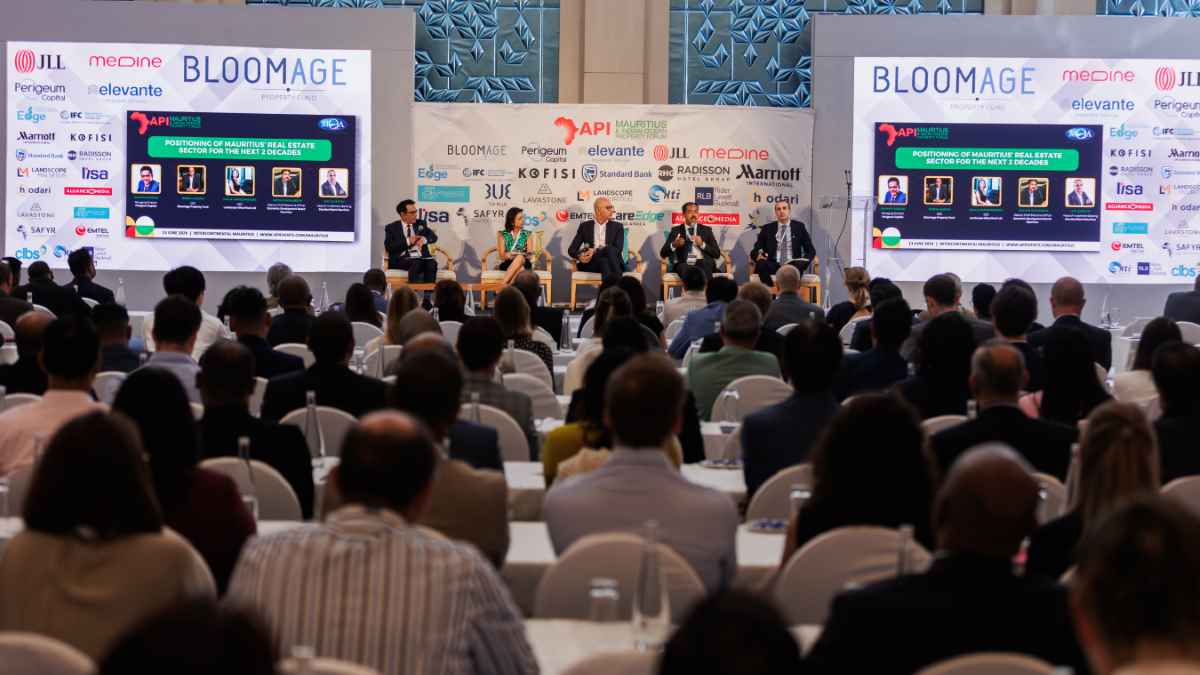
PORT LOUIS, Mauritius, June 13, 2025/APO Group/ –As Mauritius prepares to host the 3rd Annual API Mauritius & Indian Ocean Property Investment Forum on 26 June, industry leaders highlight the island’s pioneering role in sustainable tourism and hospitality development across the Indian Ocean region.

The forum will serve as a key platform to discuss growth prospects, investment challenges, and innovative partnerships shaping the future of hospitality in Mauritius and beyond.

Mauritius is increasingly recognised as a leader in sustainable tourism, driven by government initiatives, industry commitment to eco-friendly practices, and real estate developments.

The government aims to make Mauritius a “Green Destination” by 2030, focusing on reducing the negative effects of tourism like pollution and resource overuse, while increasing positive benefits such as protecting nature, supporting local communities, and preserving culture.

At the same time, real estate developments also follow green building principles, using energy-efficient designs and renewable energy to reduce carbon footprints. This combined effort from government, industry, and real estate creates a tourism sector that attracts visitors, cares for the environment, and benefits local people.

Neil George, Partner and Executive Director of Aleph Hospitality, notes that the region faces a significant opportunity to expand eco-certified hotels and circular economic practices in tourism that target waste reduction and promote local sourcing.

“Over the next five years, I believe that we will see substantial growth in eco-certified hotels as sustainability becomes a key differentiator. I expect that foreign investment in green hospitality projects will increase as Mauritius strengthens its sustainability credentials,” says George of Aleph Hospitality, which is the largest independent hotel management company in the Middle East and Africa.

However, he acknowledges that overcoming the perception of “Africa risk” and the somewhat illiquid nature of markets across the African continent remains a barrier to attracting institutional funding.

In other words, Africa is still widely viewed as lacking transparency, and it can be difficult to quickly buy or sell assets without impacting their prices. As a result, large investors such as banks and financial institutions find it challenging to commit funding. They prefer markets where information is readily available and where they can quickly recover their investments if necessary.

Investment challenges and innovative solutions

Institutional funding — traditional debt and equity funding — for hospitality developments in the Indian Ocean is often hindered by perceived market risks and limited liquidity.

Both Neil George and Govind Mundra, the Head of Development for Middle East & Africa at Wyndham Hotels & Resorts, emphasize these challenges remain perverse but also highlight innovative models to mitigate them.

Mundra points to branded residences and rental pool resorts as effective strategies that allow developers to pre-sell units and reduce upfront capital burdens while benefiting from global brand management and distribution networks. Wyndham assists developers and investors on this front.

“Branded residences and rental pools allow developers to pre-sell units—whether villas or condo-style apartments—while retaining them under a hotel management structure, easing both equity requirements and long-term debt burden.

There’s a clear opportunity to lead with eco-certified hotels, community-integrated experiences, and smart resort design – and we’re eager to be part but also to lead that journey

“It also gives investors the chance to monetize their assets while benefiting from a global brand, unified reservation system, and professional management. For interested investors, we’re always happy to explore these models further after the session. They’ve proven to be a powerful tool, especially when paired with our operational scale and strong visibility in key source markets,” says Mundra.

Wyndham’s “Wyndham Green” programme also provides a practical roadmap for hotels to achieve sustainability goals, graded across five levels covering energy use, waste reduction, sourcing, and community engagement. This approach aligns with the growing traveller demand for eco-conscious stays, particularly among younger generations, and supports Mauritius’s ambition to become a global benchmark in sustainable hospitality.

Predictions and growth outlook for the next five years

Industry leaders foresee a transformative shift in Mauritius’s hospitality sector over the next five years. Sustainable practices will evolve from optional enhancements to mandatory standards for new developments. Eco-certification, digital enablement, and environmental resilience will become prerequisites for new resorts, with guests expecting authentic cultural connections alongside eco-efficiency.

Aleph Hospitality’s expertise in tailored management solutions offers local entrepreneurs and investors opportunities to optimize operations, improve service quality, and attract international brands and investors through strategic partnerships. This collaborative approach can enhance return on investment from project inception through to exit phases.

Marriott International, one of the world’s largest hotel companies, has also reaffirmed its commitment to Mauritius, highlighting the island’s rich natural landscapes, cultural heritage, and world-class hospitality.

Says Jugal Khushalani, the Senior Director of Development for Sub-Saharan Africa at Marriott International: “The destination offers a resilient, high-value tourism offering that has evolved in terms of experience, accessibility, and infrastructure.  It also caters to the rising demand for experiential travel with enhanced luxury offerings, wellness experiences and environmentally conscious initiatives.”

Marriott International sees strong potential to expand its hotel portfolio in support of Mauritius’s resilient, high-value tourism economy.

Equally bullish about Mauritius is Radisson Hotel Group, which has reaffirmed its commitment to expanding in the Indian Ocean, building on its strong presence in Mauritius.

“Mauritius is setting the tone for sustainable hospitality in the region,” says Ramsay Rankoussi, Vice President of Development, Radisson Hotel Group, a major international hospitality company.

“There’s a clear opportunity to lead with eco-certified hotels, community-integrated experiences, and smart resort design – and we’re eager to be part but also to lead that journey. There’s growing demand from conscious travellers for resorts that integrate environmental stewardship with authentic local experiences which we have made our priority in all the hotels we operate on the island and globally,” says Rankoussi.

The Radisson Hotel Group is committed to net-zero operations by 2050. The group is also seeking to consolidate its existing presence across Mauritius, Madagascar, Reunion and Maldives but also to eventually enter Seychelles – aiming to bring its diverse portfolio of lifestyle, upper upscale, and eco-conscious brands to more of the region.

Government and industry collaboration for sustainable tourism

Mauritius’s government programme for 2025-2029 places eco-tourism at its core, reinforcing the island’s strategic focus on sustainable development. The Tourism Authority’s ongoing initiatives include banning single-use plastics, promoting renewable energy, encouraging local sourcing, and supporting eco-label certifications for hotels, such as Green Globe, held by prominent resorts. These efforts not only reduce the environmental footprint but also enhance the island’s appeal as a responsible travel destination.

Distributed by APO Group on behalf of API Events

Home  Facebook

Energy

U.S.-Africa Energy & Minerals Forum Expands to Critical Minerals and Supply Chain Security

Published

on

Africa

This year’s U.S.-Africa Energy & Minerals Forum in Houston signals a strategic shift toward integrated energy and critical minerals investment, strengthening U.S. partnerships across Africa’s resource and industrial value chains

HOUSTON, United States of America, February 26, 2026/APO Group/ –The U.S.-Africa Energy & Minerals Forum (USAEMF) has relaunched with a dedicated focus on critical minerals, marking an important evolution in its role as a platform for U.S.-Africa commercial engagement. Building on its foundation in energy, power and industrial projects, the forum’s expanded scope positions it at the center of investment conversations shaping the future energy economy.


Scheduled for July 21–22, 2026, in Houston, Texas, USAEMF comes at a time of surging global demand for copper, cobalt, lithium, manganese and rare earth elements, driven by electrification, battery storage, AI infrastructure and advanced manufacturing. Africa is increasingly critical to securing these materials, highlighting how energy and minerals are now interconnected pillars of industrial growth, geopolitical stability and decarbonization.

The forum’s minerals mandate deepens engagement with African producers – particularly the Democratic Republic of Congo (DRC), home to some of the world’s largest copper and cobalt reserves. Momentum is building through the U.S.–DRC strategic minerals framework and the U.S.-backed Orion Critical Mineral Consortium, a major investment platform supported by the DFC and private partners. The consortium is pursuing a 40% stake in the Mutanda and Kamoto copper-cobalt operations in a $9 billion transaction, securing long-term supply for allied markets while reinforcing cooperation on infrastructure, security and supply-chain governance.

Placing critical minerals at the center while maintaining strong hydrocarbons engagement strengthens U.S.-Africa commercial ties

U.S. financing is also expanding across the region, with the DFC managing a continental portfolio exceeding $13 billion to support mining, processing and transport infrastructure for critical mineral supply chains. Recent commitments include rare earth, graphite and potash projects in Malawi, Mozambique and Gabon; broader investments in Uganda, Tanzania, Zambia and South Africa; and $553 million linked to the development of the Lobito Corridor. The DFC is also a major backer of TechMet, a U.S.-supported investment firm valued at over $1 billion, which is raising up to $200 million to expand copper, cobalt, lithium and rare earth assets and pursue new opportunities across the DRC and Zambia. Together, these initiatives underscore Washington’s push to diversify battery-mineral supply while positioning Africa as a long-term partner in clean energy and industrial value chains.

Houston’s role as host city reflects the alignment between American industrial capacity and African resource development. Long established as a global energy hub, the city is expanding into energy transition technologies, advanced materials, carbon management and industrial innovation. By convening African governments with U.S. private equity, development finance institutions, exporters, insurers and technical service providers, the forum creates a commercial platform capable of converting mineral potential into bankable projects.

“The evolution from USAEF to USAEMF reflects a broader shift toward integrated energy and mineral development,” states Nadine Levin, Portfolio Director at Energy Capital & Power, forum organizers. “Placing critical minerals at the center while maintaining strong hydrocarbons engagement strengthens U.S.-Africa commercial ties and advances projects that deliver long-term shared value.”

While critical minerals define the forum’s strategic expansion, the U.S.’ longstanding role in Africa’s energy sector remains central to the platform’s value proposition. American energy companies continue to advance exploration and development across key upstream markets, support gas monetization in the Gulf of Guinea and revitalize mature production in North Africa. U.S. export credit and development finance are also helping unlock large-scale LNG capacity in Mozambique while supporting optimization and expansion across existing gas infrastructure in West Africa – demonstrating how American capital, engineering expertise and risk-mitigation tools convert resource potential into delivered energy systems.

USAEMF is the leading platform connecting U.S. capital and technical expertise with Africa’s energy and minerals sectors. For more information or to participate at the upcoming forum, please contact sales@energycapitalpower.com

Distributed by APO Group on behalf of Energy Capital & Power.

Continue Reading

Business

Pesalink and Pan-African Payment and Settlement System (PAPSS) Unlock Cross-Border Payments in Local Currencies in Kenya

Published

on

Pesalink

The Pesalink–PAPSS partnership will reduce costs, speed up settlements, and help individuals, SMEs and businesses send money more efficiently across borders

NAIROBI, Kenya, February 26, 2026/APO Group/ —

  • Instant 24/7 bank-to-bank transfers across African borders in local currencies.
  • Simpler cross-border payments for individuals, businesses, and SMEs.
  • 80 plus Pesalink network participants now linked to 160 plus PAPSS participating banks.


Pesalink, Kenya’s de facto instant payment network, has partnered with the Pan-African Payment and Settlement System (PAPSS) to ease cross-border payment and speed up regional financial integration.


The partnership enables instant 24/7 cross-border payments from PAPSS participants into banks and mobile money operators within the Pesalink network in Kenya, all settled in local currencies. This reduces complex correspondent banking requirements and reliance on foreign reserve currencies.


Kenyan banks will now be able to offer faster, cheaper cross-border payments

PAPSS, an initiative of the African Export-Import Bank (Afreximbank) in collaboration with the African Union and the AfCFTA Secretariat, enables cross-border payments between African countries. Pesalink is now a Technical Connectivity Provider. It means that 80 plus Kenyan bank, fintech, SACCO and telco participants on the Pesalink network will be connected to 160 plus commercial banks and fintechs on the PAPSS platform.


Cross-border payments remain expensive and slow for many African businesses. The 2023 (http://apo-opa.co/4baDSh7) World Bank Remittance Prices report indicates that sending money across African borders incurs on average 7-8% of the total value sent (above the global average of 6–7%). Settlement can also take three to seven business days.


The Pesalink–PAPSS partnership will reduce costs, speed up settlements, and help individuals, SMEs and businesses send money more efficiently across borders.


Speaking during the partnership signing held at Pesalink offices in Nairobi, PAPSS CEO Mike Ogbalu III said, “For PAPSS to deliver true impact, collaboration with national and private switches like Pesalink is essential. Pesalink is the first switch we’ve piloted for transaction termination in Kenya, and we are already seeing greater adoption by opening more channels for seamless, local-currency cross-border payments across Africa.”


Pesalink CEO, Gituku Kirika, said “Kenyan banks will now be able to offer faster, cheaper cross-border payments. They will be helping their customers grow more regional trading relationships and thrive in a more integrated digital economy.”

Distributed by APO Group on behalf of Afreximbank.

Continue Reading

Events

Africa Trade Conference Returns to Cape Town with Esteemed Speakers Driving Africa’s Trade Agenda

Published

on

Africa

Second edition convenes global policymakers, business leaders, and innovators to accelerate Africa’s integration into global trade

CAPE TOWN, South Africa, February 26, 2026/APO Group/ –Access Bank Plc (www.AccessBankPLC.com) is proud to announce the distinguished line-up of speakers for the second edition of the Africa Trade Conference (ATC 2026), scheduled to take place on March 11, 2026, at the Cape Town International Convention Centre, Cape Town, South Africa. Building on the strong foundation of its inaugural edition, ATC 2026 will convene an exceptional assembly of global and African leaders, policymakers, investors, and business executives committed to shaping the future of trade on the continent.

The Africa Trade Conference has rapidly emerged as a premier platform for advancing dialogue and action around Africa’s evolving role in global commerce. The 2026 edition will feature influential voices from across finance, government, development institutions, and the private sector, who will share insights on unlocking trade opportunities, strengthening intra-African commerce, enabling business expansion, and positioning African enterprises for global competitiveness.

The confirmed speakers represent a powerful cross-section of leaders driving Africa’s economic transformation.

Building on the momentum of its maiden edition, which convened senior decision-makers from 28 countries, the 2026 conference with the theme “Turning Vision into Velocity: Building Africa’s Trade Ecosystem for Real-World Impact”, will have the keynote address delivered by Kennedy Mbekeani, Director General, Southern Africa Region, African Development Bank (AfDB), alongside Kwabena Ayirebi, Managing Director, Banking Operations at the African Export-Import Bank. Their joint keynote will address the evolving financing landscape for African trade and the strategic pathways for unlocking continental prosperity.

The welcome address will be delivered by Roosevelt Ogbonna, CEO/GMD, Access Bank Plc, who will set the tone for discussions centered on trade transformation, financial inclusion, and regional competitiveness, while Tolu Oyekan, Managing Director & Partner at Boston Consulting Group, will deliver insights on “Africa Trade Outlook 2026”, examining emerging macroeconomic trends, supply chain shifts, and growth opportunities across key sectors.  The CEO of Pan-African Payment and Settlement System, Mike Ogbalu, will be engaging the conference participants on the topic, “Building a Connected Africa Through Trade, Payments & Technology”, focusing on how payment interoperability and digital infrastructure can accelerate the African Continental Free Trade Area (AfCFTA) agenda.

The calibre of speakers confirmed for this year’s conference underscores the urgency and opportunity before us

The conference will also host a High-Level Ministerial Panel that features Elizabeth Ofosu-Adjare, the Minister for Trade, Agribusiness & Industry, Ghana; Tiroeaone Ntsima, Minister of Trade and Entrepreneurship, Botswana; Mr. Florian Witt, Divisional Head, International & Corporate Banking Oddo-BHF, Ms. Nathalie Louat – Global Director, International Finance Corporation (IFC), Dr Isaiah Rathumba – Head of Department, Limpopo Economic Development, Environment and Tourism and Mr. Alfred Idialu – Chief Rep Officer, Deutsche Bank among other policymakers shaping trade policy across the continent.

Commenting on the announcement, Roosevelt Ogbonna, Managing Director/Chief Executive Officer of Access Bank Plc, said:
“The Africa Trade Conference reflects our unwavering commitment to advancing Africa’s economic transformation by creating a platform that brings together the leaders, institutions, and ideas shaping the future of trade. The calibre of speakers confirmed for this year’s conference underscores the urgency and opportunity before us. Africa is not only participating in global trade, it is helping to redefine it. Through this convening, we aim to catalyse partnerships, unlock new opportunities for businesses, and accelerate Africa’s integration into global value chains.”

“At Access Bank, we see ourselves not just as financiers, but as connectors of markets, ideas, and opportunities. Our role is to help African businesses move from ambition to impact, from local relevance to global competitiveness.”

With operations in 24 countries globally, including 16 across Africa, Access Bank’s expansive footprint places it in a unique position to facilitate cross-border trade, unlock regional value chains, and simplify the complexities of doing business across markets.

“Our presence across Africa and key global corridors gives us a front-row seat to the realities of trade. It also gives us the responsibility to design solutions that are inclusive, scalable, and future facing. ATC 2026 is part of that commitment, Ogbonna added.

ATC 2026 is expected to catalyze partnerships, enable policy dialogue, and provide actionable strategies for businesses operating within and beyond the continent.

The Access Bank Chief puts it thus, “Africa will not be a spectator in the remaking of global trade. We will be one of its architects. ATC 2026 is where those blueprints will be drawn.”

For more information and registration, please visit https://apo-opa.co/4sdXWF7

Distributed by APO Group on behalf of Access Bank PLC.


Continue Reading

Trending