Connect with us
Anglostratits

Business

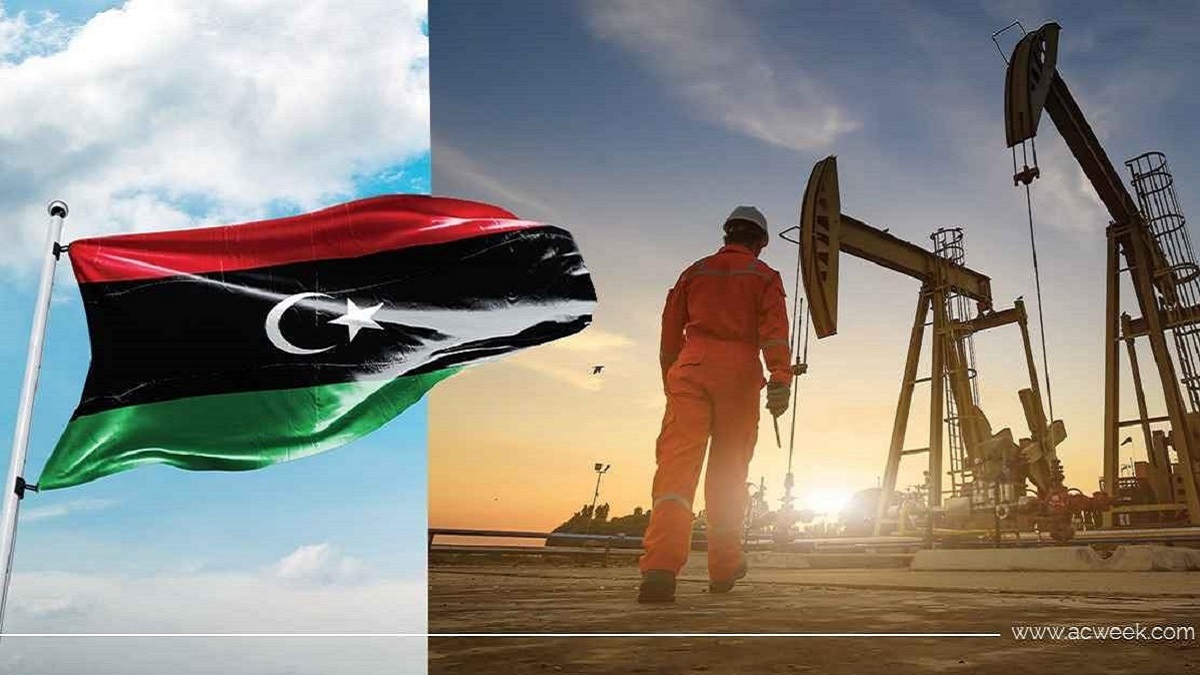
Libya’s Oil and Gas Outlook Continues to Look Stronger in The State of African Energy Q1 2023 Report (By NJ Ayuk)

Published

on

To increase confidence in the country’s oil and gas sector now that production has stabilized, the NOC has created a strategic plan to be carried out by what it is calling the Strategic Programs Office

JOHANNESBURG, South Africa, May 16, 2023/APO Group/ — 

By NJ Ayuk, Executive Chairman, African Energy Chamber (http://www.EnergyChamber.org).

When global oil prices reached a 15-year high in 2022, Libya, which holds 3% of the world’s hydrocarbon reserves and 39% of Africa’s, was unable to take advantage of the windfall.

The reasons were purely political.

Production was shut down for months beginning in April as oil became a pawn in the stalemate between rival leaders: internationally recognized Prime Minister Abdul Hamid Dbeibeh, head of the Government of National Unity (GNU), and Fathi Bashagha, parliament-appointed prime minister of the Government of National Stability (GNS).

Armed militias loyal to Khalifa Haftar, commander of the Bashagha-allied Libyan National Army, waged a campaign to oust Dbeibeh from office by blockading oil fields and ports. Within days, they had managed to close a laundry list of key operations and facilities, including the giant El Feel and El Sharara oil fields (plus several other smaller fields), and the Brega and Zueitina ports. As a result, Libya’s National Oil Company (NOC) was forced to declare force majeure, saying it was unable to fulfill its contractual obligations.

Economic Turmoil

The effect on the NOC was devastating, to say the least. At El Feel and El Sharara alone, lost production equaled 333,000 barrels per day (bpd), costing some USD34.69 million daily. Considering that oil and gas revenues have accounted in recent years for anywhere from 96% to 98% of Tripoli’s income (giving Libya one of the highest nominal GDPs in Africa), Libya’s economy didn’t fare any better.  The rebels’ actions were as much of a blow to the people as they were to Dbeibeh’s government.  

Unfortunately, this wasn’t the only time internal strife has targeted Libyan oil in recent years: A 2020 blockade of export terminals and pipelines resulted in GDP dropping 31% after exports of crude oil and condensates fell from 1.1 million barrels in 2019 to 350,000 barrels per day.

Despite the recent turmoil, things are looking up in Libya’s energy sector this year, at least so far. That’s according to “The State of African Energy Q1 2023 Report,” soon to be released by the African Energy Chamber (AEC). Among other country highlights, the report examines the effect of Libya’s parallel governments on its oil and gas industry and the NOC.

The State of African Energy Q1 2023 Report” predicts that, barring further disruptions, 2023 output should average 1.2 million bpd

Rapid Recovery

Production bottomed out under 600,000 bpd during the first half of 2022 — down 50% from the start of the year. But it rebounded remarkably almost as soon as Dbeibeh replaced the longtime NOC chair in July. The move, which was expected to give the country more control over oil revenues, satisfied the militia, who ended their blockades. In response, the NOC lifted force majeure and resumed full operations. As of the end of February 2023 crude oil production was close to pre-blockade levels at 1.164 million bpd. “The State of African Energy Q1 2023 Report” predicts that, barring further disruptions, 2023 output should average 1.2 million bpd.

That would put the NOC on its way to meeting the medium-term goal of 2 million bpd set last August by Dbeibeh, new NOC Chairman Farhat Bengdara, and other political heads. It’s unclear, however, if that figure can be achieved with the country’s current infrastructure, which is one reason GNU is working to attract additional foreign investment.

Political instability has been a fact of life in Libya for at least two decades, making it more challenging to convince international oil companies (IOCs) that Libya is a safe place to do business. Granted, there are a number of multinationals operating in the country, including France’s TotalEnergies, Italy’s Eni, Britain’s Shell, and America’s ConocoPhillips, some with histories dating back nearly 70 years. However, greenfield projects have been few and far between. When Eni announced in January of this year that it would partner with NOC in the USD8 billion Structures A&E offshore gas development, it marked the first new project in Libya in more than 20 years.

For Catherine Hunter, an analyst with S&P Global, the only way Libya can move forward is by cultivating a “far greater pool of investors to call on.” In an article posted by S&P Global, Hunter said that while there is clearly continued interest in Libya, it depends on the company’s risk tolerance.

To increase confidence in the country’s oil and gas sector now that production has stabilized, the NOC has created a strategic plan to be carried out by what it is calling the Strategic Programs Office. The idea, among other things, is to provide more transparency for IOCs into the NOC’s financials as a first step in what Bengdara called “an ambitious vision to return Libya to the ranks of the main energy-producing countries in the world.”

More Promising Signs

In the meantime, there are promising signs. In addition to Eni’s new venture, TotalEnergies, which holds interests in the Al Jurf, El Sharara, Waha, and Mabruk fields, late last year expanded its interest in Waha, completing a joint acquisition with ConocoPhillips to buy out Hess’ holdings.

In a media release, TotalEnergies said the purchase reflected the company’s “commitment to support Libya’s National Oil Corporation (NOC) in its efforts to restore and increase the country’s oil production, together with reducing gas flaring to increase supply to power plants for additional electricity supply.” The statement also said TotalEnergies and the NOC are studying the development of dedicated solar projects to supply electricity to Waha production sites.

Even more recently, good news came from the NOC itself: On May 1, just five weeks after the Erawin oilfield owned by an NOC subsidiary came online, production had already reached 92,000 bpd. That put it easily within range of its 100,000 bpd annual target.

Fair Winds

While political volatility doesn’t happen every day in hydrocarbon-producing countries, market volatility is far more common — and this time, Libya is prepared to profit from it. With Europe still seeking replacement supplies for Russian energy, it’s not surprising that long-time importers of Libyan energy — Italy, Spain, France, and Germany — would be turning to Tripoli for more oil and gas. Unless the political mayhem of 2022 resurfaces, it looks like Libya will continue to be an important outpost for exports and that the headwinds it has faced have died down.

Distributed by APO Group on behalf of African Energy Chamber.

Business

Sierra Leone Set to Showcase Offshore Ambitions with Petroleum Directorate of Sierra Leone (PDSL) Joining African Energy Week (AEW) 2026 as Strategic Partner

Published

on

African Energy Chamber

Sierra Leone is advancing offshore exploration, preparing a new licensing round and finalizing the formation of a new national oil company ahead of its Strategic Partnership with AEW 2026

CAPE TOWN, South Africa, March 26, 2026/APO Group/ –The Petroleum Directorate of Sierra Leone (PDSL) has joined African Energy Week (AEW) 2026 – scheduled to take place in Cape Town from October 12–16 – as a Strategic Partner. The Directorate will be positioned to leverage the event to highlight its open acreage, competitive fiscal framework and upstream integration plans to international investors, signaling Sierra Leone’s emergence as a frontier exploration hotspot in the MSGBC basin and across the wider Gulf of Guinea.


Italian energy major Eni and other international players have engaged in detailed geological studies across Sierra Leone’s offshore basin, underscoring rising confidence in the country’s hydrocarbon potential. Backed by enhanced 3D seismic reprocessing and basin-wide prospectivity studies, the PDSL is accelerating data-led de-risking efforts to unlock prospects such as Vega and attract fresh upstream capital.


A central focus for investors is the anticipated resumption of offshore drilling in 2026 – the country’s first campaign in nearly a decade. Following the conclusion of its fifth licensing round, which offered 56 offshore blocks, Sierra Leone is preparing to drill new wells targeting an estimated multi-billion-barrel resource base, supported by improved subsurface imaging and strengthened regulatory oversight.


PDSL’s participation at AEW 2026 reflects Sierra Leone’s serious commitment to unlocking its offshore potential through transparency, strong fiscal terms and data-driven de-risking

Sierra Leone is also in the final stages of establishing its first state-owned national oil company, which will hold a mandatory 10% carried interest in all exploration licenses. The government is targeting an overall 25–30% participation in projects, balancing national value capture with competitive terms for international operators.


Downstream integration is also gathering pace, with the 105–126 MW Nant gas-to-power plant in Freetown, developed by Anergi Group and TCQ Power, expected to nearly double national generation capacity when it comes online in 2027. In parallel, PDSL is spearheading plans for Sierra Leone’s first refinery to reduce reliance on roughly 15,000 barrels per day of imported refined products.


“PDSL’s participation at AEW 2026 reflects Sierra Leone’s serious commitment to unlocking its offshore potential through transparency, strong fiscal terms and data-driven de-risking,” said NJ Ayuk, Executive Chairman, African Energy Chamber, adding, “Their strategic vision aligns with Africa’s broader push for energy security, industrialization and investor partnership.”


With drilling set to resume, a national oil company nearing launch and integrated gas-to-power and refining projects advancing, Sierra Leone is entering a defining phase. At AEW 2026, PDSL is expected to present a clear message: the basin is open, the data is ready, and the opportunity is real.

Distributed by APO Group on behalf of African Energy Chamber.

Continue Reading

Business

Critical Mineral Projects to Watch Ahead of Invest in African Energy (IAE) 2026

Published

on

Energy Capital

The Uganda Chamber of Energy and Minerals, with both its CEO and governing council chairperson confirmed for Paris, will serve as the primary interface for investors seeking access to Uganda’s licensing framework and project pipeline

CAPE TOWN, South Africa, March 26, 2026/APO Group/ –Governments from West, Central and Southern Africa, with delegations confirmed for the Invest in African Energy (IAE) Forum in Paris next month, are each advancing critical mineral projects that span processing deals, development-stage assets and frontier exploration plays, giving investors a range of entry points across the minerals value chain.

Nigeria – Alumina Refinery & Lithium Processing

Nigeria struck a $1.3 billion deal with the Africa Finance Corporation in early March covering three components: construction of a one-million-ton-per-year alumina refinery, a national geoscience mapping program, and a joint investment vehicle to accelerate exploration and production across priority leases. Projected at 95% utilization over 20 years, the refinery is expected to add $1.2 billion to GDP annually and generate approximately $8 billion in foreign exchange earnings over its lifespan.

Separately, a $600 million lithium processing plant in Nasarawa State is at the commissioning stage, backed by ongoing mapping of lithium-bearing pegmatite belts across Kwara, Ekiti and Kaduna states. New mining licenses now require a local processing commitment covering at least 30% of output before export, a condition that directly shapes the investment structures available to foreign partners. Nigeria’s energy minister is among the confirmed delegations at IAE in Paris.

Zambia – Copperbelt Expansion & Cobalt Refinery


Copper output in Zambia is on course to clear one million tons in 2026, supported by First Quantum Minerals’ completed $1.25 billion S3 plant expansion at Kansanshi and Barrick Gold’s $2 billion program to double output at Lumwana by 2028. Several additional projects, including Sinomine’s Kitumba Mine and KoBold Metals’ Mingomba deposit, are also coming online this year, making Zambia one of the few places globally adding significant incremental copper supply in the near term.

Africa’s first cobalt sulfate refinery is targeting commissioning in Zambia in 2026, adding downstream processing capacity alongside the copper ramp-up. The Lobito Corridor, backed by a $553 million US Development Finance Corporation loan for Angola’s Benguela rail link, reduces export costs across the Copperbelt and improves project bankability for both mines and processing facilities seeking long-term offtake commitments.

Senegal – Falémé Integrated Iron Project

Senegal’s Falémé iron district in the Kédougou region holds over 600 million tons of probable reserves, including oxide ore at around 59% iron content and primary magnetite at roughly 45% Fe. The government launched the Falémé Integrated Iron Project as a phased program targeting 15 to 25 million tons per year at peak output, with national iron ore company MIFERSO conducting ongoing reserve verification.

The mineral export port at Bargny is operational and rail rehabilitation linking Kédougou to the coast is progressing under the Emerging Senegal Plan. The project is actively seeking a technical development partner. With port and rail infrastructure advancing independent of any single mining operator, Falémé carries lower logistics risk than comparable iron ore projects requiring greenfield corridor construction, which affects how financiers assess project bankability and timelines to first revenue.

Equatorial Guinea – Rio Muni Mineral Exploration

Equatorial Guinea’s Rio Muni mainland offers early-stage exposure to gold, bauxite, base metals, coltan and iron ore across largely underexplored onshore territory. The Ministry of Mines and Hydrocarbons has been opening the sector since its first public tender in 2019, with exploration contracts now in place and state geological mapping advancing in partnership with Rosgeo. Minister Antonio Oburu Ondo will address investors at IAE, with the minerals program expected to feature in bilateral meetings.

Uganda – Rare Earths & Minerals Sector Opening

Uganda holds rare earth deposits in ionic adsorption clay formations — a deposit type the IEA has flagged for low capital intensity relative to hard rock alternatives — alongside gold mineralization across greenstone belts in the West Nile, Karamoja and Mubende regions. The Uganda Chamber of Energy and Minerals, with both its CEO and governing council chairperson confirmed for Paris, will serve as the primary interface for investors seeking access to Uganda’s licensing framework and project pipeline, at the same time as the country’s Tilenga and Kingfisher oil developments move toward first oil.

Distributed by APO Group on behalf of Energy Capital & Power.

Continue Reading

Business

APO Group Takes Gold at 2026 SABRE Awards – Second Consecutive Win Across Different Clients and Sectors

Published

on

Recognition spans technology, global sport, and culture, reflecting APO Group’s cross-sector communications performance across Africa

JOHANNESBURG, South Africa, March 26, 2026/APO Group/ –APO Group (www.APO-opa.com), the pan-African communications consultancy integrating advisory, execution, and proprietary news distribution, has won gold in the Northern Africa category at the 2026 Africa SABRE Awards for its campaign, GITEX Africa Morocco 2025: A Media-Fuelled Journey for Tech Excellence.


Delivered for GITEX Africa, the campaign generated more than 3,600 media clippings across African and global outlets, positioning the event as the continent’s leading technology and startup platform, while reinforcing Morocco’s emerging status as a regional technology hub.

Being honoured at the SABRE Awards is particularly meaningful because it reflects the impact of communication designed specifically for how African markets work

APO Group was a finalist in two additional categories for campaigns delivered for international organisations operating across Africa:

  • The Africa Flag 2025 Tournament: Raising the Game in Cairo – National Football League (Media Relations category)
  • Broadcasting Greatness: Elevating African Hoops and Culture at BAL 2025 – Basketball Africa League (BAL) (Media, Arts & Entertainment category)

The SABRE Awards recognise excellence in branding, reputation management, and engagement across the global communications industry. This latest accolade adds to APO Group’s growing record at these prestigious awards, following its win in 2025 for a campaign delivered for Canon Central and North Africa, as well as multiple finalist placements for campaigns supporting leading institutions such as GITEX Africa, Africa’s Business Heroes, and the Global Africa Business Initiative.


“Being honoured at the SABRE Awards is particularly meaningful because it reflects the impact of communication designed specifically for how African markets work,” said Bas Wijne, Chief Executive Officer at APO Group. “Successful pan-African campaigns combine strategic planning and strong local execution, together with a clear understanding of how different markets, media environments, and audiences connect with a story. It’s about designing communications that deliver measurable outcomes and help organisations engage effectively and confidently across Africa’s diverse media landscape.”

In addition to its SABRE Awards success, APO Group has received multiple major industry honours over the past year, including Gold and Bronze at the Davos Communications Awards for excellence in strategic communications and campaign execution. The company was also named Africa’s Leading PR Agency – 2025 by Brands Review Magazine and Best Public Relations & Media Consultancy Agency of the Year – 2025 by World Business Outlook.Operating across 54 African countries, APO Group provides communications advisory services, public relations, and media distribution through its proprietary newswire, Africa Newsroom, which places content on more than 250 Africa-focused news platforms worldwide.

Distributed by APO Group on behalf of APO Group.

Continue Reading

Trending