Connect with us
Anglostratits

Business

Leading thinkers affirm Africa’s enormous potential and proven paths to prosperity
Published

on

Canada

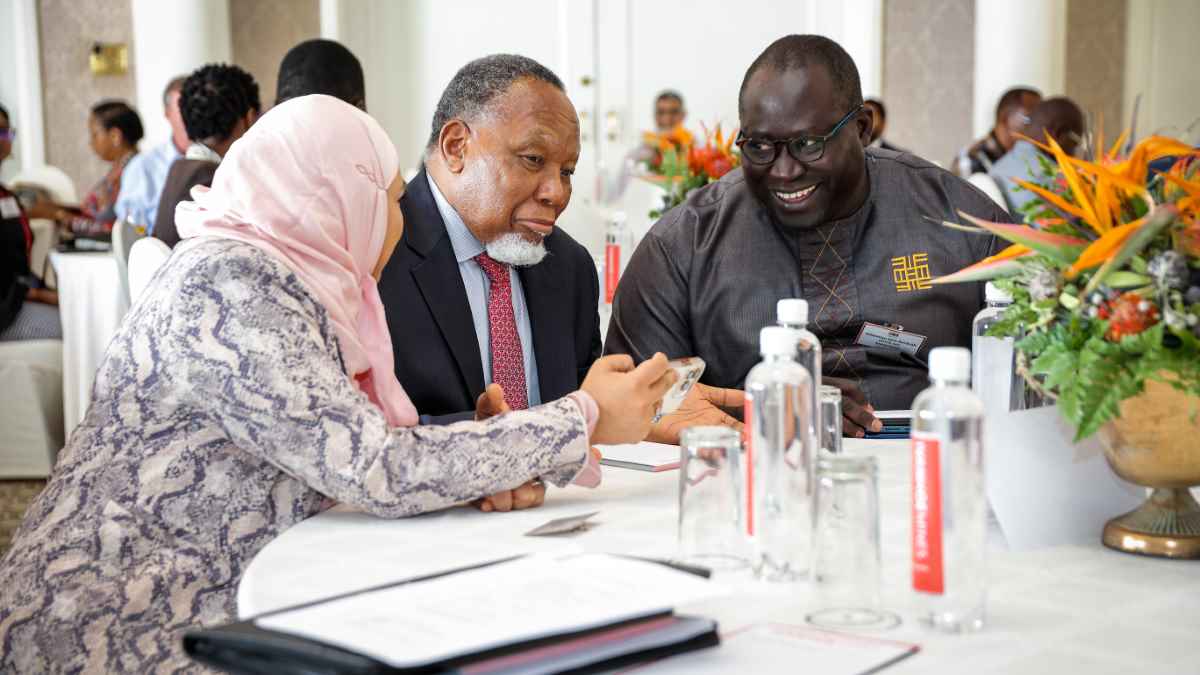
One of several tangible outcomes of the 3-day conference included a Memorandum of Understanding, signed between the Canada-Africa Chamber of Business and the Initiative for African Trade and Prosperity (IATP)

TORONTO, Canada, November 4, 2022/APO Group/ — 

“With proven reforms we’ve researched, there is no reason African countries could not become some of the most economically free and prosperous nations on earth’’ according to Fred McMahon, who serves as the Dr. Michael A. Walker Chair in Economic Freedom at the Fraser Institute, a leading Canadian think tank.

These opening remarks were delivered during the recent Africa Accelerating 2022 (http://bit.ly/3fyXgKN) conference, which welcomed messages from heads of state and government on the African continent and in Canada – kicking off three days of deliberations on how best to accelerate trade and investment between Canada and African markets.

For McMahon and numerous speakers drawn from the private and public sectors – as well as civil society – the message was clear: African countries can succeed, with Canada as a trusted partner in trade and investment, including in the creation of an enabling environment for economic development, through collaboration with some of its leading researchers.

The African Continental Free Trade Area (AfCFTA) served as a central point for deliberations over 3-days in Johannesburg, with hundreds of in-person delegates joined interactively by delegates at a satellite venue in Toronto and thousands of online registrants.

The official conference panel on Free Trade and Canada’s ongoing role as a trusted third-party partner for long-term prosperity followed a keynote address by H.E. Wamkele Mene, Secretary General to the AfCFTA Secretariat, who underscored the importance of free trade and markets.

There is absolutely no reason the top global rankings should not be dominated by African countries – with market potential translated to majorly improved outcomes

Ayanda Khumalo, Vice Chair of the Board at the FMF (a member of the Fraser Institute’s Economic Freedom of the World Network) (http://bit.ly/3DBlYSS) delivered the official Economic Freedom presentation, which preceded a forum with African and Canadian Ministerial representatives deliberating on effective strategies for trade and investment across African markets.

Khumalo detailed the institutional and policy pre-requisites for successful free trade and prosperity, in which businesses – especially at the early stage – can grow and succeed.

The world’s premier measurement of economic freedom by the Fraser Institute (http://bit.ly/3DBm5Oi), ranks countries based on five areas—size of government, legal structure and property rights, access to sound money, freedom to trade international and the regulation of credit, labour and business, he explained, summarising decades of data. There is absolutely no reason the top global rankings should not be dominated by African countries – with market potential translated to majorly improved outcomes.

Sebastian Spio-Garbrah, the Canada-Africa Chamber’s Special Envoy to the African Continental Free Trade Agreement concurred, recognising the Fraser Institute’s Economic Freedom of the World Report as an invaluable resource that shows not only the importance of free trade, but the supporting institutional and policy framework for African countries to succeed as members within a thriving African free trade bloc.  

The Economic Freedom of the World Report is an incredible contribution from Canada to the cause of economic freedom and prosperity around the world, he added.

Inspired by the work of the Fraser Institute, one of several tangible outcomes of the 3-day conference included a Memorandum of Understanding, signed between the Canada-Africa Chamber of Business and the Initiative for African Trade and Prosperity (IATP) (https://theIATP.org), comprised of African policy entrepreneurs and innovators working to accelerate trade and investment – with a particular focus on AfCFTA. With the sponsorship of 121 Canada (https://www.121Canada.com), the MoU commits the Canada-Africa Chamber of Business to supporting the IATP through full member benefits of the Canada-Africa Chamber, which include access to programs, events management, media services and matchmaking young leaders across Africa with Canadian organizations and prospective partners.

Recordings of the 3-day presentations are available here (https://bit.ly/3fyXgKN), including details of the incredible sponsors and partners whose support made Africa Accelerating 2022 possible.

Distributed by APO Group on behalf of The Canada-Africa Chamber of Business.

Business

From Megawatt (MW) to Gigawatt (GW): Why Africa Must Think in Grid-Scale Power to Compete in the Artificial Intelligence (AI) Economy

Published

on

African Energy Chamber

As AI infrastructure drives power demand into the gigawatt range, Africa must move beyond incremental energy planning – placing grid-scale generation at the center of discussions at African Energy Week 2026’s AI and Data Center Track

CAPE TOWN, South Africa, May 11, 2026/APO Group/ –The rapid expansion of artificial intelligence is fundamentally reshaping global energy demand, with implications that extend well beyond traditional power planning. Nowhere is this more apparent than in the growing energy footprint of data centers. Facilities that once required tens of megawatts are now being developed at 100–200 MW scale, with hyperscale campuses increasingly aggregating demand into the gigawatt range.


This shift presents a structural challenge for Africa. While the continent is rich in energy resources, its planning frameworks remain largely oriented around incremental, megawatt-scale additions – often tied to localized demand or short-term capacity gaps. In the context of AI-driven infrastructure, this approach is increasingly misaligned with the scale and concentration of future demand.

Africa’s data center sector, while growing, remains at an early stage. Operational capacity currently stands at approximately 300–400 MW, with projections reaching 1.5–2.2 GW by 2030. At the same time, demand is accelerating rapidly: electricity consumption from data centers is rising at 20–25% annually and is expected to reach around 8,000 GWh in the near term. This growth mirrors a broader global surge, with data center power demand projected to approach 945 TWh by 2030, driven largely by AI workloads.

This is ultimately about aligning Africa’s energy strategy with where global demand is heading

What distinguishes AI-related demand is not only its scale, but its concentration and consistency. Unlike many traditional industrial loads, data centers require uninterrupted, high-quality power, often with built-in redundancy. This places new demands on grid design, prioritizing stability, capacity and long-term scalability over incremental expansion.

Meeting these requirements will require a departure from conventional planning models. Rather than adding capacity in small increments, there is a growing case for developing gigawatt-scale generation aligned with emerging digital infrastructure hubs. This means integrating power generation, transmission and data center development into coordinated investment strategies, particularly in markets with strong resource bases and improving regulatory environments.

It also requires a shift in how excess capacity is viewed. In many African power systems, surplus generation has historically been treated as a financial inefficiency. In the context of AI and digital infrastructure, however, maintaining a margin of available capacity can enhance grid stability, reduce outages and provide the flexibility needed to support rapid load growth, while creating a foundation for broader industrial development.

A useful benchmark can be seen in Northern Virginia, the world’s largest data center market, where installed capacity has now exceeded 4 GW and more than 1 GW of new supply was added in a single year, reflecting the rapid pace at which hyperscale infrastructure is being deployed. Driven by major cloud and AI players, demand has tightened the market significantly, with vacancy rates approaching zero and most new capacity released well in advance. The scale and speed of development highlight how quickly data center demand is expanding – and underscore the level at which infrastructure must be planned.

These dynamics are increasingly shaping the policy conversation. At African Energy Week 2026, the AI and Data Center Track will focus on the infrastructure required to support this transition, with a particular emphasis on aligning energy planning with digital economy objectives. As AI infrastructure scales, reliable and abundant power is no longer a supporting factor, but a prerequisite.

“This is ultimately about aligning Africa’s energy strategy with where global demand is heading,” says NJ Ayuk, Executive Chairman of the African Energy Chamber. “If we continue to plan in megawatts, we will struggle to compete in an economy that is already moving at the gigawatt scale. Building larger, more resilient power systems is not just about meeting demand – it is about creating the conditions for investment, innovation and long-term growth.”

Distributed by APO Group on behalf of African Energy Chamber.

Continue Reading

Business

Telecoming Strengthens Its Presence in Africa with the Launch of DCB Software South Africa

Published

on

The company advances its regional strategy with a model built on AI, monetisation and direct connectivity with local operators

JOHANNESBURG, South Africa, May 11, 2026/APO Group/ –Telecoming (www.Telecoming.com), a global technology company specialising in the monetisation of digital services, announces the launch of DCB Software South Africa (www.DCBSoftwareZA.com), its new local subsidiary. The move reinforces the company’s growth strategy in Africa, one of the most promising markets in the mobile economy.

The new entity will be led by Javier de Corral, who will lead business development, establish partnerships with telecom operators and build a local team based in Johannesburg.

The South African launch builds on Telecoming’s existing footprint in the continent, where it already operates through its Algerian subsidiary, DCB Software Dzayer, further strengthening its regional position.

We are very excited about the opportunities in South Africa and committed to investing in its digital future

DCB Software South Africa will operate as a local hub focused on AI-driven digital services, supported by a team entirely based in the country. Its scope includes the development of digital products, mobile and web services, as well as solutions in digital entertainment and marketplaces, all built on scalable, multi-device platforms designed to ensure a seamless user experience.

The subsidiary combines in-depth knowledge of the South African and Sub-Saharan markets with direct access to telecom operators, digital platforms and local payment solutions. It will deploy multiple monetisation models, including Direct Carrier Billing (DCB), to optimise conversion rates and overall performance.

The launch of DCB Software South Africa marks a key milestone in our global expansion strategy”, said Cyrille Thivat, CEO of Telecoming. “We are very excited about the opportunities in South Africa and committed to investing in its digital future. With Javier de Corral at the helm, we are confident that this new subsidiary will not only drive our local growth but also contribute to the broader digital and AI ecosystem.”

Telecoming develops technology designed to enhance user acquisition, streamline payment processes and improve the performance of digital services. Its platforms integrate monetisation, advertising and user experience, leveraging artificial intelligence to deliver secure, scalable and efficient solutions.

This expansion reinforces Telecoming’s commitment to delivering innovative digital and AI services and strengthens its position as a key player in the African market. With this launch, the company takes another step in its international expansion, enhancing its ability to support the development of Africa’s digital ecosystem through advanced technology, local expertise and strategic partnerships.

Distributed by APO Group on behalf of Telecoming.

Continue Reading

Business

Enlit Africa 2026 makes 20 May the Commercial and Industrial (C&I) delivery day across power, water and clean energy hubs

Published

on

Enlit Africa 2026

Taking place 19–21 May 2026 at the Cape Town International Convention Centre (CTICC), Enlit Africa, created by VUKA Group, convenes utilities, municipalities, large energy users, financiers, developers and technology providers to focus on what shifts outcomes in African infrastructure

CAPE TOWN, South Africa, May 11, 2026/APO Group/ –Enlit Africa 2026 will put commercial and industrial delivery front and center on Wednesday 20 May with a dedicated line-up across the Power HubWater Hub and Renewable Energy & Storage Hub. The day is built for decision-makers who must keep operations running, secure reliable supply, manage risk and move projects from concept to implementation.


Taking place 19–21 May 2026 at the Cape Town International Convention Centre (CTICC), Enlit Africa, created by VUKA Group, convenes utilities, municipalities, large energy users, financiers, developers and technology providers to focus on what shifts outcomes in African infrastructure.

On 20 May, the programme is anchored by the keynote, “How a coordinated energy/water plan could change African resilience” (09:30–11:45), positioning water and energy as interlinked operational risks that can no longer be managed in silos. From there, the day breaks into practical tracks tailored for large users and the solution partners that support them.

In the Renewable Energy & Storage Hub, sessions focus on the realities of C&I adoption and delivery at scale, including “Project implementation for multi-megawatt C&I projects” (11:45–13:00) and “Clean energy adoption in the C&I market” (14:30–15:45), before turning to fleet electrification and operations with “Mobility: Management of electric vehicle fleets for C&I” (16:00–17:30).

In the Water Hub, the agenda targets the technologies and operating models that matter most to industrial continuity and compliance. Sessions include “Next-generation water treatment technologies” (11:45–13:00), “Advanced water treatment & smart water systems” (14:30–15:45) and “Accelerating water technology deployment for C&I operations” (16:30–17:30).

Together, the three stages create a single day of high-signal, implementation-led content for C&I leaders, utilities, municipalities and suppliers focused on operational performance, investment readiness and delivery discipline.

Distributed by APO Group on behalf of VUKA Group.

Continue Reading

Trending