BANGKOK, Thailand, October 20, 2026/APO Group/ —
By Ajong Mbapndah L.
Africa must do more to transform its vast natural resources into industries, jobs and prosperity rather than continue exporting raw materials while much of the economic value is created elsewhere, World Trade Organization Director-General Dr. Ngozi Okonjo-Iweala told a high-level gathering of African policymakers, development financiers and business leaders in Bangkok.
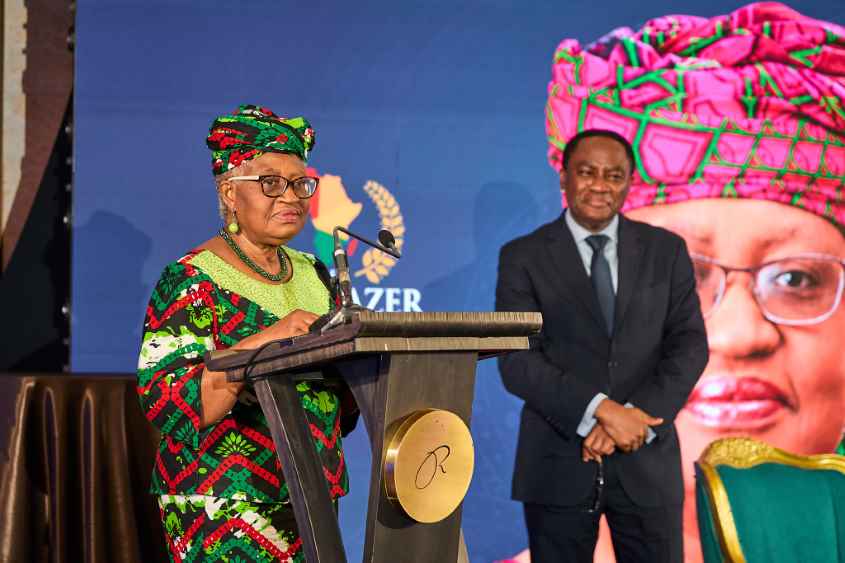
Her message was among the highlights of the October 14 Africa@WorldBank/IMF gathering, where she received the 2026 Trailblazer for Africa Award. The event also marked another milestone for the increasingly influential initiative championed by Dr. Denis Foretia, Executive Chairman of the Nkafu Policy Institute and Founder of the Denis and Lenora Foretia Foundation.
Held at the Rembrandt Hotel on the sidelines of the World Bank and International Monetary Fund Annual Meetings, the gathering brought together African ministers, central bankers, development finance executives, researchers and policy experts for discussions on industrialisation, trade, debt sustainability, investment and economic transformation. From its inaugural Washington edition in October 2025 to Bangkok a year later, Africa@WorldBank/IMF has steadily expanded its reach, with its next gatherings scheduled for April 14 and October 6, 2027, in Washington, DC.
For Foretia, the Bangkok meeting represented another step in a sustained effort to ensure that African institutions and policymakers exercise greater influence over international economic decisions affecting the continent. The recognition of Okonjo-Iweala, one of Africa’s most distinguished figures in global economic governance, gave the gathering additional prominence while reinforcing the initiative’s commitment to celebrating African leadership and advancing practical development solutions.
Ngozi Okonjo-Iweala Challenges Africa to Turn Its Wealth into Prosperity
The recognition of Okonjo-Iweala was one of the defining moments of the Bangkok gathering, celebrating a career spanning economic reform, international development finance and global trade governance.
The WTO Director-General expressed particular appreciation for the honour, describing recognition by African institutions as especially meaningful.
“This recognition by African institutions is very, very special,” she said during her acceptance remarks, reflecting on the importance of leadership that produces tangible benefits for society.
Her subsequent fireside chat went beyond personal reflections to address some of Africa’s most pressing economic challenges, including the export of unprocessed minerals, inadequate infrastructure and the limited mobilisation of domestic investment capital.
Pointing to the continent’s enormous mineral wealth, Okonjo-Iweala noted that Africa possesses approximately 30% of the world’s critical minerals, yet too much of that wealth leaves the continent without undergoing meaningful transformation.
“Africa has 30% of critical minerals,” she observed, lamenting that much of the continent’s mineral wealth is extracted and exported without being processed locally to support manufacturing and employment.
The consequences are considerable. While African countries supply minerals essential to modern technologies, manufacturing and the global energy transition, much of the processing, industrial production and employment associated with those resources takes place outside the continent.
Okonjo-Iweala’s message was that African governments must place greater emphasis on domestic processing, industrial investment and policies that allow their economies to capture a larger share of the value generated by their natural resources.
She also challenged African countries to make better use of their considerable domestic financial resources, particularly pension funds.
According to figures she cited, Nigeria, Kenya and South Africa collectively hold approximately $250 billion in pension assets, yet substantial portions of that capital are invested outside Africa.
She argued that regulatory reforms could help channel more long-term African savings into infrastructure, industrial development and productive investments, reducing excessive dependence on external financing.
Her remarks came at a time when many African governments are grappling with high borrowing costs, debt pressures and the need to mobilise investment for economic transformation.
Energy and Infrastructure at the Heart of Africa’s Industrial Future
Okonjo-Iweala also emphasised the importance of reliable electricity and basic infrastructure in building competitive African economies.
Drawing on her personal experience of installing solar power in her hometown, she explained how dependable electricity replaced diesel generation and improved daily life.
“When we installed solar in our hometown, it changed everything,” she recalled, describing reliable energy and connectivity as essential foundations for participating in the modern economy.
Her example illustrated the practical benefits of energy investment, particularly for communities and businesses whose productivity is undermined by unreliable electricity supplies.
The WTO chief’s intervention reinforced the argument that Africa’s industrial ambitions cannot be realised without adequate electricity, transport networks, digital connectivity and infrastructure capable of supporting manufacturing and processing industries.
She also offered reflections on the qualities required of effective leaders, drawing on lessons from her distinguished career.
“I learned that you need to have values and principles,” she said, warning that leaders who abandon those foundations risk inconsistency and short-term decision-making.
For Okonjo-Iweala, leadership has always been closely associated with the ability to make a meaningful difference in people’s lives. Her recognition in Bangkok celebrated not simply the influential positions she has occupied but the contributions she has made to international development and economic governance.
A former two-time Nigerian Finance Minister, Okonjo-Iweala played a leading role in negotiations that secured approximately $18 billion in debt cancellation for Nigeria. She also spent 25 years at the World Bank, rising to Managing Director of Operations, before becoming the first woman and first African to lead the WTO in 2021.
She followed former United States Ambassador to the United Nations Linda Thomas-Greenfield, the inaugural recipient of the Trailblazer for Africa Award in 2025. Their successive recognition has helped establish the award as a celebration of exceptional leadership and contributions to Africa’s development and international standing.
Denis Foretia Draws Lessons from Thailand’s Industrial Transformation
While Okonjo-Iweala challenged African countries to make better use of their natural and financial resources, Foretia drew lessons from Thailand’s economic transformation to illustrate what deliberate industrial policies could achieve.
“Just two generations ago, Thailand was a low-income economy selling raw produce,” Foretia told participants, recalling how the country moved from agricultural processing into electronics and automobile manufacturing.
Today, Thailand is an upper-middle-income economy, offering an example of how sustained investment in productive industries can transform national prosperity.
“Africa can follow the same path,” Foretia declared.
His remarks reflected the broader mission of Africa@WorldBank/IMF: helping African countries move beyond dependence on raw commodity exports towards economies capable of producing higher-value goods, creating employment and competing more effectively in international markets.
Foretia highlighted the continent’s cashew industry as an example of the opportunities being lost through inadequate local processing.
“Less than 15% of Africa’s cashew is processed on African soil,” he observed, arguing that the overwhelming majority of processing activity takes place elsewhere, along with the jobs and economic value it generates.
For Foretia, the figures demonstrated why African governments must prioritise industrial capacity, infrastructure, investment and policies that encourage domestic value addition.
His message complemented Okonjo-Iweala’s concerns about critical minerals, reinforcing the argument that Africa cannot build lasting prosperity while exporting the bulk of its natural wealth in raw form.
Too often, Africa’s priorities are discussed—usually not by Africans, and without Africans at the table
Foretia also reiterated the thinking behind the initiative, which seeks to address the longstanding imbalance between Africa’s development financing needs and its influence over international economic policies.
“Too often, Africa’s priorities are discussed—usually not by Africans, and without Africans at the table,” he told participants at the April 2026 Washington edition, capturing the concern that inspired the platform.
Since its inception, Africa@WorldBank/IMF has sought to address that imbalance by bringing African policymakers, researchers, businesses and development institutions into more direct engagement with international financial organisations.
Industrialisation Panel Examines Debt, Energy and Local Manufacturing
Beyond the award ceremony and keynote engagements, the Bangkok programme featured substantive discussions on the economic and institutional challenges confronting African countries.
The panel on Industrialisation, Value Chains, and Jobs, moderated by Bruno Ittia, Director of Communications, Partnerships and Strategic Initiatives at the Denis and Lenora Foretia Foundation, brought together Catherine Mithia of the African Forum and Network on Debt and Development (AFRODAD), Dr. Eliya Zulu of the African Institute for Development Policy and Rajneesh Bhuee, Just Transition Lead at Recourse.
The discussion examined how African countries could strengthen manufacturing, develop regional value chains and create productive employment while addressing the financial and infrastructure constraints that have slowed industrial development.
Mithia drew attention to Africa’s borrowing relationships and the importance of responsible debt management, citing substantial borrowing from China for infrastructure development and cautioning that governments must ensure debt obligations do not undermine broader industrial ambitions.
Her intervention reinforced the need to align public borrowing with investments capable of generating lasting economic returns and supporting domestic production.
Bhuee placed particular emphasis on the relationship between energy infrastructure and manufacturing.
“The obstacle to African manufacturing is not just about attracting foreign capital,” she observed, arguing that reliable energy infrastructure was equally essential to support local processing and value addition.
Her remarks highlighted the limitations of investment strategies that focus primarily on attracting foreign capital without addressing the electricity and infrastructure challenges confronting African businesses.
Together, the contributions reinforced the need for a coordinated approach to industrialisation, combining responsible financing, dependable energy, stronger institutions and policies that support domestic production.
Gender-Responsive Policies and Africa-Asia Trade in Focus
Gender-responsive economic policymaking was another major focus of the Bangkok gathering, with discussions examining how government budgets, taxation and economic reforms affect women and men differently.
Dr. Tara Povey, Gender Equality and Macroeconomics Project Coordinator at the Bretton Woods Project, highlighted Africa’s growing leadership in international debates about economic justice, taxation and unpaid care work.
She pointed to the African Union’s Common Position on Care and Debt and African engagement in United Nations tax convention negotiations as examples of the continent’s increasing influence in international policy discussions.
Povey emphasised that economic policies must recognise and value unpaid care work, an issue frequently overlooked in traditional economic planning despite its importance to households, communities and national productivity.
The discussion reinforced the importance of ensuring that Africa’s economic transformation is inclusive and that development policies respond to the realities of women and vulnerable communities.
Africa-Asia trade and digital connectivity also featured prominently, with participants examining opportunities for stronger commercial partnerships, cross-border payment systems, regulatory cooperation and improved market access.
The choice of Bangkok provided a fitting setting for discussions about how African countries could draw lessons from Asia’s industrial development while building stronger trade and investment relationships.
African Leaders Confront the Challenge of Turning Ambition into Results
The panel titled Africa Transforming Africa: From Ambition to Action addressed one of the continent’s most persistent challenges: translating ambitious development strategies into measurable economic results.
Moderated by Mavis Owusu-Gyamfi, President and Chief Executive Officer of the African Center for Economic Transformation, the session featured Dr. Hodan Osman Abdi of the Somali Development and Reconstruction Bank, African Union Commissioner Francisca Tatchouop Belobe and Edem Adzogenu, Co-founder of the AfroChampions Initiative. Guinea’s Planning Minister Ismael Nabe delivered introductory remarks.
Discussions examined the political and institutional obstacles that frequently prevent reforms from taking hold, including weak coordination, inadequate financing and the difficulty of maintaining development priorities during periods of economic uncertainty.
The gathering also attracted senior African policymakers and development finance leaders, including South Africa’s Deputy Minister of Finance Dr. David Masondo, Mauritania’s Central Bank Governor Mohamed Lemine Dhehby and Development Bank of Southern Africa Chief Executive Officer Boitumelo Mosako.
Their participation reflected the platform’s growing capacity to convene government officials, financial institutions and policy researchers around Africa’s development priorities.
The discussions reinforced the importance of stronger regional integration, more effective implementation of the African Continental Free Trade Area and policies capable of translating economic potential into jobs, investment and improved living standards.
A Growing Coalition of African Policy Institutions
The expansion of Africa@WorldBank/IMF has been supported by a growing network of African research and policy institutions, including the Nkafu Policy Institute, the African Center for Economic Transformation, the Partnership for Economic Policy and the Centre for the Study of the Economies of Africa.
Their collaboration brings together expertise in economic research, governance, public finance, regional integration and development policy, strengthening the platform’s capacity to engage international institutions with evidence-based African perspectives.
For Foretia and his colleagues, the objective is to create an enduring platform through which African institutions can influence international economic discussions, develop partnerships and advance practical solutions to the continent’s development challenges.
The Bangkok gathering demonstrated the possibilities of that approach, bringing together influential personalities and institutions while giving prominence to issues that directly affect Africa’s economic prospects.
The recognition of Okonjo-Iweala, the participation of senior policymakers and the substantive exchanges on industrialisation, investment and development financing further strengthened the initiative’s international profile.
Washington to Host Two More Africa@WorldBank Gatherings in 2027
Building on the momentum generated in Bangkok, the next two Africa@WorldBank/IMF gatherings are scheduled for April 14 and October 6, 2027, in Washington, DC.
The forthcoming meetings will provide additional opportunities to deepen institutional partnerships, sustain engagement with international financial organisations and advance discussions on development financing, industrialisation, trade and economic governance.
For Foretia and the institutions supporting the initiative, the expanding calendar reflects a long-term commitment to strengthening Africa’s influence over international economic policies and investment decisions.
From Washington to Bangkok and back to Washington in 2027, Africa@WorldBank/IMF is steadily developing into an important meeting point for African economic leadership, global partnerships and policy innovation.
The challenge ahead will be to translate its growing visibility into measurable influence and practical development outcomes.
As Okonjo-Iweala’s call for greater domestic investment and Foretia’s appeal for industrial transformation demonstrated, Africa possesses considerable natural, financial and human resources. The task now is to develop the policies, infrastructure and institutions needed to convert those resources into lasting prosperity.
*For more information visit https://Africa.Nkafu.org/ .For inquiries and interest to join next Africa@WorldBank/IMF events, send email to communications@foretiafoundation.org, and bachuo@foretiafoundation.org .






 Events5 days ago
 Business5 days ago
 Business2 days ago
 Business2 days ago
 Energy1 day ago
 Business1 day ago
 Sports2 days ago
 Business1 day ago