Connect with us
Anglostratits

Tech

Kaspersky maps Artificial intelligence (AI) and the evolving threat landscape at AI Everything Kenya x GITEX Kenya

Published

on

Kaspersky

Kaspersky data demonstrates that in 2025, password stealer attacks increased by 83% year-over-year in Kenya and 56% across Sub-Saharan Africa

NAIROBI, Kenya, May 19, 2026/APO Group/ –At AI Everything Kenya x GITEX Kenya, taking place from 19-21 May, global cybersecurity company, Kaspersky (www.Kaspersky.co.za), talks about the current threat landscape in Kenya and the wider East Africa region, warning that the rapid development and adoption of artificial intelligence is creating new opportunities for innovation while simultaneously introducing cyberthreats for businesses and individual users. With risks varying from AI-powered social engineering campaigns and deepfake fraud to “Shadow AI” risks inside organisations, Kaspersky advises organisations to adopt clear policies, cybersecurity controls and employee education to ensure AI technologies are deployed safely and responsibly.


“As organisations in Kenya and the wider region accelerate digital transformation, cybersecurity is becoming a board-level priority. We are seeing growing awareness that innovation and security must develop hand in hand. Industry events such as GITEX play an important role in this process by helping businesses better understand both the impressive opportunities AI and digital technologies create, and the precautions needed to manage the evolving cyber risks that come with them,” says Chris Norton, General Manager for Sub-Saharan Africa at Kaspersky.


Cyberthreat landscape developments


AI risks come amid other cybersecurity challenges of the evolving threat landscape in the region. Kaspersky data demonstrates that in 2025, password stealer attacks increased by 83% year-over-year in Kenya and 56% across Sub-Saharan Africa. Spyware attacks grew by the same figure of 83% in Kenya and 53% regionally, while backdoor attacks rose by 25% in Kenya and 8% across Sub-Saharan Africa. Although exploit attacks showed a slight decline, they remain a major concern due to their mass spread and unauthorised access they open to a users’ systems. Meanwhile, ransomware continues to pose a serious risk to organisations, with 7.62% of organisations in Africa experiencing ransomware detections in 2025.


Advanced Persistent Threats (APTs) remain among the most serious risks for enterprises. According to the Kaspersky Security Services Global Report, APT groups were detected and blocked in 21% of customers in 2025 and accounted for 23% of all high-severity incidents. These highly organised groups increasingly combine AI-enhanced techniques with social engineering and targeted intrusion methods to maximise operational effectiveness.


Cybersecurity traps of AI


According to Kaspersky experts, cybercriminals can use AI across multiple stages of cyberattacks: from preparation and communication to assembling malicious components, probing for vulnerabilities and deploying tools, while simultaneously concealing evidence of AI involvement to complicate investigations and attribution. Malicious actors are also actively distributing malware disguised as AI tools to steal sensitive information from victims.


One of the growing cybersecurity issues is the spread of deepfakes and AI-generated fraudulent content. As AI tools become more and more sophisticated, distinguishing authentic material from manipulated ones is becoming more difficult. Kaspersky researchers warn that AI models can also be vulnerable to “unintended memorisation”, where models retain fragments of sensitive information that attackers may later extract. Additional risks include malicious tampering with training datasets, injection of harmful logic into AI software code and exploitation of vulnerabilities within AI-powered systems.

As organisations in Kenya and the wider region accelerate digital transformation, cybersecurity is becoming a board-level priority


The emergence of AI agents, which are systems capable of autonomously taking actions on behalf of users, creates another significant attack surface. According to Kaspersky, these systems can be manipulated through adversarial content or misconfigured autonomy settings, potentially leading to harmful real-world actions.


Kaspersky also highlights the growing challenge of “Shadow AI”, where employees use public AI services without oversight from IT departments. This creates uncontrolled data flows and increases the risk of confidential information exposure. A recent Kaspersky study* titled “Cybersecurity in the workplace: Employee knowledge and behaviour” showed that 87.8% of professionals surveyed in Kenya use AI tools for work-related tasks, including text editing, e-mail writing, data analytics and content creation. However, only 35% reported receiving cybersecurity training related to AI use.


Essential Actions in the AI-driven IT world


Kaspersky recommends organisations to regularly assess AI-related risks and establish comprehensive AI governance policies defining which AI tools are approved and what types of data can be processed. Regular employee training on secure AI usage, recognition of fake AI services, malicious links and prompt injection risks is equally essential.


To effectively manage the growing range of cyber risks, organisations should adopt a comprehensive cybersecurity strategy that combines advanced security technologies, reliable threat intelligence, strong internal processes and continuous employee education. Robust cybersecurity solutions, such as the AI-powered Kaspersky SIEM and Kaspersky Next product line, provide real-time protection, threat visibility, investigation and response capabilities.


For private users, Kaspersky recommends exercising caution when using AI-powered tools, carefully reviewing privacy settings, verifying the authenticity of AI applications and double-checking information generated by agentic AI systems before making decisions based on automated outputs. The company also advises families to maintain open discussions with children regarding their use of AI technologies and online safety practices.


Visit the Kaspersky stand at B10 in Hall 2 at GITEX Kenya to find out more.


*The survey was conducted by Toluna research agency at the request of Kaspersky in 2025. The study sample included 2800 online interviews with employees and business owners using computers for work in seven countries: Türkiye, South Africa, Kenya, Pakistan, Egypt, Saudi Arabia, and the UAE.

Distributed by APO Group on behalf of Kaspersky.

Business

Huawei and Qualcomm Announce Broad Patent License Agreement

Published

on

patent

SHENZHEN, CHINA – Media OutReach Newswire – 5 October 2026 – Huawei and Qualcomm today announced a multi-year, broad patent license agreement that includes cross licenses to the companies’ patent portfolios across a range of technology fields, including 5G, compute, AI, and networking, together with Qualcomm’s purchase of certain Huawei U.S. patents in the areas of compute, AI, networking, and other technologies. This transaction will close following receipt of the necessary regulatory approvals. The agreement reflects the companies’ shared commitment to intellectual property rights and to licensing practices consistent with fair, reasonable and non-discriminatory (FRAND) principles.


 “Huawei’s decades of sustained investment in fundamental R&D have driven innovation and progress in mobile communications and other technology fields. Huawei’s broad contributions to the 4G/5G standards, such as the near-physical-limit signal transmission technology using polar codes, have established Huawei’s leadership in the mobile communications industry, and continuously transformed the way people communicate and live,” said Alan Fan, Huawei’s Chief Intellectual Property Officer. “This agreement not only demonstrates the value of Huawei’s innovations, but also recognizes Qualcomm’s foundational contributions to modern communication technologies.”

“Qualcomm has invested in foundational wireless technologies that have enabled successive generations of mobile innovation and earned broad recognition across the global wireless industry. This agreement reaffirms industry recognition of Qualcomm’s 5G technology leadership and the success of Qualcomm’s 5G SEP licensing program,” said John Han, Executive Vice President and General Manager of Qualcomm Technology Licensing. “This agreement likewise reflects Qualcomm’s recognition of Huawei’s continued innovation and intellectual property in 5G and other technology fields.”

About Qualcomm
Qualcomm is a global computing leader at the center of the AI era, enabling intelligence to scale from the most personal devices to large‑scale infrastructure. Building on more than four decades of innovation, we develop platforms and solutions that bring together advanced AI, high‑performance low power computing, and industry‑leading connectivity—powering products and services used around the world. At Qualcomm, we are engineering human progress.

Qualcomm Incorporated includes our licensing business, QTL, and the vast majority of our patent portfolio. Qualcomm Technologies, Inc., a subsidiary of Qualcomm Incorporated, operates, along with its subsidiaries, substantially all of our engineering and research and development functions and substantially all of our products and services businesses, including our QCT semiconductor business. Snapdragon and Qualcomm branded products are products of Qualcomm Technologies, Inc. and/or its subsidiaries. Qualcomm patents are licensed by Qualcomm Incorporated. Qualcomm, Snapdragon, Qualcomm Dragonwing and Qualcomm Dragonfly are trademarks or registered trademarks of Qualcomm Incorporated.


Continue Reading

Tech

Huawei Launches the HUAWEI Mate 90 Series, Equipped with the Flagship Tau Chipset Across the Entire Series

Published

on

Huawei

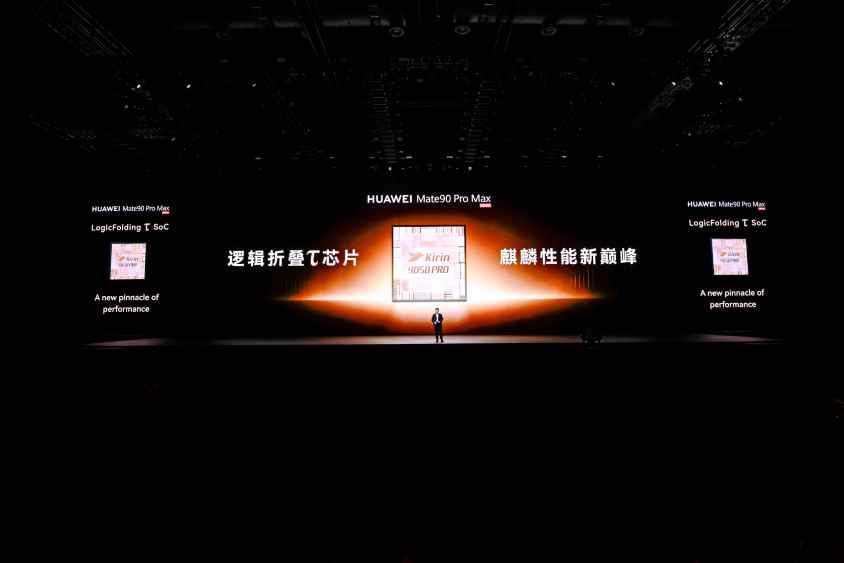
SHANGHAI, CHINA – Media OutReach Newswire – 1 October 2026 – Huawei today officially launched its next-generation flagship HUAWEI Mate 90 Series, featuring the powerful LogicFolding Tau Chip, the Kirin 9050 Pro. Packed with breakthrough innovations, including the XMAGE True-to-Color Portrait Camera, the Second-generation Linglong Display, full-body Kunlun Xuanwu architecture, and the HUAWEI XMAGE Z10 Modular Camera, the series sets a new benchmark for mobile technology.


 Richard Yu, Executive Director of Huawei, Director of the Investment Review Board, and Chairman of the Huawei Consumer BG, stated: “The HUAWEI Mate 90 Series is equipped with the flagship Tau chipset across the entire series. Through vertical integration of hardware, software, chips, and cloud, we have achieved a comprehensive evolution in design, performance, imaging, reliability, and smart user experience. Today, we step into a new era of brilliance.”

Between 2007 and the end of 2025, Huawei invested a total of CNY1.8 trillion into R&D. Today’s product breakthroughs are the direct result of long-term R&D investment and a foundation of core technology. Huawei is turning foundational advancements in Kirin, HarmonyOS, and beyond into tangible product experiences that consumers can truly feel.

Meticulously Crafted, Radiant at First Sight

The HUAWEI Mate 90 Series introduces a refined, seamless design, pairing a glossy mid-frame with a matte metal rear cover.

In terms of durability, the Mate 90 Pro and higher models are built on the full-body Kunlun Xuanwu architecture. The camera cover introduces the industry’s first Optical Kunlun Glass, delivering 20x better drop resistance, while the front display is protected by 3rd-gen Kunlun Glass, offering a 50% improvement in impact resistance. The Pro Max Premium Edition and RS ULTIMATE DESIGN go further with upgraded Xuanwu Kunlun Glass, cutting reflections by 70% and boosting scratch resistance by 16x. The entire lineup supports IP68 dust and water resistance up to 6 meters alongside IP69 resistance against high-temperature, high-pressure water jets.

Powered by LogicFolding Tau Chip: A Massive Leap in Performance

At the heart of the HUAWEI Mate 90 Pro Max is the LogicFolding Tau Chip, built on an innovative architecture that drastically compresses critical path latency to enable 5 million signal transmission bonds and an impressive 125 TB/s inter-die bandwidth. The Pro Max Premium Edition and RS ULTIMATE DESIGN are powered by the Kirin 9050 Pro chip, delivering a 31% increase in overall performance. Meanwhile, the Pro model’s Kirin 9035 chip brings a 20% performance boost, and the standard edition’s Kirin 9030 chip offers a 27% gain in performance.

Vertically integrated with HarmonyOS 7 across hardware, software, chips, and the cloud, the Kirin 9050 Pro CPU supports hyper-threading technology for effortless, ultra-smooth operations. Mobile gaming also reaches new heights with hardware-accelerated ray tracing, capable of rendering up to 55 million rays per second.

Second-Generation Linglong Display: A Screen That Truly Stands Out

The HUAWEI Mate 90 Pro introduces the second-generation Linglong Display, reaching an unprecedented peak brightness of 12,000 nits at 1% APL. Built on an enhanced Tandem OLED Architecture, panel lifespan is extended by 138%. The HUAWEI Mate 90 Pro Max and RS ULTIMATE DESIGN debut the Full-color Linglong Display. Leveraging its 12,000-nit ultra-high brightness and full BT.2020 end-to-end color management, over 60 mainstream apps can now upsample P3 content to vibrant, full-color BT.2020 quality. Eye care technology also receives a major upgrade, featuring industry-first ambient light detection and a 1-nit ultra-low brightness eye-comfort mode for a seamless, strain-free viewing experience.

Breakthrough Connectivity & Reliable Outdoor Utility

Connectivity gets a total overhaul. The industry-first Wi-Fi and cellular converged antenna architecture boosts signal gain by 2 dB. The entire lineup supports eSIM, with the Pro Max pioneering four-SIM, three-standby functionality. With multi-device communication sharing, photo and video upload speeds are boosted by up to 40% in congested environments like crowded concerts or remote outdoor areas.

XMAGE True-to-Color Portrait

The entire series comes equipped with True-to-Color Camera 3.0, featuring full-focal-length infrared optical coating for the first time, which advances overall color accuracy by 37% and skin-tone accuracy by 62%. The updated XMAGE True-to-Color Portrait engine introduces four versatile shooting modes: Portrait original, Soft light portrait, Dazzling fireworks, and Starburst, delivering striking, authentic portraits that speak directly to the heart.

The Pro Max features a powerful 18 EV ultra-HDR main camera, a large-sensor 200 MP RYYB telephoto camera, and CIPA 7.5-rated hardware image stabilization, guaranteeing crisp, steady shots even beyond 20x zoom. The lineup also introduces a dedicated live-streaming optimization mode, making it an ideal companion for content creators.

Additionally, the HUAWEI XMAGE Z10 Modular Camera features a 1-inch large sensor, 24–240 mm continuous optical zoom, and a maximum aperture of f/2.0 to f/4.5, providing pristine, studio-quality imagery across every focal length.

HarmonyOS AI: Smarter, Proactive, and Seamless

Powered by the 30B MoE full-modal on-device foundation model on the Pro Max and higher models, next-generation AI features come to life. Celia Memories seamlessly syncs and organizes content from over 50 mainstream apps, while the Celia navigation bar proactively suggests over 30 context-aware actions based on on-screen content. For everyday tasks, Celia Call 2.0 handles automated call answering, call summaries, and real-time translation, while the Celia Gallery Assistant enables intuitive voice- or text-driven photo editing and instant video generation. Furthermore, HarmonyOS Interconnect brings distance-free remote Huawei Share and allows one-tap sharing to multiple HarmonyOS devices simultaneously.

Committed to taking the harder but right path, Huawei provides users and developers with a powerful alternative in HarmonyOS. Today, HarmonyOS 6 and HarmonyOS 7 power over 90 million devices, including smartphones, PCs, and tablets, and are on track to pass the 100 million mark by the end of this year. At the same time, Huawei’s global registered developer community has grown to over 11 million.

ULTIMATE DESIGN: See the Extraordinary

The HUAWEI Mate 90 RS ULTIMATE DESIGN evolves the iconic Star Diamond camera module aesthetic and debuts Dynamic Lenticular Kunlun Glass, elevating high-durability materials into an expression of premium design. The rear cover showcases an all-new Ascending Texture available in Red, White, and Black. Under the hood, it packs the Kirin 9050 Pro chip, Full-color Linglong Display, Tiantong Satellite Communications, BeiDou Satellite Messaging, four-SIM three-standby, and the advanced True-to-Color Camera 3.0 with an 18 EV ultra-HDR main camera, delivering ultimate design, technology, imaging, and experience.

The series starts at CNY5,999 for the HUAWEI Mate 90, CNY6,999 for the HUAWEI Mate 90 Pro, CNY9,499 for the HUAWEI Mate 90 Pro Max, and CNY12,999 for the HUAWEI Mate 90 RS ULTIMATE DESIGN.



Continue Reading

Tech

Huawei Pioneers a New Computing Architecture for the AI Era: Making One Million Processors Work as One Computer

Published

on

Huawei

SHANGHAI, CHINA – Media OutReach Newswire – 30 September 2026 – During HUAWEI CONNECT on September 17, 2026, Eric Xu (Huawei’s Rotating Chairman) and Dr. Liao Heng (Chief Scientist of HiSilicon) had a Q&A session with journalists of media outlets to discuss Huawei’s Peerium Computing Architecture for the AI era as well as UnifiedBus (UB).

At last year’s HUAWEI CONNECT, Eric Xu gave a keynote speech and released Ascend chips and their roadmap (including the 950, 960, 970, and SuperPoDs and SuperClusters). He also announced the open release of the UnifiedBus protocol.


At this year’s HUAWEI CONNECT, Huawei announced the Ascend 950 and the Atlas 950 SuperPoD. While the industry is talking about SuperPoDs or supernodes, the ways of making these products differ hugely. The key of SuperPoDs is about allowing several thousand or even tens of thousands of processors to work as one computer.

Today, Huawei announced a SuperPoD based on the Ascend 950 chip. The SuperPoD is powered by a new computing architecture that Huawei has pioneered. This architecture now can make one million processors work as one computer. This architecture is called Peerium, and it can achieve strong scaling to the million-processor level through nested parallelism, unified memory addressing, and peer-to-peer interconnect. It extends the parallelism paradigm of Turing with the introduction of Nested BSP (Nested Bulk Synchronous Parallel).

This architecture also extends the von Neumann single-machine architecture and overruns the master-slave design paradigm that has prevailed for decades. Given that the available technologies in the industry could not support this architecture, Huawei invented a key interconnect technology – UnifiedBus. Ultimately, one million processors can truly work as one larger computer.

UnifiedBus is a high-speed bus that uses an open protocol to scale without a limit to connect CPUs, NPUs, memory, SSDs, interface cards, and switches. With UnifiedBus, peer-to-peer interconnect is achieved across compute, storage, and networking. This fundamentally overruns the traditional master-slave architecture.

The Atlas 950 SuperPoD is a product built upon the Peerium Computing Architecture. A SuperCluster with 256,000 computing cards is currently being deployed and tested.

Q: Dr. Liao, your paper mentioned a SuperPoD that’s made up of 256,000 cards. Is that the upper limit of your technology? Can you tell us more about market demand for your products?

Liao Heng: 256,000 or roughly 200k, this number is not an arbitrary number.

First of all, the purpose of these large clusters is for training. It has a hardware infrastructure that can support the training of foundation models, which today are already in the 5T parameter range.

Over the next two years, there will be roughly 6 or 7 frontier AI labs in China, and all will aim at training foundation language models of sizes ranging from 10 to 40 trillion parameters. These numbers kind of match up to the memory capacity and the size of the SuperPoD. So you need such a scale of infrastructure to train these models.

The second thing is that in China, most data centers have a national plan on this power grid. So 200,000 is a relatively conservative number, given the design of the power delivery system in a single autonomous zone and single data center campus.

As I said, everybody must be quite familiar with the AI model race that’s happening across the globe. And in China, there are at least 3 or 4 tier-1 players that are already well recognized and have achieved tier-1 status.

Q: What are your plans to encourage Chinese model providers to use Ascend chips for training?

Eric Xu: For the Ascend 950, we first launched the 950PR to the market. It’s primarily used for AI inference, and currently the total volume of supply available in the market is not very big. The SuperPoDs based upon the Ascend 950DT are mainly used for AI training. Right now, they are under testing, and their large-scale supply will start at the end of this year or early next year. We are having extensive dialogues and discussions with AI model providers. The testing result of using the Ascend 950DT for training is pretty good. I believe that starting from next year, a lot of AI model training will be based upon SuperPoDs that use the Ascend 950DT. I think at the end of the day, it’s not about how hard we are going to push model providers, but about how much supply capacity we will have. We can only supply based on how much that’s produced. And we hope the value chain will expand its capacity faster to increase supply.

Q: What is Huawei’s take on recent calls by leading AI model providers in the US to slow down AI development?

Eric Xu: We need to look at the level and cadence of AI development in China and the US. AI models in China are largely open-source models and their progress is relatively transparent. If we look at the mainstream model providers in the US, they have more computing power, so maybe only they themselves know where they are in terms of the level of sophistication of their models. The market feeling about AI risks might be weaker in China than in the US. Model providers in China need to speed up their pace to reach a level where they could also feel the risks from AI development. And then, maybe they will feel the same as the leading US model providers. But I always believe that we need to strike a balance between driving AI development and managing AI risks. At the very least, the bottom line is we need to ensure AI for good, not AI for evil.

Q: Does Huawei have plans to bring the Atlas 950 SuperPoD to other markets outside China? If yes, which markets are you going to target? Can you share with us data about your market share in China? What is your take on China’s push for chip self-sufficiency?

Eric Xu: Since we don’t have enough capacity to even satisfy the demand in China, we don’t have plans to expand to the international market in a fully-fledged way. But indeed, there are several countries that have very strong demand. We are doing some testing, and we are providing some supply to those countries, but the volume is quite limited.

Right now, it’s pretty hard to collect data about the market share of NVIDIA in China. But based on the data we have collected, Ascend has surpassed NVIDIA.

China’s push for chip self-sufficiency is an inevitable path forward. China is a country of 1.4 billion people and it’s an industrial powerhouse, so the way people work and live is closely tied to chips. Chinese people have a keen sense of urgency, and will not accept a future in which others decide whether or not we can have access to certain products. Even though our chips may be less advanced, at least their supply is assured, so that you don’t have to worry about chip supply day in and day out. I think that’s certainly the path forward. For the Chinese government, for the domestic industry, and for Huawei, the path forward is undoubtedly to push for full self-sufficiency in terms of chips and the entire semiconductor value chain. We also believe this will become a reality sooner or later.

To read the full Q&A session: https://www.apmultimedianewsroom.com/multimedia-newsroom/huawei-pioneers-a-new-computing-architecture-for-the-ai-era-making-one-million-processors-work-as-one-computer-2 


Continue Reading

Trending