Connect with us
Anglostratits

Business

Investing in Africa is profitable, African Development Bank President tells Japanese investors

Published

on

African Development Bank

While the number of Japanese companies in Africa increased from 520 in 2010 to 900 in 2020, Adesina called for more venture capital and private equity funds to tap into the continent’s huge potentials

TOKYO, Japan, April 24, 2023/APO Group/ — 

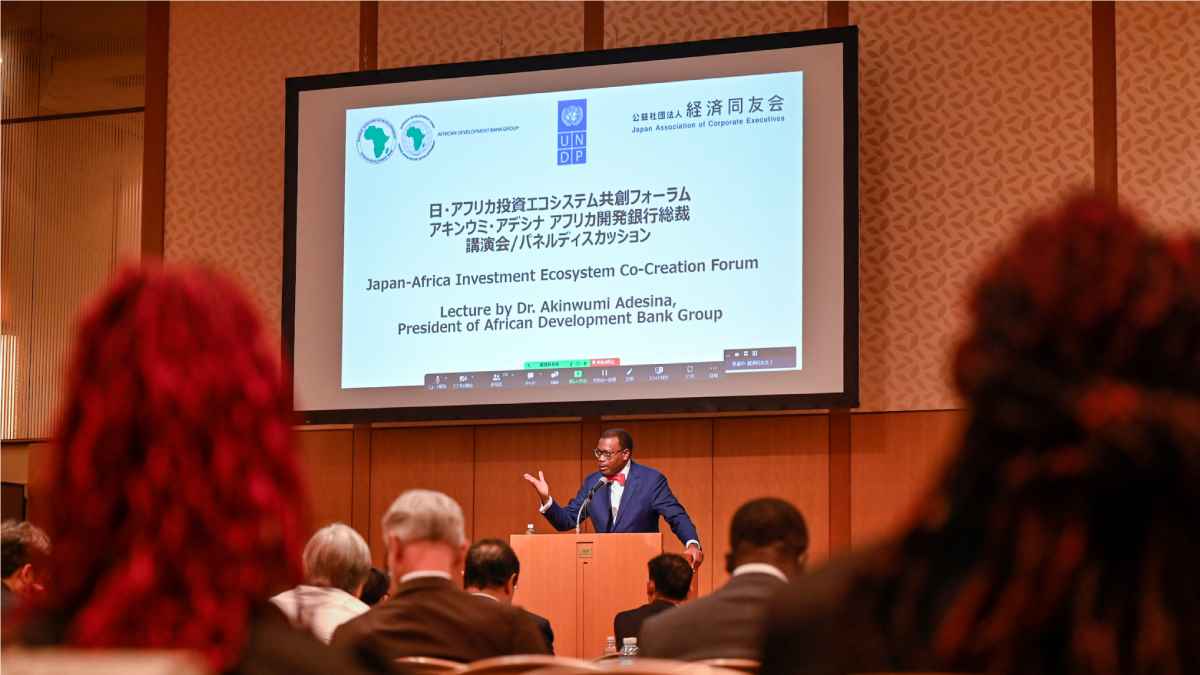
The president of the African Development Bank Group (www.AfDB.org), Dr. Akinwumi Adesina, has called for a significant increase in Japanese investment in Africa, saying the continent is the world’s best investment destination now and in the future.

Dr. Adesina is leading a Bank delegation on a five-day visit to Japan during which he will meet senior government officials, large Japanese companies, development partners and members of the African diplomatic corps in the country.

Delivering a lecture at the Japan-Africa Investment Ecosystem Co-Creation Forum in the capital, Tokyo, Adesina said Africa offers enormous investment opportunities and gave examples of Japanese companies that have been running profitable businesses on the continent for many years.

The forum was organized by Keizai Doyukai, a private, non-profit and nonpartisan organization that brings together nearly 1,400 top executives of some 1,000 corporations.

Adesina pointed out that Japan’s foreign direct investment in Africa declined from $10 billion in 2016 to just $4.7 billion in 2020 during Covid-19 but recovered to $6 billion in 2021. Africa accounts for only 0.003% of Japan’s $2 trillion global foreign direct investments.

In terms of trade, the volume of exports and imports between Africa and Japan remains lower than 2%.

Dr. Adesina said there was every reason to change the trend.

He mentioned the state-owned Japan Bank for International Cooperation (JBIC), which, together with TOTAL and other investors, including the African Development Bank, co-financed the $24 billion Liquified Natural Gas project in Mozambique—which will make it the third largest in the world. Japan will buy 30% of its production.

JBIC and Mizuho Bank, along with the African Development Bank and nine other financial institutions, invested $2.7 billion to build the Nacala corridor railway and port in Mozambique.

Dr. Adesina cited Japanese multinationals such as Toyota Tsusho, Mitsubishi Corporation, Hitachi and Komatsu, whose businesses make billions of dollars in profit every year.

“These companies will tell you investing in Africa pays!” said Adesina, “there is now a greater pulse and excitement for more Japanese investments in Africa.”

The Africa Development Bank chief said the successes of large Japanese companies operating in Africa are spurring a new generation of young Japanese to turn their eyes to venture capital and private equity funds to support small- and medium-sized enterprises.

He gave the example of a startup company, Kepple Africa Ventures, which has raised $43 million and is investing along with African private equity funds in 100 seed-stage enterprises in 11 African countries.

The Uncovered Fund, founded only in 2019, is another Japanese venture capital fund that has invested in 26 African startups.

Speaking during the Forum, the Vice Chairperson of the Africa Project Team at Keizai Doyukai, Ken Shibusawa, said a new company, &Capital Inc, was formed early this year to promote Japanese investments in Africa.

The African Development Bank chief spelled out areas in Africa with enormous investment opportunities for Japanese investors

The Chairperson of the Japan-AU Parliamentary Friendship Association, Ichiro Aisawa, described Africa as a continent of hope with population power. The parliamentarian announced that with the Covid-19 pandemic under control, the association will embark on a grand tour of Africa to raise Japan’s presence.

While the number of Japanese companies in Africa increased from 520 in 2010 to 900 in 2020, Adesina called for more venture capital and private equity funds to tap into the continent’s huge potentials.

He thanked the Japanese government for recognizing Africa’s strategic importance and showing a strong political will to invest in Africa.

Japan’s Prime Minister Fumio Kishida announced during the TICAD 8 Summit in Tunis last year $30 billion for Africa, including support for startups in Africa, green growth, and training of 300,000 professionals from Africa.

The African Development Bank chief spelled out areas in Africa with enormous investment opportunities for Japanese investors.

Africa has the world’s highest demographic asset. Its population will rise to 2.4 billion by 2050. The continent has the largest number of young people in the world, with over 75% of its population aged less than 35 years.

“With appropriate skills, they will form the labor force for global industries as many countries face a rapidly aging population,” said Adesina.

The recent establishment of the African Continental Free Trade Area makes Africa the largest free-trade zone in the world in terms of participating countries. Manufacturing opportunities alone would reach $1 trillion in 2025. And Africa’s consumer spending will reach $6.7 trillion by 2030.

In addition, Africa has the world’s largest renewable energy sources, including solar, wind, hydropower, and geothermal.

The continent also holds the key for the world as it transitions towards electric vehicles with its abundant deposits of minerals and metals such as platinum, lithium, cobalt, copper, and graphite.

“The manufacturing of lithium-ion batteries is most competitive in Africa. For example, setting up a lithium-ion battery precursor in the Democratic Republic of the Congo would be three times less expensive than in China or the US.”

Africa holds 65% of the remaining uncultivated arable land in the world. What Africa does with its agriculture will determine the future of food in the world. And the size of Africa’s food and agriculture market will rise to $1 trillion by 2030.

Other areas of enormous potential include the financial technology (fintech) sector; internet economy; healthcare; tourism; real estate, and automobile markets. For that reason, Adesina said the Japanese private sector and businesses should invest a lot more in the continent. “Your investment is safe in Africa.”

He referred to a survey conducted in 2020 by the African Private Equity and Venture Capital Association which indicated that about 45% of Limited Partners expected returns in Africa to outperform emerging and developed markets over the next 10 years. Also, 60% of the Limited Partners plan to increase allocations to Africa in the next three years.

Furthermore, in 2020, Moody Analytics looked at infrastructure debt default rates by region cumulatively over a ten-year period, comparing Africa with the rest of the world. It found that Africa had the second lowest cumulative default rate, after the Middle East, while default rates are much worse in Eastern Europe, Latin America, and Oceania.

Adesina reassured investors, “Africa is also not as risky to investments as many perceive,” and added, “Let’s ramp up Japanese private sector investments in Africa. Let’s do more together in Africa, faster and at scale.”

The African Development Bank’s delegation included Vice President for Power, Energy, Climate Change and Green Growth Dr. Kevin Kariuki, Vice President for Private Sector, Infrastructure and Industrialization Solomon Quaynor and Vice President for Agriculture, Social and Human Development Dr. Beth Dunford and the Executive Director of Argentina, Austria, Brazil, Japan and Saudi Arabia Takaaki Nomoto.

Click here (https://apo-opa.info/3oC8LFs) for Dr. Adesina’s speech.

Distributed by APO Group on behalf of African Development Bank Group (AfDB).

Business

Aurionpro expands its multi-country transaction banking engagement with Diamond Trust Bank (DTB)

Published

on

Aurionpro

Aurionpro’s upgraded iCashpro platform for DTB delivers a unified digital experience across payments, trade, virtual accounts, and real-time reporting, enhancing straight-through processing, visibility, and control for both the bank and its corporate customers

MUMBAI, India, April 30, 2026/APO Group/ –Aurionpro Solutions Limited (www.AurionPro.com) (BSE: 532668 | NSE: AURIONPRO)a global leader in banking technology, announced the expansion and upgrade of its transaction banking engagement with Diamond Trust Bank (DTB), to modernize and enhance the bank’s corporate transaction banking capabilities across multiple countries.

Download Document: https://apo-opa.co/4edHUaC

This multi-country transaction banking upgrade covering Kenya, Uganda, and Tanzania aligns with DTB’s intent to enhance customer experience, streamline operations, and support growing transaction volumes as it expands its regional corporate banking footprint. DTB continues to focus on building a more agile, ‘digital-first’ banking experience, particularly around payments for its corporate customers across Africa, and is now well positioned to scale these capabilities. As part of its broader transformation agenda, the bank has been steadily investing in platforms that enhance scale, reliability, and service consistency across markets.

Through this partnership, we are proud to lead the next era of transformation in transaction banking, helping DTB enhance operational agility

Aurionpro’s upgraded iCashpro platform for DTB delivers a unified digital experience across payments, trade, virtual accounts, and real-time reporting, enhancing straight-through processing, visibility, and control for both the bank and its corporate customers. By enabling DTB to standardize and scale its transaction banking operations across countries, the platform ensures consistent service levels, stronger control, and improved efficiency. It also supports enhanced user experience, advanced security, and the flexibility to introduce new features as DTB expands its regional transaction banking footprint.

Murali Natarajan (https://apo-opa.co/48trPdk), Managing Director & CEO, DTB Kenya   commented: “We are delighted to strengthen and broaden our partnership with Aurionpro Solutions as part of DTB’s ongoing digital transformation journey across multiple markets. Our focus on innovation, operational excellence, and customer-centricity continues to guide our technology investments. This upgrade strengthens our transaction banking capabilities, enabling us to deliver greater value to our customers through robust digital channels and seamlessly integrated experiences.”

Ashish Rai, Group CEO, Aurionpro Solutions, commented: “We are pleased to deepen our multi-country engagement with Diamond Trust Bank and support the next phase of its transaction banking modernization. As DTB continues to scale across markets, platform resilience and consistency become paramount. Through this partnership, we are proud to lead the next era of transformation in transaction banking, helping DTB enhance operational agility, deliver superior experiences to corporate customers, and create long-term value across geographies.”

He added, “Aurionpro’s iCashpro lays a strong digital foundation for transaction & wholesale banks across the globe to grow their corporate and SME client portfolio today, while creating a clear roadmap for next- generation capabilities in AI-driven insights, advanced automation and API-led connectivity for businesses in Kenya and across Africa.”

Distributed by APO Group on behalf of Aurionpro Solutions Ltd.


Continue Reading

Business

Minerals Council Chief Executive Officer (CEO) Joins African Mining Week (AMW) as South Africa Improves Sectorial Investment Climate

Published

on

Energy Capital

Minerals Council CEO to share insights on policy, infrastructure and investment trends shaping South Africa’s mining industry

CAPE TOWN, South Africa, April 30, 2026/APO Group/ –The upcoming African Mining Week (AMW) conference will feature Mzila Mthenjane, CEO of the Minerals Council of South Africa, as a speaker. Scheduled for October 14 – 16, 2026 in Cape Town, the event will bring together global investors, policymakers and industry leaders, with Mthenjane’s participation highlighting the council’s commitment to engaging international stakeholders and promoting investment across South Africa’s mining sector.

His participation comes at a critical moment as the Minerals Council works closely with government on finalizing the Mineral Resources Development Bill 2025, a policy framework aimed at strengthening the country’s mining investment climate and the sector’s contribution to GDP. According to the council, the revised legislation will support new investment across the value chain as South Africa seeks to mobilize R2 trillion over the next five years to unlock its critical minerals potential.

The policy reforms come amid shifting production trends in the sector. In 2025, South Africa recorded declines in gold and platinum group metals output of 1.9% and 4.1%, respectively. The new regulatory framework is expected to strengthen public-private partnerships and stimulate investment, enabling South Africa to increase production and capitalize on strong global commodity prices. Increased private sector investments is crucial with South Africa seeking targeting to unlock an estimated R40 trillion in untapped iron ore potential as well as maintain its position as the world’s leading producer of chrome and manganese.

At AMW 2026, Mthenjane is expected to outline these trends, providing insights into how the council is contributing to addressing challenges disrupting the sector. Infrastructure and energy costs remain key concerns for industry players. To support the energy-intensive sector, South Africa approved a 35% reduction in electricity tariffs for major ferrochrome producers, helping stabilize an industry that has faced significant cost pressures after electricity prices surged by roughly 900% since 2008.

Logistics constraints are also a priority area for reform. South Africa’s economy is losing an estimated R1 billion per day due to inefficiencies across rail and port infrastructure. As a result, the government is considering measures supported by the Minerals Council to increase private sector participation in logistics. Planned reforms include rail modernization initiatives targeting 250 million tons of freight capacity by 2029, alongside port upgrades and private operator participation aimed at strengthening mineral exports and improving supply chain efficiency.

Beyond infrastructure and policy reforms, the Minerals Council is advocating for stronger exploration investment to support long-term industry growth.

At AMW, Mthenjane is expected to highlight these developments and outline the steps required to reinforce South Africa’s position in the global minerals supply chain. His insights will offer investors and stakeholders a timely perspective on opportunities within the country’s mining sector.

Distributed by APO Group on behalf of Energy Capital & Power.

Continue Reading

Energy

Seychelles Targets Energy Investment Push as Minister Jérémie Joins African Energy Week (AEW) 2026 as a Speaker

Published

on

African Energy Chamber

Seychelles energy minister will speak at AEW 2026, positioning her to highlight reforms, renewable projects and investment opportunities as the island nation advances its transition toward a diversified energy system

CAPE TOWN, South Africa, April 29, 2026/APO Group/ –Marie-May Jérémie, Minister of Environment, Climate, Energy and Natural Resources for Seychelles will participate as a speaker at this year’s African Energy Week (AEW) 2026, taking place from October 12–16 in Cape Town. Her participation underscores the country’s growing role in shaping Africa’s small-island energy transition agenda.

Minister Jérémie’s presence at AEW 2026 comes at a critical time as Seychelles accelerates efforts to reduce its heavy reliance on imported fossil fuels. The event provides a platform to attract investment, strengthen policy alignment and showcase bankable projects, positioning the country as a viable destination for private-sector participation in island energy systems.

Seychelles is demonstrating how policy reform and innovation can unlock investment in constrained environments

In May last year, international finance institution the World Bank approved the Renewable Energy Acceleration Program, a seven-year initiative aimed at modernizing the grid and increasing renewable energy penetration to 15% by 2030. The program focuses on unlocking private capital while strengthening transmission infrastructure to accommodate variable renewable energy sources.

Project development is gaining traction in the country, particularly in innovative technologies suited to Seychelles’ land constraints. The 5.8 MW Seysun Lagoon floating solar PV project, developed by independent renewable power producer Qair, is under construction and expected online in 2026.

Alongside renewables, Seychelles continues to pursue upstream opportunities to diversify its economy. The government approved new exploration entrants in 2025 and extended exiting petroleum agreements, while securing an infrastructure partnership with China. Multilateral estimates suggest over $800 million in investment will be required over the next 25 years.

Regulatory reform is central to this transition, with Seychelles introducing an independent power producer framework to open the market to private developers. Standardized power purchase agreements, grid access reforms and strengthened public-private partnership structures are being implemented to improve transparency, reduce risk and accelerate project bankability across solar, storage and emerging wind opportunities.

“Minister Jérémie’s participation highlights the strategic importance of island nations in Africa’s broader energy transition,” says NJ Ayuk, Executive Chairman, African Energy Chamber. “Seychelles is demonstrating how policy reform and innovation can unlock investment in constrained environments. Her insights will be critical to advancing dialogue on resilient, low-carbon energy systems across the continent.”

Distributed by APO Group on behalf of African Energy Chamber.

Continue Reading

Trending