Connect with us
Anglostratits

Sports

Vibrant Cultural Exchange Activities at ABG Athletes’ Village Foster Friendship Among Asian Youth

Published

on

Asian Beach Games

SANYA, CHINA – Media OutReach Newswire – 24 April 2026 – From April 22 to 30, the 6th Asian Beach Games (ABG) is being held in Sanya, Hainan, China. The Athletes’ Village, located at the Mangrove Tree Resort World Sanya Bay, has become a vibrant hub for athletes from across Asia to gather and connect.

From China’s Hainan rice noodles and India’s curry prawns to South Korea’s kimchi, a mouthwatering array of regional delicacies is on display. As athletes savor diverse flavors and share their culinary cultures, friendships are quietly blossoming over the shared joy of food.

Beyond cuisine, the Village also hosts activities that blend traditional Chinese culture with local Hainan charm. These events allow nearly 1,800 athletes from 45 countries and regions to use culture as a bond to forge genuine friendships off the field, perfectly embodying the Games’ aspiration of “Passing Friendship, Meeting in Sanya.”

As a main thoroughfare, the corridor in the Athletes’ Village International Zone buzzes with activity. Athletes from various nations often gather here to share amusing training stories, hometown delicacies, traditional songs and dances, and local folklore. Amid this lively hubbub, language and geographical barriers begin to close effortlessly. More than just a place to rest, the Village has become a true “home away from home” for the Games.

“I believe that when we come together for sports and cultural exchange, the most important thing is to fully engage in the sports themselves. That’s what helps us build friendships, and it’s a wonderful experience,” said Chaladol Boonsri, a Thai team official. He noted that athletes from across Asia have gained a deeper understanding of one another through these activities, forging closer ties that will ultimately make the world a better place.

The local Hainan cultural experience has become one of the most anticipated highlights of these exchange activities. Xing Liting, head of the Intangible Cultural Heritage (ICH) Exhibition Area at the Village, explained that athletes can get up close to ICH items such as Li brocade, coconut carving, and Li pottery, personally experiencing the unique charm of Hainan culture. On the other side of the Village, the Traditional Chinese Medicine (TCM) clinic has also proven highly popular, with many athletes making special trips to experience traditional therapies such as Tuina (massage) and moxibustion.

“I really love this experience. Immersing myself in Chinese culture is truly enjoyable,” said Chmaissani Issa, a Saudi Arabian ju-jitsu athlete, after trying his hand at Hainan rattan and bamboo weaving.

During the Games, the Athletes’ Village will host eight themed cultural performances, including “Quintessence of China,” “Joyful Songs of the Sea,” and “Trendy Sounds of the Free Trade Port.” The debut performance, “Quintessence of China,” took the stage on April 19. The spectacular show had athletes involuntarily clapping along to the rhythm. “This is my first time watching a Chinese performance in an Athletes’ Village, and it’s incredibly interesting,” Issa added.

An official from the Sanya ABG Organizing Committee stated that a professional service team had been assembled to fully address athletes’ daily needs during the competition. By offering diverse forms of care, such as birthday wishes and congratulatory messages for medal winners, the committee ensures that athletes can fully concentrate on their events while fostering mutual understanding and friendship in a relaxed and joyful atmosphere.

The 6th ABG marks the first comprehensive international sporting event held after the launch of independent customs operations at the Hainan Free Trade Port. The cultural exchange activities at the ABG Athletes’ Village not only serve as a bridge of communication for Asian youth but also showcase Hainan’s openness and inclusiveness to the world. “I look forward to making more friends, sharing training experiences, and exploring different cultures,” said Shhijir-Erdene Bat-Enkh, a Mongolian beach volleyball player. “This will undoubtedly become a beautiful, unforgettable memory for me.”

As the Games progress, the cultural exchange activities within this “home away from home” will also continue, allowing the seeds of friendship to take root and grow amidst the coconut breezes and coastal scenery of Sanya, and ensuring the spirit of the Asian Beach Games is continuously passed on through cultural integration.


Sports

More Than a Trophy: Africa’s Moment to Champion Women’s Football (By Isha Johansen)

Published

on

Global revenues from women’s sports are expected to reach at least $3 billion in 2026, an increase of 340% in four years

ABIDJAN, Côte d’Ivoire, October 19, 2026/APO Group/ —By Isha Johansen, former CAF (www.CAFonline.com) Executive Committee Member and the first West African woman to serve on the FIFA Council.

For years, Africa has been known for its growth story. Investment has flowed, new tech has been  growing fast, and a young, active population has inspired hope for the future.  Women’s football now offers another lens through which to consider that progress.  Following the conclusion of the TotalEnergies CAF Women’s Africa Cup of Nations in Rabat, Casablanca and Fez, the question is what happens next: whether the momentum generated by the tournament can translate into sustained investment in women’s football, stronger structures and more opportunities for the next generation of players. This tournament was much more than sport. It was a moment to spotlight gender equality, inclusion, and the changing role of women in African sports.


For too long, women’s sports have been seen as charity projects or CSR boxes to tick; not real investments. That’s changing. Stadiums are filling, fans are showing up, and real money is finally coming in. The message is clear: women’s football is no longer a side issue; it’s a huge opportunity Africa can’t afford to ignore.

Global revenues from women’s sports are expected to reach at least $3 billion in 2026, an increase of 340% in four years (https://apo-opa.co/3U7pm41). In Africa, the true value is still unknown. Most of the investment comes from sports associations, governments, and a handful of sponsors. Ticket sales and big broadcast deals are exceptions, not the rule. So women’s sports here are half-in, half-out: there’s new investment, but plenty of hurdles remain.

Some progress has been made, however. This year, the Confederation of African Football doubled Women’s Africa Cup of Nations prize money to $5.8 million, with $2 million for the winners. Last year, Nigeria’s NWFL Premiership landed its biggest private investment, a ten-year, ₦20 billion partnership, while South Africa’s Women’s League secured a R17 million naming rights deal.

The final whistle will pick a winner, but what happens next will show whether Africa is ready to make women’s football central to its future

The Women’s Africa Cup of Nations featured 16 teams, and money from TV and sponsors went up by 40%. Matches were shown on more than one hundred channels. Real interest grew across the continent. Africa’s fans,  young and energetic, followed their teams on platforms like TikTok and Instagram.

Despite the progress and growing support from fans,  challenges remain. Top female players are leaving for Europe or the US, where their skills are valued and rewarded. Without money from TV deals or steady support from local fans, women’s sports here will keep relying on outside help and quick fixes.

In South Africa, a few years ago, women’s national team players earned just a tenth of what the men did. The gap is closing, but it’s not gone. Women are still few in sports leadership roles, and coaching jobs mostly go to men. But pioneers like South Africa’s Desiree Ellis and Kenya’s Beldine Odemba show what’s possible when women get a real shot: excellence follows.

Mentorship is central to that possibility. Behind every player and coach who broke through, there was almost always someone who opened a door, offered guidance, or made room at the table. Formal mentorship programmes, pairing rising talent with experienced players, coaches, and administrators, gave young women a clearer path into leadership roles that had long been closed to them. To turn potential into progress, more is needed than just a few stars. Governments, sports bodies, and private investors must team up by building partnerships, investing in training grounds, leadership, mentorship, and the kind of infrastructure that lasts.

The private sector can’t afford to sit this out. New models like sportswomen-driven content, streaming platforms, and direct fan engagement can break old barriers. Organisations like Tibu Africa, a leading NGO empowering young people through sport, show how football can drive wider social change by building opportunities and breaking down barriers. Their work reminds us that every girl deserves a shot at the game and demonstrates the impact that partnerships between the private sector, government, and civil society can have.

Governments must make investing in women’s sports worthwhile, guarantee fairness, and keep things transparent. Regional bodies should align standards, share resources, and channel funds into grassroots development. And media matters too: having more women on camera or working behind the scenes changes opinions and gives new role models the chance to shine.

TotalEnergies’ partnership with the Confederation of African Football (CAF) is more than a sponsorship. It’s a commitment to building African football from the grassroots up, creating lasting opportunities for players, fans, and communities. Supporting CAF helps raise the visibility of women’s football and strengthens the sport as a force for unity and inclusion across the continent. This investment reflects an alignment of values: sustainable development, community empowerment, and celebrating Africa’s potential.

If Africa misses this window, old gaps will widen, and the chance to lead in women’s sports could be lost. But if we step up now, the rewards are huge: jobs, tourism, and growth everywhere you look. This tournament is more than a trophy. It’s a test of whether Africa will build up its talent or watch it leave. The final whistle will pick a winner, but what happens next will show whether Africa is ready to make women’s football central to its future.

Distributed by APO Group on behalf of Confederation of African Football (CAF).


Continue Reading

Sports

How the “Dual Olympic City” Activates the Sports Event Economy
Published

on

Dual Olympic City

BEIJING, CHINA – Media OutReach Newswire – 9 October 2026 – On the evening of October 6, after Djokovic won the first set of the men’s singles final, his opponent Alex de Minaur retired due to injury, giving Djokovic his seventh China Open title.

During the tournament, the excitement of the China Open extended from the courts to the entire park. The “second venue” with big-screen viewing, a rich variety of officially licensed merchandise, and food and beverage outlets full of everyday bustle blended the passion of sports competition with the city’s relaxed atmosphere, creating a diverse holiday viewing experience.


“After entering through the two ticket gates—north and south—of the National Tennis Center, there are officially licensed merchandise stores at both locations. During the National Day holiday, each of these two stores received over 10,000 visitors a day. Nearly a thousand products give everyone’s tournament memories a tangible carrier,” said Yin Xufei, head of the China Open officially licensed merchandise store.

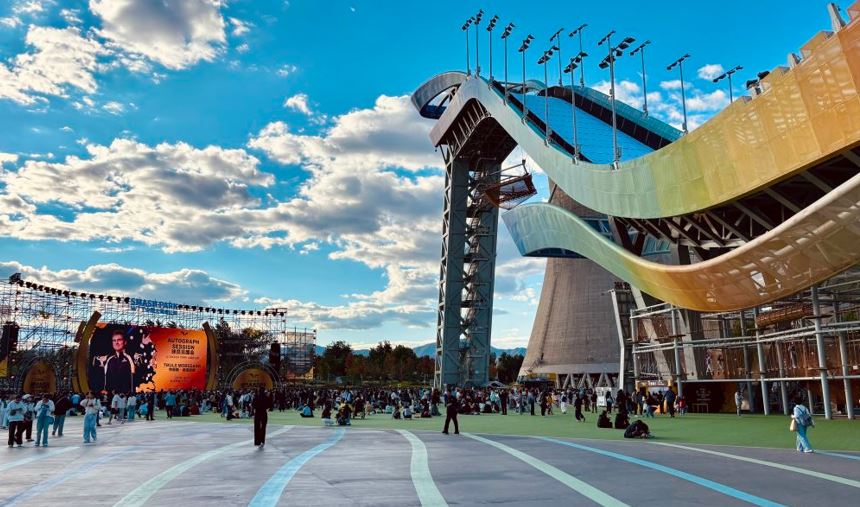
Also thriving thanks to the events is Shougang Park in Shijingshan, Beijing. The World Table Tennis (WTT) China Grand Smash held in this industrial-style park echoed the China Open during the National Day holiday for the third consecutive year, giving the most vivid footnote to the “Golden Week of Sports Events.”

“People can spend a whole day wandering around Shougang Park—dining, markets, and souvenirs are all available. Besides going into the venue to watch matches and cheer for the athletes, you can also feel the festive atmosphere of table tennis, China’s national sport, blending with the National Day holiday at the Grand Smash Park,” said Gao Yize, a fan from Xinjiang.

At the WTT China Grand Smash official licensed store, visitors and tourists stopped to learn about the tournament-themed T-shirt that lets you “Explore Shijingshan in One T-Shirt.” For those familiar with the “ticket stub economy,” this T-shirt is a “walking ticket stub.” Wearing the benefits during the tournament gives you access to exclusive discounts on dining, accommodation, and sightseeing at hundreds of partner merchants in Shougang Park, Yongdingheji, Moshikou Historical and Cultural Street, and other locations.

The “Golden Week of Sports Events” ignited a city. Led by high-level international events such as the China Open and the WTT China Grand Smash, competitive sports, mass sports, and youth sports events at all levels covered the north, south, east, and west of the “Dual Olympic City” and integrated into its streets and alleys.

During the National Day holiday, the Beijing Yizhuang GT World Challenge attracted over 26,000 spectators. By Tongming Lake, engines roared, and speed and passion were set against the lake and city scenery. The automobile-themed carnival, integrating race viewing, car culture, technology interaction, and leisure consumption, drove significant growth in surrounding dining, retail, and accommodation spending. In Miyun on the outskirts of Beijing, the China Men’s 3×3 Basketball League Championship linked cultural tourism resources and key commercial districts, opening the “Chao San” Market that brought together over 30 merchants offering Miyun’s Three Roasts, intangible cultural heritage “loufen” (starch noodles), and other specialties, allowing fans to enjoy food and buy local products after watching the games…

The “Dual Olympic City” has made holiday cultural tourism scenarios a standard feature of sports events, expanding event consumption scenarios and enhancing the event consumption experience, further demonstrating the enormous potential of the sports event economy.


Continue Reading

Sports

Beijing Marathon to Kick Off on October 18: Road Running Charm Blooms in the Golden Autumn Capital
Published

on

BEIJING, CHINA – Media OutReach Newswire – 29 September 2026 – On September 28, the 2026 Bank of China Beijing Marathon & National Marathon Championships held a press conference in Beijing, officially disclosing the event’s preparation details and competition arrangements. The race is scheduled to start on October 18, 2026, with a total field of 32,000 runners.

Founded in 1981, the Beijing Marathon is the oldest city marathon in China and a World Athletics Gold Label road race. Over more than four decades, it has evolved from a simple marathon event into a unique urban experience that traverses Beijing.


The Beijing Marathon boasts a highly distinctive course. The start line is set at Tiananmen Square. After setting off, runners follow Chang’an Avenue, passing through Fuxingmen and Fuxing Road, before heading north into the Xueyuan Road area in Haidian District, and finally arriving at the Olympic Park, where they sprint to the finish along the landscaped avenue between the Bird’s Nest and the Water Cube.

One of the most notable features of this year’s Beijing Marathon is the integration of the race with the National Marathon Championships. China’s top professional athletes will compete for championship placings on the same course, while mass runners set off alongside them, bringing professional competition and national fitness together on a single course. The event not only provides a high-level competitive platform for professional runners but also preserves broad participation channels for everyday runners, striving to strike a balance between competitive leadership, public participation, and organisational effectiveness.
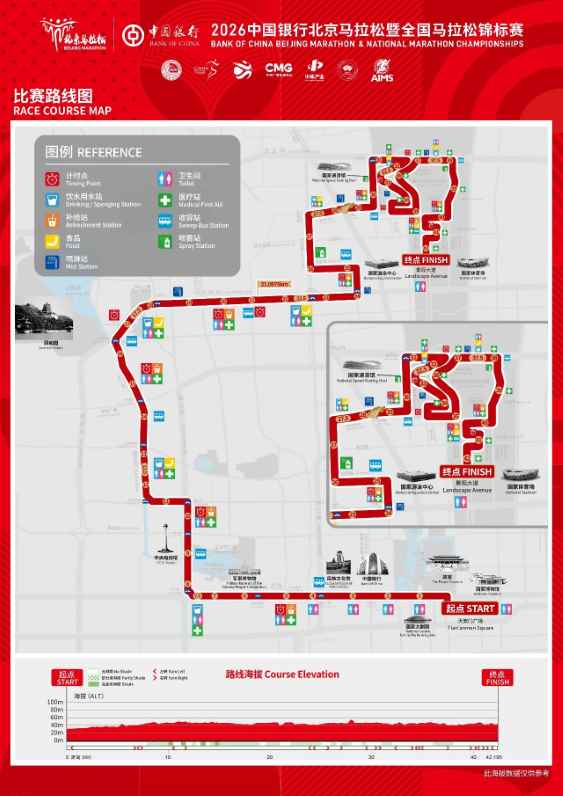
In terms of event support and civilised race organisation, the organising committee has simultaneously released a number of upgraded measures to comprehensively optimise the participant experience and safeguard race order, building a refined system of medical support, course supplies, and smart guidance, while continuing mature international event service standards. The event also emphasises green organisation, introducing reusable eco-friendly cups, multi-tap self-service water stations, backpack-style water supply equipment, and recyclable waste collection pools, among other environmental measures.

In golden autumn October, Beijing’s mild temperatures make it the perfect season for running. This year’s Beijing Marathon continues to be rooted in Beijing, the “Dual Olympic City,” showcasing the vitality of China’s road running and the urban charm of Beijing to runners and audiences around the world through professional race standards, international event-organising concepts, and profound urban heritage.


Continue Reading

Trending