Connect with us
Anglostratits

Business

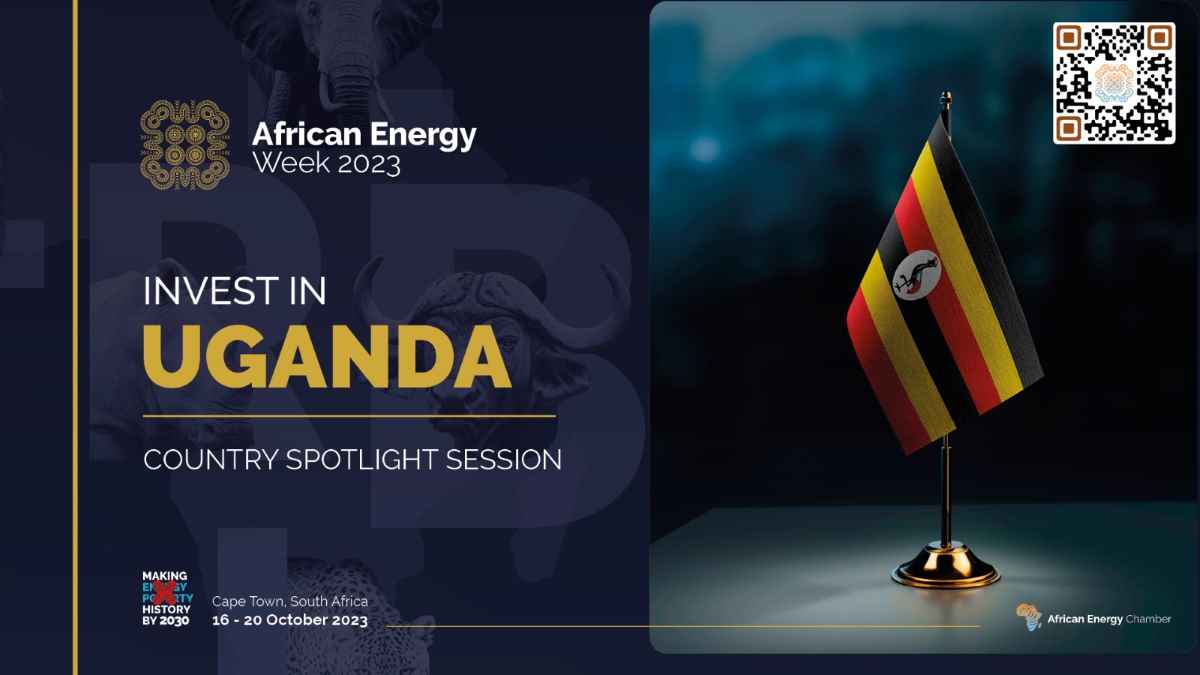
Invest in Uganda Energies African Energy Week (AEW) Spotlight to Promote East African Country’s Energy Potential

Published

on

African Energy Week

The Invest in Uganda Energies forum at African Energy Week 2023 will unite Ugandan energy regulatory authorities and companies with global partners to discuss the country’s energy future

JOHANNESBURG, South Africa, July 11, 2023/APO Group/ — 

The African Energy Chamber (AEC) (http://www.EnergyChamber.org) – the voice of the African energy sector – is proud to announce that African Energy Week (AEW) 2023 – taking place October 16-20 in Cape Town – will host an Invest in Uganda Energies country spotlight, showcasing the various investment and partnership prospects available across the east African country’s energy sector.

Featuring high-level roundtables and panel discussions, technical presentations, exclusive networking and deal signings, the Invest in Uganda Energies forum at AEW 2023 will unite energy policymakers and companies with global investors, laying the foundation for deals to be signed.

Boasting approximately 1.4 billion barrels of recoverable crude oil reserves and significant gas resources, Uganda ranks among Africa’s fastest growing energy markets, and has emerged as an attractive investment destination for global energy companies and investors alike. The country aims to produce first oil in 2025, having achieved a final investment decision for the $10 billion Lake Albert Development – comprising the Kingfisher and Tilenga oilfields as well as the 1,443km-long East African Crude Oil Pipeline (EACOP) – alongside TotalEnergies and the China National Offshore Oil Corporation in 2022. The development not only represents an important avenue for exporting Ugandan crude to international markets via the Port of Tanga in Tanzania but is set to provide a consistent supply of oil to a region in much-need of reliable energy.

We commend the efforts being undertaken by the Ugandan government to fast-track the development and monetization of both hydrocarbon and renewable energy resources

The Lake Albert Development has not only opened up opportunities for energy and economic growth but has showcased the potential for large-scale hydrocarbon developments in the country, and global players are already taking note. With the aim of further expanding the upstream market, the Ministry of Energy and Mineral Development is set to launch its third licensing round in 2023 to unlock additional discoveries. The Invest in Uganda Energies spotlight at AEW 2023 will promote the country’s upstream opportunities, triggering newfound investment in the burgeoning industry.

On the midstream and downstream fronts, in addition to the EACOP, the country is inviting foreign investors to fund a series of infrastructure projects, both in-country and across the region. Representing a relatively new market, opportunities for players across the refining, transportation, service provision and associated industries are growing, and the AEW country spotlight will connect investors to opportunities.

In the renewables and power sectors, the government of Uganda is committed to accelerating the diversification of the energy mix by maximizing biomass, nuclear power, solar energy and green hydrogen production. Various projects are currently underway including the government-led Uganda Rural Electricity Access Project; an HDF Energy-led green hydrogen facility; and the Serengeti Energy-led Nyamwamba II hydroelectric project. Additionally, French energy major TotalEnergies has committed to building up to 120 MW of solar capacity in the county. However, the market remains largely untapped, and the Uganda country spotlight will showcase projects, promote market potential while incentivizing new deals.

“The Chamber is proud to host key Ugandan decision makers alongside energy stakeholders and global investors during the Invest in Uganda Energies country spotlight at AEW 2023. We commend the efforts being undertaken by the Ugandan government to fast-track the development and monetization of both hydrocarbon and renewable energy resources, and consider projects such as the EACOP to be crucial for the continent. During the country spotlight, further insight will be provided into Uganda’s energy opportunities and we look forward to a strong slate of deals that are expected to be signed,” states NJ Ayuk, the Executive Chairman of the AEC.

Under the theme, ‘The African Energy Renaissance: Prioritizing Energy Poverty, People, the Planet, Industrialization and Free Markets’, AEW 2023’s Invest in Ugandan Energies spotlight will connect global players to East African energy opportunities.

AEW is the AEC’s annual event uniting African energy stakeholders with global investors to discuss the future of African energy. For more information about AEW 2023, visit https://AECWeek.com/

Distributed by APO Group on behalf of African Energy Chamber.

Business

Africa’s Business Heroes Unveils 2026 Top 100 Entrepreneurs Selected from Over 24,000 Applications Across Africa

Published

on

Africa’s Business Heroes

Expanded cohort reflects the scale, diversity, maturity, and economic impact of African entrepreneurship

KIGALI, Rwanda, June 11, 2026/APO Group/ –Africa’s Business Heroes (ABH) (www.AfricaBusinessHeroes.org), the flagship philanthropic initiative of the Jack Ma Foundation and Alibaba Philanthropy, has unveiled its 2026 Top 100 entrepreneurs, selected from more than 24,000 applications from all 54 African countries.

Download Infographic: https://apo-opa.co/4v3n7w5

For the first time in ABH’s history, the competition has expanded its first round of finalists from a Top 50 to a Top 100 cohort, creating more visibility and opportunity for entrepreneurs across regions, sectors, and business models. The expansion reflects the growing depth, competitiveness, and commercial maturity of African entrepreneurship as ABH approaches its 10-year milestone.

The 2026 Top 100 represents 27 countries, with an average founder age of 38 and an average business age of 6.5 years. Half of the cohort are returning applicants, underscoring the continued value entrepreneurs see in the ABH platform and the strength of its pan-African community.

This year’s applications came from every region of the continent. Women represented the highest share of entries since the competition launched in 2019 and there was also increased participation from emerging startup hubs such Angola, Burkina Faso, Chad, Libya, Madagascar, and Mozambique. ABH is grateful to the hard-working Round 1 judges who selected the Top 100 from more than 24,000 applicants, with strong representation from key sectors like AI, agriculture, fintech, health, and climate.

A Snapshot of Africa’s Entrepreneurial Momentum

The 2026 Top 100 cohort offers a strong picture of the diversity, resilience, and economic contribution of African entrepreneurs. Collectively, the Top 100 businesses generated USD 170 million in 2025 revenue, employed 6,200 people, and served 10 million customers. These figures underscore the role entrepreneurs are playing not only in building commercially viable companies, but also in creating jobs, widening access to essential products and services, and advancing inclusive growth across Africa.

The 2026 cohort tells an important story: African entrepreneurship is becoming broader, deeper, and more commercially mature

Top 100: By the Numbers

  • Operating Countries Represented: 27
  • Average founder age: 38
  • Average years in business: 6.5
  • Gender representation: 33% women founders; 67% men founders
  • Francophone/French-language representation: 13%
  • Returning applicants: 50%
  • Top operating countries: Egypt, Nigeria, and Kenya (15 entrepreneurs each), followed by Rwanda (9) and South Africa (6)
  • Leading sectors: Agriculture (21), Financial Services (12), Manufacturing (10), Healthcare (10), and Energy (9)

Key Sector Trends Driving the Cohort

The businesses represented address some of the continent’s most pressing challenges through scalable, regional solutions. The cohort also points to important shifts in the continent’s entrepreneurial landscape. Key trends include:

  • Agri-Tech Dominance: Comprising 21% of the cohort, agriculture has evolved beyond traditional farming into tech-enabled, value-added models.
  • Tech-Driven Financial Inclusion: As the second-largest sector (12%), Financial Services is leveraging machine learning and alternative data to provide paperless credit scoring for unbanked small businesses, resolving core frictions across markets
  • Recycling & Environmental Protection: 7% of the ABH Top 100 operate in this space, shifting toward high-margin circular economy models that combine profitability with social impact through value-added processing and emerging ESG/carbon credit monetization.
  • Decentralized Manufacturing Growth: Manufacturing accounts for 10% of the cohort and spans 9 diverse countries (including Cabo Verde, Namibia, and Ethiopia). This geographic spread indicates industrialization is accelerating beyond major economies, propelled by AfCFTA incentives, import substitution, and rising local demand.
  • AI as a Tool for Practical, Sector-Specific Innovation: 32 of the Top 100 entrepreneurs are integrating AI across 12 African countries to address concrete market challenges: improving low agricultural productivity through predictive crop and soil insights, expanding access to credit through alternative scoring, closing education gaps through personalized learning, easing healthcare shortages through triage and decision-support tools, and reducing logistics inefficiencies and supply chain waste through smarter routing and demand matching.

The full list of the ABH 2026 Top 100 entrepreneurs can be found here (www.AfricaBusinessHeroes.org).

Speaking on the significance of this year’s Top 100 cohort, Zahra Baitie-Boateng, Managing Director, Africa at ABH, said:

“The expansion from the Top 50 to the Top 100 reflects the extraordinary evolution of entrepreneurship across Africa. The 2026 cohort tells an important story: African entrepreneurship is becoming broader, deeper, and more commercially mature. These are not just promising ideas; they are real businesses operating across 27 countries, generating USD 170 million in annual revenue, employing 6,200 people, and serving 10 million customers. We are seeing strong innovation from established hubs as well as from emerging ecosystems that have often been underrepresented. By expanding the cohort, ABH is creating more opportunities for entrepreneurs to access visibility, recognition, community, and long-term support.”

Commenting on this year’s selection process, an ABH Round 1 Judge: Johan de Visser, Regional Manager, Africa at PUM & Founder of Africa Business Coaching, said:

“The quality of applications this year was exceptionally strong. What stood out was the level of innovation, clarity of vision, and deep understanding of local market challenges from founders across the continent. The Top 100 includes businesses that are already serving customers, creating jobs, and building scalable solutions across critical sectors, from agriculture and financial services to healthcare, manufacturing, energy, and climate. Expanding the cohort allows ABH to spotlight more of the entrepreneurs shaping Africa’s next phase of growth.”

Now in its 8th year, the ABH Prize Competition celebrates visionary leaders driving inclusive and sustainable growth across the continent. Since 2019, ABH has grown into one of Africa’s leading entrepreneurship platforms, directly awarding 70 entrepreneurs with funding, mentorship, global exposure, and ecosystem-building opportunities. ABH has also supported more than 5,000 entrepreneurs through programs including ABH ScaleUp and attracted more than 160,000 applicants to date.

The Top 100 will now advance to the next stage, where judges will evaluate the cohort to determine the Top 20 semi-finalists. The Top 20 will pitch live on August 21-22 in Nairobi, Kenya, competing for a place in the ABH Top 10 and a share of the USD 1.5 million grant prize.

Distributed by APO Group on behalf of Africa’s Business Heroes (ABH).


Continue Reading

Business

New outlook shows Gulf Crisis still threatens $94bn of incremental ad investment worldwide over next 18 months

Published

on

Gulf Crisis
  • Global ad growth uprated to +11.5% this year – to $1.39trn – but ongoing volatility could remove as much as 3.2 percentage points (pp) – or $39.6bn – from growth in 2026
  • Automotive, food, and travel & transport sectors among most susceptible to high oil prices and a prolonged disruption to shipping in Strait of Hormuz
  • There is an uneven impact on brand- and performance-led media spend, with TV suffering sharp falls as social and search remain largely unaffected
  • Ad market growth is expected to ease to 8.2% next year – to a total of $1.50trn – but a prolonged Gulf crisis could remove a further $54.1bn from growth prospects in 2027

WARC Media Global Ad Spend Forecast Q2 2026 update: Implications of the Gulf energy crisis

11 June 2026 – A new study from WARC, the experts in marketing effectiveness, has found that a prolonged conflict in the Gulf region could threaten $39.6bn of global advertising growth this year, and $93.7bn over the next 18 months.

James McDonald, Director of Data, Intelligence & Forecasting, WARC, and author of the research, says: “As the Gulf Crisis stretches into its fourth month, global markets are now in damage limitation mode as the blockade of the Strait of Hormuz acts like a tax on consumers, lifting prices and squeezing real spending power.

“If the conflict drags on – or further intensifies – these risks shift toward stagflation, with sectors such as travel, automotive, and food acutely exposed to higher production costs and weaker demand. The net effect is a grueling squeeze on margins that could put as much as $94bn of anticipated ad market growth at risk over the coming 18 months.”

WARC Media’s latest global projections are based on data aggregated from 100 markets worldwide and leverage a proprietary neural network which projects advertising investment trends based on over two million data points. The projections account for three scenarios of increasing severity to model the potential impacts of the ongoing Gulf Crisis.


The fallout from the conflict is being felt differently across regions

WARC’s baseline scenario is for 11.5% ad market growth in 2026, but if the Crisis were to become more severe, the growth rate could fall to +8.3%
Southeast Asia (+6.9%) and Latin America (+12.8%) are on course for healthy growth this year, but are most exposed to an increase in severity
The Gulf ad market could fall into recession (-0.2%) this year, as would the French ad market (-1.0%), in the most severe scenario
The US (+9.5%) is well insulated and benefits from the World Cup and Midterms; even in a severe scenario the ad market would lose just $10bn in growthThe baseline projection is for global ad market growth of 11.5% to $1.39trn this year, an upgrade from the 10.6% rise predicted in March owing to a strong first half for online platforms. The supply-side pressures caused by the Gulf Crisis, however, are expected to be felt by consumers and brands alike from the second half of the year.

Data shows that Southeast Asia will be among the hardest hit by the conflict, due to vulnerabilities in energy imports and trade flows. WARC’s baseline projects +6.9% ad spend growth for the region to $24.8bn in 2026; a moderate scenario, however, pulls that to +6.3%, and a severe scenario delivers +3.6% – a 3.3pp swing from best to worst outcome.

​China’s exposure is also distinct: imported energy and shipping costs compress industrial margins and export competitiveness. A baseline ad spend growth forecast of +7.9% (to $223.1bn) for 2026 falls to +5.3% in the severe scenario (-2.6pp), equivalent to $5.3bn in lost growth for the Chinese ad market should the situation deteriorate.

While the US isn’t immune to pressures from the situation in the Gulf, its relative insulation shows ​a clear contrast to the pressures war in the Middle East is placing on other markets. Even under the severe scenario, ​US ad spend growth is +7.2% in 2026, down 2.3pp from a baseline of +9.5% (to $452.6bn) and equivalent to a shortfall of $9.8bn.​

Conversely, the Latin American ad market is on the precipice. Led by Brazil and Mexico, Latin America posts the strongest baseline ad spend growth of any region in the forecast: +12.8% to $27.8bn in 2026. The severe scenario clips that to just +3.4%; a 9.4pp downgrade and the largest single swing in the data.

The markets in the Gulf Cooperation Council (GCC) – namely Saudi Arabia, United Arab Emirates, Kuwait, Oman, Qatar, and Bahrain – are already seeing weakened demand, particularly from global advertisers. Under the severe scenario, GCC ad spend tips into outright contraction at -0.2% in 2026, a swing of -11.9pp against the baseline expectation of +11.7% to $5.7bn.

Ad spend across the Eurozone, where major economies are already stagnating, is set to rise 5.6% to $109.0bn this year. This could, however, ease to just 1.8% growth if the severe scenario is realized. The UK (+6.3%), Germany (+6.7%) and France (+2.7%) are all expected to see ad market growth this year, but the severe scenario removes 3.1 percentage points on average, pushing France into recession should the worst case materialise.

Travel, automotive and food sectors among most susceptible to a prolonged disruption

Travel & Transport ad spend already forecast to decline (-3.5%) this year
Automotive ad spend is largely flat in Western Europe, though is still expected to be up globally (+6.7%) in 2026
Growth in the food sector remains steady this year (+10.3%), but the impacts of present supply chain disruption are expected to be felt more in 2027

Travel is the worst-hit major category and the only one already thought to be contracting at the global level, with ad spend forecast to be down -3.5% to $34.4bn in 2026. Airlines active in the Middle East are already reviewing budget allocations. The sector is expected to record a projected recovery of +13.0% in 2027, however.

The double squeeze of rising inputs on the manufacturer side and consumer credit sensitivity suppressing demand is clearly visible in the automotive sector. Germany – one of the world’s largest car manufacturers – is forecast to see automotive ad spend grow by just +1.9% in the 2026. If the Gulf Crisis were to become more severe, this would fall to a 4.2% contraction this year, a 6.0pp swing from a baseline that was already fragile.

While the food market looks steady – ad spend is projected to grow 10.3% to $99.8bn this year – the sector can be heavily impacted by a complex supply chain: fertiliser, grain, fuel, and packaging costs are rising before consumers feel it.

The full impacts on the food sector are expected to land in H2 2026 and into 2027, when the severe forecast scenario trails the baseline by 1.2pp, wider than the 2026 gap. Europe’s major markets are impacted significantly: UK food ad spend grows +4.9% in the baseline and contracts -0.2% in the severe scenario: a 5.0pp swing that tips the category negative.


There is an uneven impact on brand- and performance-led media spend

Linear TV’s decline likely to accelerate as the situation worsens, with advertisers favouring short-term, performance channels over brand-building
Social media growth remains strong, but cost pressures on small and medium-sized companies leave social platforms somewhat exposed
Paid search – including generative AI – remains stable in all scenarios

In the baseline scenario, the linear TV ad market is forecast to fall ​2.7% in 2026, and by the same margin again in 2027. TV’s total share of global ad investment – 12.7% in the baseline across linear and video on-demand combined – slips to 12.5% in the severe scenario. While the 2026 FIFA World Cup provides a cyclical boost in the baseline that partially offsets the decline. However, a severe scenario erodes that buffer.​

The headline numbers are robust for social media: 20.0% growth in the baseline forecast this year, falling back to 17.9% in the severe scenario ​(a 2.1pp gap). The severe scenario therefore costs social platforms $7.8bn, just 11% of incremental ad revenue this year. However, underneath these numbers may lie some vulnerability. Social’s advertiser base is heavily concentrated in SMEs. If smaller businesses are suffering because household spend is declining, then marketing budgets may be at risk. Paid search – including generative AI – provides the most stable picture. In the severe scenario, it still grows +11.0% in 2026 – only 3.3pp below a baseline of +14.3%.

Even under the most disruptive conditions modelled, search, social and retail media will retain two-thirds of global ad spend.​ The channels absorbing the losses are those already under pressure. Linear TV falls 7.3% this year in the severe scenario (compared to a 3.7% fall in the baseline forecast); publishing contracts ​8.5% (compared to a 0.8% baseline dip), and cinema drops 4.0% in the most severe case, versus a baseline forecast of 6.3% growth this year.

Cinema, alongside publishing, is the least resilient channel in the dataset. Cinema advertising is tied directly to leisure discretionary spending and theatrical attendance, both of which weaken sharply when consumer confidence falls and energy-linked transport costs rise.


WARC Media subscribers can read the full report available from Monday 15 June. A WARC podcast on the findings outlined in the report will be available from 18 June.

Continue Reading

Energy

Libya Energy & Economic Summit (LEES) 2027 to Host In-Country Value Forum on Youth, Women in Energy, Artificial Intelligence (AI) and Workforce Development

Published

on

LEES

LEES 2027 will host an In-Country Value Forum focused on youth training, capacity building, women in energy, AI enablement, and the nurturing of the next generation in oil, gas and energy

TRIPOLI, Libya, June 10, 2026/APO Group/ –The upcoming Libya Energy & Economic Summit (LEES) 2027 – taking place on January 23–25 in Tripoli – will host a dedicated In-Country Value Forum, featuring strategic sessions on human capital (including women and youth in the energy sector), AI-driven workforce transformation and education to drive Libya’s expanding energy sector.


The forum – set for January 24 – comes as Libya accelerates its upstream and downstream expansion agenda under the National Oil Corporation and Ministry of Oil and Gas, with output targets approaching 2 million barrels per day by 2030. Supported by international operators including TotalEnergies, Repsol, Eni, and OMV, LEES is positioned as a deal-making platform for investment, capacity building and digital transformation.


The session Youth in Energy – Next-Gen Strategic Human Capital Development, will focus on Libya’s expanding youth integration strategy. The state is mobilizing over 7,000 graduates across 50 cities through structured pipelines tied to exploration and production sharing agreements, with mandatory local hiring and training quotas embedded into new licensing rounds.


At LEES 2027, policymakers and operators will be positioned to assess how initiatives such as the Energy JEEL program are reshaping workforce entry points. With over 900 youth ambassadors already deployed, the framework connects technical institutes, field operators and policymakers, aligning human capital deployment with production hubs such as El Sharara and Mabruk.


The Digital Skills and AI: Modernizing the Local Energy Workforce session will examine the rapid digitization of Libya’s oil and gas operations. AI-enabled drilling systems deployed with SLB have already demonstrated autonomous reservoir navigation and doubled drilling rates in early 2026 pilot operations.


Discussions will also cover expanding digital infrastructure in remote basins, where telecom providers and service firms are addressing connectivity gaps. Platforms introduced under the National Strategy for Artificial Intelligence (2025–2030) are enabling predictive maintenance, real-time telemetry and automated production optimization across brownfield assets.


Meanwhile, the Energy Academy: From Classroom to Career session will focus on education-to-employment pipelines linking universities, vocational institutes and operators. Programs co-developed with international agencies including UNDP and GIZ are modernizing technical subsea curricula across petroleum institutes and regional training hubs.


The framework is designed to reduce youth unemployment while supplying a skilled workforce for both hydrocarbons and renewables. With Libya targeting a 20% renewable energy mix by 2035, graduates are being trained across solar PV systems, carbon accounting and grid integration, ensuring mobility across conventional and transition energy sectors.

Distributed by APO Group on behalf of Energy Capital & Power.

Continue Reading

Trending