Connect with us
Anglostratits

Business

International Tribunal Rejects Democratic Republic of Congo’s (DRC) Attempt to Avoid Accountability on the Glencore Bribery Case
Published

on

Tribunal

The case, which stems from CLG’s mandate to assist the DRC in recovering losses due to Glencore’s corruption scandal, has gained international prominence

JOHANNESBURG, South Africa, December 19, 2024/APO Group/ — 

In a decisive ruling by the International Chamber of Commerce (ICC), the arbitral tribunal has dismissed the Democratic Republic of Congo’s (DRC) latest jurisdictional objections, marking a major procedural victory for Centurion Law Group (CLG) (www.CLGGlobal.com) in its ongoing arbitration against the DRC and its anti-corruption agency, Agence de Prévention et de Lutte contre la Corruption (APLC).

The case, which stems from CLG’s mandate to assist the DRC in recovering losses due to Glencore’s corruption scandal, has gained international prominence. Despite benefiting from CLG’s extensive efforts to hold Glencore accountable, the DRC and APLC failed to honor their payment obligations under the Engagement Letter signed in 2022. In a dramatic turn, the DRC attempted to distance itself from the arbitration, claiming it was not bound by the contractual agreement. This jurisdictional objection was a blatant attempt to evade responsibility while undermining CLG’s contributions to fighting corruption and ensuring justice for the Congolese people.

The arbitral tribunal’s Procedural Order No. 2 has now definitively rejected the DRC’s request for bifurcation, ruling that splitting the case into jurisdictional and merits phases would only delay proceedings and unnecessarily increase costs. The tribunal emphasized that justice would be best served through a single, efficient proceeding, allowing CLG to press its claims against both the DRC and APLC without obstruction​.

CLG’s Historic Role in DRC’s Anti-Corruption Efforts

CLG was initially engaged in 2022 under the aegis of the APLC to assist the DRC government in investigations surrounding Glencore’s corruption practices, a matter that resulted in historic settlements exceeding USD 1.5 billion globally. CLG’s expertise and steadfast advocacy were instrumental in positioning the DRC to pursue justice against one of the world’s largest mining corporations.

Yet, despite CLG’s pivotal contributions, the DRC reneged on its financial obligations, prompting CLG to initiate arbitration under the ICC framework. Today’s ruling confirms that the DRC cannot unilaterally erase its commitments under international law.

As the U.S. Attorney Damian Williams for the Southern District of New York stated, “The scope of this criminal bribery scheme is staggering. Glencore paid bribes to secure oil contracts. Glencore paid bribes to avoid government audits. Glencore bribed judges to make lawsuits disappear. At bottom, Glencore paid bribes to make money – hundreds of millions of dollars. And it did so with the approval, and even encouragement, of its top executives.” Glencore should pay for its crimes and not be rewarded at the expense of the people of the DRC.

The scope of this criminal bribery scheme is staggering

A Monumental Commitment to Justice

This monumental case is now being handled directly by CLG’s international team of arbitrators drawn from its offices across Africa. By committing its own highly skilled, multi-jurisdictional legal team, CLG underscores the generational importance it attributes to this matter and its ardent belief in achieving justice.

We, however, recognize that this ruling is a powerful statement: governments cannot use procedural tactics to avoid their obligations. The decision is not just a vital piece of what we hope could be a resounding victory for us but a validation of our unwavering fight for accountability, fairness, and justice. This case is not simply about compensation, it is about upholding the rule of law and setting a precedent that no entity, no matter how powerful, is above honoring its commitments.

CLG’s decision to centralize its elite African legal team on this matter speaks volumes about its unwavering focus and belief in the cause. With CLG’s resources and resolve, this ruling positions the firm on a path toward securing a significant and long-overdue outcome.

Global Interest and Implications

The case is not only a milestone for CLG but also serves as a watershed moment for global anti-corruption efforts. It highlights the critical role legal professionals play in holding powerful entities accountable while demonstrating that procedural tactics cannot derail justice.

As the case proceeds to the merits phase, CLG remains committed to achieving a resolution that upholds fairness, accountability, and the rule of law.

Distributed by APO Group on behalf of CLG.

Business

AFRICLOUD Opens Lagos Region and Local-Currency Payments in African Markets
Published

on

AFRICLOUD

The company’s third African region keeps Nigerian workloads in Nigeria, and customers from Abidjan to Nairobi can now pay in the currency they earn, without an international card
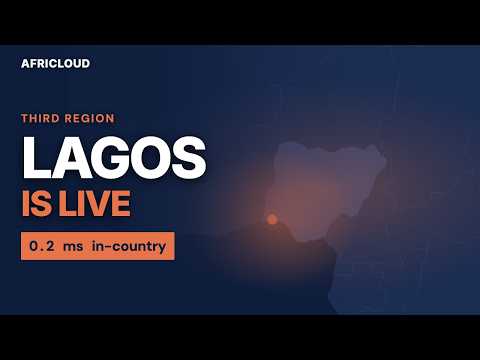
MIAMI BEACH, United States of America, September 23, 2026/APO Group/ –AFRICLOUD (https://AFRICLOUD.com), a cloud infrastructure company, has opened its third African region in Lagos and now accepts payment in local currency across West, Central, East and Southern Africa. Businesses across the continent can run servers in Nigeria, South Africa or Portugal from one account, and pay for them the way they already pay for everything else.


Download document (1): https://apo-opa.co/4Ardfz9

Download document (2): https://apo-opa.co/46FWH8Y

Buying cloud infrastructure in Africa has meant living with three compromises: traffic that leaves the continent and comes back, payment in dollars behind a card many businesses do not hold, and data sitting under somebody else’s law.

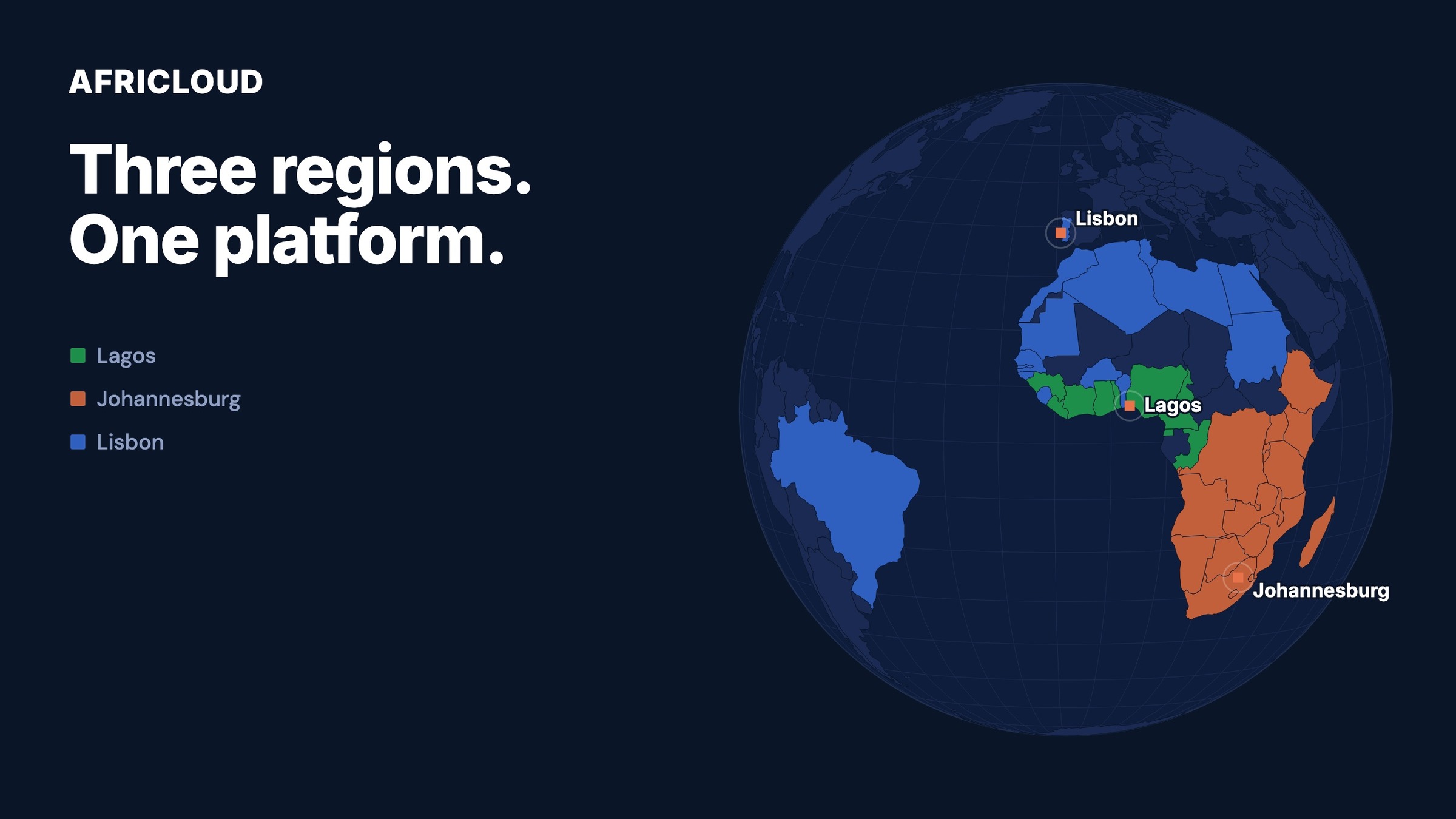
Lagos answers the first. Compute and storage for Nigerian customers stay in Nigeria, and the region also serves Accra, Abidjan, Lome, Douala and Ouagadougou. Traffic from landlocked West Africa that once reached comparable infrastructure by way of Europe now stays on terrestrial West African fibre. Johannesburg serves Southern and East Africa. Lisbon serves North Africa and Europe, and reaches Brazil over a direct subsea route. Across the three regions, AFRICLOUD’s own continent-wide measurements place 42 of the 53 African countries measured within a best-case round trip of 70 milliseconds, countries home to about 1.28 billion people.

A company in Accra or Abidjan now reaches West African infrastructure without leaving the region, and pays for it in the currency it earns

Payment answers the second. Customers across West, Central, East and Southern Africa pay in their own currency, including the naira, the cedi, the shilling and the CFA francs, by local card, bank transfer, USSD or mobile money, with no international card needed. Mobile money is live in twelve African countries, and cards, PayPal and more than 300 cryptocurrencies are accepted everywhere. The GSMA reports that 74 per cent of the world’s mobile money activity by transaction count took place in Africa in 2024.

Residency answers the third. Nigerian data runs under the Nigeria Data Protection Act, South African data under POPIA and European workloads under EU law, chosen server by server from the same dashboard.

“African businesses have been asked to choose between infrastructure that is close, infrastructure they can actually pay for, and infrastructure that keeps their data under their own law,” said Oluniyi Ajao, Founder of AFRICLOUD. “Removing that choice is the reason we built this.”

“Lagos is the piece that completes the map,” he said. “A company in Accra or Abidjan now reaches West African infrastructure without leaving the region, and pays for it in the currency it earns.”

All three regions run the same platform: AMD EPYC processors with all-NVMe storage, IPv4 and IPv6 on every server, and a new server online in about two minutes. Dedicated Servers are built to order in all three regions. Support is available around the clock by chat and email.

Cloud Servers are available now at https://AFRICLOUD.com.

Distributed by APO Group on behalf of AFRICLOUD LLC.


Continue Reading

Business

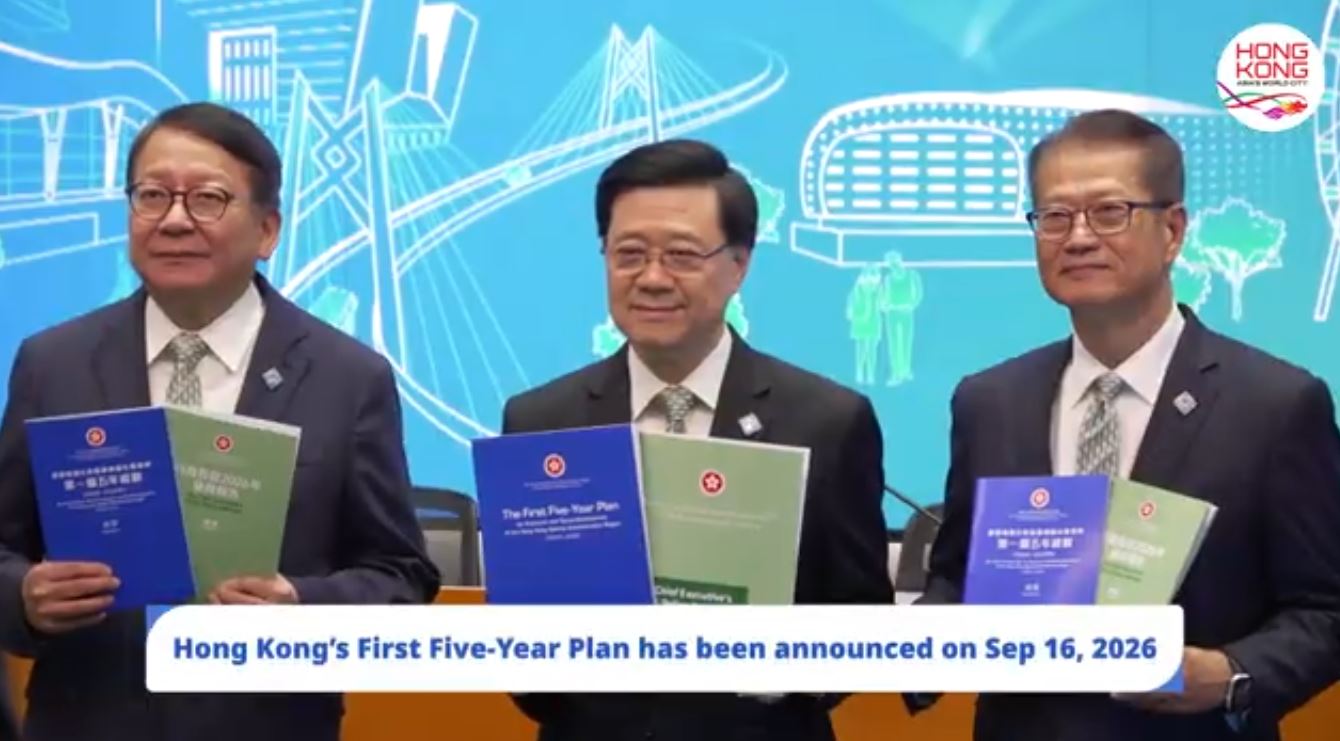
Hong Kong outlines strategies for deepening development of the Guangdong-Hong Kong-Macao Greater Bay Area and enhancing green transformation
Published

on

Hong Kong

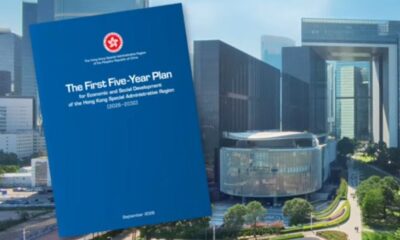
HONG KONG SAR – Media OutReach Newswire – 22 September 2026 – Hong Kong’s Chief Executive John Lee announced the First Five-Year Plan for Economic and Social Development of the Hong Kong Special Administrative Region (HKSAR) (2026-2030) and his fifth Policy Address on September 16, rolling out measures to further sharpen Hong Kong’s edge amid global competition, consolidate development of the Guangdong-Hong Kong-Macao Greater Bay Area (GBA) and promote green transformation.

Initiatives aim to support high-quality development of the GBA, align rules and mechanisms within the region, and promote cross-boundary collaboration.


“The HKSAR Government will continue its efforts in fostering synergistic development of the GBA,” said Mr Lee. “We will strengthen co‑operation in technological innovation, promote ‘hard connectivity’ in infrastructure, foster ‘soft connectivity’ by deepening the alignment of rules and mechanisms, and achieve ‘connectivity of hearts’ among residents of the three places.”

The HKSAR Government will continue to actively participate in the development of the various major co-operation platforms, including Qianhai of Shenzhen, Nansha of Guangzhou, Hengqin of Zhuhai and the Hetao Shenzhen-Hong Kong Co-operation Zone, to promote mutual benefits.

In terms of “hard connectivity” the HKSAR Government will support Nansha in its role as a high‑standard gateway for opening up, including encouraging the trade to participate in Nansha’s infrastructure development.

“To promote the co‑ordinated development of rail transit in Guangdong, Hong Kong and Macao, we are pressing ahead with the Northern Link Project and the Hong Kong‑Shenzhen Western Rail Link (Hung Shui Kiu‑Qianhai), with target commissioning in 2034 and 2035 respectively, to fully connect the rail transit networks of Hong Kong and Shenzhen,” Mr Lee said.

Regarding “soft connectivity”, Mr Lee said the HKSAR Government will set up a Task Force to explore ways to advance the alignment of rules and mechanisms within the GBA.

To achieve “Connectivity of Hearts” among residents across the GBA, Hong Kong will strengthen co-operation between its higher education institutions and those in other GBA cities by establishing cross‑disciplinary partnerships, facilitating scientific research, knowledge transfer, and commercialisation, with a view to promoting high‑level research.

Hong Kong’s Secretary for Constitutional and Mainland Affairs, Janice Tse, noted that the First Five-Year Plan clearly states that Hong Kong will participate in the development of the GBA into an international first‑class bay area and a world‑class city cluster with global influence.

“Hong Kong will forge closer alignment and synergy with the nine GBA cities in Guangdong Province and Macao, making full use of our respective advantages to jointly promote the high-quality development of the GBA,” Miss Tse said.

To foster financial development in the GBA, Hong Kong will continue to capitalise on institutional innovation, financial infrastructure upgrading and enhanced regulatory alignment to encourage the orderly flow of financial elements among GBA cities.

The Hong Kong Exchanges and Clearing Limited’s Core Climate, in collaboration with the Guangzhou Power Exchange Centre, is working towards the pilot trading of national renewable‑energy, green electricity certificates in Hong Kong in 2026.

“On connecting the Chinese Mainland and the world, the HKSAR Government will continue to support green technology development through the HK$400 million (aboutUS$51 million) Green Tech Fund, leveraging Hong Kong’s function as a springboard for green technology and assisting national green technologies and products in going global,” said Hong Kong’sSecretary for Environment and Ecology, Tse Chin-wan. “On the development of hydrogen energy, we have participated in drafting national hydrogen energy standards with a view to helping these standards align with international practice.”

To meet the country’s “dual carbon” targets and fulfil Hong Kong’s commitment to achieving carbon neutrality before 2050, the HKSAR Government steered the establishment of a production base for sustainable aviation fuel (SAF) in Dongguan, leveraging the leading position of Hong Kong enterprises in the international SAF industry.

“By combining technology strengths with industrial foundation, Hong Kong and Guangdong will jointly develop a globally influential green industry,” Mr Lee said.

The HKSAR Government will take forward the construction of an SAF blending facility in Hong Kong to build an end‑to‑end SAF value chain and reduce logistics costs to make SAF prices more competitive. The target is to achieve an SAF consumption ratio of 1% to 3% for flights departing from Hong Kong International Airport in 2030.

Hong Kong’s Five-Year Plan promotes the integrated development of culture, sports, and tourism, to develop the GBA into a cultured bay area.

Under the strategic framework of the Agreement on Strengthening of Sports Cooperation and Promotion of Integrated Development, Hong Kong will deepen co-operation, and strive to co‑organise important regional and international single‑sport events. It will also strengthen cultural exchanges, pass on Cantonese opera and the characteristics of Lingnan culture, and promote the sales and cross‑boundary exhibition of Hong Kong publications.


Continue Reading

Business

Alamein Africa Forum to bring together key political and business leaders

Published

on

Alamein

The forum is to become the continent’s premier gathering where political power meets entrepreneurial prowess, bridging the established engines of African growth with the new sectors defining its future

CAIRO, Egypt, September 22, 2026/APO Group/ –The inaugural Alamein Africa Forum (https://AlameinForum.com/) will take place from October 2-4 in the historic city of Alamein on Egypt’s Mediterranean coast in parallel with the 2026 African Union mid-year summit.

Established in response to a mandate from the African Union, which called for a permanent African Business Forum to convene biennially in Egypt, the inaugural edition will bring together Heads of State and official delegations as well as some key actors in business and finance.


The forum is to become the continent’s premier gathering where political power meets entrepreneurial prowess, bridging the established engines of African growth with the new sectors defining its future.

The Alamein Africa Forum will serve as a pan-African platform bringing together the private sector, investment and financial institutions

The Presidents of Algeria, Angola, Burundi, Chad, Equatorial Guinea, Ghana, Libya, Senegal, Somalia, and South Africa are expected in Alamein as well as President Al Sisi, President of the Arab Republic of Egypt who is the host of this year’s AU Mid-Year Summit. Business leaders from across the continent have confirmed their participation including Ralph Mupita, MTN; Idrissa Nassa, Coris Bank; Mohamed El Ketani, Attijariwafa Bank; Hichem Eloumi, Groupe Shakira; Wale Tinubu, Oando; and many more. Aliko Dangote, Africa’s biggest industrialist is also expected to attend, with the organisers hoping to set up a Business Advisory Council to help advance private sector priorities and investment throughout the continent.

Bringing together leaders in politics, business and policy from across the continent, the Alamein Africa Forum will provide a unique opportunity to shape Africa’s growth agenda by aligning policy and investment priorities, mobilising partnerships for implementation and strengthening financing and investment pathways. The private sector must become an integral part of Agenda 2063, the AU’s strategic 50 year masterplan to transform the continent.

Co-organised by the Government of Egypt, Afreximbank, the African Union and AUDA-NEPAD, the Forum brings together Africa’s most influential decision-makers in an unprecedented alliance of public and private sector leadership.

Speaking on the imperative of the summit at a joint press conference by the government of Egypt and Afreximbank on Thursday, September 17 2026, Dr. Badr Abdelatty, Minister of Foreign Affairs, International Cooperation, and Expatriates Abroad said (https://apo-opa.co/4ygiQag): “The Alamein Africa Forum will serve as a pan-African platform bringing together the private sector, investment and financial institutions, and representatives of various productive and service sectors, to strengthen direct links between companies and markets and decision making at the highest level.”

Continuing, he noted that the Alamein Africa Forum is part of a series of high-level African events that Egypt will host in early October, stressing that holding the forum reflects Egypt’s commitment to advancing continental economic cooperation

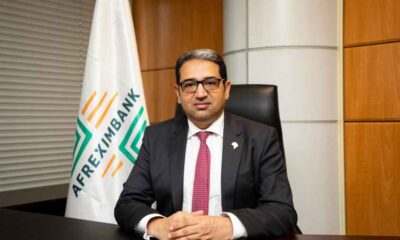
In his own comments, Dr. George Elombi, President and Chairman of the Board of Directors of Afreximbank described (https://apo-opa.co/4ygiQag) the Alamein Africa Forum as a pan-African platform for promoting intra-African trade and investment and connecting the business community and financial institutions with priority projects and investment opportunities in the continent.

Distributed by APO Group on behalf of Alamein Africa Forum.


Continue Reading

Trending