Connect with us
Anglostratits

Business

How to Drive Africa’s Energy Transition (By Anibor Kragha)

Published

on

African

The Continent’s Energy Transition Must Be Locally Led

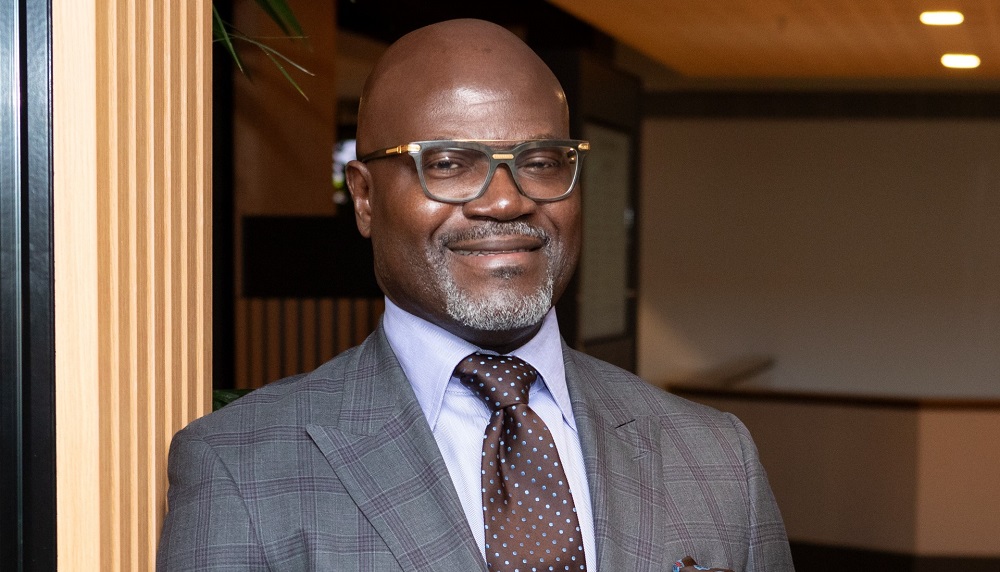
ABIDJAN, Ivory Coast, September 4, 2025/APO Group/ —By Anibor Kragha, Executive Secretary, African Refiners & Distributors Association (ARDA) (https://ARDA.Africa/).

External expectations have framed Africa’s role in the energy transition for years. Despite facing different realities, such as limited infrastructure, restricted access to capital, and less influence in global energy policy, it has been assumed that Africa will follow the same decarbonisation path as developed economies.

This way of thinking is misaligned with today’s realities. Africa’s priorities—improving access, promoting industrial growth, and building resilience—must be reflected in its energy strategy. The continent is actively involved in the global shift. It is, however, doing this on its own terms.

At the African Refiners & Distributors Association (ARDA), we believe the continent’s energy transition must be designed in Africa, for Africa, balancing three urgent imperatives: expanding energy access, driving industrial growth, and prioritising energy security for the continent That means shaping policies, financing mechanisms, and partnerships that work for Africa rather than copying models that do not.

Across Africa, governments and private sector players are investing in diversified energy portfolios that reflect both local needs and global sustainability goals. In Angola, construction is progressing on a 35MW solar project, part of a broader pipeline exceeding 3GW of planned solar, wind, and hydropower developments.

In Uganda, the 250MW Bujagali hydropower plant continues to play a vital role in stabilising the national electricity supply. Meanwhile, South Africa is advancing a 316MW solar PV installation paired with 500MWh of battery storage.

These projects indicate a significant move toward energy independence and long-term resilience. The continent is not only catching up with global energy trends but also accelerating them, with locally-led solutions and designed with long-lasting impact.

Bold vision, however, is not enough. To scale Africa’s energy transition, there will need to be structural follow-through. Three crucial factors will determine if the continent can move from prospective projects to transformative change: sustainable finance, regional integration, and investor-friendly policy frameworks.

The investments we make today must be forward-thinking, aimed at speeding up the transition to a diverse, low-emission energy economy that promotes inclusive growth and progress

1. Sustainable Finance

The African Development Bank estimates that Africa’s energy transition will cost around $100 billion per year between 2020 and 2040.

Current capital flows fall significantly short, and the financing that does exist often comes with higher risk premiums, shorter loan terms and limited flexibility.

ARDA is championing innovative financing models that blend public and private capital, lower investment risks, and align global climate finance with Africa’s development priorities. To attract serious investment, Africa needs to utilise smart financing strategies that utilise public and private money, reduce risks for investors, and encourage global institutions to support energy projects. This approach can minimise risks for investors and encourage institutions to back energy projects. It’s also vital to prioritise initiatives that merge renewable energy with storage systems. Not only do these projects help cut down emissions, but they also ensure a steady electricity supply, support various industries, and ultimately, strengthen the economy.

2. Regional Integration

Many African countries remain reliant on fragmented, underpowered national grids that struggle to attract large-scale investment. Regional integration is essential, and it depends on harmonised regulations, cross-border infrastructure, and shared power resources. Initiatives like the African Single Electricity Market (AfSEM) and the African Continental Free Trade Area (AfCFTA) lay the groundwork for collaboration. What we need now is political unity and focused investment to transform these initiatives into platforms for energy security and economic growth.

3. Policy Frameworks

Africa is catching the eye of global investors, but what it needs is predictability. Governments must consider implementing policies that simplify the process of permitting, financing, and running energy projects. Whether it’s through feed-in tariffs, tax incentives, or local regulations, the aim remains the same: to cut down on uncertainty, reduce costs and attract long-term investments. ARDA works with policymakers to design frameworks that enable private participation, ensuring that energy projects are not only bankable but also deliver lasting local value.

The countries that will lead the continent’s energy shift are those that provide a stable and transparent environment, allowing both public and private players to collaborate with confidence. Most importantly, this energy transition must create local value. It should focus on building skills, transferring technology, and sparking new industries, from battery production to green hydrogen. Every megawatt generated should be viewed not just as electricity produced, but as a job created, a business empowered, and a supply chain bolstered.

Africa’s energy transition is about making smart choices. Cleaner fuels like natural gas will continue to play a vital role in the short to medium term, particularly in replacing high-emission diesel and fuel oil in power generation and transport. Mozambique, through its significant gas reserves and ongoing LNG initiatives, plays an increasingly important role in shaping Africa’s transitional energy future. These transition fuels are essential to maintaining reliability while building capacity for a low-carbon future.

The investments we make today must be forward-thinking, aimed at speeding up the transition to a diverse, low-emission energy economy that promotes inclusive growth and progress. The global community stands to gain immensely from the continent’s transition. The real question isn’t whether Africa will make this shift; it’s about how quickly and decisively the world is ready to back that journey.

Distributed by APO Group on behalf of African Refiners & Distributors Association (ARDA).

Business

Canada–Africa Financing Forum to Convene Investors and Decision-Makers in Cape Town – May 14, 2026

Published

on

Ateau Zola

This timely Forum comes on the heels of commitments announced by Canadian Prime Minister Mark Carney, deepening Canada–Africa commercial ties and expanding investment partnerships

TORONTO, Canada, April 29, 2026/APO Group/ –The Canada–Africa Chamber of Business (https://CanadaAfrica.ca) will convene investors, financiers, policymakers, and industry leaders in Cape Town on May 14, 2026 for the Canada–Africa Financing Forum—a high-level platform focused on unlocking capital and accelerating deal flow across African markets.

Registration is open (http://apo-opa.co/4vZN6oV)

This timely Forum comes on the heels of commitments announced by Canadian Prime Minister Mark Carney, deepening Canada–Africa commercial ties and expanding investment partnerships. The program connects leaders from venture capital, private equity, and institutional investors to examine where capital is moving—and where the next opportunities lie—supported by Canadian project partners with proven capacity to deliver on-the-ground.

Delegates will engage directly with finance and investment decision-makers, following the program opening, featuring messages from President Cyril Ramaphosa and Prime Minister Mark Carney, in addition to high-level Ministerial representation.

This Forum is about capital deployment, not just conversation

“This Forum is about capital deployment, not just conversation,” said Garreth Bloor, President of the Canada–Africa Chamber of Business. “We are convening investors, institutions, and project leaders who are actively shaping transactions across Africa—and connecting them directly with Canadian partners who are ready to work together.”

The Canada–Africa Financing Forum reflects the Chamber’s role as a privately financed, market-led platform advancing Canada-Africa trade and investment through world-class networking and information-sharing events.

Why Attend

  • Direct access to active dealmakers and capital allocators
  • Insights into where capital is being deployed and key players delivering major projects
  • Opportunities to build partnerships across Canada and African markets
  • Participation in a curated, high-level environment focused on execution

Secure Your Place

Space is limited and demand is strong.

Apply to secure your place (http://apo-opa.co/4vXb9oz)

Read More and View the Program (http://apo-opa.co/4vZN6oV)

Distributed by APO Group on behalf of The Canada-Africa Chamber of Business.

Continue Reading

Business

ORUN and 1xBET Partner to Support a Dynamic Creative Africa

Published

on

MIR Holding

During the MASA 2026 edition, held from April 11 to 18, 2026, ORUN and 1xBET implemented the We Champion Talent program, an initiative aimed at promoting African talent and advancing the development of Cultural and Creative Industries (CCIs)

ABIDJAN, Ivory Coast, April 28, 2026/APO Group/ –As part of the Innovation Village co-organized with MASA at the Palais de la Culture in Abidjan from April 14 to 18, ORUN (https://ORUN.Africa) announces the rollout of its partnership with 1xBET to support a creative Africa that is structuring itself, professionalizing, and scaling across the continent.

We aim to demonstrate that it is possible to support African talent, narratives, and creative ecosystems over the long term, with ambition and consistency

Designed as a space of convergence between heritage, innovation, and knowledge transmission, the Innovation Village features scenography crafted by Ivorian artisans, a program of panels and masterclasses on creative industries, an immersive experience produced by Orun Studios, and a major institutional highlight on April 17. Its narrative platform is built around three pillars: memory, structure, and transmission. The initiative aims to position cultural and creative industries as an economic driver for the continent.

“The Innovation Village was conceived as an act of construction. By partnering with organizations such as 1xBET, we aim to demonstrate that it is possible to support African talent, narratives, and creative ecosystems over the long term, with ambition and consistency,” said Habyba Thiero, CEO of Africa Currency Network and President of ORUN.

This vision aligns with ORUN’s broader ambition to produce, structure, and internationalize African creative industries through events, content, and strategic partnerships.

Distributed by APO Group on behalf of ORUN, part of African Currency Network (ACN).


Continue Reading

Business

MIR Holding Reaffirms Its Commitment to African Creative Industries Alongside ORUN at Marché des Arts du Spectacle Africain d’Abidjan (MASA) 2026

Published

on

MIR Holding

More than event support, this partnership reflects a commitment to backing platforms capable of structuring value chains, increasing the visibility of talent, and fostering the emergence of strong African creative infrastructures

ABIDJAN, Ivory Coast, April 28, 2026/APO Group/ –On the occasion of MASA 2026, held from April 11 to 18 in Abidjan, MIR Holding (https://MIRHolding.odoo.com) reaffirmed its commitment to supporting the growth of African creative industries by partnering with ORUN as part of the Innovation Village, hosted at the Palais de la Culture in Abidjan. This presence reflects a clear intention to support the scaling of cultural and creative industries so they can fully contribute to job creation and value generation across the continent.


Co-organized by ORUN and MASA, the Innovation Village brought together over several days scenography designed by Ivorian artisans, a program of panels and masterclasses dedicated to creative industries, an immersive experience produced by Orun Studios, and a key institutional highlight on April 17.

At MIR Holding, we believe that Africa’s future will also be shaped by its ability to structure its narratives, its talent, and its creative value chains

Built around three pillars — memory, structure, and transmission — the initiative carried a renewed ambition for culture: positioning it as a concrete lever for economic structuring and African projection.

By supporting this initiative, MIR Holding aligns with a broader dynamic aimed at strengthening connections between creation, entrepreneurship, content, youth, and growth ecosystems. More than event support, this partnership reflects a commitment to backing platforms capable of structuring value chains, increasing the visibility of talent, and fostering the emergence of strong African creative infrastructures. MIR Holding stands among the main partners of the Village, alongside Africa Currency Network and other stakeholders engaged in this vision.

“With ORUN, we are not only seeking to make culture visible. We aim to help provide it with a framework, a reach, and a trajectory. What is at stake here is the continent’s ability to better transform its creative energy into sustainable value, real opportunities, and influence,” said Habyba Thiero, CEO of Africa Currency Network and President of ORUN.

Mouhamed Dieng, President of MIR Holding, added: “Supporting Africa’s creative industries is not about backing a secondary sector. It is about investing in one of the continent’s most powerful spaces for storytelling, youth, innovation, and competitiveness. At MIR Holding, we believe that Africa’s future will also be shaped by its ability to structure its narratives, its talent, and its creative value chains.”

Distributed by APO Group on behalf of MIR Holding.


Continue Reading

Trending