An endless appetite for data doesn’t have to mean gorging on power
JOHANNESBURG, South Africa, October 20, 2022/APO Group/ —
The amount of data we produce, distribute, and consume in our professional and social lives is ever increasing. But it’s all too easy, particularly for non-technologists, to forget that the remorseless increase in data processing and distribution can also lead to a remorseless increase in power consumption.
This dilemma is illustrated by data centres. They are the engine of the compute growth that informs, educates and entertains the world, and enables collaboration that will help us tackle the challenges of climate change.
But substantial research (bit.ly/3ClQW0x) by the International Energy Agency shows that data centres accounted for 200 to 250 TWh, or one per cent of total world electricity demand in 2020, while data transmission networks – mobile and fixed lined – accounted for 1.1 to 1.4 per cent of worldwide electricity use.
It’s a tribute to the ingenuity of the tech world that, so far, data centre operators and tech providers have managed to hold the line on energy consumption. Data centre energy use has remained fairly constant over the last ten years, even as internet traffic has expanded 15-fold. In 2020 alone, global internet traffic surged by 40 per cent.
But can technology providers maintain this level of efficiency? More and more people are connecting to the internet for work or pleasure, and emerging compute-intensive workloads such as AI or IoT are ever more demanding.
Indeed, can technology vendors take the initiative, and support these ever more demanding workloads, while simultaneously making data centres and networks more efficient, and reducing energy consumption down in the process?
At MWC in Barcelona this month, Huawei explained how the company is enabling providers and operators to meet these more demanding use cases, and process and deliver ever more data, while driving down energy consumption at the heart of the data centre, and beyond.
One way to reduce power consumption within the data centre is through the use of all-flash storage, and the all-flash storage market is forecast to grow 7.6 per cent this year according to IDC. With fewer moving parts, and higher density, SSDs require far less power – and cooling – than their traditional mechanically based hard disk forebears and are considered more reliable. Moreover, they are also more efficient from a data point of view, reducing access latency by half to 0.05ms, for example, and potentially increasing backup speed by a factor of three.
Less power, in a flash
And when it comes to the AI driven workloads that are imposing an increasing strain on data centres, Huawei’s all-flash OceanStor Dorado (bit.ly/3CNL9Bg) can improve algorithm efficiency by 60 per cent.
The platform offers both SAN and NAS, with built-in ransomware detection and protection, and delivers 30 per cent higher performance on small files and blocks. The result is higher utilisation of CPUs, helping boost overall compute efficiency within the data centre.
One way to reduce power consumption within the data centre is through the use of all-flash storage

But innovation within the data centre’s storage racks alone won’t solve the problem of increasing power consumption within the data centre. Networking too is an essential, and power hungry, element within the data centre, and beyond. And the data centre is just one component of the cloud, and the overall digitalization equation.
Huawei also used MWC to highlight its CloudFabric 3.0 strategy, which aims to reduce packet loss across networks. At the same time, the platform’s intelligent algorithms reduce opex by up to 30 per cent. Reduced opex results in less resources wasted. The result is an SDN architecture which industry consultants Tolly declared delivers the highest level of autonomous driving (prn.to/3SmAOlj) in the industry.
Meanwhile, Huawei’s CloudWAN 3.0 technology, based on its NetEngine 8000 F8 routers, unveiled at MWC, enables the construction of experience centric IP production networks and office services. The platform launches with forwarding capability of 2Tbps, which will increase to 6.4Tbps in the future. But it also features two patented technologies – SRU warm backup and a rectifier circuit – which help to deliver a 30 per cent reduction in power consumption.
The Cloud Campus 3.0 solution (bit.ly/3eJo3Ui) enables further efficiency, with its “concise structure” reducing the classic three layer model of access, aggregation and core, to just two, access and core. By transforming the access switch into a highly flexible, remote extension Huawei delivers an 80 per cent reduction in equipment management nodes.
Rectifying the power dilemma
The architecture also features Power over Ethernet technology, allowing power to be delivered to terminals over data lines. With each port requiring less than a 1W of power, overall energy consumption is reduced by 30 per cent compared to the industry average. In a campus with 2,000 unit users, that equates to a 23,800 kWh saving Huawei’s figures show. Resources are further preserved, with the PoE optical fibre network being maintenance free for 15 years.
You could think of Huawei’s vision of the Intelligent Cloud Network as the “Power Grid” of the digital world, supplying “digital” efficiently, 24 x 7. While simultaneously reducing the load on the actual power grid.
Looking even further afield, Huawei’s Fiber To The Office (FTTO) (bit.ly/3TlhHJS) and Fiber To The Machine (FTTM) solutions enable the new generation of industry 4.0 applications, such as smart factories, while again, working hard to increase efficiency.
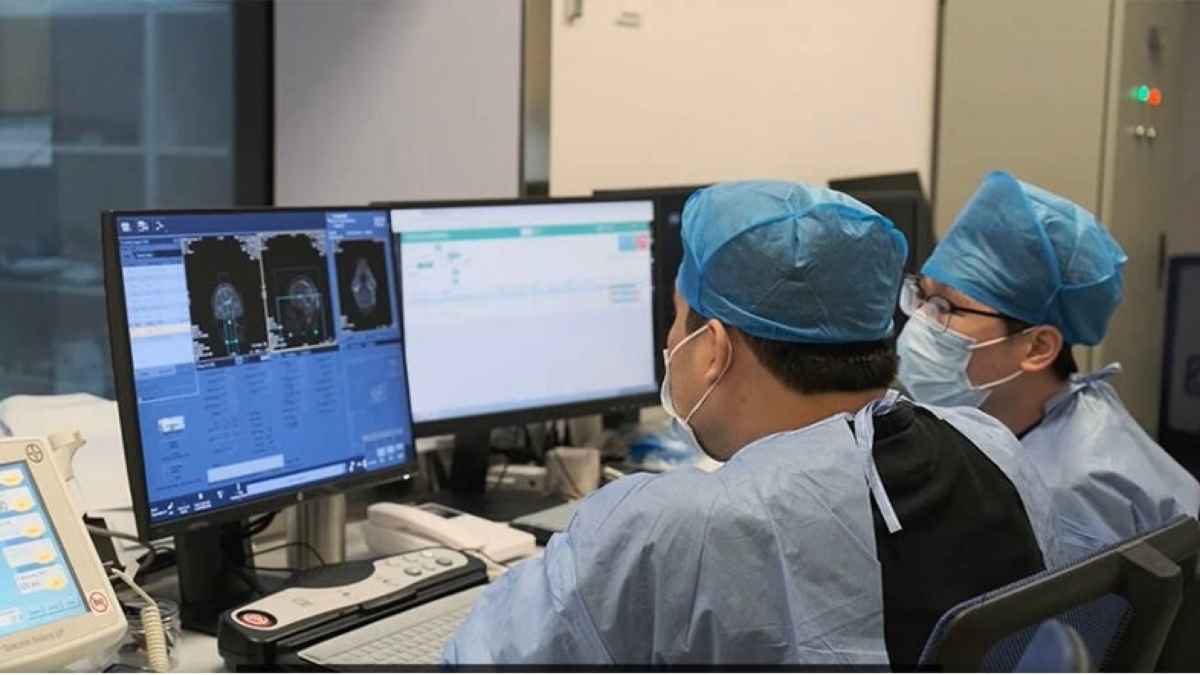
For example, at MWC, Huawei showed how a smart healthcare network project at the Union Shenzhen Hospital delivered 10Gbps coverage, and reduced the number of O&M nodes by 60 percent, while 1000 CT images can be uploaded and downloaded within one second.
Huawei illustrated how the use of FTTM again rationalises the architecture in oil field operations from over 10 layers to just three and combines blistering speeds with secure data collection and intelligent management. Again, this reduces network maintenance costs by up to 70 per cent, while allowing unattended operations across a field of over 60,000 oil wells, all over a single network.
The architecture is similarly applicable to other heavyweight applications such as port management, power infrastructure, and metro transit. Huawei highlighted the application of its FTTM technology in a metro network, which resulted in an 80 per cent reduction in ELV room space, and a 90 per cent reduction in cabling space, while delivering network reliability of 99.999 per cent.
These are just some of the examples Huawei demonstrated at MWC this year. At the event, Huawei showcased how it supports customers in implementing innovative solutions and practices, from government and public sector through finance, transportation, energy, manufacturing, and of course, ISPs. In every scenario, Huawei focuses on reducing carbon emissions, which means that whatever customer problem the company is helping to solve, it also helps solve the biggest problem facing us all.
To go further in depth on how Huawei is changing the data centre, and the industries that rely on it, check out Huawei Enterprise at Huawei Connect 2022 (bit.ly/3VD4I85).
Distributed by APO Group on behalf of Huawei Enterprise.
The Africa Debate 2026 will provide a platform for this essential, era-defining discussion, convening leaders to explore how Africa and its partners can build more balanced, resilient and sustainable models of cooperation
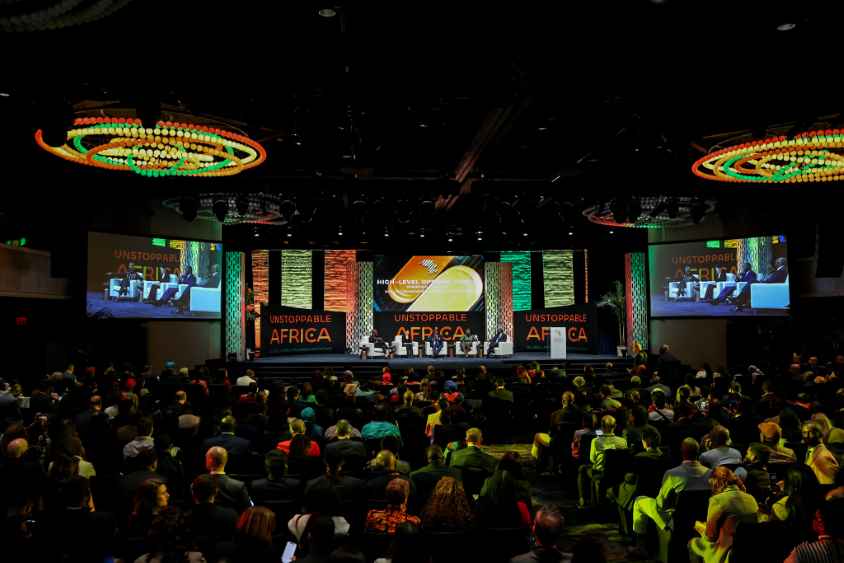
LONDON, United Kingdom, February 5, 2026/APO Group/ –As African economies assert greater agency in a rapidly evolving global order, Invest Africa (www.InvestAfrica.com) is delighted to announce The Africa Debate 2026, its flagship investment forum, taking place at the historic Guildhall in London on 3 June 2026.
Now in its 12th year, The Africa Debate has established itself as London’s premier platform for African investment dialogue since launching in 2014, convening over 800 global decision-makers annually to shape the future of trade, finance, investment, and development across the continent.
Under the theme “Redefining Partnership: Navigating a World in Transition”, this year’s forum will focus on Africa’s response to global economic realignment with greater agency, ambition and economic sovereignty.
The Africa Debate puts Africa’s priorities at the centre of the conversation, moving beyond traditional narratives to focus on ownership, resilience and long-term value creation.
“Volatility is not new to Africa. What is changing is the opportunity to respond with greater agency and ambition,” says Invest Africa CEO Chantelé Carrington.
“This year’s edition of The Africa Debate asks how we strengthen economic sovereignty — from access to capital and investment to financial and industrial policy — so African economies can take greater ownership of their growth. Success will be defined by how effectively we turn disruption into leverage and partnership into shared value.”
The Africa Debate 2026 will provide a platform for this essential, era-defining discussion, convening leaders to explore how Africa and its partners can build more balanced, resilient and sustainable models of cooperation.
Key challenges driving the debate
Core focus areas for this year’s edition of The Africa Debate include:
This year’s edition of The Africa Debate asks how we strengthen economic sovereignty — from access to capital and investment to financial and industrial policy
Global Realignment & New Partnerships
How shifting geopolitical and economic power structures are reshaping Africa’s global partnerships, trade dynamics and investment landscape.
Financing Africa’s Future
The growing need to reform the global financial architecture, new approaches to development finance, as well as the strengthening of market access and financial resilience of African economies in a changing global system.
Strategic Value Chains
Moving beyond primary exports to build local value chains in critical minerals for the green economy. Also addressing Africa’s energy access gap and mobilising investment in renewable and transitional energy systems.
Digital Transformation & Technology
Unlocking growth in fintech, AI and digital infrastructure to drive productivity, inclusion, and the next phase of Africa’s economic transformation.
The Africa Debate 2026 offers a unique platform for high-level dialogue, deal-making, and strategic engagement. Attendees will gain actionable insights from leading policymakers, investors and business leaders shaping Africa’s economic future, while building strategic partnerships that define the continent’s next growth phase.
After a thorough internal and external investigation, along with a disciplinary hearing chaired by Sbongiseni Dube, CLG (https://CLGglobal.com) has made the decision to terminate Zion Adeoye due to serious personal and professional conduct violations. This process adhered to the Code of Good Practice of the Labour Relations Act, ensuring fairness, transparency, and compliance with South African law.
Mr. Adeoye has been held accountable for several serious offenses, including:
Making malicious and defamatory statements against colleagues
Extortion
Intimidation
Fraud
Misuse of company funds
Theft and misappropriation of funds
Breach of fiduciary duty
Mismanagement
His actions are in direct contradiction to our firm’s core values. We do not approve of attorneys spending time in a Gentleman’s Club. CLG deeply regrets the impact this situation has had on our colleagues and continues to provide full support to those affected.
We want to express our gratitude to those who spoke up and to reassure everyone at the firm of our unwavering commitment to maintaining a respectful workplace. Misconduct of any kind is unacceptable and will be addressed decisively.
We recognize the seriousness of this matter and have referred it to the appropriate law enforcement, regulatory, and legal authorities in Nigeria, Mauritius, and South Africa. We kindly ask that the privacy of the third party involved be respected.
The International Islamic Trade Finance Corporation (ITFC) Strengthens Partnership with the Republic of Djibouti through US$35 Million Financing Facility
This facility forms part of the US$600 million, three-year Framework Agreement signed in May 2023 between ITFC and the Republic of Djibouti, reflecting the strong and growing partnership between both parties
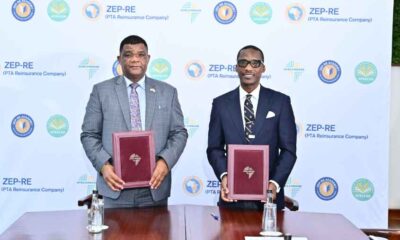
JEDDAH, Saudi Arabia, February 5, 2026/APO Group/ –The International Islamic Trade Finance Corporation (ITFC) (https://www.ITFC-IDB.org), a member of the Islamic Development Bank (IsDB) Group, has signed a US$35 million sovereign financing facility with the Republic of Djibouti to support the development of the country’s bunkering services sector and strengthen its position as a strategic regional maritime and trade hub.
The facility was signed at the ITFC Headquarters in Jeddah by Eng. Adeeb Yousuf Al-Aama, Chief Executive Officer of ITFC, and H.E. Ilyas Moussa Dawaleh, Minister of Economy and Finance in charge of Industry of the Republic of Djibouti.
The financing facility is expected to contribute to Djibouti’s economic growth and revenue diversification by reinforcing the competitiveness and attractiveness of the Djibouti Port as a “one-stop port” offering comprehensive vessel-related services. With Red Sea Bunkering (RSB) as the Executing Agency, the facility will support the procurement of refined petroleum products, thus boosting RSB’s bunkering operations, enhancing revenue diversification, and consolidating Djibouti’s role as a key logistics and trading hub in the Horn of Africa and the wider region.
We look forward to deepening this partnership, creating new opportunities, and leveraging collaborative programs to advance key sectors and drive sustainable economic growth
Commenting on the signing, Eng. Adeeb Yousuf Al-Aama, CEO of ITFC, stated:
“This financing reflects ITFC’s continued commitment to supporting Djibouti’s strategic development priorities, particularly in strengthening energy security, port competitiveness, and trade facilitation. We are proud to deepen our partnership with the Republic of Djibouti and contribute to sustainable economic growth and regional integration.”
H.E. Ilyas Moussa Dawaleh, Minister of Economy and Finance in charge of Industry of the Republic of Djibouti, commented: “Today’s signing marks an important milestone in the development of Djibouti’s bunkering services and reflects our strong and valued partnership with ITFC, particularly in the oil and gas sector. This collaboration supports our ambition to position Djibouti as a regional hub for integrated maritime and logistics services. We look forward to deepening this partnership, creating new opportunities, and leveraging collaborative programs to advance key sectors and drive sustainable economic growth.”
This facility forms part of the US$600 million, three-year Framework Agreement signed in May 2023 between ITFC and the Republic of Djibouti, reflecting the strong and growing partnership between both parties.
Since its inception in 2008, ITFC and the Republic of Djibouti have maintained a strong partnership, with a total of US$1.8 billion approved primarily supporting the country’s energy sector and trade development objectives.
Distributed by APO Group on behalf of International Islamic Trade Finance Corporation (ITFC).
We use cookies on our website to give you the most relevant experience by remembering your preferences and repeat visits. By clicking “Accept”, you consent to the use of ALL the cookies.
This website uses cookies to improve your experience while you navigate through the website. Out of these, the cookies that are categorized as necessary are stored on your browser as they are essential for the working of basic functionalities of the website. We also use third-party cookies that help us analyze and understand how you use this website. These cookies will be stored in your browser only with your consent. You also have the option to opt-out of these cookies. But opting out of some of these cookies may affect your browsing experience.
Necessary cookies are absolutely essential for the website to function properly. These cookies ensure basic functionalities and security features of the website, anonymously.
Cookie
Duration
Description
cookielawinfo-checkbox-analytics
11 months
This cookie is set by GDPR Cookie Consent plugin. The cookie is used to store the user consent for the cookies in the category "Analytics".
cookielawinfo-checkbox-functional
11 months
The cookie is set by GDPR cookie consent to record the user consent for the cookies in the category "Functional".
cookielawinfo-checkbox-necessary
11 months
This cookie is set by GDPR Cookie Consent plugin. The cookies is used to store the user consent for the cookies in the category "Necessary".
cookielawinfo-checkbox-others
11 months
This cookie is set by GDPR Cookie Consent plugin. The cookie is used to store the user consent for the cookies in the category "Other.
cookielawinfo-checkbox-performance
11 months
This cookie is set by GDPR Cookie Consent plugin. The cookie is used to store the user consent for the cookies in the category "Performance".
viewed_cookie_policy
11 months
The cookie is set by the GDPR Cookie Consent plugin and is used to store whether or not user has consented to the use of cookies. It does not store any personal data.
Functional cookies help to perform certain functionalities like sharing the content of the website on social media platforms, collect feedbacks, and other third-party features.
Performance cookies are used to understand and analyze the key performance indexes of the website which helps in delivering a better user experience for the visitors.
Analytical cookies are used to understand how visitors interact with the website. These cookies help provide information on metrics the number of visitors, bounce rate, traffic source, etc.
Advertisement cookies are used to provide visitors with relevant ads and marketing campaigns. These cookies track visitors across websites and collect information to provide customized ads.