Connect with us
Anglostratits

Energy

Gwede Mantashe Joins African Energy Week (AEW) 2026 as South Africa’s Petroleum Reforms Open the Orange Basin to Drilling

Published

on

African Energy Chamber

A new petroleum law and the prospect of fresh Orange Basin drilling is resetting South Africa’s upstream, and Minister Mantashe is taking the AEW host nation’s case to the global market

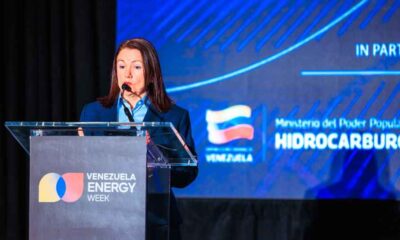
CAPE TOWN, South Africa, June 8, 2026/APO Group/ –Gwede Mantashe, Minister of Mineral and Petroleum Resources of the Republic of South Africa, has been confirmed as a featured speaker at the upcoming African Energy Week (AEW) 2026 Conference and Exhibition, where he is expected to lay out the reform agenda reshaping the country’s upstream oil and gas sector and its drive to convert long-stranded offshore gas into production.


South Africa is pursuing one of the most significant upstream overhauls in its history, anchored by a new law that gives oil and gas their own regulatory regime for the first time. The reforms position the host nation as both a destination for exploration capital and a future producer along an Atlantic margin that has drawn the world’s largest oil companies to the region.

At the center of the shift is the Upstream Petroleum Resources Development Act (UPRDA), which President Cyril Ramaphosa signed into law in October 2024. The Act separates petroleum from the mining statute that has long regulated both sectors. It also creates a single petroleum right covering exploration and production along with a 20% carried interest for the state. The UPRDA awaits a presidential proclamation to take effect, and implementing regulations that went through a further round of industry comment in early 2026 are now being finalized.

A clear petroleum framework and a credible state partner are what international capital needs to commit to the Orange Basin

Mantashe has emerged as the most forceful advocate for accelerating the sector. He has long-argued that South Africa must shift from importing refined products to producing its own, warning that dependence on foreign supply leaves the economy exposed to global price shocks. This shift becomes increasingly more importance in the current global climate, where supply security has become a major challenge – particularly for import-reliance economies such as South Africa. As such, Mantashe has repeatedly pressed for faster licensing and fewer legal delays to exploration. AEW 2026 is a key platform to bring this discussion to a global audience.

“South Africa has the geology for exploration. Now it is building the regulatory certainty it needs to turn discoveries into bankable projects,” said NJ Ayuk, Executive Chairman of the African Energy Chamber. “A clear petroleum framework and a credible state partner are what international capital needs to commit to the Orange Basin.”

Offshore, TotalEnergies – operator of Block 3B/4B in the Orange Basin – is preparing to begin drilling in South African waters in 2026 pending final regulatory approvals. The acreage sits on trend with the Venus discovery in neighboring Namibia, where TotalEnergies is developing the basin’s first oil project.

Onshore, momentum is building in Mpumalanga, where gas developer Kinetiko Energy’s Amersfoort project has logged sustained high-flow results and is advancing plans for an LNG pilot plant. Mantashe has also signaled that government is moving to lift the long-standing moratorium on shale gas development, with the Petroleum Agency of South Africa (PASA) estimating recoverable Karoo reserves at 209 tcf.

Mantashe is also expected to report on successes of the South African National Petroleum Company (SANPC), the state entity formed in May 2025 through the merger of PetroSA, iGas and the Strategic Fuel Fund. Positioned as the country’s petroleum champion, SANPC is intended to anchor state participation across the value chain as South Africa works toward 6 GW of gas-fired power by 2030.

As AEW 2026 prepares to convene policymakers, investors and operators at the Cape Town International Convention Centre from October 12-16, Mantashe’s address carries added weight as the host nation’s signal to the market. His message is expected to be direct: South Africa is open for upstream investment and ready to move from potential to production.

Distributed by APO Group on behalf of African Energy Chamber.

Business

Century Group Joins African Energy Week (AEW) 2026 as Floating Production Storage and Offloading (FPSO) Partner, Showcasing Regional Offshore Expansion

Published

on

African Energy Chamber

The Nigerian FPSO operator will highlight its fleet capabilities, regional expansion plans and investment partnerships at African Energy Week 2026

JOHANNESBURG, South Africa, April 10, 2026/APO Group/ –Century Group has been confirmed as an Energy Infrastructure and FPSO Partner at African Energy Week (AEW) 2026 in Cape Town, reflecting its growing footprint as one of Nigeria’s leading indigenous offshore operators. The company’s participation underscores its expanding operational capacity, fleet strength and role in driving local content and infrastructure solutions across Africa.


Century Group’s operational strategy is evolving beyond traditional service provision toward asset ownership, infrastructure management and regional expansion. In October 2025, the company confirmed it is in ongoing discussions with South African partners about potential oil and gas infrastructure projects, highlighting its interest in deploying FPSO and midstream solutions into new regional markets.

This partnership highlights how African-led solutions are increasingly shaping the continent’s energy landscape

At AEW 2026, Century Group will showcase how indigenous operators can support offshore production stability, build local capacity and forge strategic investment partnerships. Its asset portfolio and regional collaborations reflect Nigeria’s evolving offshore landscape, where local operators are increasingly ensuring production continuity, reducing bottlenecks and connecting domestic output to export markets – capabilities central to discussions at AEW’s upstream and infrastructure sessions.

“At AEW 2026, Century Group will showcase not only its fleet capabilities but also its strategic vision for offshore infrastructure development,” said NJ Ayuk, Executive Chairman of the African Energy Chamber. “This partnership highlights how African-led solutions are increasingly shaping the continent’s energy landscape and how indigenous operators can bridge technical execution with regional growth opportunities.”

The company’s broader engagement in continental energy dialogues further underscores its strategic outlook. Century Group executives have advocated for deeper Africa‑Gulf partnerships, identifying Africa’s youthful demographics and growing energy demand as opportunities for joint investment and capability development in global energy markets.

These developments align with a wider shift in Nigeria’s energy ecosystem, where local capacity and policy reforms are boosting indigenous participation, enhancing competitiveness and unlocking private capital. Century Group’s trajectory – from managing FPSO/FSO infrastructure to cross-border expansion and strategic partnerships – reinforces its value as an FPSO partner for AEW and as a leader in Africa’s offshore energy sector.

Distributed by APO Group on behalf of African Energy Chamber.


Continue Reading

Energy

Climate Litigation Surge Reshapes Energy Policy as Africa Seeks Stronger Legal Voice

Published

on

African Energy Chamber

Landmark rulings from global courts are redefining climate obligations and investment risk, as the African Energy Chamber moves to ensure African interests are represented in a rapidly evolving legal landscape

JOHANNESBURG, South Africa, April 10, 2026/APO Group/ –The rapid rise of climate litigation is reshaping how energy policy is defined and enforced worldwide, with courts increasingly setting the parameters of climate action. Advisory proceedings at the International Court of Justice (ICJ) and the International Tribunal for the Law of the Sea (ITLOS) are establishing legal interpretations that extend far beyond national borders, influencing how governments regulate emissions, approve projects, and manage natural resources.


For Africa, the implications are significant. While the continent contributes less than 4% of global emissions, it faces mounting pressure to align with legal standards largely shaped outside the region. Without stronger participation in these proceedings, African states risk having climate obligations defined externally – with direct consequences for industrialization, energy access, and investment flows.

Against this backdrop, the African Energy Chamber (AEC) has moved to intervene in a landmark advisory proceeding before the African Court on Human and Peoples’ Rights. The application seeks amicus curiae status in a case initiated by the Pan African Lawyers Union, which aims to define state climate obligations under the African Charter.

The case reflects a broader jurisprudential shift. Recent and ongoing proceedings build on earlier rulings such as Social and Economic Rights Action Center v. Nigeria and Ivorian League of Human Rights v. Côte d’Ivoire, which established environmental protection as an enforceable legal duty while affirming the need to safeguard broader socioeconomic rights. Together, these decisions are expanding the scope of climate-related obligations across jurisdictions.

At the global level, advisory opinions from the ICJ and ITLOS emphasize that states must exercise due diligence to prevent significant environmental and climate-related harm – setting clearer expectations for how climate obligations are interpreted under international law. While these interpretations stop short of prohibiting fossil fuel development, they introduce more stringent expectations around environmental oversight, regulatory enforcement, and long-term climate risk management.

Climate litigation is not just a regulatory challenge – it affects financing for our oil and gas sector

This trend is already affecting the financing of oil and gas projects across Africa. Banks and insurers are increasingly cautious about backing high-emission infrastructure, citing reputational and legal risks. For example, Standard Chartered declined to finance the $5 billion East African Crude Oil Pipeline due to civil society pressure and climate concerns. These risk-averse stances make loans for large upstream projects harder to secure, leaving some discoveries unable to reach FID. In Nigeria, marginal field developments have stalled despite proven reserves, and refinery expansions that could improve local energy security struggle to attract funding. To fill these gaps, African-led initiatives like the Africa Energy Bank are emerging, reflecting a shift in financing flows in response to climate and regulatory risk.

As a result, the continent’s ability to expand production and meet energy demand is constrained. Projects with strong fundamentals may face delays, stranded asset risk or permit uncertainty. Downstream and gas-to-power projects – critical for local consumption – also struggle for financing, even as climate and legal frameworks evolve. While institutions like Afreximbank have underwritten $2.5 billion toward Nigeria’s Dangote Petroleum Refinery, upstream oil and gas finance remains fragmented amid global climate mandates and litigation risk.

In South Africa, the Climate Change Act (2024) aligns domestic law with international climate commitments, and recent litigation – including a Supreme Court of Appeal decision invalidating a gas power plant authorization for inadequate environmental assessment – demonstrates how courts are increasingly scrutinizing energy projects.

This shift is redefining risk for investors. Expanding legal interpretations – including the potential characterization of climate inaction as an internationally wrongful act – increase exposure for states and private operators. Projects that fail to meet evolving standards may face financing hurdles, delays or stranded asset risk, while governments may confront investor-state disputes if regulatory changes affect project viability.

At the same time, these legal developments are reshaping geopolitics. African states are leveraging climate-related legal findings to strengthen claims for climate finance, debt relief and technology transfer. By framing climate harm as a legal liability rather than solely a political issue, the continent gains negotiating leverage – but also subjects domestic energy strategies to greater scrutiny.

Within this landscape, the AEC’s intervention ensures African priorities are represented in emerging legal standards. The Chamber advocates for a balanced interpretation that recognizes both environmental obligations and the right to development, particularly in a region where more than 600 million people lack access to electricity. Competing perspectives remain strong, with environmental groups calling for stricter limits on fossil fuel expansion under human rights frameworks.

“If Africa leaves its energy future to outside courts, we risk seeing policies designed for other continents applied here,” says NJ Ayuk, AEC Executive Chairman. “Climate litigation is not just a regulatory challenge – it affects financing for our oil and gas sector. Banks are retreating, discoveries can’t reach FID and projects that could fuel our energy ambitions remain stalled. Africa must turn this challenge into an opportunity to define standards that protect the planet while ensuring our people, our resources, and our growth are not left behind.”

The rise of climate litigation marks a decisive shift from political negotiation to legal enforcement. For Africa, the stakes are clear: engage actively in shaping these frameworks or risk adapting to standards set elsewhere. Ensuring African representation in these processes is now critical not only to align climate ambition with economic growth and energy security but also to secure the financing necessary for the continent’s oil and gas sector to reach its potential.

Distributed by APO Group on behalf of African Energy Chamber.


Continue Reading

Business

Afreximbank convenes Angola oil and gas financing forum to ad-vance local content and indigenous participation

Published

on

Afreximbank

The forum examined practical constraints facing indigenous companies, including access to appropriate financing, bankability, execution capability and market access

African Export-Import Bank (Afreximbank) (www.Afreximbank.com) hosted a Local Content Development Forum in Luanda, Angola, on 9 September 2026, bringing together government institutions, financial institutions, indigenous companies and industry players to explore financing opportunities across Angola’s oil and gas value chain.


Held at the Centro de Convenções de Talatona, the forum focused on how financing, partnerships and transaction structures could support the growth of Angolan companies across the sector, including opportunities in project finance, trade finance, downstream infrastructure and industrial development.

Angola remains one of Africa’s most significant energy markets, with Afreximbank having invested close to US$2 billion in the country’s oil and gas sector. The forum built on that engagement by examining how more Angolan companies could progress from participation into ownership and scale, when the right financing, partnerships and structures are made available to them.

Commenting on Afreximbank’s ambition to support the next generation of Angolan energy companies, Mr. Haytham Elmaayergi, Executive Vice President, Global Trade Bank, Afreximbank, said:

“Angola has built a strong platform for its energy sector, with Afreximbank playing a longstanding role in structuring, financing and mobilising capital to support its development at scale. The next phase is about enabling more Angolan companies to move from participation and service provision towards ownership and scale, drawing on the experience of successful indigenous African operators to turn that ambition into bankable transactions and build the next generation of national and regional champions.”

The next phase is about enabling more Angolan companies to move from participation and service provision towards ownership and scale


Speaking at the Forum, Berta Rodrigues Issa, President of ASSEA (Association of Indigenous Companies for the Oil Industry of Angola), congratulated Afreximbank on hosting the event, and for placing Local Content where it truly belongs: “A country does not industrialise merely by exporting more than it imports. It industrialises when it transforms its resources, develops productive capacity and builds companies capable of competing beyond its borders. That is why Afreximbank’s theme- “From Resources to Value” – is so deeply aligned with Angola’s Local Content agenda.

“For ASSEA, Local Content cannot be limited to the participation of Angolan-owned companies in one-off contracts. It must be a deliberate path towards capacity building, industrialization and competitiveness.”

The forum examined practical constraints facing indigenous companies, including access to appropriate financing, bankability, execution capability and market access, and considered how Afreximbank’s financing and advisory capabilities could help address these barriers.

Participants also drew lessons from Nigeria, where indigenous companies such as Oando and Heirs Energies have expanded their ownership and operating positions through significant acquisition transactions. Oando’s US$783 million acquisition of Nigerian Agip Oil Company increased its interests in OMLs 60–63 from 20% to 40%, while Heirs Energies acquired a 45% interest in OML 17 and assumed operatorship of the asset. The examples illustrated how indigenous African companies can scale into larger ownership and operating roles.

The forum also highlighted significant pipeline of opportunities across Angola’s oil and gas sector, including US$2.5 billion for Lobito Oil, US$1 billion for Sonangol, US$1.4 billion for Amufert and US$280 million for Itracom.

Discussions centred on how public institutions, local banks, industry operators and investors could work together to advance these opportunities towards implementation.

Distributed by APO Group on behalf of Afreximbank.


Continue Reading

Trending