Connect with us

Energy

Guinea-Conakry Energy Minister to Bring Frontier Oil & Power Opportunities to Invest in African Energy (IAE) 2026

Published

on

Energy

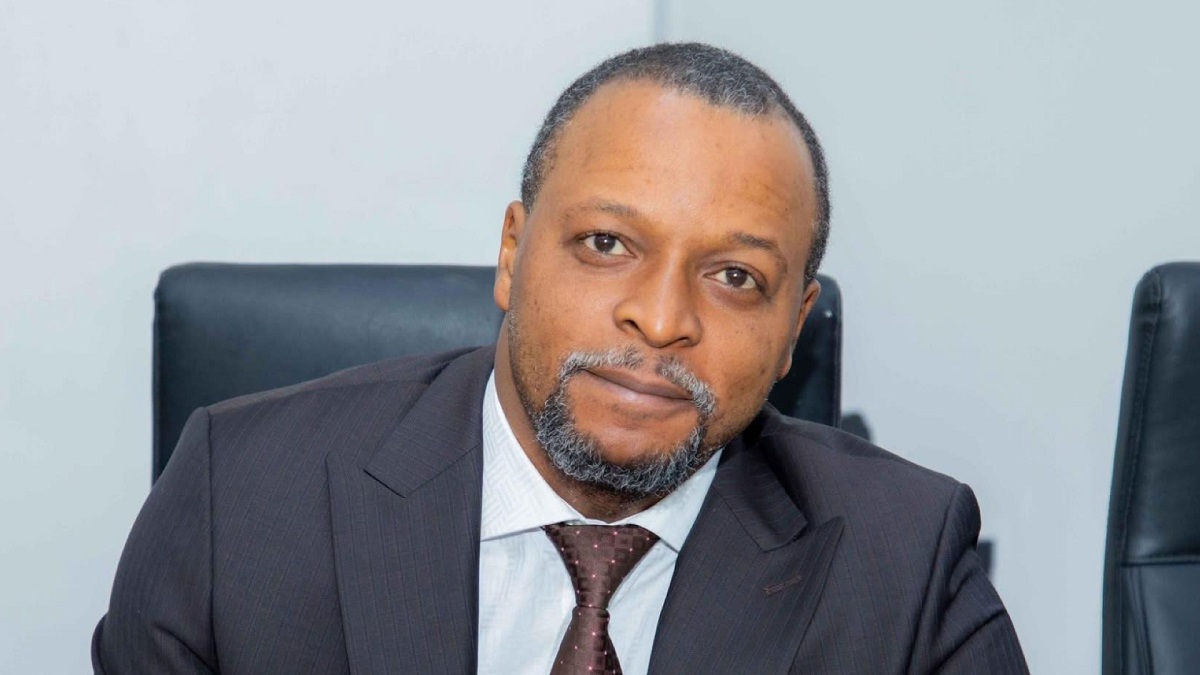
Aboubacar Camara, Minister of Health, Sanitation, Energy, Hydraulics and Hydrocarbons of Guinea-Conakry, will deliver a keynote at next month’s Invest in African Energy Forum in Paris

PARIS, France, March 13, 2026/APO Group/ –As exploration momentum builds across West Africa’s (Mauritania-Senegal-Gambia-Bissau-Conakry) MSGBC basin, Guinea-Conakry is seeking to position itself as the region’s next frontier for oil and gas development while accelerating investment in large-scale power infrastructure. At the upcoming Invest in African Energy Invest in African Energy (IAE) Forum in Paris, Aboubacar Camara, Minister of Health, Sanitation, Energy, Hydraulics and Hydrocarbons of Guinea-Conakry, will outline the country’s strategy to unlock upstream potential and expand electricity generation to support industrial growth.


Guinea’s hydrocarbon sector remains largely underexplored compared to its regional neighbors. To stimulate exploration activity, the government has been preparing a licensing round covering 22 onshore and offshore blocks designed to attract international operators. As of late 2025, authorities were finalizing the technical framework and fiscal terms while expanding access to geological data through a National Seismic Data Visualization Center, developed in partnership with SLB and TGS. The data platform is expected to provide prospective investors with improved visibility into Guinea’s offshore basins ahead of the planned bid round.


While Guinea has historically seen limited drilling activity, interest in the country’s offshore margin has grown in recent years as major discoveries in neighboring Senegal and Mauritania have reshaped perceptions of the MSGBC basin’s resource potential.


Alongside upstream ambitions, Guinea is advancing a series of large-scale power projects aimed at addressing electricity shortages and supporting its expanding mining sector. Hydropower remains the backbone of the country’s electricity system, with major projects developed along the Konkouré River significantly increasing generation capacity in recent years.


The 450 MW Souapiti Hydropower Plant and the earlier 240 MW Kaleta facility have significantly expanded national generation capacity in recent years, strengthening grid reliability while providing power to mining operations and urban centers. Additional large-scale projects are progressing across the pipeline, including the 300 MW Amaria hydropower project and the 294 MW Koukoutamba hydropower plant, which is being developed under the Senegal River Basin Development Authority to supply electricity across several West African countries.


Beyond hydropower, authorities are exploring opportunities to diversify the country’s energy mix through gas and renewable energy investments. One proposal involves the development of an LNG terminal at the Port of Kamsar to support both import and export operations while supplying a planned gas-fired power facility capable of generating up to 1,900 MW of electricity.


Solar energy is also gaining momentum as part of Guinea’s long-term strategy to strengthen grid reliability and reduce seasonal dependence on hydropower. Government plans call for the addition of up to 500 MW of solar generation capacity in the coming years, opening new opportunities for independent power producers and infrastructure investors.


At the same time, regional transmission initiatives are expanding Guinea’s integration within the West African Power Pool. Financing approved in 2025 for the Guinea–Mali electricity interconnection project aims to improve electricity supply in eastern Guinea while enabling cross-border power trade and strengthening regional grid stability.


The IAE 2026 Forum offers Guinea-Conakry an opportunity to present its evolving energy strategy to international investors. By highlighting frontier exploration acreage alongside major power infrastructure developments, the government aims to attract the partnerships needed to accelerate the next phase of the country’s energy sector development.


IAE 2026 (http://apo-opa.co/4urkt3f) is an exclusive forum designed to connect African energy markets with global investors, serving as a key platform for deal-making in the lead-up to African Energy Week. Scheduled for April 22–23, 2026, in Paris, the event will provide delegates with two days of in-depth engagement with industry experts, project developers, investors and policymakers. For more information, visit www.Invest-Africa-Energy.com. To sponsor or register as a delegate, please contact sales@energycapitalpower.com

Distributed by APO Group on behalf of Energy Capital & Power.

Business

Chevron Taps Emmanuelle Garinet to Lead Exploration Across Sub-Saharan Africa and the America

Published

on

Chevron appoints exploration veteran Emmanuelle Garinet to lead discovery strategy across sub-Saharan Africa and the Americas, a move welcomed by the African Energy Chamber as positive for exploration investment

JOHANNESBURG, South Africa, March 13, 2026/APO Group/ –Energy supermajor Chevron has appointed Emmanuelle Garinet as Director of Exploration for the Americas and Sub-Saharan Africa, bringing one of the upstream industry’s most experience exploration geophysicists into a strategic leadership role overseeing discovery efforts across two of the world’s most important hydrocarbon regions.


The African Energy Chamber (AEC) – as the voice of the African energy industry – welcomes the appointment, with Garinet’s move to Chevron serving as a positive signal for Africa’s exploration sector. For the Chamber, placing an executive with decades of African exploration experience at the helm of a major international oil company’s discovery strategy could help unlock new investment across frontier basins, accelerate geological understanding and strengthen collaboration between operators and host governments.


Expanding Exploration Across Sub-Saharan Africa

Chevron’s African portfolio is entering a new phase of exploration-led growth as international energy companies continue to pursue new discoveries across frontier basins and established producing hubs.


Namibia has emerged as one of the most closely watched exploration regions in the world following a series of major deepwater discoveries in the Orange Basin. Chevron is currently evaluating prospects in the Walvis Basin, where the company plans to drill a new exploration well in PEL 82 between 2026 and 2027. The campaign follows earlier drilling in the Orange Basin, reflecting the company’s continued interest in Namibia’s rapidly evolving offshore petroleum system.


In West Africa, Chevron is expanding its deepwater presence in Nigeria after acquiring a 40% stake from TotalEnergies in offshore licenses PPL 2000 and PPL 2001. The company is expected to deploy a drilling rig in late 2026 targeting resources near the Agbami field as part of a broader deepwater growth strategy.


Angola remains a cornerstone of Chevron’s African portfolio where, in December 2025, the company achieved first oil at the South N’dola platform in Block 0, producing approximately 25,000 barrels of oil per day using existing infrastructure. Associated gas from the project is routed to the Angola LNG plant, supporting the country’s gas monetization strategy while reducing flaring.


For the AEC, these developments highlight the continued importance of exploration in unlocking new energy resources across the continent while supporting regional economic growth and energy security.


Americas Portfolio Provides Additional Growth

Emmanuelle Garinet brings decades of geological insight and international exploration leadership

Beyond Africa, Chevron maintains a large upstream portfolio across the Americas.


In the U.S. the company continues expanding production in the Permian Basin, where output is projected to reach around one million barrels of oil equivalent per day in 2026. Deepwater developments in the Gulf of Mexico also remains a key component of Chevron’s portfolio, contributing to long-term production growth.


In South America, Chevron’s position in Guyana’s prolific Stabroek Block – obtained through the company’s acquisition of Hess Corporation – places it within one of the world’s fastest-growing offshore petroleum provinces. Meanwhile, unconventional development in Argentina’s Vaca Muerta formation continues to support production growth in the region.


A Career Built on Global Exploration

Garinet’s career reflects more than three decades of experience in exploration geology, subsurface interpretation and international upstream leadership.


She began her career as a geophysicist, working on seismic analysis and subsurface evaluation before moving into management roles overseeing large exploration portfolios. Over time, she held senior leadership positions across multiple continents, including roles managing exploration programs in Nigeria, Gabon and South America.


Her tenure at TotalEnergies also spanned the transformation of the company from Elf Aquitaine to ToalFinaElf and ultimately TotalEnergies.


One of her most notable achievements was leading the exploration team behind the Venus discovery offshore Namibia – one of the largest deepwater oil finds in recent years and a project expected to move toward a final investment decision in 2026.


“Exploration leadership with deep technical expertise and real experience in Africa’s basins is critical as the continent seeks to unlock new resources and attract global investment,” says NJ Ayuk, Executive Chairman, AEC. “Emmanuelle Garinet brings decades of geological insight and international exploration leadership. Her appointment at Chevron sends a strong signal about the continued importance of African energy development.”


Garinet has also been a prominent advocate for African energy development and has frequently spoken at the annual African Energy Week conference in Cape Town, where she has highlighted the role of advanced seismic data, frontier exploration and efficient permitting systems in unlocking new opportunities across the continent.

Distributed by APO Group on behalf of African Energy Chamber.

Continue Reading

Business

Zephyr Marine Services Signals New Era for Namibian Oil Services as Taimi Nangula Itembu Steps into Leadership

Published

on

The African Energy Chamber – as the voice of the African energy sector – celebrates and commends the launch of Zephyr Marine Services. The milestone represents a huge step in the growth of Namibia’s energy sector and the strengthening of the country’s local content development

WINDHOEK, Namibia, March 23, 2026/APO Group/ –Namibia’s rapidly expanding offshore energy sector has gained a critical new enabler with the launch of Zephyr Marine Services Pty Ltd – a locally owned company dedicated to marine asset logistics and operational solutions. At the helm is co-Founder and Executive Director Taimi Nangula Itembu, a respected Namibian professional now stepping into a leadership role focused on building domestic capacity to support the country’s maritime and offshore industries.


Itembu brings a strong track record of public sector, policy and international engagement to her new role. Her career spans key institutions including the Judiciary of Namibia and the Parliament of Namibia, where she contributed to legislative processes, governance oversight and institutional reform. She later built extensive experience in public and government affairs within the energy sector, gaining insight into stakeholder engagement, regulatory frameworks and the strategic priorities shaping Namibia’s oil and gas landscape.

She has held various positions at ExxonMobil, including Deputy Country Manager for Namibia, before moving on to a global role in Europe in Public and Government Affair. Her early career also includes work with the U.S. Department of State, strengthening U.S.-Namibian relations. Academically, Itembu holds a Master of Public Administration from Harvard University and a Bachelor of Arts in Political Science and Psychology from St. Francis Xavier University. Her transition into Zephyr Marine Services reflects a deliberate move toward building Namibian-led solutions.

We are creating solutions that understand local realities, respond to local challenges and contribute to long-term national growth

“I am deeply grateful for my time at ExxonMobil, which provided an exceptional platform for growth, learning and professional development. The experience, mentorship and exposure I gained have been instrumental in shaping my understanding of Namibia’s energy landscape and the broader global industry. I leave with immense appreciation for the opportunities I was given and carry those lessons forward as I take on this next chapter,” Itembu said.

The launch of Zephyr Marine Services comes at a critical time for the Namibian oil and gas industry. With first oil on the cards for 2029 – led by the TotalEnergies-operated Venus and Mopane fields -, the demand for robust, locally-driven logistics, marine coordination and operational support continues to rise. TotalEnergies aims to reach FID for the Venus project in 2026 and recently signed an agreement with Galp Energia – former operator of the Mopane field – granting it operatorship of PEL 83. Under the terms of the deal, Galp will retain a stake in PEL 83 while assuming a 10% stake in the Venus project.

Other players are driving exploration activities in Namibia’s off- and onshore basins. In 2025, several milestones were achieved, including Rhino Resources’ light oil discovery at the Capricornus 1-X well in April. Chevron announced plans to embark on a 2026/2027 drilling campaign while ReconAfrica completed drilling at the Kavango West 1X well (onshore). Looking ahead, ReconAfrica plans to return to Kavango West 1X in 2026 to conduct a production test. Offshore, Shell could likely drill an exploration well at PEL 39, Chevron at PEL 82 and Rhino Resources is targeting 2 appraisal wells at Capricornus and Volans. Continued exploration across the Orange and Walvis Basins are expected through 2028, strengthening Namibia’s position as a future production hub.

Stepping into this picture, the launch of Zephyr Marine Services is expected to not only support upcoming drilling campaigns but position Namibian expertise at the heart of the country’s next development phase. Offering tailored, efficient and reliable solutions designed specifically for Namibia’s evolving offshore ecosystem, the company represents more than a service provider, but a broader shift toward local participation, innovation and ownership in the country’s energy value chain. Zephyr Marine Services is looking at building real industrial capability in Namibia, taking on high-barrier entry services and supporting the country’s move toward first oil production.

“This is about building something meaningful for Namibia. Zephyr Marine Services is rooted in the belief that Namibians should not only participate in our country’s energy future but actively shape it. We are creating solutions that understand local realities, respond to local challenges and contribute to long-term national growth,” said Itembu.

The company’s mission is clear: to support Namibia’s growing maritime and offshore industries with efficient, reliable and locally driven marine logistics solutions. From vessel coordination and asset management to operational planning, Zephyr Marine Services is positioning itself as a critical link between upstream operators and on-the-ground execution.

Distributed by APO Group on behalf of African Energy Chamber.

Continue Reading

Business

Which Pre-Crisis African Liquefied Natural Gas (LNG) Projects Could Provide Critical Supply for Europe

Published

on

Projects sanctioned before today’s geopolitical shocks are coming online just as Europe seeks flexible Liquefied Natural Gas (LNG) volumes – positioning Africa as a key source in a volatile gas market ahead of the Invest in African Energy Forum (IAE 2026) in Paris

PARIS, France, March 23, 2026/APO Group/ —

Europe’s gas strategy is under renewed pressure. Rising geopolitical risk and tightening global LNG markets have refocused attention on African projects that were approved years ago – but are only now becoming operational. At the Invest in African Energy Forum (IAE) in Paris next month, these pre-crisis LNG developments are expected to dominate discussions as buyers and investors reassess near-term, flexible supply options.

The advantage is timing. Projects sanctioned before today’s disruptions are delivering – or approaching first gas – providing Europe with volumes without waiting for the next multi-year investment cycle. In a market where new greenfield LNG supply can take 5–7 years to reach the market, African LNG increasingly functions as ready-to-deploy capacity, capable of meeting demand spikes, offsetting supply shortfalls and reducing reliance on concentrated geopolitical sources.


Mozambique LNG: Scale Delayed, But Strategic


Mozambique remains Africa’s largest long-term LNG play, with more than 30 mtpa of planned additional capacity across developments led by TotalEnergies and ExxonMobil. While TotalEnergies’ 12.9 mtpa Mozambique LNG project remains paused due to security concerns, momentum toward a restart is building.


In today’s market, that scale is highly relevant. European buyers seeking to diversify away from concentrated supply sources are increasingly willing to engage with projects that offer long-term volumes – even if timelines remain uncertain. In a tighter global market, previously “high-risk” projects are being reassessed as strategic supply anchors.


Senegal–Mauritania GTA: From Frontier to First Gas


The Greater Tortue Ahmeyim LNG Project (GTA), operated by bp and Kosmos Energy, is moving into production just as Europe looks to expand Atlantic Basin supply. The project will deliver around 2.3 mtpa in its first phase, with expansion potential up to 10 mtpa.


GTA’s strategic advantage lies not only in scale but in design and timing. Floating LNG units allow faster deployment and flexible cargo delivery, while its West African location shortens shipping times to Europe compared with U.S. Gulf exports. As Europe seeks to balance winter demand peaks, GTA provides mid-scale, redirectable supply that the market currently lacks.


Nigeria LNG Expansion: Incremental Capacity, Immediate Impact


Nigeria LNG Train 7 will add roughly 8 mtpa to the country’s existing 22 mtpa capacity, making it one of the most significant near-term additions globally. Unlike greenfield projects, Train 7 leverages existing infrastructure, reducing cost and development time. For Europe, incremental expansions like this offer faster access to contracted volumes, helping utilities manage seasonal volatility and limit exposure to spot-market price swings.


Angola LNG: Underutilized, Now Repositioned


Angola’s Angola LNG plant has a nameplate capacity of 5.2 mtpa but has historically operated below potential due to feedgas constraints. With upstream investment improving and gas supply stabilizing, the project now represents “quick-win” capacity – volumes that can be ramped up without the long lead times of new developments. For European buyers, this latent supply is increasingly valuable as a buffer against short-term disruptions.


Republic of Congo LNG: Fast-Track Development


The Congo LNG Project, led by Eni, targets around 3 mtpa through a phased, modular approach, with first exports already underway. By leveraging existing offshore assets and floating LNG units, the project has moved from concept to production faster than traditional developments. In a market where timing is critical, rapid deployment offers a clear competitive advantage.


Paris as the Deal-Making Interface


As these dynamics converge, the IAE 2026 Forum in Paris is emerging as a key platform for turning market demand into project momentum. With European buyers seeking long-term supply and African producers looking to advance both new and delayed LNG projects, the forum provides direct engagement with decision-makers, investors and technical teams.


Africa’s pre-crisis LNG projects were not designed for today’s market – but in a world of tight supply and high volatility, their readiness is becoming indispensable.

IAE 2026 (www.Invest-Africa-Energy.comis an exclusive forum designed to connect African energy markets with global investors, serving as a key platform for deal-making in the lead-up to African Energy Week. Scheduled for April 22–23, 2026, in Paris, the event will provide delegates with two days of in-depth engagement with industry experts, project developers, investors and policymakers. For more information, visit www.Invest-Africa-Energy.com. To sponsor or register as a delegate, please contact sales@energycapitalpower.com

Distributed by APO Group on behalf of Energy Capital & Power.

Continue Reading

Trending

Exit mobile version