Connect with us
Anglostratits

Business

GITEX GLOBAL 2024: Historic opening day marked by record international participation and capacity crowds at key events

Published

on

GITEX GLOBAL

These events are fostering collaboration and driving innovation to shape the tech landscape of tomorrow

DUBAI, United Arab Emirates, October 15, 2024/APO Group/ —

  • Entire international tech ecosystem descended on Dubai to mark the start of GITEX GLOBAL 2024 (www.GITEX.com)  – the world’s largest and best-rated tech event
  • Innovative showcases and GITEX Editions & European Innovation Council pavilion launches also star on “Tech Investor Day”
  • “AI Super Tuesday” next up at GITEX GLOBAL 2024

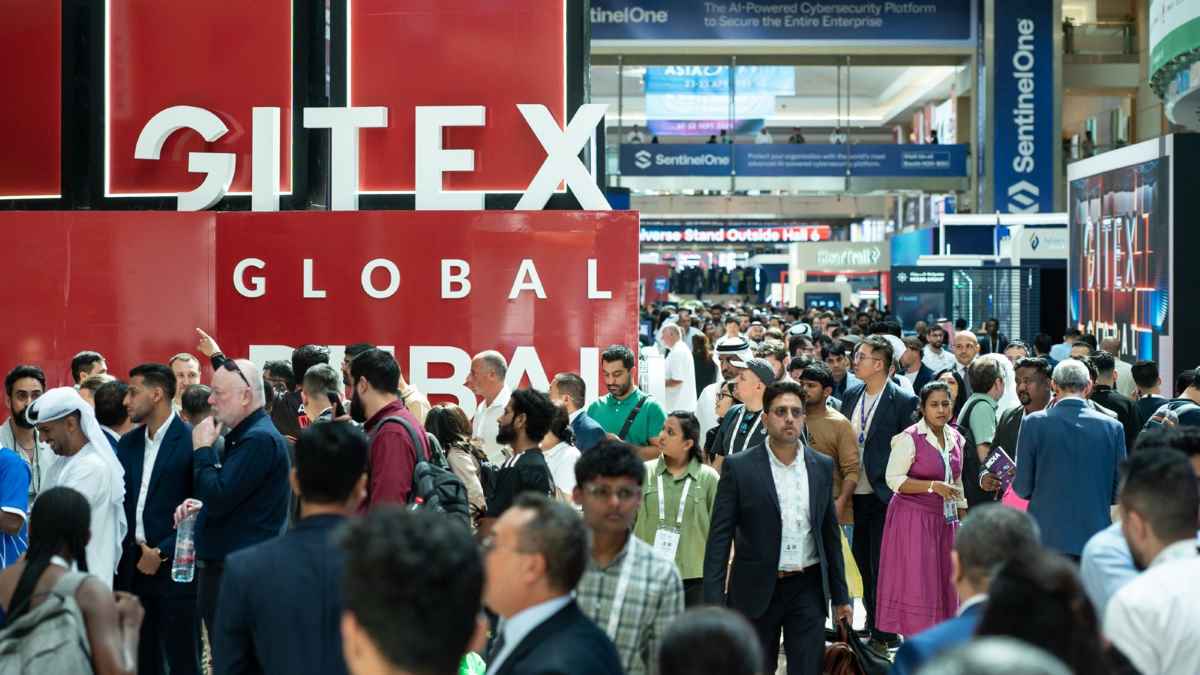
International audiences enjoyed a memorable first day at GITEX GLOBAL 2024 (http://apo-opa.co/4h8HyRu) on Monday as the world’s largest and best-rated tech event kicked off in sensational fashion – setting the stage for an unforgettable week of breakthrough tech showcases.

Taking place at Dubai World Trade Centre (DWTC) from 14-18 October, GITEX GLOBAL presents a record-breaking edition in its 44th year. It welcomes over 6,500 exhibitors, 1,800 startups, 1,200 investors alongside governments from more than 180 countries – the highest-ever international participation at GITEX GLOBAL – comprising enterprises, experts, investors, startups, academia, researchers, and the entire global tech ecosystem.

Eagerly awaited exhibitions and events take centre stage

Across a capacity-crowd venue, international audiences became acquainted with a wide variety of incredible innovations on Day 1 of GITEX GLOBAL 2024. UAE technology group G42 presented its Intelligence Grid immersive experience, enabling visitors to discover how AI can power every aspect of future life as a ‘super utility’. Lenovo showcased its new range of hardware and cloud solution equipped with transformative AI capabilities of the future, while e& showcased some the world’s most mindblowing protypes in all of tech. One of the highlights was the XPeng AeroHT eVTOL Flying Car – enabling audiences to discover how such innovations represent a historic opportunity to revolutionise aviation and personal transportation.

With five incredible themes across five unmissable days this year, “Tech Investment Day” was first up with World Future Economy Digital Leaders Summit (http://apo-opa.co/4dLQ9qC) amongst the many shows that drew huge crowds and received widespread audience acclaim.

In a special briefing, His Excellency (H.E.) Abdullah Bin Touq Al Marri, Cabinet Member & UAE Minister of Economy, addressed attendees during ‘Rise of the New Economy: AI & Emerging Industries’. This session delved into the UAE’s strategic initiatives fostering innovation, enhancing competitiveness, and positioning the country as a global leader in the new economy.

With the UAE’s non-oil sector accounting for 74% of national gross domestic product (GDP) in 2024, H.E. Al Marri reaffirmed the Ministry of Economy’s ambitious plans for the years ahead, insisting: “We are in the business of breaking records. We’ve already achieved a non-oil sector that accounts for 74% of GDP – this record has never happened before in our country’s history. The UAE’s environment and ecosystem attracts people from around the globe – and the target now is to reach 80% by 2030 and become an R&D hub for the world.”

The UAE’s environment and ecosystem attracts people from around the globe – and the target now is to reach 80% by 2030 and become an R&D hub for the world

With several leadership sessions held throughout the Monday schedule, H.E. Faisal Al Bannai, Advisor to the UAE President & Secretary General of the Advanced Technology Research Council (ATRC), shared key insights and perspectives during ‘AI Leadership: Steering Societal Transformation’. AI socio-economic implications were discussed alongside global AI leadership, models, governance, and regulation.

Elsewhere on a historic opening day to celebrate GITEX GLOBAL’s record-extending 44th edition, new industry-defining programmes were also launched – including GITEX Editions, an exclusive platform for late-stage advanced tech companies and a premier hub for unicorns, soonicorns and rhinos.

GITEX Editions connects 59 top global unicorns and was attended by H.E. Omar Sultan Al Olama, UAE Minister of State for AI, Digital Economy & Remote Work Applications, also addressed attendees between another applauded leadership session – ‘The UAE As The Sandbox For Pragmatic Ai Regulation And Policy Development’.

The year’s most impactful discussions surrounding AI’s future in society and industry were also attending by high numbers of visitors. While discussing the most transformative AI case studies across government, enterprise, and startups, the need to balance AI’s potential with creativity and human intuition was examined in various sessions, including ‘Regulating Tech: The Intersection of Tech, Crime and Law’.

Didier Jacobs, Head of ICT & Chief AI Officer at Europol, stressed that heightened collaboration and cooperation are needed to overcome challenges and solve international crime, adding: “Cybercrime knows no borders. There are many technologies that can be misused for hacking, extortion, sabotage, illegal transactions, and so on. What’s needed are solutions – a blend of increased human collaboration and technology deployment is essential.”

As this week marks the largest-ever European participation at GITEX GLOBAL with 38 European countries exhibiting alongside 1,000-plus SMEs and 450-plus startups, the European Innovation Council pavilion was officially launched to commemorate the milestone.

With debuting exhibitors from countries including Austria, Portugal, Latvia, Serbia, Bosnia & Herzegovina, and Switzerland in attendance, Trixie LohMirmand, Executive Vice President of DWTC, the organiser of GITEX GLOBAL, opened the brand-new site. This casts a unique spotlight on Europe’s AI, tech, and innovation advancements alongside the cross-continental collaboration efforts currently taking shape across the continent.

What next at GITEX GLOBAL 2024?

GITEX GLOBAL 2024 continues Tuesday as “Super AI Tuesday” showcases how AI is transforming business strategies, revolutionising industries, and creating new growth opportunities across the globe. Up until Friday (October 18), attendees can also explore the latest tech sector services and solutions being rolled out across Central Asia, Southeast Asia, Latin America, and the Middle East.

GITEX GLOBAL is seamlessly connecting with world’s largest network of tech events with its stellar list including GITEX EUROPE Berlin, GITEX ASIA Singapore, GITEX AFRICA Morocco, and GITEX NIGERIA. These events are fostering collaboration and driving innovation to shape the tech landscape of tomorrow.

More information on GITEX GLOBAL and to purchase passes, please visit www.GITEX.com

Distributed by APO Group on behalf of GITEX Global.

Business

Africa Finance Corporation Appoints Central Bank of Nigeria (CBN) Governor Yemi Cardoso as Chairman of the Board

Published

on

Mr Cardoso’s appointment comes as AFC continues to expand its role in financing and developing strategic infrastructure assets that address Africa’s infrastructure gap, accelerate industrialisation and strengthen regional integration

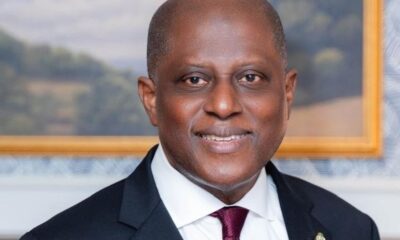
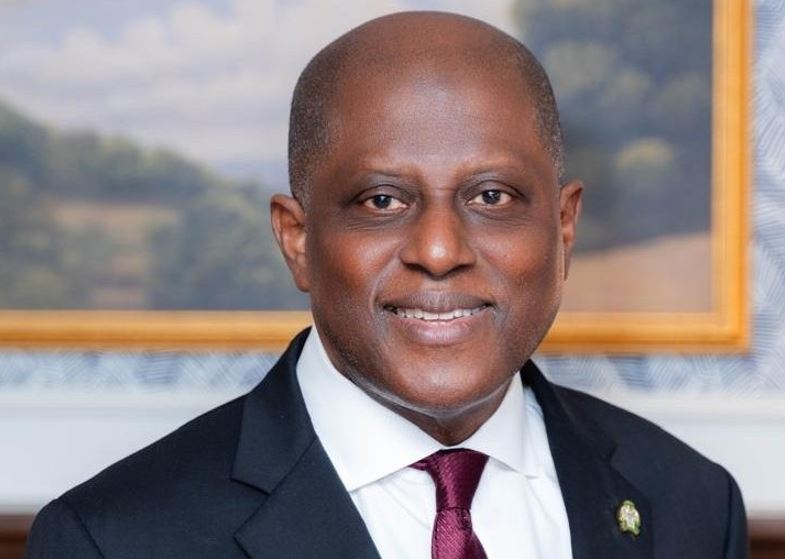
LAGOS, Nigeria, October 14, 2026/APO Group/ –Africa Finance Corporation (AFC) (www.AfricaFC.org), the continent’s leading infrastructure solutions provider, announces the appointment of Mr. Olayemi Cardoso, Governor of the Central Bank of Nigeria (CBN), as Chairman of its Board of Directors. He succeeds the immediate-past Chair, Ireti Samuel-Ogbu, who served the Corporation meritoriously during her tenure and continues to serve as a board member.


Mr Cardoso brings extensive experience spanning international banking, investment management, economic policy and public sector leadership. Since assuming office as Governor of the CBN in September 2023, he has led a far-reaching programme of monetary, financial-sector, and institutional reforms to restore macroeconomic stability, strengthen policy credibility, and rebuild investor confidence in Nigeria’s economy.

Under his leadership, the CBN has implemented significant reforms to Nigeria’s foreign exchange market, addressed longstanding foreign exchange obligations, strengthened monetary policy transmission, and enhanced institutional governance and transparency. The Bank has also concluded a recapitalisation programme for the banking sector, aimed at strengthening the resilience and capacity of Nigeria’s financial system to support sustainable economic growth.

I look forward to working with the Board, management and member states to advance The Africa We Build 2050

Prior to his appointment as Governor, Mr Cardoso built a distinguished career in international banking and public service, including a 12-year tenure as Chairman of Citibank Nigeria and service as Commissioner for Economic Planning and Budget in Lagos State. In the latter role, he contributed to economic planning and fiscal management in one of Africa’s largest economies. He holds a degree from Aston University in the United Kingdom and a master’s in public administration from Harvard Kennedy School, where he also served on the Alumni Board.

Mr Cardoso’s appointment comes as AFC continues to expand its role in financing and developing strategic infrastructure assets that address Africa’s infrastructure gap, accelerate industrialisation and strengthen regional integration. His experience in financial sector reform, institutional governance and capital markets will provide valuable perspective on the Corporation’s strategic direction as it mobilises investment to unlock Africa’s economic potential.

Samaila Zubairu, President & CEO of AFC, said: “We are delighted to welcome Mr Cardoso as our Board Chairman. He shares our conviction that Africa’s lasting stability depends on its productive capacity. His leadership will strengthen AFC as we advance The Africa We Build 2050, mobilising African capital to build the infrastructure and industries that create jobs, prosperity and dignity for our people. We also sincerely thank Mrs Samuel-Ogbu for her dedication and contribution to AFC’s board during her tenure.”

Mr. Cardoso commented on his appointment, saying: “A more productive Africa is a more stable Africa. AFC has the credibility and track record to mobilise capital and build the infrastructure and industries that drive transformation. I look forward to working with the Board, management and member states to advance The Africa We Build 2050. Our measure of success must be the productive capacity we create, the industries we enable and the jobs we support.”

AFC continues to advance transformational infrastructure and industrial investments across Africa, with recent milestones including achieving financial close on the US$753 million Lobito Corridor Railway Project in Angola, to support the rehabilitation, upgrade, and long-term operation of the 1,300-kilometre brownfield rail corridor; supporting a US$600 million facility for Dangote Group’s US$7 billion fertiliser expansion programme to scale production in Nigeria; and committing to a combined US$300 million investment alongside Vision Invest in WIOCC Group to accelerate the expansion of critical digital infrastructure across the continent. These investments reflect AFC’s unique approach to developing strategic infrastructure platforms that connect markets, strengthen industrial value chains and mobilise capital at scale to drive Africa’s economic transformation.

Distributed by APO Group on behalf of Africa Finance Corporation (AFC).


Continue Reading

Business

Ghana Targets End to Liquid Fuel Purchases for Power as Gas Supply Expands

Published

on

GECF

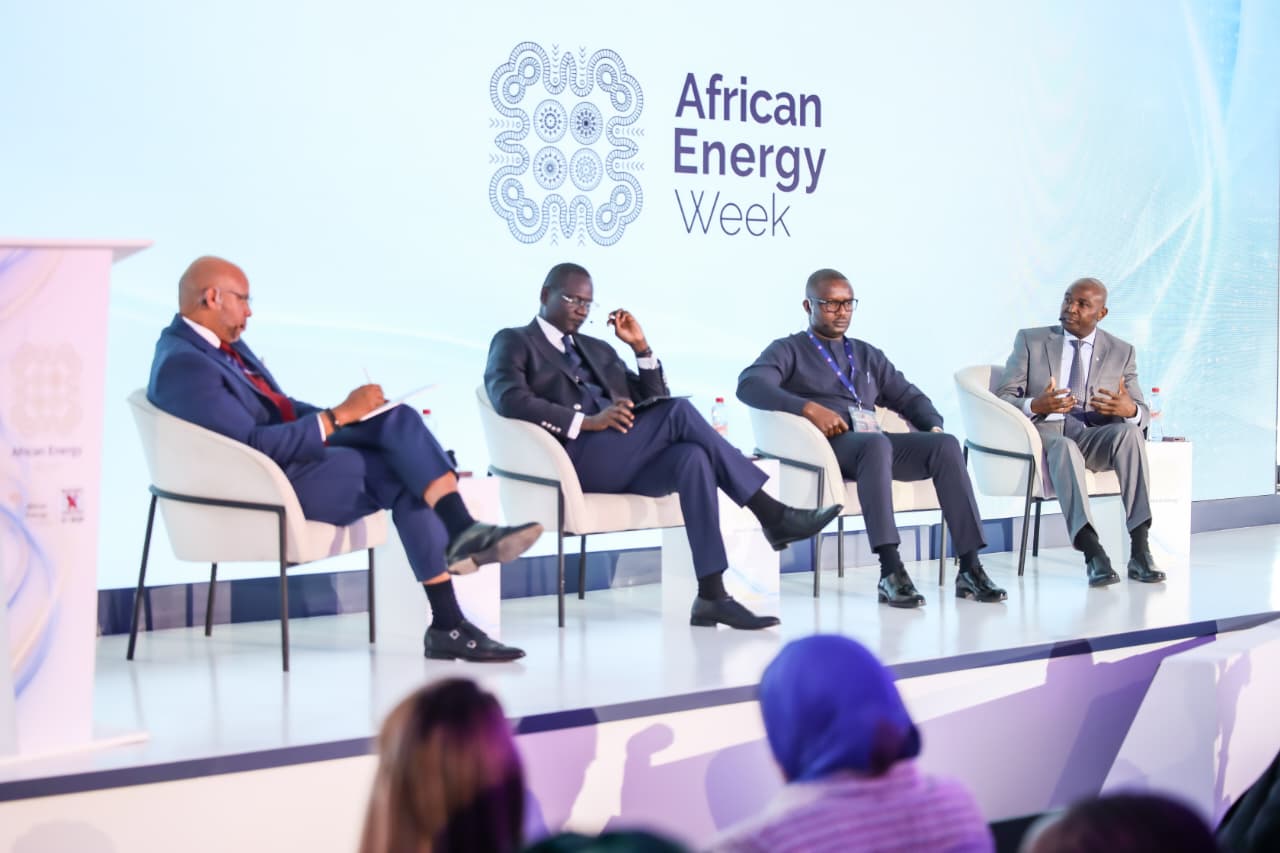
Ghana, Senegal and the GECF outlined how African producers can grow domestic gas use alongside exports at the GECF-AEC Strategic Forum

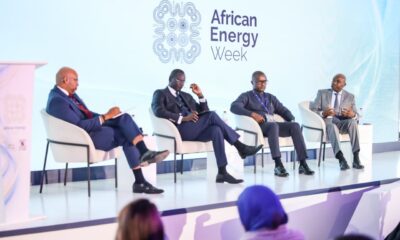
CAPE TOWN, South Africa, October 14, 2026/APO Group/ –Ghana expects to stop procuring liquid fuels for power generation next year, John Jinapor, Minister for Energy and Green Transition, said during a Gas Exporting Countries Forum (GECF)-hosted strategic session at African Energy Week (AEW) 2026 in Cape Town. Ghana has already cut its liquid fuel purchases for electricity from eight cargoes to two, he said, as domestic gas and imports from Nigeria replace diesel and heavy fuel oil in thermal plants.


Ghana’s gas policy prioritizes domestic processing, with gas directed first to power generation and then to industry, Jinapor said. The switch from liquid fuels saved Ghana about $500 million in a single year through import substitution, at a time when electricity demand is growing about 10% annually. Nigeria supplies Ghana through the West African Gas Pipeline, and he said Ghana expects to double those volumes under its current agreements. Ghana is also building a 278 km pipeline to link its main power centers, and is using a levy on pump fuel to fund LPG adoption, targeting 50% penetration within three years.

We are a gas continent before an oil continent

Senegal, which began exporting LNG in 2025, is working to balance exports with supply to its own economy. El Hadji Abdourahmane Diouf, Minister of Energy and Petroleum, said companies often prioritize export markets, leaving governments to secure domestic supply. Senegal is targeting domestic gas supply of around 150 million standard cubic feet per day by 2030, delivered through a national gas network to power plants across the country. Diouf said the network’s pipeline, which has faced delays, is expected within nine months.

Philip Mshelbila, Secretary General of the Gas Exporting Countries Forum (GECF), called the choice between exports and domestic use “a false choice.” In his address, he said: “Exports mobilize capital, revenue and investment confidence. Domestic utilization is the development multiplier.” The GECF’s Global Gas Outlook projects African gas demand will more than double, from 175 billion cubic meters in 2024 to about 374 billion cubic meters by 2055.

Panel moderator Oliver Onyekweli, Partner at McKinsey & Company, noted that only around 3% of gas commercialized in Africa is traded within the continent. Mshelbila said regional cooperation, gas storage and cross-border infrastructure will determine how resilient African markets are to future supply disruptions. He cited the Senegal-Mauritania Greater Tortue Ahmeyim project as a model.

NJ Ayuk, Executive Chairman of the African Energy Chamber, described gas as a “Swiss knife” for African development, with uses spanning power generation, petrochemicals and fertilizers. “We are a gas continent before an oil continent,” he asserted.

Ghana’s gas master plan, currently under review, sets a 15-year blueprint for the country’s gas infrastructure and budgeting.

Distributed by APO Group on behalf of African Energy Chamber.


Continue Reading

Business

Africa Energy Bank to Begin Financing Gas Projects in Early 2027, African Petroleum Producers Organization (APPO) Says

Published

on

African Energy Chamber

APPO’s new bank will prioritize regional corridors as GECF forum panelists flag a gap in domestic gas financing

CAPE TOWN, South Africa, October 14, 2026/APO Group/ –The Africa Energy Bank (AEB) will become operational within weeks and begin financing projects at the start of 2027, Farid Ghezali, Secretary General of the African Petroleum Producers Organization (APPO), said during the technical panel of the GECF-AEC Strategic Forum at African Energy Week (AEW) 2026 in Cape Town. The bank, launched by APPO and Afreximbank, will use a corridor approach, prioritizing projects that deliver regional economic development across four pillars: export infrastructure, domestic infrastructure, clean cooking and power.


Ghezali said exports and domestic supply should not compete. “I come from a country where you cannot export any drop of gas if the domestic demand is not satisfied,” he said. APPO and the Gas Exporting Countries Forum (GECF) signed an agreement earlier this year to work jointly on gas corridors, and plan to harmonize transit tariffs and gas contracts across member states.

I come from a country where you cannot export any drop of gas if the domestic demand is not satisfied

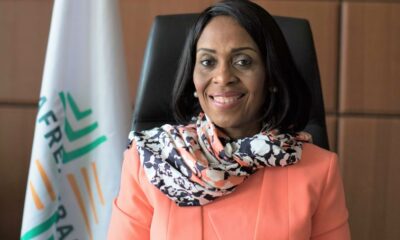
The panel focused on why domestic gas markets remain underdeveloped. Rashid Ali Abdallah, Executive Director of the African Energy Commission (AFREC), said recent investment has gone largely into export terminals while regional pipelines struggle to attract funding. He called for regional financing frameworks for cross-border infrastructure, and for joint planning of gas pipelines and power transmission.

In South Africa, industrial consumers face the loss of natural gas supply within about 18 months, with only a short-term coal supply bridge beyond that, said Jaco Human, Executive Officer of the Industrial Gas Users Association of Southern Africa (IGUA-SA). The gas aggregation company was formed to pool demand, share risk and underwrite new infrastructure across the region. Human said a proposed pipeline linking the Orange Basin to Western Cape and inland markets would need around 200 petajoules of annual demand. “We have much more demand than that, so the problem is not an economic one,” he said. “Rather, it is a coordination problem.”

Abubakar Abbas, Senior Energy Forecast Analyst at the GECF, said Africa will require at least $1 trillion over the next 30 years to develop its gas resources. Per capita energy consumption on the continent is about 25 gigajoules a year, well below the global average. Abderrezak Benyoucef, Head of Energy Studies at OPEC, said OPEC expects gas to rise from 17% to 23% of Africa’s energy mix by 2050. Electricity generation is projected to grow from under 1,000 TWh to about 2,700 TWh, with half of it from gas.

The AEB is headquartered in Abuja, where Nigeria handed over the bank’s offices to APPO and Afreximbank in February.

Distributed by APO Group on behalf of African Energy Chamber.


Continue Reading

Trending