Connect with us
Anglostratits

Business

GITEX Africa returns in 2024 with strong line-up of tech topics, set to fast-track continent’s future digital economy
Published

on

GITEX Africa

International tech companies ramp up partnerships with GITEX Africa to secure competitive advantage in the burgeoning African digital valley

DUBAI, United Arab Emirates, March 13, 2024/APO Group/ — 

GITEX Africa (www.GITEXAfrica.com), the continent’s largest and most influential tech and start-up event is on high momentum to welcome the year’s biggest tech conversations and collaborative ventures in Marrakech, Morocco.

Under the High Patronage of His Majesty King Mohammed VI of the Kingdom of Morocco, the 2nd edition of GITEX Africa will take place from 29-31 May 2024, under the authority of the Moroccan Ministry of Digital Transition and Administration Reform and hosted by the Digital Development Agency (ADD).

The 2nd blockbuster edition follows its pioneering debut in 2023, rated by the attending tech community as the world’s best tech launch event. The intense global interest in exploring diverse tech themes is now powering GITEX Africa’s growth, fuelling momentum in a maturing digital ecosystem while turbocharging a big tech rush into one of the world’s most exciting and dynamic markets. 

GITEX Africa 2024 shall welcome thousands of attendees from across the continent for large scale discourse and future-focused collaborations, while accelerating tech’s massive advances across diverse industries, from cloud and IOT, cybersecurity, digital health, and future finance, to consumer tech, telecoms, and the great hype of artificial intelligence.

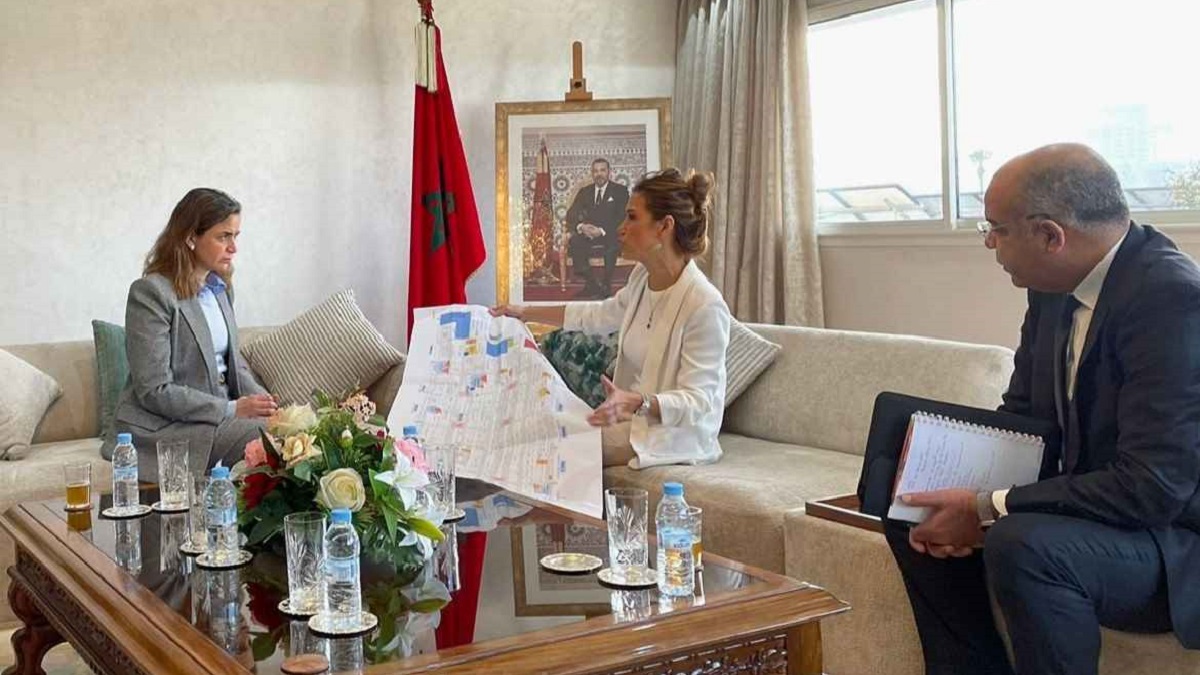
H.E. Dr Ghita Mezzour, the Moroccan Minister of Digital Transition and Administration Reform, met with organisers in Morocco recently as plans ramp up for the development of an expanded purpose-built venue to accommodate the surge in global exhibitor demand.

“The success of the 1st edition of GITEX Africa Morocco highlights our continent’s enthusiastic embrace of the digital revolution and Morocco’s commitment to strengthen South-South cooperation in the digital field, as well as its contribution to the international promotion of the African continent in accordance with the High Royal Vision of His Majesty King Mohammed VI, may God assist Him.” said H.E. Dr Mezzour.

“Our ambitions are growing as we look ahead to the 2nd edition in the beautiful city of Marrakech. We’re excited about making GITEX Africa Morocco even more remarkable and look forward to hosting a diverse and impactful African and international tech presence.”

Mr. Mohammed Drissi Melyani, the General Director of ADD, added: “The Kingdom of Morocco successfully hosted the first edition of GITEX Africa Morocco in 2023, which showcased Africa as an emergent continent in the digital economy. The 2nd edition in 2024 is another opportunity to enhance and support Africa’s digital transformation progress and boost the competitiveness of the continent’s digital ecosystems.”

World Future Health Africa debut accelerates continent’s digital health revolution

GITEX Africa is organised by KAOUN International, the overseas affiliate of Dubai World Trade Centre (DWTC), which organises GITEX GLOBAL in the UAE, the world’s largest and most trusted tech and start-up event. The expansion of Africa’s powerhouse tech showcase is amplified by the debut of the co-located World Future Health Africa, accelerating the continent’s ascending tech-fuelled digital health revolution.

World Future Health Africa is held under the auspices of the Moroccan Ministry of Digital Transition and Public Administration Reform, the Moroccan Ministry of Health and Social Protection, and the Digital Development Agency.

Trixie LohMirmand, CEO of KAOUN International, organiser of GITEX Africa and World Future Health Africa, said: “This sequel of GITEX Africa this year follows the upbeat trend of tech discovery we created last year in its inaugural edition.

“The global community is experiencing the growing energy, curiosity and demand for digital advancement from Africa which is outpacing that of matured developed continents. The depth and breadth of tech showcase, including the much-hyped AI in society and business at GITEX Africa shall be an eye-opening experience fostering great knowledge sharing and collaboration opportunities between the public and private sectors, and amongst businesses across the world.”

Tech titans return intensifying cross-continental tech tussle

The 2nd edition of GITEX Africa will welcome returning exhibitors following their hugely successful participation at the show’s momentous debut in 2023. Multinational majors including Epson, Honeywell, Kaspersky, and Lexar are among those back for a second round of future-focused collaborations reviving a tech-enabled African investment race.

Neil Colquhoun, Vice President of Epson Europe and the Middle East, said: “Epson is delighted to announce its participation for the second consecutive year at GITEX Africa 2024. Epson’s technology offering will focus primarily on a range of sustainable, energy-efficient solutions and products that address the pressing concerns of many industrial sectors, as well as small and medium-sized enterprises in the region.”

UAE-headquartered Presight, the Middle East’s leading big data analytics company powered by generative AI, and part of G42, a global leader in creating visionary AI, will also return: “Africa has been our focus; it’s the newly emerging continent for the digital workforce and digital transformation,” said Thomas Pramotedham, CEO of Presight.

“Presight has multiple digital transformation programmes with several African governments, and in 2024, we aim to contribute even more to the continent’s thriving tech ecosystem. Our goal is to make a positive societal impact using our big data analytics capabilities powered by generative AI. With GITEX Africa playing a key role, we’re excited to be part of discussions shaping the continent’s digital transformation journey.”

Bertrand Trastour, General Manager, France and North, Central and West Africa of global leading Cybersecurity company, Kaspersky, added: “GITEX Africa is a very important platform for Kaspersky as it allows us to inform our customers and partners about our growth strategy and potential.

“Digitalisation is a high priority in African markets, and cybersecurity is the foundation for this successful transformation. Kaspersky provides the most comprehensive cybersecurity for the growth of our customers’ businesses, regardless of their sector, scenario or assets.”

Moroccan trailblazers spotlight ground-breaking innovations

Moroccan headliners advancing tech and innovation across the region are also returning to GITEX Africa 2024, including Maroc Data Centre, Zen Networks, Dataprotect, and Mohammed VI Polytechnic University (UM6P), the show’s official R&D partner.

“UM6P transcends the traditional boundaries of R&D, embodying a powerhouse of innovation and entrepreneurship for Africa and beyond,” said Yassine Laghzioui, CEO of UM6P Ventures and Director of Entrepreneurship and Venturing at UM6P.

“We are excited to elevate our role at GITEX Africa, not merely as a leading R&D collaborator but as a beacon of innovation. Our partnership with GITEX Africa underscores our dedication to driving progress in science, technology, and investment realms.

Added Laghzioui: “We aim to nurture and scale DeepTech ventures across Africa through our targeted entrepreneurship and venturing programs, moving beyond Morocco’s borders. GITEX Africa offers an unparalleled opportunity for UM6P to forge strategic partnerships, showcasing our ground-breaking initiatives in diverse sectors such as HealthTech, BioTech, AgriTech, and GreenTech. These efforts stem from UM6P’s innovation labs and from our extended ecosystem, poised to tackle the continent’s pressing challenges.”

Regional start-up, VC investment surge on high revs at North Star Africa

GITEX Africa 2024 will feature an elevated North Star Africa start-up showcase, converging the largest curation of award-winning start-ups and scale-ups ever seen in the African continent. The most ambitious and forward-thinking entrepreneurs and founders will collaborate with African and global accelerators and investors to scale business opportunity in a region that is tipped to raise US$10 billion in VC funds by 2025.

North Star Africa is extending its far-reaching footprint to all ends of the world’s second largest continent and beyond, spurring investors to seek out and uplift the next potential unicorns solving Africa’s biggest challenges.

There’ll be more awards too, with globe-trotting innovative companies battling for start-up supremacy at the Supernova Challenge, Africa’s most coveted and valuable start-up pitch competition, with a prize pool of US$100,000 up for grabs across six categories. 

More information is available at www.GITEXAfrica.com.

Distributed by APO Group on behalf of GITEX Africa.

Business

Afreximbank Africa Trade Report shows Africa can turn geopolitical disruptions into long-term growth opportunity

Published

on

Afreximbank

The report highlights Africa’s continued growth resilience despite significant headwinds occasioned by escalating geopolitical tensions and ensuing economic shifts

CAIRO, Egypt, June 24, 2026/APO Group/ –African Export-Import Bank (Afreximbank) (www.Afreximbank.com) has launched the 2026 edition of its flagship African Trade Report themed “Leveraging Geopolitics for Trade and Industrialisation in Global Africa.” The report presents a comprehensive review of trade and economic developments across Africa and globally in the context of the 2025 operating environment, while outlining available strategic options for Africa to transform ongoing geopolitical tensions and associated supply chain disruptions into long-term resilience for growth and shared prosperity across the continent.


The report highlights Africa’s continued growth resilience despite significant headwinds occasioned by escalating geopolitical tensions and ensuing economic shifts. Reflecting the continent’s growth resilience, the report shows that while global economic growth slowed to 3.4 percent in 2025 and is projected to further ease to 3.1 percent in 2026, Africa’s real GDP growth strengthened from 3.4 percent in 2024 to 4.5 percent in 2025. This performance not only surpasses the global average but also highlights the continent’s improving economic fundamentals in a fractured world economic order.

Africa’s merchandise trade also delivered strong performance, expanding by 6.1 percent to reach approximately US$1.5 trillion, while aggregate inflation declined sharply from 21.6 percent in 2024 to 13.1 percent 2025. These outcomes reflect the stabilising effects of prudent macroeconomic management, ongoing policy and institutional reforms, and the countercyclical interventions of development finance institutions across the continent.

Commenting on the Africa Trade Report’s findings, Dr Yemi Kale, Group Chief Economist and Managing Director of Research and Trade Intelligence at Afreximbank, said:

By strategically leveraging these shifts, Africa can build a more resilient, competitive and inclusive economic future

Africa stands at a critical juncture. Geopolitical tensions and economic fragmentation are reshaping global trade patterns, but they also present a historic opportunity for the continent. By strategically leveraging these shifts, Africa can build a more resilient, competitive and inclusive economic future.

Afreximbank

“It is imperative for the continent to act decisively to strengthen regional value chains, deepen industrial capacity, expand access to trade finance, and accelerate continental integration. Through coordinated policy action, strategic infrastructure investment, and stronger development finance institutions, Africa can build a more resilient, inclusive, and value-added trade ecosystem. Africa cannot afford to delay.”

The report further highlights that Africa’s export performance remains constrained by a persistent trade finance gap, estimated at approximately US$74 billion in 2025. The challenge is exacerbated by limited foreign exchange liquidity and the continued decline in correspondent banking relationships, factors that restrict the continent’s capacity to fully realise its trade and industrial potential.

At the same time, evolving shipping routes and prolonged disruptions to global logistics networks continue to extend delivery timelines and increase freight and trading costs. These pressures are particularly acute for African economies that remain heavily reliant on imported inputs and external markets, even as global supply chains increasingly reconfigure toward resilience, diversification, and emergence of alternative production hubs.

The report also outlines several strategic priorities, including the accelerated implementation of the African Continental Free Trade Area (AfCFTA), the expansion of digital payments infrastructure through the Pan-African Payment and Settlement System (PAPSS), and coordinated reforms to the global financial architecture. It further underscores the growing role of African financial institutions in strengthening economic resilience. Afreximbank, a founding member of the Alliance of African Multilateral Financial Institutions (AAMFI), disbursed US$17.5 billion in 2024 and is working to double intra-African trade finance by 2026. Meanwhile, Pan African Payment and Settlement System (PAPSS) is already helping to reduce transaction costs and lessen reliance on foreign currencies across the continent.

As geopolitical tensions continue to reshape global supply chains and trade patterns, the continent’s ability to leverage these shifts will depend on strengthening industrial ecosystems, expanding intra-African trade, and sustaining coordinated financial support. Ultimately, a combination of adaptive policy frameworks, strategic trade positioning, and robust direct foreign investment interventions will be central to driving a resilient, inclusive, and sustainable industrialisation pathway for Global Africa. The imperative now is to act with ambition and urgency. This would require accelerating the implementation of the African Continental Free Trade Area (AfCFTA), expanding intra-African trade finance, strengthening transport and logistics infrastructure, and deepening digital payment systems through the Pan-African Payment and Settlement System (PAPSS).

The full report can be downloaded here:  https://apo-opa.co/4xNkbFx

Distributed by APO Group on behalf of Afreximbank.


Continue Reading

Business

Islamic Development Bank (IsDB) Institute Strengthens Global Partnerships through Strategic Bilateral Engagements at 2026 Group Annual Meetings

Published

on

IsDBI

The meetings reaffirmed IsDBI’s commitment to advancing Islamic economics and finance as a catalyst for sustainable development, innovation, financial inclusion, and economic transformation across Member Countries and beyond

BAKU, Azerbaijan, June 24, 2026/APO Group/ –The Islamic Development Bank Institute (IsDBI) (https://IsDBInstitute.org/) successfully conducted a series of bilateral meetings with government institutions, multilateral organizations, financial regulators, academic institutions, development agencies, and industry leaders on the sidelines of the 2026 IsDB Group Annual Meetings in Baku, Azerbaijan.


The meetings reaffirmed IsDBI’s commitment to advancing Islamic economics and finance as a catalyst for sustainable development, innovation, financial inclusion, and economic transformation across Member Countries and beyond.

The engagements covered a wide spectrum of strategic themes, including Islamic finance ecosystem development, regulatory and legislative reform, capacity building, sukuk market development, Islamic social finance, digital transformation, fintech, sustainable finance, waqf innovation, and knowledge partnerships.

Among the key engagements were discussions with representatives from the Governments of Tajikistan, Libya, Maldives, Türkiye, Ethiopia, and Sierra Leone on strengthening Islamic finance ecosystems through technical assistance, regulatory enhancement, and institutional capacity development.

The Institute also met with leading international organizations and standard-setting bodies, including the Islamic Financial Services Board (IFSB), AAOIFI, the Eurasian Development Bank, and the Islamic Microfinance Development Fund (FDMI). The meetings explored avenues for collaboration in research, standards development, capacity building, and strategic initiatives aimed at broadening the global reach and impact of Islamic finance.

Several meetings focused on innovation and emerging opportunities, including discussions with Rosatom State Corporation on sustainable financing solutions and sukuk structures, Islamic Money Australia on digital Islamic banking models, and INCEIF University on Islamic social finance data, waqf tokenization, and applied research collaboration.

The Institute also explored partnerships with organizations from Brazil, Palestine, Somalia, Senegal, Djibouti, and the private sector to advance knowledge dissemination, capacity-building programs, blended Islamic finance solutions, cash waqf digitalization initiatives, and investment-related research.

Commenting on the outcomes of the engagements, the Institute’s team, led by Acting Director General, Dr. Sami Al-Suwailem, noted that the meetings reflected the growing global interest in leveraging Islamic economics and finance to address contemporary development challenges and unlock new opportunities for inclusive and sustainable growth.

The discussions generated a pipeline of follow-up initiatives, including technical assistance programs, joint research projects, capacity-building activities, policy advisory support, and collaborative knowledge-sharing platforms.

The 2026 IsDB Group Annual Meetings provided a valuable platform for strengthening existing partnerships, establishing new strategic relationships, and advancing the Institute’s mission of promoting innovative, impactful, and development-oriented Islamic economics and finance solutions worldwide.

Distributed by APO Group on behalf of Islamic Development Bank Institute (IsDBI).


Continue Reading

Energy

Nigeria Accelerates $750B Mining Vision Ahead of African Mining Week (AMW) 2026

Published

on

Etu Energias

African Mining Week will showcase opportunities within Nigeria’s mining value chain as the country seeks capital to unlock its $750 billion worth of untapped mineral deposits

CAPE TOWN, South Africa, June 24, 2026/APO Group/ –Nigeria’s mining sector is entering a new phase of growth as regulatory reforms, downstream investments and international partnerships strengthen investor confidence in one of Africa’s largest untapped mineral markets. The country’s solid minerals sector has secured approximately $3 billion in investments over the past three years, reflecting growing investor confidence as the West African nation seeks to bridge the financing gap hindering large-scale mining development.


The investment milestone comes as Nigeria deepens engagement with investors to unlock its estimated $750 billion in untapped mineral resources. The country is targeting an increase in mining’s contribution to GDP to 10%, creating lucrative investment opportunities for global mining industry players.

These developments come as African Mining Week (AMW) 2026 – Africa’s Most Influential Mining Conference, taking place in Cape Town from October 14-16 – prepares to showcase Nigeria’s expanding project pipeline and investment opportunities. Through dedicated country sessions, project showcases and executive networking, the event will connect international investors with Nigerian policymakers, mining companies and service providers driving the country’s mining transformation.

Nigeria’s expanding investment pipeline is a testament to its drive to strengthen partnerships. In June 2026, indigenous company Romulus Mining announced plans to increase investments across its gold and lithium portfolio from approximately $50 million to $150 million over the next three years, underscoring growing private sector confidence in the country’s mining outlook.

A partnership deal signed with Turkey in May 2026 is expected to support cooperation in geological exploration, mining technologies, digitalization and capacity building, while creating new opportunities for Turkish investment and technical expertise across Nigeria’s mining value chain.

Meanwhile, the advancement of several downstream projects – including a $600 million lithium processing facility in Nasarawa State and a $200 million lithium processing plant in Abuja – underscores Nigeria’s commitment to boosting mineral production and supporting industrialization.

Amid these developments, AMW 2026 provides a timely platform for investors seeking to capitalize on one of Africa’s most promising mining markets. The event will facilitate strategic partnerships that support exploration, mineral processing and long-term industry growth, reinforcing Nigeria’s ambition to develop a $1 billion economy by 2030 on the back of its mining industry.

Distributed by APO Group on behalf of Energy Capital & Power.

Continue Reading

Trending