The fourth annual GoGettaz Agripreneur Prize reached nearly six million people during the entry window from 19 April to 6 June 2022
KIGALI, Rwanda, September 9, 2022/APO Group/ —
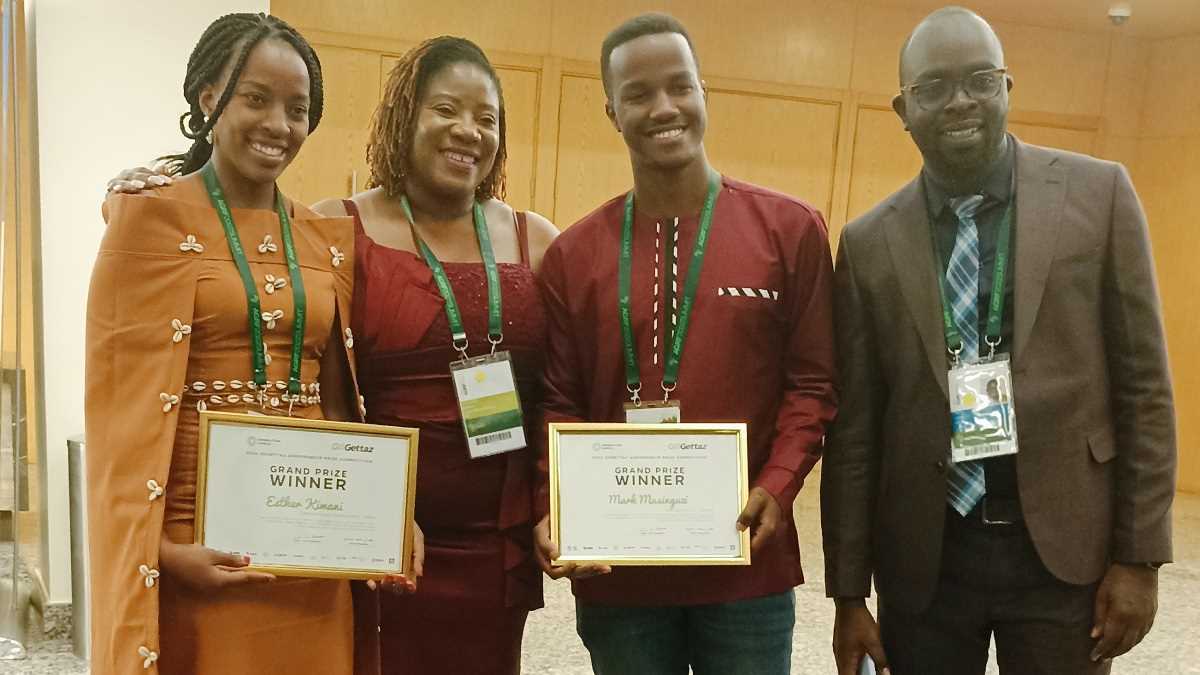
After impressive on-stage pitches to an expert panel of judges earlier this week, Esther Kimani founder of FarmerLifeLine Technologies in Kenya and Mark Musinguzi founder of Hya Bioplastics in Uganda each received a US$50,000 grand prize at the African Green Revolution Forum’s (AGRF) at its Gala Dinner and Africa Food Prize Awards Ceremony attended by H.E. President of Rwanda, Paul Kagame and a host of other African heads of state, dignitaries, and esteemed food systems experts from across the world.
With 12 top-class finalists in this year’s GoGettaz Agripreneur Prize Competition, four additional Impact Awards winners were merited and will receive US$2,500: Eloge Niyomwungere, founder of Best Food Solution in Burundi, Nancy Iraba co-founder of Healthy Seaweed Company in Tanzania, Noël N’guessan co-founder of LONO in Côte d’Ivoire, and Seynabou Dieng, co-founder of Maya Sarl in Senegal.
“These young entrepreneurs are the in the midst of a food revolution. Their ventures are making a positive impact on their communities, their environment, and the local economy,” remarked Ms. Fernanda Lopes, Executive Vice President for Asia & Africa, Yara International, who awarded the winners on behalf of the Generation Africa co-founders.
Emerging victorious among the women agripreneurs, Esther Kimani and her company FarmerLifeLine Technologies invented a device that helps Kenyan farmers to get ahead of pests and pathogens with a proprietary disease detection device that leverages solar-powered cameras, Artificial Intelligence, data analytics, and machine learning.
Among the men, grand prize winner Mark Musinguzi of Hya Bioplastics wants to lead Africa in sustainable food packaging with an innovative biodegradable product solution that provides a cost competitive alternative to petroleum-based plastic packaging.
Generation Africa co-founder Svein Tore Holsether, CEO and President of Yara International, delivered keynote remarks at the final pitching contest to thank the finalists for their visionary work, remarking: “Once again, I am so impressed with the finalists. They are all truly inspiring and I see them as leaders and role models in a world that so desperately needs that kind of drive and dedication to solve the staggering global challenges we are faced with.”
AGRF Chair Emeritus Strive Masiyiwa, Generation Africa co-founder and Executive Chairman of Econet and Cassava Technologies, joined Holsether via video message to motivate the contestants to use their entrepreneurial spirit for positive impact: “From amongst you, are the very people who are going to save our continent and ensure that millions of people do not starve, ensure that millions of other people will be able to overcome the challenges created by climate change. […] The true winners are not going to be because you got a prize, but because you were inspired and encouraged to go on to do greater things with your entrepreneurial venture, and that you reached out where the need was greatest, and the help was least,” Masiyiwa said in a heartfelt appeal.
Embodying the spirit of Masiyiwa’s message, Generation Africa also recognized four Impact Award Winners for each venture’s potential to empower communities and protect the environment.
For Senegalese Seynabou Dieng, the company she co-founded, Maya, is much more than a food processing company. By partnering with small-scale local farmers in Mali, this 80% women-staffed company gets the best local ingredients to manufacture their proudly African sauces, spices, mixes, and dried fruits.
Nancy Iraba founded Healthy Seaweed Company to boost the livelihoods for women seaweed farmers in Zanzibar and to bring the health benefits of seaweed home through local value-addition and the promotion of seaweed as a sustainable and highly nutritious food source.
Noël N’guessan of LONO co-founded his business to focus on healthy soil. One of its products, KubeKo, helps farmers in Côte d’Ivoire to unlock value from their waste. This easy-to-use biogas composting system generates 2hrs of cooking gas and 50l of liquid fertilizer from 5kg of organic waste per day.
Eloge Niyomwungere and his business Best Food Solution processes chillies into oil, powder, and dried chillies for local and export markets. He founded his company to revitalise Burundi’s chilli industry by supporting smallholder farmers with quality inputs and guaranteed offset. They even manufacture an organic chilli-based pesticide to protect yields.
Marking the first in-person GoGettaz Agripreneur Prize Competition since 2019, the twelve finalists were elated for the post-pandemic opportunity to build relationships with a global complement of delegates attending the 2022 AGRF summit. They enjoyed facilitated participation at the AGRF Agribusiness Deal Room where they could build face-to-face trust with future partners, investors, and clients. Corteva Agriscience, one of Generation Africa’s co-founders, sponsored the finalists in their travels to the live event.
“By bringing them to Africa’s biggest agriculture summit we hope to catalyse relationships between these youth agripreneurs and global leaders in the industry. The GoGettaz Agripreneur Prize, and the networks and connections that come with it, is designed to empower the youth generation to scale their impact-driven agrifood businesses in the fight for a sustainable, African food system. It is wonderful to see this powerful platform back in action,” said Barbra Muzata, Head of Corporate Communications and Brand at Corteva Agriscience.
The fourth annual GoGettaz Agripreneur Prize reached nearly six million people during the entry window from 19 April to 6 June 2022. Applications streamed in from 45 African countries with 10 countries represented amongst the Top 12 finalists.
“GoGettaz has grown into the biggest, youth-focussed, agripreneurship competition in Africa. Our entries are becoming more diverse every year,” said Dickson Naftali, Head of Generation Africa. “The GoGettaz Agripreneur Prize was conceived to spread a message of hope and opportunity in the agrifood sector. Seeing more youth with truly innovate solutions, building companies that create jobs in the food system, makes me really proud. They hold the future of our continent in their hands.”
The 2022 Gogettaz Agripreneur Prize Judging Panel
George Apaka, Agriculture Sector Lead at the Mastercard Foundation
Barbra Muzata, Head of Corporate Communications and Brand at Corteva Agriscience, Africa and the Middle East
Edson Mpyisi, Chief Financial Economist and Coordinator of the ENABLE Youth Programme at the African Development Bank.
Ellen Cathrine Rasmussen, Executive Vice President of Scalable Enterprises at Norfund
Zvichapera Katiyo, Group CEO of Delta Philanthropies
Jane Lowicki-Zucca, Senior Youth Advisor at USAID
Temi Adegoroye, Managing partner at Sahel Consulting
Jean Muthamia-Mwenda, Global Lead for Youth Employment and Entrepreneurship at SNV Netherlands
Dent Agrisystems empowers poor urban households in Ghana with its environmentally sustainable Aquaponics Hub. Its innovative solar-powered, IoT-integrated system makes it easy for anyone to farm fish and grow hydroponic vegetables.
FarmerLifeLine invented a device that helps Kenyan farmers get ahead of pests and pathogens with a proprietary disease detection device that leverages solar-powered cameras, Artificial Intelligence, data analytics, and machine learning.
Nancy Iraba, Healthy Seaweed Company, Tanzania:
https://HealthySeaweedCafe.co.tz
Healthy Seaweed Company is boosting the livelihoods for women seaweed farmers in Zanzibar and bringing the health benefits of seaweed home through local value-addition and the promotion of seaweed products as a sustainable food source.
Maya is much more than a food processing company. By partnering with small-scale local farmers in Mali, this 80% women-staffed company gets the best local ingredients to manufacture proudly African sauces, spices, mixes, and dried fruits.
Pure and Just Food is all about climate-smart agro-processing that creates sustainable jobs, raises incomes, and protects the environment. They process and package dried fruit for Ghanaian and international markets.
Zima Healthy processes the pulp and seeds of organic pumpkins into healthy snacks, food ingredients, cooking oil and cosmetics. They employ youth and source their pumpkins from women and youth farmers in Rwanda.
Kepya is an agribusiness innovation hub with a network of rural shops and an online e-commerce platform. Kepya is improving rural livelihoods by bringing agricultural services and products to smallholder farmers across Angola.
Best Food Solution processes chillies into oil, powder, and dried chillies for local and export markets. They are revitalising Burundi’s chilli industry by supporting smallholder farmers with quality inputs and guaranteed offset.
Fidena Agri converts banana peels and eggshells into Eggo Farm, a low-cost organic fertilizer that gives crops the nutrients they need to boost yields by up to 45%. Its helping Uganda’s smallholder farmers to increase their profits.
Hya Bioplastics wants to lead Africa in sustainable, biodegradable food packaging. Its innovative business upcycles wasted agricultural fibres and casava starch into cost-competitive containers and fruit trays to replace plastic food packaging in Uganda.
LONO designed an innovative system that helps farmers in Côte d’Ivoire to unlock value from organic waste with KubeKo. This easy-to-use biogas composting system generates 2hrs of cooking gas and 50l of liquid fertilizer from 5kg of organic waste per day.
Solaristique is a recycling company that is tackling Nigeria’s food waste problem with an innovative solution that repurposes old freezers into a range of low-cost, hyper-efficient, solar-powered cold storage units for off-grid use.
Distributed by APO Group on behalf of Generation Africa.
New facility expands in-country drilling and completion fluids capability, advancing the next phase of SLB’s growth in Mozambique
PEMBA, Mozambique, October 9, 2026/APO Group/ –SLB (NYSE: SLB) (www.SLB.com) announced the opening of a new fluids systems plant in Pemba, Mozambique. The new facility strengthens in-country capacity to prepare, store and deliver drilling and completion fluids for offshore operations, reinforcing the infrastructure needed as Mozambique’s offshore activity grows and its role as a strategic energy hub for East Africa continues to expand.
The commissioning of the plant, also known as a liquid mud plant, coincides with SLB marking 70 years of operations in Mozambique. It reflects the company’s long-term commitment to investing in people, infrastructure and capability that support the country’s long-term offshore energy development plans.
With an initial storage capacity of 21,000 barrels, the liquid mud plant provides a scalable platform for future growth, supporting multiple customers and rising offshore activity while improving logistics and enhancing operational flexibility.
As SLB marks 70 years in Mozambique, this investment reflects our confidence in the country’s future and our commitment to supporting its energy ambitions
“As SLB marks 70 years in Mozambique, this investment reflects our confidence in the country’s future and our commitment to supporting its energy ambitions,” said Miguel Baptista, Central, East and Southern Africa, Managing Director, SLB. The new liquid mud plant strengthens local energy infrastructure, expands opportunities for local content development, and enhances our ability to support customers as they deliver some of Africa’s most significant offshore energy resources.”
The liquid mud plant project was delivered with strong local participation and that momentum is expected to continue into operations. During project delivery, more than 100 jobs were created in Pemba with nationals representing 80% of the workforce, reflecting a focus on building local capability.
The project was delivered with a strong focus on safety, operational integrity, and quality, achieving more than 67,000 hours worked without a recordable safety incident.
This key infrastructure strengthens SLB’s ability to support consistent service quality and enhance supply chain readiness for increasing offshore activity across Mozambique, supporting customers execute safely and efficiently while developing local skills and expertise.
Key Points:
SLB has commissioned a new fluids system plant in Pemba, expanding in-country drilling and completion fluids capability for offshore operations.
With an initial storage capacity of 21,000 barrels, the facility provides a scalable platform to support growing offshore activity in Mozambique.
The investment marks the next phase of SLB’s growth in Mozambique, strengthening local capability and supporting long-term offshore energy development.
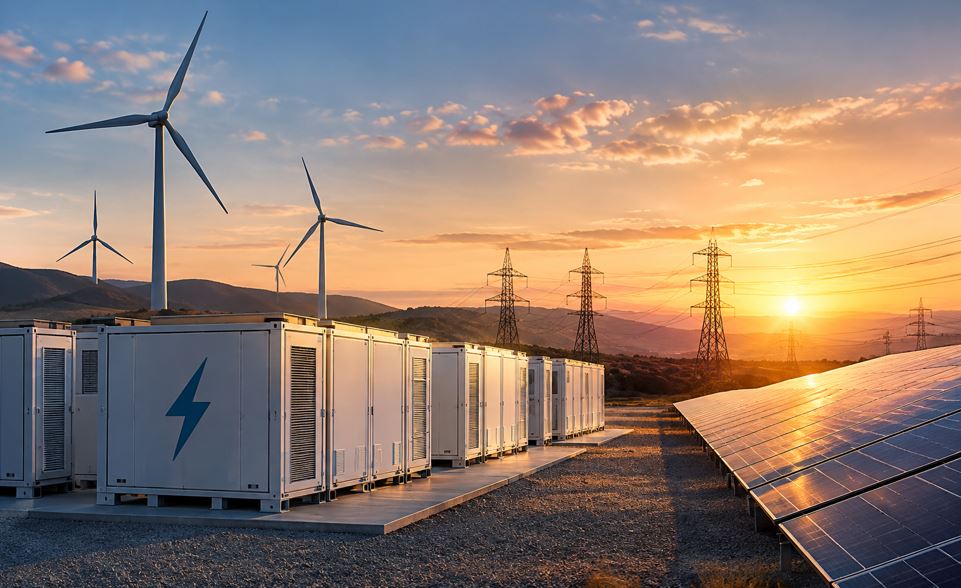
Battery energy storage systems (BESS) are becoming critical system infrastructure, supporting flexibility, reducing avoidable curtailment, shifting energy into periods of demand and strengthening security of supply
JOHANNESBURG, South Africa, October 9, 2026/APO Group/ –The South African Energy Storage Association (SAESA) (www.SAESA.org.za) welcomes the prioritisation of 4,600 MW of battery energy storage under the first Integrated Resource Plan (IRP) 2025 Section 34 determination.
The timing is significant. Recent Integrated Energy Plan (IEP) modelling and assumptions discussions highlighted a fundamental shift that South Africa’s energy planning now needs to capture: we cannot plan the future power system by counting megawatts of generation alone.
We must plan for when energy is available, where it is available, how it moves through a constrained grid and how it is stored and dispatched when the system needs it most.
The announcement reinforces that shift. Battery energy storage systems (BESS) are becoming critical system infrastructure, supporting flexibility, reducing avoidable curtailment, shifting energy into periods of demand and strengthening security of supply.
For SAESA, the message for the IEP is clear: storage, flexibility and system services must be modelled as integral components of South Africa’s future electricity architecture, with their contribution considered from the outset of generation planning.
“The IEP must plan the power system we are becoming, not simply model the power system we have inherited,” says SAESA.
The IEP must plan the power system we are becoming, not simply model the power system we have inherited
Partnership with C&I Energy + Storage Summit
SAESA is an association partner of the C&I Energy + Storage Summit, created by VUKA Group, taking place on 28–29 October 2026 at The Maslow Hotel, Sandton, Johannesburg.
The summit brings together commercial and industrial energy users, project developers, financiers, regulators and solution providers to explore practical approaches to energy security, procurement and storage deployment.
For businesses assessing how storage can support their operations, the event offers an opportunity to meet SAESA and engage with the wider energy community on the decisions shaping South Africa’s evolving electricity system.
Commercial and industrial energy decision-makers are invited to apply to attend as hosted buyers. Qualifying buyers receive complimentary summit access and curated opportunities to engage with industry partners.
Meet SAESA at C&I Energy + Storage Summit: Join the Hosted Buyer Programme
The Hosted Buyer Programme connects commercial and industrial energy decision-makers with solution providers shaping South Africa’s evolving private energy market.
Qualified energy buyers receive complimentary access to the summit and curated engagement with industry partners exploring energy procurement, storage deployment and project development.
Expanding credible rating coverage can improve the information available to investors and support the development of deeper domestic and regional capital markets
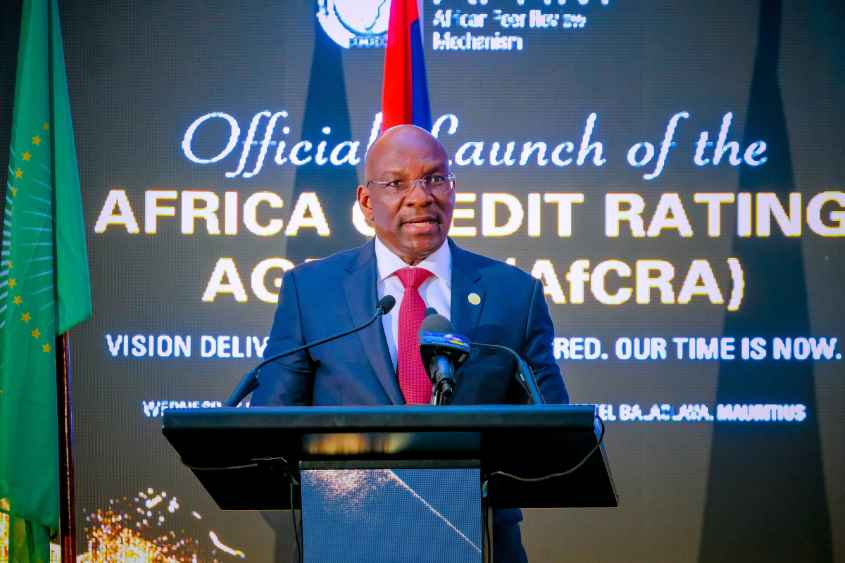
PORT LOUIS, Mauritius, October 8, 2026/APO Group/ –African Export-Import Bank (Afreximbank) (www.Afreximbank.com) welcomes today’s launch of the Africa Credit Rating Agency (AfCRA), an important milestone in strengthening Africa’s financial architecture and expanding the continent’s capacity to generate credible, independent analysis of African credit risk.
Credit ratings play an important role in determining access to capital, influencing investor perceptions and shaping the cost at which governments, institutions and businesses can finance development. It is therefore essential that assessments of African credit risk are independent, rigorous and evidence-based, while reflecting a complete understanding of the structures, institutions and economic realities being assessed.
The establishment of AfCRA adds an important African-led source of credit opinion to the market. Its value will not be measured by whether it produces more favourable ratings, but by the credibility of its analysis, the quality of its data and transparency of its methodology, and its ability to deepen understanding of African sovereigns, sub-sovereigns and corporate credit.
This is particularly important given that many African issuers remain unrated, while local-currency and sub-sovereign markets continue to have limited rating coverage. Expanding credible rating coverage can improve the information available to investors and support the development of deeper domestic and regional capital markets.
AfCRA must set a new benchmark for the continent, maintain its independence, and remain wholly owned and controlled by Africans
Alongside fellow members of the Alliance of African Multilateral Financial Institutions (AAMFI), Afreximbank has consistently maintained that African Multilateral Financial Institutions should be assessed on the basis of their fundamentals, performance, legal frameworks, mandates and operating models. Ensuring that these institutional characteristics are properly understood is essential to achieving informed, balanced and credible assessments of African risk.
Commenting on the uniqueness of the African market, and need for AfCRA’s rating methodology to reflect this, Mr Denys Denya, Senior Executive Vice President, Afreximbank, said: “The rating methodology AfCRA develops must recognise the uniqueness of our environment and its institutional structures. The Agency must set its own standards and not follow those set elsewhere — it must build a unique identity that conforms to an ‘African best practice.”
Highlighting the need for the autonomy of the Africa Credit Rating agency as it takes off, Mr Denya added: “Most importantly, AfCRA must set a new benchmark for the continent, maintain its independence, and remain wholly owned and controlled by Africans. We must all use it, and in return expect a complete assessment of where we (Africa) stand: the strengths the market has ignored, and the weaknesses we still need to fix.”
AfCRA should therefore be seen as complementary to existing international and regional rating agencies, broadening the range of credible analysis available to investors and issuers while strengthening competition, transparency and analytical capacity within Africa’s credit markets.
As Africa seeks to mobilise the scale of capital required for industrialisation, trade, infrastructure and economic transformation, credible African institutions that improve information, strengthen market confidence and deepen the continent’s financial markets will become increasingly important.
Afreximbank congratulates the African Union, the African Peer Review Mechanism (APRM) and all those involved in bringing AfCRA from concept to launch, and looks forward to the contribution the Agency will make to deeper, more transparent and more efficient African capital markets.
Distributed by APO Group on behalf of Afreximbank.
We use cookies on our website to give you the most relevant experience by remembering your preferences and repeat visits. By clicking “Accept”, you consent to the use of ALL the cookies.
This website uses cookies to improve your experience while you navigate through the website. Out of these, the cookies that are categorized as necessary are stored on your browser as they are essential for the working of basic functionalities of the website. We also use third-party cookies that help us analyze and understand how you use this website. These cookies will be stored in your browser only with your consent. You also have the option to opt-out of these cookies. But opting out of some of these cookies may affect your browsing experience.
Necessary cookies are absolutely essential for the website to function properly. These cookies ensure basic functionalities and security features of the website, anonymously.
Cookie
Duration
Description
cookielawinfo-checkbox-analytics
11 months
This cookie is set by GDPR Cookie Consent plugin. The cookie is used to store the user consent for the cookies in the category "Analytics".
cookielawinfo-checkbox-functional
11 months
The cookie is set by GDPR cookie consent to record the user consent for the cookies in the category "Functional".
cookielawinfo-checkbox-necessary
11 months
This cookie is set by GDPR Cookie Consent plugin. The cookies is used to store the user consent for the cookies in the category "Necessary".
cookielawinfo-checkbox-others
11 months
This cookie is set by GDPR Cookie Consent plugin. The cookie is used to store the user consent for the cookies in the category "Other.
cookielawinfo-checkbox-performance
11 months
This cookie is set by GDPR Cookie Consent plugin. The cookie is used to store the user consent for the cookies in the category "Performance".
viewed_cookie_policy
11 months
The cookie is set by the GDPR Cookie Consent plugin and is used to store whether or not user has consented to the use of cookies. It does not store any personal data.
Functional cookies help to perform certain functionalities like sharing the content of the website on social media platforms, collect feedbacks, and other third-party features.
Performance cookies are used to understand and analyze the key performance indexes of the website which helps in delivering a better user experience for the visitors.
Analytical cookies are used to understand how visitors interact with the website. These cookies help provide information on metrics the number of visitors, bounce rate, traffic source, etc.
Advertisement cookies are used to provide visitors with relevant ads and marketing campaigns. These cookies track visitors across websites and collect information to provide customized ads.
















 Business5 days ago
 Business5 days ago
 Business3 days ago
 Events4 days ago
 Business5 days ago
 Business3 days ago