

Business
GE Unveils Brand Names for Three Planned Future Public Companies
All Three Companies will Continue to Benefit from GE Heritage
BOSTON, United States of America, July 18, 2022/APO Group/ —
Healthcare business to be named GE (www.GE.com) HealthCare; GE’s portfolio of energy businesses, including GE Renewable Energy, GE Power, GE Digital, and GE Energy Financial Services, to come together as GE Vernova; Aviation business to be named GE Aerospace
GE (NYSE:GE) today announced the brand names of the future companies it will create through its planned separation into three industry-leading, global, investment-grade public companies focused on the growth sectors of healthcare, energy, and aviation.
GE HealthCare will be the name of GE’s healthcare business. GE’s existing energy portfolio of businesses, including Renewable Energy, Power, Digital, and Energy Financial Services, will sit together under the brand name GE Vernova. GE Aerospace will be the name of GE’s aviation business. All three planned companies will continue to benefit from GE’s heritage and global brand valued at nearly $20 billion*.
Additionally, GE announced today that following the completion of the planned spin-off, shares of GE HealthCare will be listed on The Nasdaq Global Select Market under the ticker symbol “GEHC.” By listing on Nasdaq, GE HealthCare will benefit from the exchange’s profile and track record as a market for innovative, technology-led public companies, particularly in the healthcare sector.

Today marks a key milestone in GE’s plan to become three independent, laser-focused companies
H. Lawrence Culp, Jr., Chairman and CEO, GE, and CEO, GE Aerospace said, “Today marks a key milestone in GE’s plan to become three independent, laser-focused companies. Leveraging GE’s multi-billion-dollar global brand gives us a competitive advantage in our end markets, allowing these businesses to win in the future. Built on a foundation of lean and innovation, these brands will continue our mission of building a world that works and provide our customers with an important reminder of the strengths they value in GE.”
GE intends to execute the tax-free spin-off of GE HealthCare in early 2023, creating an independent company driving innovation in precision health to improve patient outcomes and address critical patient and clinical challenges. Building on a more than 100-year history, the GE HealthCare name and Monogram will serve as an enduring badge of safety, quality, trust, and innovation. The new brand color for GE HealthCare is called “compassion purple” to reflect more humanity and warmth and achieve greater distinction. The company will continue to be at the forefront of provider and patient care with more than four million product installations and over two billion patient exams a year.
In early 2024, GE plans to execute the tax-free spin-off of GE Vernova, GE’s portfolio of energy businesses, which together with its customers provides one-third of the world’s electricity and is focused on accelerating the path to reliable, affordable, and sustainable energy. The new name is a combination of “ver,” derived from “verde” and “verdant” to signal the greens and blues of the Earth, and “nova,” from the Latin “novus,” or “new,” reflecting a new and innovative era of lower carbon energy that GE Vernova will help deliver. These attributes also are reflected in GE Vernova’s new “evergreen” brand color. With an installed base of more than 7,000 gas turbines and 400 GW of renewable energy equipment, GE Vernova’s Monogram will serve as a reminder of the company’s lasting commitments to deliver quality, partnership, and ingenuity to its customers.

Following these planned spin-offs, GE will be an aviation-focused company called GE Aerospace. With an installed base of 39,400 commercial and 26,200 military aircraft engines, the company will continue to play a vital role in supporting the industry through a historic recovery while shaping the future of flight. The GE Monogram, new name, and new “atmosphere blue” brand color—representing the upper limits of the atmosphere—maintain the brand’s strong standing in the aviation sector, while setting forth a confident vision to compete and advance in the field of aerospace and defense for future generations. Following the planned separations, GE Aerospace would own the GE trademark and would provide long-term licenses to the other companies.
GE Chief Marketing Officer Linda Boff said, “Over the course of the last six months, we engaged in a thorough, customer-led process to understand the intrinsic value of the GE brand for our planned future companies. Based on data and analysis drawn from thousands of conversations, it became clear that the GE name and our century-plus old Monogram represent a legacy of innovation, symbol of trust by global customers, pride for our team, and a talent magnet for future leaders. We’re proud these future businesses will be able to build on GE’s DNA of innovation.”
By creating three separate companies, each will benefit from greater focus, tailored capital allocation, and strategic flexibility to drive long-term growth and value.*
*According to Interbrand Best Global Brands 2021 (https://bit.ly/3zgfmbK) .
**These plans may be subject to the outcome of legally mandated consultation in some parts of the world.
Distributed by APO Group on behalf of GE.









Business
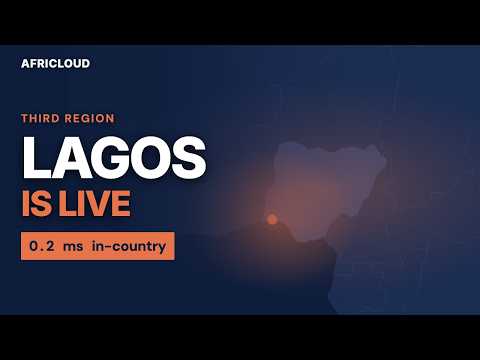
AFRICLOUD Opens Lagos Region and Local-Currency Payments in African Markets
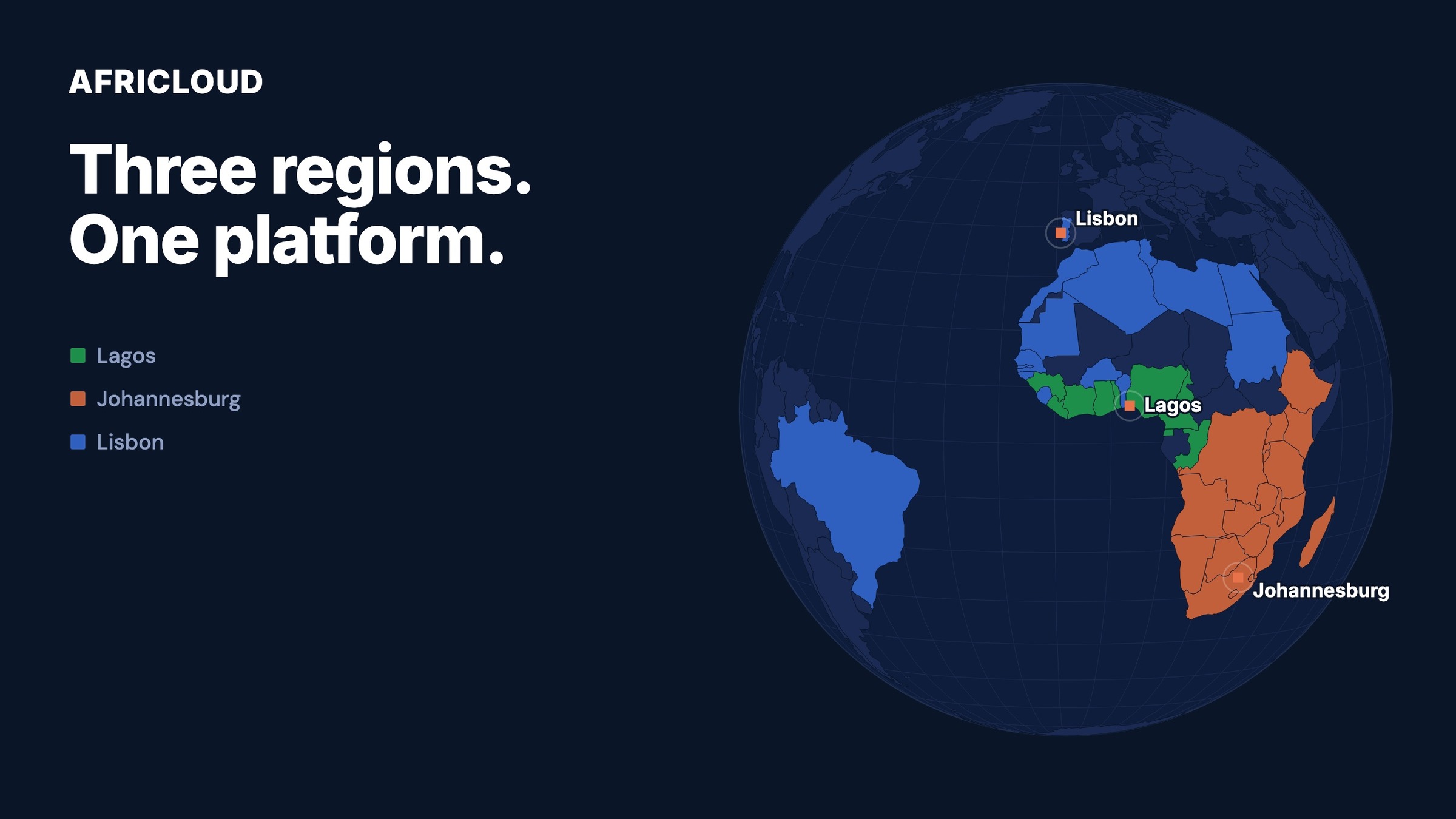
The company’s third African region keeps Nigerian workloads in Nigeria, and customers from Abidjan to Nairobi can now pay in the currency they earn, without an international card
Download document (1): https://apo-opa.co/4Ardfz9
Download document (2): https://apo-opa.co/46FWH8Y
Buying cloud infrastructure in Africa has meant living with three compromises: traffic that leaves the continent and comes back, payment in dollars behind a card many businesses do not hold, and data sitting under somebody else’s law.
Lagos answers the first. Compute and storage for Nigerian customers stay in Nigeria, and the region also serves Accra, Abidjan, Lome, Douala and Ouagadougou. Traffic from landlocked West Africa that once reached comparable infrastructure by way of Europe now stays on terrestrial West African fibre. Johannesburg serves Southern and East Africa. Lisbon serves North Africa and Europe, and reaches Brazil over a direct subsea route. Across the three regions, AFRICLOUD’s own continent-wide measurements place 42 of the 53 African countries measured within a best-case round trip of 70 milliseconds, countries home to about 1.28 billion people.
A company in Accra or Abidjan now reaches West African infrastructure without leaving the region, and pays for it in the currency it earns
Payment answers the second. Customers across West, Central, East and Southern Africa pay in their own currency, including the naira, the cedi, the shilling and the CFA francs, by local card, bank transfer, USSD or mobile money, with no international card needed. Mobile money is live in twelve African countries, and cards, PayPal and more than 300 cryptocurrencies are accepted everywhere. The GSMA reports that 74 per cent of the world’s mobile money activity by transaction count took place in Africa in 2024.
Residency answers the third. Nigerian data runs under the Nigeria Data Protection Act, South African data under POPIA and European workloads under EU law, chosen server by server from the same dashboard.
“African businesses have been asked to choose between infrastructure that is close, infrastructure they can actually pay for, and infrastructure that keeps their data under their own law,” said Oluniyi Ajao, Founder of AFRICLOUD. “Removing that choice is the reason we built this.”
“Lagos is the piece that completes the map,” he said. “A company in Accra or Abidjan now reaches West African infrastructure without leaving the region, and pays for it in the currency it earns.”
All three regions run the same platform: AMD EPYC processors with all-NVMe storage, IPv4 and IPv6 on every server, and a new server online in about two minutes. Dedicated Servers are built to order in all three regions. Support is available around the clock by chat and email.
Cloud Servers are available now at https://AFRICLOUD.com.
Distributed by APO Group on behalf of AFRICLOUD LLC.
Business
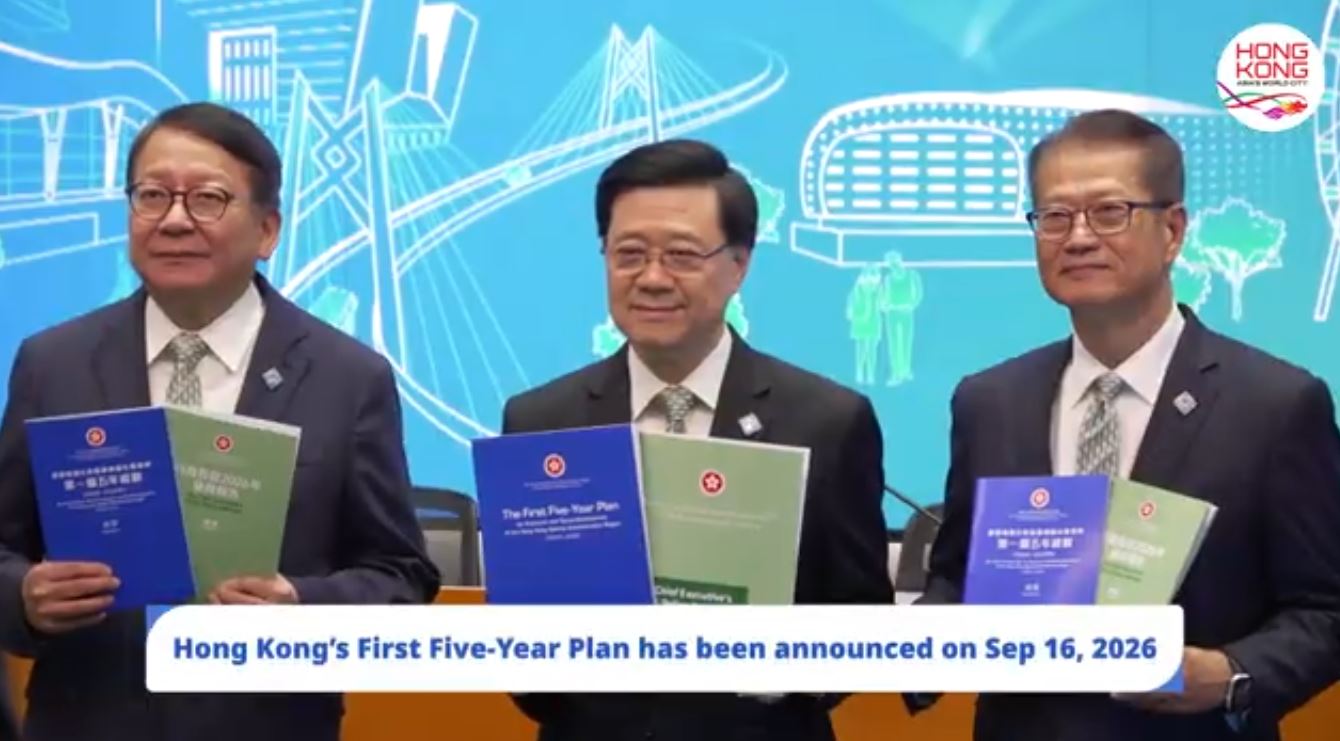
Hong Kong outlines strategies for deepening development of the Guangdong-Hong Kong-Macao Greater Bay Area and enhancing green transformation
Business
Alamein Africa Forum to bring together key political and business leaders

-

 Business2 days ago
Afreximbank, Ghana Infrastructure Investment Fund (GIIF) and Ghana’s 24-Hour Economy Authority launch project preparation partnership to accelerate 24H+ projects
-

 Events2 days ago
Huawei Cloud Rolls Out Enterprise AI Products Across the Board, Building an Open Agentic Cloud
-

 Business2 days ago
Hong Kong sets out strategies to enhance the appeal and add value to the city’s tourism industry
-

 Energy2 days ago
Deals, Drilling and New Entrants Define Angola Oil & Gas 2026
-

 Business2 days ago
Former DAMAC Senior Vice President Paulo J. Cruz Appointed Founding CEO of African Collaboration Group (ACG) to Spearhead Sports and Entertainment District Development Across Africa
-

 Business2 days ago
Hong Kong sets out initiatives to secure long-term development of pillar industries
-

 Business2 days ago
Africa Makes its Case for a Bigger Role on the Global Stage
-

 Business2 days ago
South Africa’s water challenges are reshaping how businesses plan for resilience