Connect with us

Energy

Gabon Seeks Fresh Investment to Unlock Untapped Oil & Gas Potential

Published

on

Oil

A key emphasis by Gabonese officials was placed on the marginal oil fields in the country to counter oil production decline linked to the natural lifecycle of its fields

Gabon is calling for renewed international investment in its oil and gas sector, focusing on marginal oil fields to counteract declines from aging reservoirs.

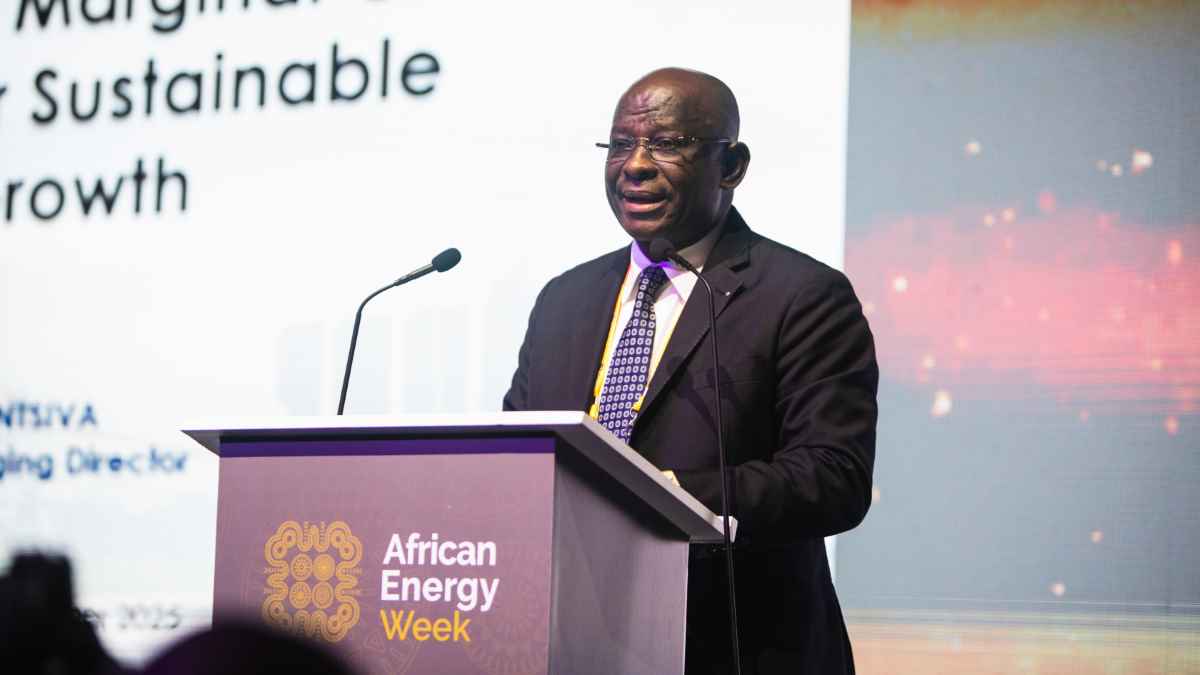
Speaking at a session titled ‘Unlocking Investment Opportunities in Gabon’s Oil & Gas Sector’ at Africa Energy Week: Invest in African Energies, Aristide P. Nyamat Bantsiva, General Director of Upstream Oil and Gas, highlighted the government’s push to revitalize production from mature fields and capitalize on untapped resources.

Gabon’s 2019 Hydrocarbon Code reforms, which include flexible production sharing contracts and tax incentives, aim to stimulate exploration. The country has more than 30 marginal discoveries across onshore and offshore blocks, which officials hope will drive sustainable production growth and economic revitalization.

Through our technical workshops and yearly statutory meetings, we will continue to monitor the overall performance of these assets, including safety, production, people and budget

“The advancement of technology has allowed us to review and discover new blocks that were previously thought inaccessible. Through our technical workshops and yearly statutory meetings, we will continue to monitor the overall performance of these assets, including safety, production, people and budget,” Bantsiva said.

Bantsiva noted that Gabon has over two billion barrels of proven oil reserves and substantial gas potential. Yet only 27.5% of its 255,104 km² total acreage is currently licensed, leaving nearly 185,000 km² open for investment.

“The government, through partnerships with operators such as Perenco, BW Energy and state-owned Gabon Oil Company, is leveraging these enhanced oil recovery technologies and redeveloping underutilized assets to maximize output from mature fields,” he added, emphasizing that tapping deepwater basins will require additional investment and technical expertise.

Meanwhile, independent energy company Perenco is investing $2 billion into the Cap Lopez LNG terminal, deploying a floating LNG vessel capable of producing 700,000 tons of LNG and 25,000 tons of LPG, with 137,000 cubic meters of storage. BW Energy also signed production sharing contracts for the Niosi Marin and Guduma Marin blocks in 2024, covering an eight-year exploration period with a two-year extension option.

“With established infrastructure, including over 225 km of gas pipelines, 7 million barrels of storage capacity, and a functioning refinery system, as well as continued commitment from government, Gabon offers a compelling opportunity for investors to be part of the next chapter in Africa’s energy story. Our oil basin is rich in history and ripe for innovation,” Bantsiva concluded.

Distributed by APO Group on behalf of African Energy Chamber.

Home  Facebook

Business

Critical Mineral Projects to Watch Ahead of Invest in African Energy (IAE) 2026

Published

on

The Uganda Chamber of Energy and Minerals, with both its CEO and governing council chairperson confirmed for Paris, will serve as the primary interface for investors seeking access to Uganda’s licensing framework and project pipeline

CAPE TOWN, South Africa, March 26, 2026/APO Group/ –Governments from West, Central and Southern Africa, with delegations confirmed for the Invest in African Energy (IAE) Forum in Paris next month, are each advancing critical mineral projects that span processing deals, development-stage assets and frontier exploration plays, giving investors a range of entry points across the minerals value chain.

Nigeria – Alumina Refinery & Lithium Processing

Nigeria struck a $1.3 billion deal with the Africa Finance Corporation in early March covering three components: construction of a one-million-ton-per-year alumina refinery, a national geoscience mapping program, and a joint investment vehicle to accelerate exploration and production across priority leases. Projected at 95% utilization over 20 years, the refinery is expected to add $1.2 billion to GDP annually and generate approximately $8 billion in foreign exchange earnings over its lifespan.

Separately, a $600 million lithium processing plant in Nasarawa State is at the commissioning stage, backed by ongoing mapping of lithium-bearing pegmatite belts across Kwara, Ekiti and Kaduna states. New mining licenses now require a local processing commitment covering at least 30% of output before export, a condition that directly shapes the investment structures available to foreign partners. Nigeria’s energy minister is among the confirmed delegations at IAE in Paris.

Zambia – Copperbelt Expansion & Cobalt Refinery


Copper output in Zambia is on course to clear one million tons in 2026, supported by First Quantum Minerals’ completed $1.25 billion S3 plant expansion at Kansanshi and Barrick Gold’s $2 billion program to double output at Lumwana by 2028. Several additional projects, including Sinomine’s Kitumba Mine and KoBold Metals’ Mingomba deposit, are also coming online this year, making Zambia one of the few places globally adding significant incremental copper supply in the near term.

Africa’s first cobalt sulfate refinery is targeting commissioning in Zambia in 2026, adding downstream processing capacity alongside the copper ramp-up. The Lobito Corridor, backed by a $553 million US Development Finance Corporation loan for Angola’s Benguela rail link, reduces export costs across the Copperbelt and improves project bankability for both mines and processing facilities seeking long-term offtake commitments.

Senegal – Falémé Integrated Iron Project

Senegal’s Falémé iron district in the Kédougou region holds over 600 million tons of probable reserves, including oxide ore at around 59% iron content and primary magnetite at roughly 45% Fe. The government launched the Falémé Integrated Iron Project as a phased program targeting 15 to 25 million tons per year at peak output, with national iron ore company MIFERSO conducting ongoing reserve verification.

The mineral export port at Bargny is operational and rail rehabilitation linking Kédougou to the coast is progressing under the Emerging Senegal Plan. The project is actively seeking a technical development partner. With port and rail infrastructure advancing independent of any single mining operator, Falémé carries lower logistics risk than comparable iron ore projects requiring greenfield corridor construction, which affects how financiers assess project bankability and timelines to first revenue.

Equatorial Guinea – Rio Muni Mineral Exploration

Equatorial Guinea’s Rio Muni mainland offers early-stage exposure to gold, bauxite, base metals, coltan and iron ore across largely underexplored onshore territory. The Ministry of Mines and Hydrocarbons has been opening the sector since its first public tender in 2019, with exploration contracts now in place and state geological mapping advancing in partnership with Rosgeo. Minister Antonio Oburu Ondo will address investors at IAE, with the minerals program expected to feature in bilateral meetings.

Uganda – Rare Earths & Minerals Sector Opening

Uganda holds rare earth deposits in ionic adsorption clay formations — a deposit type the IEA has flagged for low capital intensity relative to hard rock alternatives — alongside gold mineralization across greenstone belts in the West Nile, Karamoja and Mubende regions. The Uganda Chamber of Energy and Minerals, with both its CEO and governing council chairperson confirmed for Paris, will serve as the primary interface for investors seeking access to Uganda’s licensing framework and project pipeline, at the same time as the country’s Tilenga and Kingfisher oil developments move toward first oil.

Distributed by APO Group on behalf of Energy Capital & Power.

Continue Reading

Business

Sierra Leone’s PDSL to Host Strategic Investor Roundtable at Paris Energy Forum

Published

on

The Petroleum Directorate of Sierra Leone will lead a targeted roundtable at Invest in African Energy 2026, spotlighting upstream potential and cross-regional partnerships

PARIS, France, March 24, 2026/APO Group/ –The Petroleum Directorate of Sierra Leone (PDSL) is set to convene an investor roundtable at Invest in African Energy (IAE) Forum 2026 in Paris, underscoring growing interest in West and North African energy markets and the need for deeper capital engagement across exploration, renewable and offshore services. The session reflects a strategic effort by Sierra Leone to connect its emerging upstream prospects with established operators and project developers as the country moves to unlock the full potential of its emerging oil and gas industry.


Sierra Leone is increasingly positioning itself as a frontier oil and gas market with significant offshore potential, and part of the PDSL’s mandate is to catalyze investment interest in its offshore acreage through direct engagement with global capital. Recent data suggest the country holds estimated recoverable resources in the tens of billions of barrels, backed by discoveries and extensive multi‑client seismic datasets that prospective investors are evaluating. The PDSL is actively promoting licensing opportunities and drilling plans, emphasizing fiscal terms and exploration readiness to attract strategic partners.


A cornerstone of this strategy is the anticipated launch of the country’s sixth licensing round. Offering a rare early-entry opportunity into a largely untapped deepwater terrain with considerable upside, the upcoming bid round is backed by fresh 3D datasets which de-risk exploration and support new drilling campaigns. Just this month, GeoPartners announced that the final Pre-Stack Time Migration data for its recently acquired 3D multi-client seismic survey in the country was complete and is now available for licensing. The dataset provides a 3D window into the hydrocarbon potential of the underexplored northern Sierra Leone region.


Sierra Leone’s licensing drive comes as major operators advance exploration activities. In 2025, Eni signed a Reconnaissance Permit Agreement with the PDSL, securing rights to conduct reconnaissance and technical evaluation activities across offshore blocks G113, G129, G130, G131 and G132. The acreage covers 6,790 square kilometers within Sierra Leone’s territorial waters. Nigeria’s F.A. Oil Limited is pursuing drilling following its award of six offshore blocks through the country’s fifth licensing round in 2023. The company is currently seeking a farm-in partner to advance the project from exploration to production, offering a 40% stake in each of the G Blocks 53, 54, 55, 71, 72 and 73.


As these development unfold, the upcoming roundtable at IAE 2026 offers a unique opportunity for operators and policymakers to engage potential investors. The IAE 2026 Forum has become a strategic bridge between African upstream opportunities and global investors, with sessions like the PDSL roundtable designed to foster deeper dialogue and provide clarity on project pipelines and investment prerequisites. Discussions are expected to cover mechanisms for de‑risking exploration activity, optimizing fiscal and contractual frameworks and identifying synergies between hydrocarbon investment and renewable energy commitments.


For investors seeking differentiated exposure to African energy markets, the Sierra Leone roundtable represents both a focused exploration of frontier oil potential and a broader conversation about regional infrastructure, partnerships and the evolving demands of energy capital in the years ahead.


IAE 2026 (www.Invest-Africa-Energy.com) is an exclusive forum designed to connect African energy markets with global investors, serving as a key platform for deal-making in the lead-up to African Energy Week. Scheduled for April 22–23, 2026, in Paris, the event will provide delegates with two days of in-depth engagement with industry experts, project developers, investors and policymakers. For more information, visit www.Invest-Africa-Energy.com. To sponsor or register as a delegate, please contact sales@energycapitalpower.com


Distributed by APO Group on behalf of Energy Capital & Power.

Continue Reading

Energy

Cape Town Prepares for African Mining Week 2026 as Draft Program Reveals Continent’s Mineral Drive

Published

on

African Mining Week returns for its 2026 edition with an expanded three-day program, bringing together African mining leaders and global partners to shape the future of the continent’s mining sector

CAPE TOWN, South Africa, March 24, 2026/APO Group/ –Global economic trends – from record-breaking commodity prices to intensifying geopolitical competition for resources – are reshaping the strategic importance of Africa’s mineral wealth. As global countries race to secure supply chains for energy transition metals – which are expected to triple by 2030 – Africa is positioning its 30% share of the world’s critical minerals as a key pillar of economic growth. African governments are modernizing mining codes, developing industrial corridors and investing in mineral processing facilities to support local beneficiation, job creation, workforce development and regional mineral markets.


Against this backdrop, the upcoming African Mining Week (AMW) Conference & Exhibition – Africa’s premier gathering for mining stakeholders – has launched the draft program for its 2026 edition {https://apo-opa.co/3NneKLj}. Scheduled to take place October 14–16 in Cape Town, the event provides a platform where policymakers, global investors, project operators, technology providers, academia and mining service companies examine Africa’s mining opportunities, challenges and long-term strategic direction.

Under the theme ‘Mining the Future: Unearthing Africa’s Full Mineral Value’, the three-day, multi-track agenda reflects the growing urgency among African markets to strengthen value addition across the mining value chain.

Regional Cooperation and Policy Alignment in Focus

A key feature of the agenda is the Ministerial Forum, where African mining ministers will provide updates on regulatory reforms and policy alignment initiatives aimed at unlocking greater value from the continent’s mineral resources. Discussions will examine how harmonized regulatory frameworks and regional cooperation can accelerate investment flows and strengthen Africa’s position in global mineral supply chains.

The inclusion of regional policy integration reflects a growing continental push to leverage frameworks such as the African Continental Free Trade Area (AfCFTA) to enhance cross-border mineral cooperation and trade.

We are acting to enhance regional integration through frameworks such as the African Mining Vision and the Africa Mineral Strategy Group

“Africa’s integration is not only a political objective but a strategic economic vision,” stated Emmanuel Armah-Kofi Buah, Ghana’s Minister of Lands and Natural Resources, in remarks reported by Energy Capital & Power – organizers of AMW – in February 2026. “Our natural resources require coordinated policies. Isolated legal frameworks cannot fully unlock their value. Through integration and initiatives such as the ECOWAS [Economic Community of West African States] Mining Code and the African Mining Vision, we can build a stronger and more competitive mineral economy.”

Nigeria’s Minister of Solid Minerals Development, Henry Alake, echoed this emphasis on regional cooperation and beneficiation.

“We are acting to enhance regional integration through frameworks such as the African Mining Vision and the Africa Mineral Strategy Group,” he stated. “We must develop mineral corridors that connect resources, infrastructure and markets across the continent. Our goal is not to simply export raw materials, but to develop industrial hubs that create jobs and value across borders.”

Connecting Global Investors with African Opportunities

Strategic roundtables and Country Focus sessions form a key part of the AMW 2026 program, connecting African mining jurisdictions with international partners from the U.S, Europe, the Middle East and China. These sessions will provide African stakeholders with a platform to showcase exploration opportunities and project pipelines across the mining value chain.

Meanwhile, technical workshops and the exhibition floor at AMW 2026 will provide a platform for equipment manufacturers, technology providers and engineering firms to showcase innovations designed to enhance operational performance across mining operations.

By combining high-level policy dialogue with technical expertise and investment matchmaking, AMW 2026 positions itself as a critical marketplace where Africa’s mineral potential converges with global capital, technology and strategic partnerships – helping shape the next phase of growth for the continent’s mining sector.

AMW serves as a premier platform for exploring the full spectrum of mining opportunities across Africa. The event is held alongside the African Energy Week: Invest in African Energies 2026 conference from October 12-16 in Cape Town. Sponsors, exhibitors and delegates can learn more by contacting sales@energycapitalpower.com.

Distributed by APO Group on behalf of Energy Capital & Power.

Continue Reading

Trending

Exit mobile version