Connect with us
Anglostratits

Business

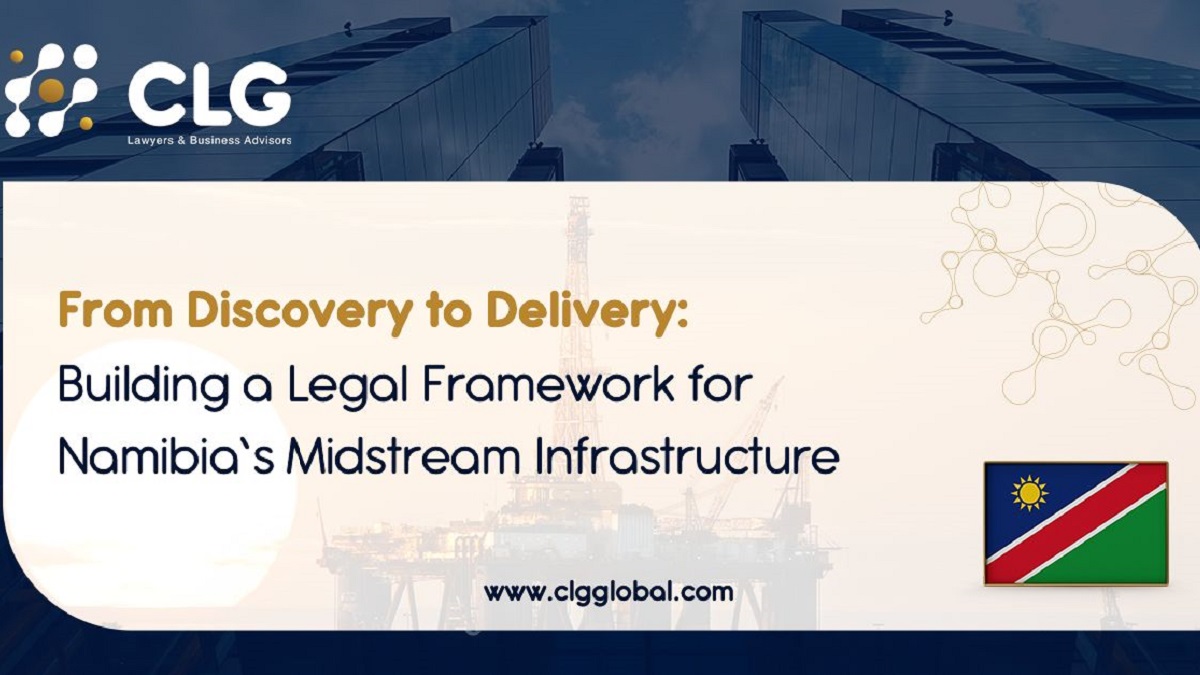
From Discovery to Delivery: Building a Legal Framework for Namibia’s Midstream Infrastructure (by Rachel Mushabati)

Published

on

Framework

A strong legal framework for midstream infrastructure is essential to ensure that Namibia maximizes economic benefits, attracts investment, and builds a sustainable energy industry

SANDTON, South Africa, June 20, 2025/APO Group/ —By Rachel Mushabati, Senior Associate Attorney & Country Head – CLG Namibia (www.CLGGlobal.com)

Namibia’s recent offshore oil discoveries mark a pivotal moment in the country’s energy sector. With major players such as Shell, TotalEnergies, QatarEnergy, and Galp uncovering significant reserves, Namibia is poised to become a key oil producer. However, while exploration and production activities have gained momentum, the midstream sector; involving transportation, storage, and refining of petroleum, remains underdeveloped.

A strong legal framework for midstream infrastructure is essential to ensure that Namibia maximizes economic benefits, attracts investment, and builds a sustainable energy industry. CLG Legal and Business Advisory, with its extensive advisory experience across Africa, is uniquely positioned to support this transition. CLG has advised on midstream regulatory frameworks, infrastructure structuring, and investment promotion strategies in various jurisdictions, and brings this expertise to the Namibian context.

Understanding Midstream Infrastructure and Its Importance

Midstream infrastructure serves as the critical link between oil extraction and the end consumer. This includes pipelines, refineries, storage facilities, and specialized port infrastructure that facilitate the transportation of crude oil and natural gas. Without adequate midstream infrastructure, Namibia risks becoming an exporter of raw crude without capturing additional value through processing and distribution. A robust midstream sector can boost job creation, industrial development, and energy security, making it a strategic national priority.

Market studies from other African producers have shown that well-developed midstream infrastructure can contribute up to 30% more in local value addition compared to direct crude exports.[1] In Ghana, for instance, domestic refining and pipeline infrastructure contributed significantly to its GDP growth in the petroleum sector between 2016–2022. Namibia has the opportunity to tap into similar economic potential.[2]

Existing Legal Framework and Gaps

Namibia’s petroleum sector is primarily governed by the Petroleum (Exploration and Production) Act 2 of 1991 and the Petroleum Products and Energy Act 13 of 1990. These laws focus largely on upstream activities and the regulation of downstream petroleum products. However, there is no dedicated midstream regulatory framework. The absence of clear midstream regulations means there is little guidance on ownership structures, investment incentives, and operational guidelines for pipelines, storage, and refining facilities.

For example, Nigeria’s midstream sector prior to the Petroleum Industry Act (2021) faced significant bottlenecks due to the absence of a clear regulatory framework, particularly regarding third-party access and tariff setting for pipeline infrastructure. These issues led to investor reluctance and underinvestment, which were only addressed after the establishment of the Nigerian Midstream and Downstream Petroleum Regulatory Authority (Nigeria Petroleum Industry Act, 2021).

Lessons from Other Oil-Producing Countries

Namibia can draw inspiration from countries that have successfully developed midstream infrastructure through effective regulation. Norway, for example, has established a robust midstream legal framework that ensures state participation in pipelines and refineries while promoting private investment.[3] Ghana has a dedicated Petroleum Midstream Regulatory Authority that oversees infrastructure development and ensures compliance with environmental and safety standards. Similarly, Nigeria’s Petroleum Industry Act (2021) introduced the Nigerian Midstream and Downstream Petroleum Regulatory Authority, which provides clear guidelines on pipeline ownership and operations.

To address the existing gaps, Namibia must develop a comprehensive legal framework that clearly defines the governance of midstream activities

The Role of Key Stakeholders in Strengthening Namibia’s Legal Framework

To unlock the full potential of the midstream sector, coordinated action is required among various stakeholders:

  1. Government Ministries and Regulators: Responsible for drafting legislation, setting environmental and safety standards, and issuing licenses.
  2. Private Sector and Investors: Bring in capital and technical expertise, while also needing legal certainty to invest confidently.
  3. State-Owned Entities: Can serve as infrastructure operators and strategic partners in public-private partnerships.
  4. Civil Society and Communities: Essential for ensuring environmental accountability and social license to operate.
  5. Legal Advisory Firms: Provide technical assistance in drafting laws, structuring transactions, and navigating policy reform.


Strengthening Namibia’s Midstream Legal Framework

To address the existing gaps, Namibia must develop a comprehensive legal framework that clearly defines the governance of midstream activities. A dedicated Midstream Act would be a crucial first step, providing legal certainty on pipeline infrastructure, refineries, storage, and transportation. Encouraging public-private partnerships can drive midstream development while ensuring local participation. Establishing an independent regulatory authority will help enhance transparency, streamline approvals, and enforce compliance.

Additionally, Namibia should implement policies that prioritize local employment and skills transfer, ensuring that midstream investors contribute to national workforce development. Environmental and safety standards must also be strengthened to mitigate risks associated with pipeline integrity, spill prevention, and emergency response. To further attract investors, tax breaks, duty exemptions, and streamlined licensing processes should be introduced to make Namibia a more competitive destination for midstream infrastructure development.

Conclusion

For Namibia to fully capitalize on its oil discoveries, it must establish a strong midstream legal framework that facilitates the efficient transportation, storage, and processing of petroleum resources. Without this, the country risks losing significant economic value and remaining dependent on crude exports.

By adopting best practices from other oil-producing nations and implementing strategic legal reforms, Namibia can create a thriving midstream sector that benefits both investors and citizens alike. CLG stands ready to support this transformation, leveraging its pan-African expertise in midstream regulation, infrastructure development, and legal advisory. Our team has been instrumental in shaping midstream legal regimes across West and Central Africa, and we are committed to helping Namibia build a regulatory foundation that supports sustainable growth and long-term prosperity.


[1] Ruben, R., Kuijpers, R., & Dijkxhoorn, Y. (2022). Mobilizing the Midstream for Supporting Smallholder Intensification. Land11(12), 2319. https://apo-opa.co/4ngI2bu

[2] Oxford Business Group. “Ghana’s energy production targets and exploration attract investment”. Retrieved from https://apo-opa.co/4kUZQHu.

[3] Norwegian Petroleum Directorate (2021). ‘Midstream Regulatory Framework and Investment Guidelines’.

 

Distributed by APO Group on behalf of CLG

Home  Facebook

Business

Canada–Africa Financing Forum to Convene Investors and Decision-Makers in Cape Town – May 14, 2026

Published

on

Ateau Zola

This timely Forum comes on the heels of commitments announced by Canadian Prime Minister Mark Carney, deepening Canada–Africa commercial ties and expanding investment partnerships

TORONTO, Canada, April 29, 2026/APO Group/ –The Canada–Africa Chamber of Business (https://CanadaAfrica.ca) will convene investors, financiers, policymakers, and industry leaders in Cape Town on May 14, 2026 for the Canada–Africa Financing Forum—a high-level platform focused on unlocking capital and accelerating deal flow across African markets.

Registration is open (http://apo-opa.co/4vZN6oV)

This timely Forum comes on the heels of commitments announced by Canadian Prime Minister Mark Carney, deepening Canada–Africa commercial ties and expanding investment partnerships. The program connects leaders from venture capital, private equity, and institutional investors to examine where capital is moving—and where the next opportunities lie—supported by Canadian project partners with proven capacity to deliver on-the-ground.

Delegates will engage directly with finance and investment decision-makers, following the program opening, featuring messages from President Cyril Ramaphosa and Prime Minister Mark Carney, in addition to high-level Ministerial representation.

This Forum is about capital deployment, not just conversation

“This Forum is about capital deployment, not just conversation,” said Garreth Bloor, President of the Canada–Africa Chamber of Business. “We are convening investors, institutions, and project leaders who are actively shaping transactions across Africa—and connecting them directly with Canadian partners who are ready to work together.”

The Canada–Africa Financing Forum reflects the Chamber’s role as a privately financed, market-led platform advancing Canada-Africa trade and investment through world-class networking and information-sharing events.

Why Attend

  • Direct access to active dealmakers and capital allocators
  • Insights into where capital is being deployed and key players delivering major projects
  • Opportunities to build partnerships across Canada and African markets
  • Participation in a curated, high-level environment focused on execution

Secure Your Place

Space is limited and demand is strong.

Apply to secure your place (http://apo-opa.co/4vXb9oz)

Read More and View the Program (http://apo-opa.co/4vZN6oV)

Distributed by APO Group on behalf of The Canada-Africa Chamber of Business.

Continue Reading

Business

ORUN and 1xBET Partner to Support a Dynamic Creative Africa

Published

on

MIR Holding

During the MASA 2026 edition, held from April 11 to 18, 2026, ORUN and 1xBET implemented the We Champion Talent program, an initiative aimed at promoting African talent and advancing the development of Cultural and Creative Industries (CCIs)

ABIDJAN, Ivory Coast, April 28, 2026/APO Group/ –As part of the Innovation Village co-organized with MASA at the Palais de la Culture in Abidjan from April 14 to 18, ORUN (https://ORUN.Africa) announces the rollout of its partnership with 1xBET to support a creative Africa that is structuring itself, professionalizing, and scaling across the continent.

We aim to demonstrate that it is possible to support African talent, narratives, and creative ecosystems over the long term, with ambition and consistency

Designed as a space of convergence between heritage, innovation, and knowledge transmission, the Innovation Village features scenography crafted by Ivorian artisans, a program of panels and masterclasses on creative industries, an immersive experience produced by Orun Studios, and a major institutional highlight on April 17. Its narrative platform is built around three pillars: memory, structure, and transmission. The initiative aims to position cultural and creative industries as an economic driver for the continent.

“The Innovation Village was conceived as an act of construction. By partnering with organizations such as 1xBET, we aim to demonstrate that it is possible to support African talent, narratives, and creative ecosystems over the long term, with ambition and consistency,” said Habyba Thiero, CEO of Africa Currency Network and President of ORUN.

This vision aligns with ORUN’s broader ambition to produce, structure, and internationalize African creative industries through events, content, and strategic partnerships.

Distributed by APO Group on behalf of ORUN, part of African Currency Network (ACN).


Continue Reading

Business

MIR Holding Reaffirms Its Commitment to African Creative Industries Alongside ORUN at Marché des Arts du Spectacle Africain d’Abidjan (MASA) 2026

Published

on

MIR Holding

More than event support, this partnership reflects a commitment to backing platforms capable of structuring value chains, increasing the visibility of talent, and fostering the emergence of strong African creative infrastructures

ABIDJAN, Ivory Coast, April 28, 2026/APO Group/ –On the occasion of MASA 2026, held from April 11 to 18 in Abidjan, MIR Holding (https://MIRHolding.odoo.com) reaffirmed its commitment to supporting the growth of African creative industries by partnering with ORUN as part of the Innovation Village, hosted at the Palais de la Culture in Abidjan. This presence reflects a clear intention to support the scaling of cultural and creative industries so they can fully contribute to job creation and value generation across the continent.


Co-organized by ORUN and MASA, the Innovation Village brought together over several days scenography designed by Ivorian artisans, a program of panels and masterclasses dedicated to creative industries, an immersive experience produced by Orun Studios, and a key institutional highlight on April 17.

At MIR Holding, we believe that Africa’s future will also be shaped by its ability to structure its narratives, its talent, and its creative value chains

Built around three pillars — memory, structure, and transmission — the initiative carried a renewed ambition for culture: positioning it as a concrete lever for economic structuring and African projection.

By supporting this initiative, MIR Holding aligns with a broader dynamic aimed at strengthening connections between creation, entrepreneurship, content, youth, and growth ecosystems. More than event support, this partnership reflects a commitment to backing platforms capable of structuring value chains, increasing the visibility of talent, and fostering the emergence of strong African creative infrastructures. MIR Holding stands among the main partners of the Village, alongside Africa Currency Network and other stakeholders engaged in this vision.

“With ORUN, we are not only seeking to make culture visible. We aim to help provide it with a framework, a reach, and a trajectory. What is at stake here is the continent’s ability to better transform its creative energy into sustainable value, real opportunities, and influence,” said Habyba Thiero, CEO of Africa Currency Network and President of ORUN.

Mouhamed Dieng, President of MIR Holding, added: “Supporting Africa’s creative industries is not about backing a secondary sector. It is about investing in one of the continent’s most powerful spaces for storytelling, youth, innovation, and competitiveness. At MIR Holding, we believe that Africa’s future will also be shaped by its ability to structure its narratives, its talent, and its creative value chains.”

Distributed by APO Group on behalf of MIR Holding.


Continue Reading

Trending