

Business
Four top trends to watch in the African energy sector in 2024
Published
3 years agoon

In 2024, the focus is vastly shifting towards load management, where batteries play a dynamic role in optimisinag energy consumption
LAGOS, Nigeria, January 17, 2024/APO Group/ —
As we head into 2024, the renewable energy sector is set to see innovation that will transform the way energy is accessed, stored and deployed across Africa. Paul van Zijl, Group CEO at Starsight Energy (https://StarsightEnergy.com/), discusses 4 key trends that he thinks will profoundly shape the industry over the next year.
Batteries will provide benefits far beyond backup for behind-the-meter projects
One of the most significant shifts in solar technology revolves around the integration of battery energy storage systems (BESS) – especially for behind-the-meter solar (also known as onsite solar). Traditionally, batteries were seen primarily as backup storage when paired with a solar system, ensuring a steady power supply during cloudy days, nighttime or when the grid is unavailable. However, in 2024, the focus is vastly shifting towards load management, where batteries play a dynamic role in optimising energy consumption.
As the trend for the deployment of batteries across the continent grows, cutting-edge management systems will become a key part of solar installations with an integrated battery component. These systems use advanced algorithms to predict energy demand patterns. This allows for the strategic use of battery storage – discharging it during expensive peak times and charging it using solar energy or the grid during off-peak – to reduce the costly demand charges that come with variable tariff structures. Along with enhancing the efficiency of solar systems, integrated battery storage solutions can also contribute to grid stability by reducing strain during high-demand periods.
When it comes to front-of-the-meter (or offsite) storage, BESS is also set to play a bigger role in the deployment of utility-scale renewable energy technology like wheeling – where power is generated at an offsite location (like a solar or wind farm) and transported using the available power network to different off-takers.
In South Africa for example, the national energy provider Eskom announced the deployment of around 343 MW in BESS projects as part of an overall 500 MW BESS initiative aimed at addressing the country’s long-running electricity crisis. The systems will be in remote areas (with limited access to Eskom’s network) but still close to renewable energy plants built by independent power producers (IPPs).
This collaboration between the public and private sectors supports more widespread deployment of utility-scale power and the adoption of renewable energy projects. By adding battery storage components to the national grid, businesses and consumers can gain quicker access to reliable electricity while the power utility can address peak energy demands more easily. This also ensures that the increasing amount of power generated from utility-scale solar projects can be stored and consumed outside of daylight hours to avoid stranded grid capacity.
Data, banking and tourism: The rise of sustainable off-grid solar solutions
Off-grid renewable energy solutions, including stand-alone systems and mini-grids, offer a unique opportunity to expand modern energy access services. The distributed nature of these systems allows them to be tailored to local conditions, tap into available renewable resources, deliver diverse energy services, and utilise local capacity to ensure long-term sustainability.
We will see a rise in these solutions as more and more commercial and industrial businesses realise the value of effectively moving off-grid. This will be prevalent in three industries:
As more and more businesses become aware of the benefits of off-grid solar, it is likely that we will see an even greater adoption of this technology in the coming year
Data centres: Africa is a global hub for data centres. According to research from African Infrastructure Investment Managers (AIIM), there is around 250 MW of installed data centre capacity across Africa – with the demand for centres in Africa expected to exceed supply by 300% by 2030. These powerhouses of technology rely heavily on a steady and safe electricity supply. From operating to maintaining their vast cooling systems, large data centres simply can’t afford the risk of a grid collapse or any possible power interruptions. Power autonomy is the name of the game here, making battery storage a necessity from the get-go.
Banking: While the prevalence of mobile financial services continues to soar on the continent, there is still a tangible need for brick-and-mortar banks and ATMs in countries where access to these services remains essential. These sites need to remain operational should there be any sort of grid collapse or catastrophic power failures – making an off-grid solution a non-negotiable component of the future of banking in Africa.
Tourism: With the rise of conscious consumerism and eco-tourism, sustainability is fast becoming the differentiating factor for discerning travellers choosing their next holiday destination. Luxury lodges in popular destinations in East and Southern Africa are fast moving towards fully off-grid solar battery operations to offer their guests uninterrupted access to power while boosting the lodge’s green credentials in the process.
As more and more businesses become aware of the benefits of off-grid solar, it is likely that we will see an even greater adoption of this technology in the coming year.
Seamless access to renewables through a reimagined aggregation model
We will certainly see a shift towards aggregated solutions, wherein energy providers will consolidate diverse technologies and services into comprehensive packages in 2024. This trend is driven by the recognition that a holistic approach to energy solutions is not only more convenient for consumers but also more effective in optimising energy production and consumption.
This can be done in several ways. For example, trading of electricity in South Africa allows a service provider of solar energy to buy and sell, excess wind energy without having to invest substantial capital expenditure amounts. Similarly, instead of having gas-powered energy compete with renewable energy, the aggregation model will also allow providers of such services to aggregate their energy solutions and provide the client with a holistic offering. The goal is to provide consumers with a seamless and integrated final product that maximises the benefits of renewable energy across various aspects of their daily lives. The real value for customers lies in a collaboration of providers who can meet their specific needs and power the entire energy lifecycle.
Tackling complexities through an increasingly consolidated sector
As the solar industry matures, a trend towards consolidation will become increasingly evident in 2024. Larger energy companies will consider merging or acquiring smaller players, creating more robust and diversified entities. This consolidation is driven by the desire to achieve economies of scale, increase market share, and foster innovation by pooling resources and expertise.
Consolidation in the industry is not limited to manufacturers but extends to service providers, research and development firms, and energy management companies. By joining forces, these entities can tackle the complexities of the evolving energy landscape more effectively, driving down costs and accelerating the adoption of alternative energies across the continent.
This trend is fostering the emergence of holistic service providers capable of providing end-to-end solutions that address the diverse needs of businesses, consumers and communities. Our recent market-milestone merger between Starsight Energy (https://StarsightEnergy.com/) and SolarAfrica (https://SolarAfrica.com/) is a case in point. Customers in Eastern, Southern and Western Africa can access our comprehensive mix of cost-effective solutions that provide power security and carbon reduction. These include solar energy, battery storage, wheeling, and energy management, among others.
The future is bright. If 2023 was anything to go by in terms of transformation for the energy sector, 2024 will be marked by accelerated innovation and a collective commitment to harnessing the full potential of renewable energy that holds the promise of a more resilient, more sustainable, and more tightly connected energy future for Africa.
Distributed by APO Group on behalf of Starsight Energy.
You may like
-

The Coca-Cola System Drives USD 3.6 Billion Economic Impact and Supports over 458,200 Jobs Across COMESA Region, Study Reveals
-


GE Vernova secures order aimed to strengthen regional energy capacity in Côte d’Ivoire
-


Algeria’s Hydrocarbons Minister Joins MSGBC 2026 as Sonatrach Eyes Senegal Partnerships
-

Afreximbank and partners advance Africa’s automotive investment agenda at Alamein Africa Forum
-


The Detail Behind a Decade: Mala Lingappa Marks Ten Years at APO Group
-


More Than a Trophy: Africa’s Moment to Champion Women’s Football (By Isha Johansen)
Business
From Washington to Bangkok, Africa@WorldBank Gains Global Momentum as Ngozi Okonjo-Iweala Takes Centre Stage (By Ajong Mbapndah L)
Published
4 hours agoon
October 21, 2026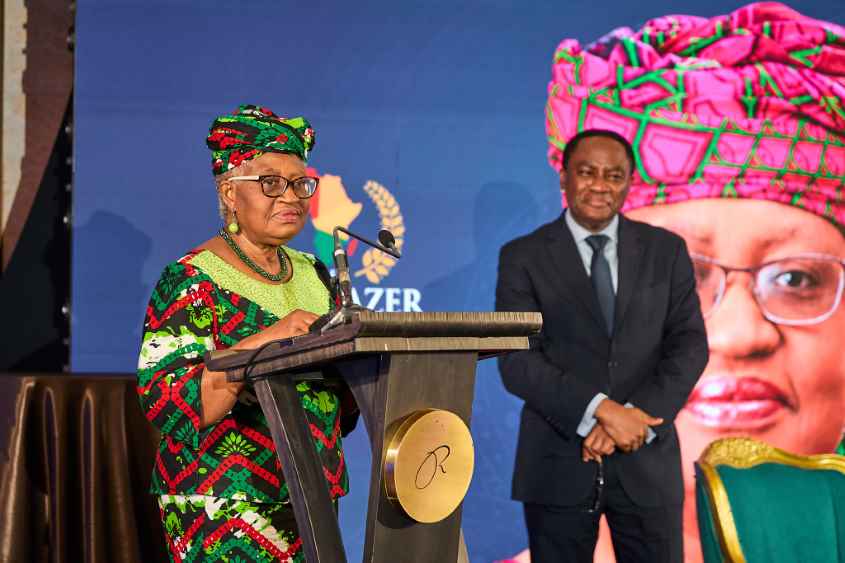
Dr. Denis Foretia’s expanding initiative brings African policymakers, development financiers and global leaders together as WTO Director-General Ngozi Okonjo-Iweala receives the 2026 Trailblazer for Africa Award, with renewed calls for industrialisation, domestic investment and stronger African leadership in global economic decisions
Africa must do more to transform its vast natural resources into industries, jobs and prosperity rather than continue exporting raw materials while much of the economic value is created elsewhere, World Trade Organization Director-General Dr. Ngozi Okonjo-Iweala told a high-level gathering of African policymakers, development financiers and business leaders in Bangkok.
Her message was among the highlights of the October 14 Africa@WorldBank/IMF gathering, where she received the 2026 Trailblazer for Africa Award. The event also marked another milestone for the increasingly influential initiative championed by Dr. Denis Foretia, Executive Chairman of the Nkafu Policy Institute and Founder of the Denis and Lenora Foretia Foundation.
Held at the Rembrandt Hotel on the sidelines of the World Bank and International Monetary Fund Annual Meetings, the gathering brought together African ministers, central bankers, development finance executives, researchers and policy experts for discussions on industrialisation, trade, debt sustainability, investment and economic transformation. From its inaugural Washington edition in October 2025 to Bangkok a year later, Africa@WorldBank/IMF has steadily expanded its reach, with its next gatherings scheduled for April 14 and October 6, 2027, in Washington, DC.
For Foretia, the Bangkok meeting represented another step in a sustained effort to ensure that African institutions and policymakers exercise greater influence over international economic decisions affecting the continent. The recognition of Okonjo-Iweala, one of Africa’s most distinguished figures in global economic governance, gave the gathering additional prominence while reinforcing the initiative’s commitment to celebrating African leadership and advancing practical development solutions.
Ngozi Okonjo-Iweala Challenges Africa to Turn Its Wealth into Prosperity
The recognition of Okonjo-Iweala was one of the defining moments of the Bangkok gathering, celebrating a career spanning economic reform, international development finance and global trade governance.
The WTO Director-General expressed particular appreciation for the honour, describing recognition by African institutions as especially meaningful.
“This recognition by African institutions is very, very special,” she said during her acceptance remarks, reflecting on the importance of leadership that produces tangible benefits for society.
Her subsequent fireside chat went beyond personal reflections to address some of Africa’s most pressing economic challenges, including the export of unprocessed minerals, inadequate infrastructure and the limited mobilisation of domestic investment capital.
Pointing to the continent’s enormous mineral wealth, Okonjo-Iweala noted that Africa possesses approximately 30% of the world’s critical minerals, yet too much of that wealth leaves the continent without undergoing meaningful transformation.
“Africa has 30% of critical minerals,” she observed, lamenting that much of the continent’s mineral wealth is extracted and exported without being processed locally to support manufacturing and employment.
The consequences are considerable. While African countries supply minerals essential to modern technologies, manufacturing and the global energy transition, much of the processing, industrial production and employment associated with those resources takes place outside the continent.
Okonjo-Iweala’s message was that African governments must place greater emphasis on domestic processing, industrial investment and policies that allow their economies to capture a larger share of the value generated by their natural resources.
She also challenged African countries to make better use of their considerable domestic financial resources, particularly pension funds.
According to figures she cited, Nigeria, Kenya and South Africa collectively hold approximately $250 billion in pension assets, yet substantial portions of that capital are invested outside Africa.
She argued that regulatory reforms could help channel more long-term African savings into infrastructure, industrial development and productive investments, reducing excessive dependence on external financing.
Her remarks came at a time when many African governments are grappling with high borrowing costs, debt pressures and the need to mobilise investment for economic transformation.
Energy and Infrastructure at the Heart of Africa’s Industrial Future
Okonjo-Iweala also emphasised the importance of reliable electricity and basic infrastructure in building competitive African economies.
Drawing on her personal experience of installing solar power in her hometown, she explained how dependable electricity replaced diesel generation and improved daily life.
“When we installed solar in our hometown, it changed everything,” she recalled, describing reliable energy and connectivity as essential foundations for participating in the modern economy.
Her example illustrated the practical benefits of energy investment, particularly for communities and businesses whose productivity is undermined by unreliable electricity supplies.
The WTO chief’s intervention reinforced the argument that Africa’s industrial ambitions cannot be realised without adequate electricity, transport networks, digital connectivity and infrastructure capable of supporting manufacturing and processing industries.
She also offered reflections on the qualities required of effective leaders, drawing on lessons from her distinguished career.
“I learned that you need to have values and principles,” she said, warning that leaders who abandon those foundations risk inconsistency and short-term decision-making.
For Okonjo-Iweala, leadership has always been closely associated with the ability to make a meaningful difference in people’s lives. Her recognition in Bangkok celebrated not simply the influential positions she has occupied but the contributions she has made to international development and economic governance.
A former two-time Nigerian Finance Minister, Okonjo-Iweala played a leading role in negotiations that secured approximately $18 billion in debt cancellation for Nigeria. She also spent 25 years at the World Bank, rising to Managing Director of Operations, before becoming the first woman and first African to lead the WTO in 2021.
She followed former United States Ambassador to the United Nations Linda Thomas-Greenfield, the inaugural recipient of the Trailblazer for Africa Award in 2025. Their successive recognition has helped establish the award as a celebration of exceptional leadership and contributions to Africa’s development and international standing.
Denis Foretia Draws Lessons from Thailand’s Industrial Transformation
While Okonjo-Iweala challenged African countries to make better use of their natural and financial resources, Foretia drew lessons from Thailand’s economic transformation to illustrate what deliberate industrial policies could achieve.
“Just two generations ago, Thailand was a low-income economy selling raw produce,” Foretia told participants, recalling how the country moved from agricultural processing into electronics and automobile manufacturing.
Today, Thailand is an upper-middle-income economy, offering an example of how sustained investment in productive industries can transform national prosperity.
“Africa can follow the same path,” Foretia declared.
His remarks reflected the broader mission of Africa@WorldBank/IMF: helping African countries move beyond dependence on raw commodity exports towards economies capable of producing higher-value goods, creating employment and competing more effectively in international markets.
Foretia highlighted the continent’s cashew industry as an example of the opportunities being lost through inadequate local processing.
“Less than 15% of Africa’s cashew is processed on African soil,” he observed, arguing that the overwhelming majority of processing activity takes place elsewhere, along with the jobs and economic value it generates.
For Foretia, the figures demonstrated why African governments must prioritise industrial capacity, infrastructure, investment and policies that encourage domestic value addition.
His message complemented Okonjo-Iweala’s concerns about critical minerals, reinforcing the argument that Africa cannot build lasting prosperity while exporting the bulk of its natural wealth in raw form.
Too often, Africa’s priorities are discussed—usually not by Africans, and without Africans at the table
Foretia also reiterated the thinking behind the initiative, which seeks to address the longstanding imbalance between Africa’s development financing needs and its influence over international economic policies.
“Too often, Africa’s priorities are discussed—usually not by Africans, and without Africans at the table,” he told participants at the April 2026 Washington edition, capturing the concern that inspired the platform.
Since its inception, Africa@WorldBank/IMF has sought to address that imbalance by bringing African policymakers, researchers, businesses and development institutions into more direct engagement with international financial organisations.
Industrialisation Panel Examines Debt, Energy and Local Manufacturing
Beyond the award ceremony and keynote engagements, the Bangkok programme featured substantive discussions on the economic and institutional challenges confronting African countries.
The panel on Industrialisation, Value Chains, and Jobs, moderated by Bruno Ittia, Director of Communications, Partnerships and Strategic Initiatives at the Denis and Lenora Foretia Foundation, brought together Catherine Mithia of the African Forum and Network on Debt and Development (AFRODAD), Dr. Eliya Zulu of the African Institute for Development Policy and Rajneesh Bhuee, Just Transition Lead at Recourse.
The discussion examined how African countries could strengthen manufacturing, develop regional value chains and create productive employment while addressing the financial and infrastructure constraints that have slowed industrial development.
Mithia drew attention to Africa’s borrowing relationships and the importance of responsible debt management, citing substantial borrowing from China for infrastructure development and cautioning that governments must ensure debt obligations do not undermine broader industrial ambitions.
Her intervention reinforced the need to align public borrowing with investments capable of generating lasting economic returns and supporting domestic production.
Bhuee placed particular emphasis on the relationship between energy infrastructure and manufacturing.
“The obstacle to African manufacturing is not just about attracting foreign capital,” she observed, arguing that reliable energy infrastructure was equally essential to support local processing and value addition.
Her remarks highlighted the limitations of investment strategies that focus primarily on attracting foreign capital without addressing the electricity and infrastructure challenges confronting African businesses.
Together, the contributions reinforced the need for a coordinated approach to industrialisation, combining responsible financing, dependable energy, stronger institutions and policies that support domestic production.
Gender-Responsive Policies and Africa-Asia Trade in Focus
Gender-responsive economic policymaking was another major focus of the Bangkok gathering, with discussions examining how government budgets, taxation and economic reforms affect women and men differently.
Dr. Tara Povey, Gender Equality and Macroeconomics Project Coordinator at the Bretton Woods Project, highlighted Africa’s growing leadership in international debates about economic justice, taxation and unpaid care work.
She pointed to the African Union’s Common Position on Care and Debt and African engagement in United Nations tax convention negotiations as examples of the continent’s increasing influence in international policy discussions.
Povey emphasised that economic policies must recognise and value unpaid care work, an issue frequently overlooked in traditional economic planning despite its importance to households, communities and national productivity.
The discussion reinforced the importance of ensuring that Africa’s economic transformation is inclusive and that development policies respond to the realities of women and vulnerable communities.
Africa-Asia trade and digital connectivity also featured prominently, with participants examining opportunities for stronger commercial partnerships, cross-border payment systems, regulatory cooperation and improved market access.
The choice of Bangkok provided a fitting setting for discussions about how African countries could draw lessons from Asia’s industrial development while building stronger trade and investment relationships.
African Leaders Confront the Challenge of Turning Ambition into Results
The panel titled Africa Transforming Africa: From Ambition to Action addressed one of the continent’s most persistent challenges: translating ambitious development strategies into measurable economic results.
Moderated by Mavis Owusu-Gyamfi, President and Chief Executive Officer of the African Center for Economic Transformation, the session featured Dr. Hodan Osman Abdi of the Somali Development and Reconstruction Bank, African Union Commissioner Francisca Tatchouop Belobe and Edem Adzogenu, Co-founder of the AfroChampions Initiative. Guinea’s Planning Minister Ismael Nabe delivered introductory remarks.
Discussions examined the political and institutional obstacles that frequently prevent reforms from taking hold, including weak coordination, inadequate financing and the difficulty of maintaining development priorities during periods of economic uncertainty.
The gathering also attracted senior African policymakers and development finance leaders, including South Africa’s Deputy Minister of Finance Dr. David Masondo, Mauritania’s Central Bank Governor Mohamed Lemine Dhehby and Development Bank of Southern Africa Chief Executive Officer Boitumelo Mosako.
Their participation reflected the platform’s growing capacity to convene government officials, financial institutions and policy researchers around Africa’s development priorities.
The discussions reinforced the importance of stronger regional integration, more effective implementation of the African Continental Free Trade Area and policies capable of translating economic potential into jobs, investment and improved living standards.
A Growing Coalition of African Policy Institutions
The expansion of Africa@WorldBank/IMF has been supported by a growing network of African research and policy institutions, including the Nkafu Policy Institute, the African Center for Economic Transformation, the Partnership for Economic Policy and the Centre for the Study of the Economies of Africa.
Their collaboration brings together expertise in economic research, governance, public finance, regional integration and development policy, strengthening the platform’s capacity to engage international institutions with evidence-based African perspectives.
For Foretia and his colleagues, the objective is to create an enduring platform through which African institutions can influence international economic discussions, develop partnerships and advance practical solutions to the continent’s development challenges.
The Bangkok gathering demonstrated the possibilities of that approach, bringing together influential personalities and institutions while giving prominence to issues that directly affect Africa’s economic prospects.
The recognition of Okonjo-Iweala, the participation of senior policymakers and the substantive exchanges on industrialisation, investment and development financing further strengthened the initiative’s international profile.
Washington to Host Two More Africa@WorldBank Gatherings in 2027
Building on the momentum generated in Bangkok, the next two Africa@WorldBank/IMF gatherings are scheduled for April 14 and October 6, 2027, in Washington, DC.
The forthcoming meetings will provide additional opportunities to deepen institutional partnerships, sustain engagement with international financial organisations and advance discussions on development financing, industrialisation, trade and economic governance.
For Foretia and the institutions supporting the initiative, the expanding calendar reflects a long-term commitment to strengthening Africa’s influence over international economic policies and investment decisions.
From Washington to Bangkok and back to Washington in 2027, Africa@WorldBank/IMF is steadily developing into an important meeting point for African economic leadership, global partnerships and policy innovation.
The challenge ahead will be to translate its growing visibility into measurable influence and practical development outcomes.
As Okonjo-Iweala’s call for greater domestic investment and Foretia’s appeal for industrial transformation demonstrated, Africa possesses considerable natural, financial and human resources. The task now is to develop the policies, infrastructure and institutions needed to convert those resources into lasting prosperity.
*For more information visit https://Africa.Nkafu.org/ .For inquiries and interest to join next Africa@WorldBank/IMF events, send email to communications@foretiafoundation.org, and bachuo@foretiafoundation.org .
Distributed by APO Group on behalf of Pan African Visions.
Business
The Coca-Cola System Drives USD 3.6 Billion Economic Impact and Supports over 458,200 Jobs Across COMESA Region, Study Reveals
Published
4 hours agoon
October 21, 2026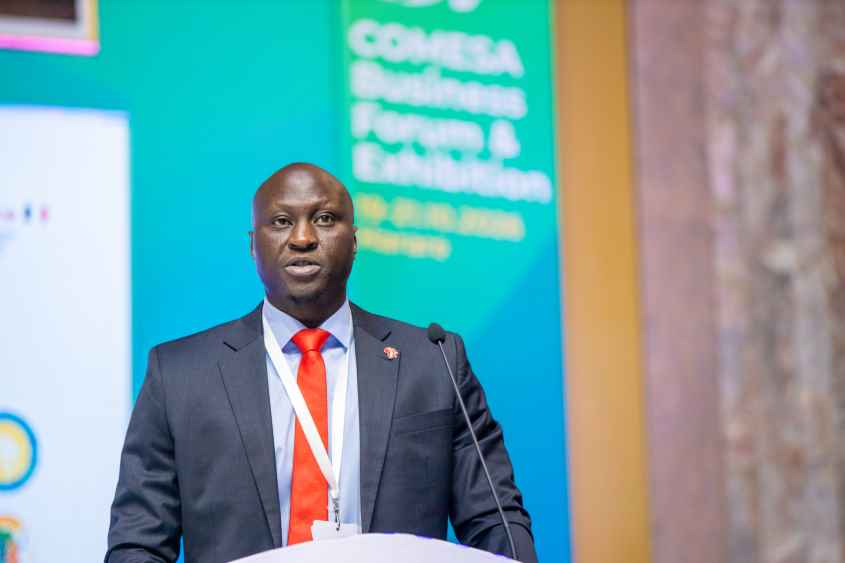
The Coca-Cola system and its value chain supported over 458,200 direct and indirect jobs across the region in sectors including agriculture, manufacturing, retail, transport, and services
- In 2024, the Coca-Cola system contributed USD 3.6 billion in value-added economic activity across the COMESA region.
- The Coca-Cola system and its value chain supported over 458,200 direct and indirect jobs across the region in sectors including agriculture, manufacturing, retail, transport, and services.
- The system spent almost USD 1.5 billion on goods and services from suppliers in COMESA member countries, driving local industry growth and economic resilience.
During the 19th COMESA Business Forum, a major economic platform for promoting trade and regional integration, the Coca-Cola (www.Coca-ColaCompany.com) system unveiled the results of a new study showcasing its significant economic contributions to the COMESA region. The study was conducted by global consultancy Steward Redqueen and highlights the transformative role Coca-Cola plays in fostering economic progress, creating employment, and supporting local industries.
“As this study shows, the Coca-Cola system continues to deliver substantial economic impact in COMESA, creating opportunities through local partnerships, investments, and supply chains,” said Luis Felipe Avellar, President of Coca-Cola’s Africa Operating Unit. “The 19th COMESA Business Forum is an important platform to highlight how businesses like those that comprise the Coca-Cola system contribute to sustainable economic development in Africa.”
The 19th COMESA Business Forum has brought together leaders from across the region to discuss trade, innovation, and economic growth. Coca-Cola’s active participation as a key collaborator demonstrates its alignment with the forum’s mission of building stronger economic ties across the region’s 21 member countries.
For every direct job created by the Coca-Cola system in COMESA, an additional 28 jobs are supported throughout the regional economy
The study revealed that the Coca-Cola system, incorporating its network of bottlers, suppliers, distributors, and retailers, contributed USD 3.6 billion to the region’s combined GDP in 2024, representing 0.3% of COMESA’s GDP. Through direct employment and its value chain, the system supported over 458,200 jobs.
“For every direct job created by the Coca-Cola system in COMESA, an additional 28 jobs are supported throughout the regional economy,” noted Avellar.
In addition to its employment multiplier, the Coca-Cola system’s integration within local economies fuels industrial and community advancement. The report highlighted that Coca-Cola spent almost USD 1.5 billion on suppliers across the COMESA region in 2024, benefitting industries like sugar production, manufacturing, packaging, and logistics.
“The Coca-Cola system operates as a critical economic engine across the COMESA region, empowering local suppliers, retailers, and distributors to thrive,” said Alfred Olajide, Vice President of East and Central Africa Operations at Coca-Cola. “The 19th COMESA Business Forum provides a meaningful opportunity to underscore our commitment not just to delivering beverages, but also driving innovation, collaborations, and sustainable development in the region.”
Beyond economic contributions, the Coca-Cola system continues to champion sustainability and community development initiatives in the region. Several COMESA member states benefit directly from the Coca-Cola system’s Africa Water Stewardship Initiative, a nearly USD 25 million program that addresses water-related challenges across 20 African countries by 2030.
The study leveraged a robust Multi-Regional Input-Output (MRIO) model to capture the Coca-Cola system’s impact across its activities, including operations, local procurement, and extensive value chain linkages. The findings demonstrate how Coca-Cola drives ripple effects through the economy, from agriculture to retail, illustrating the company’s strategic role in driving regional development.
Avellar concluded: “The 19th COMESA Business Forum reaffirms the importance of collaboration in achieving sustainable and inclusive economic growth. We are proud to collaborate with COMESA in building stronger economies and better futures for the communities we serve.”
Distributed by APO Group on behalf of Coca-Cola.
Events
Wuzhen Summit Puts Spotlight on Tongxiang’s Expanding AI Industry
Published
4 hours agoon
October 21, 2026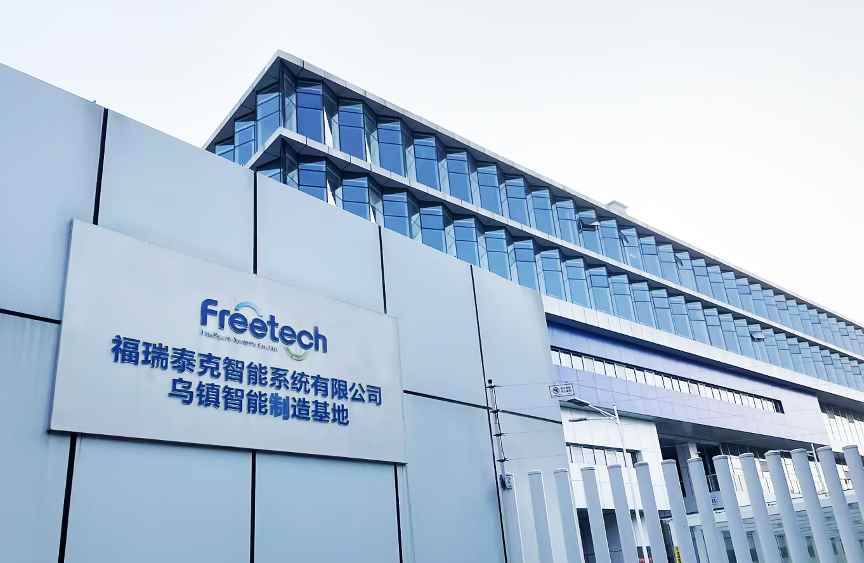
TONGXIANG, CHINA – Media OutReach Newswire – 20 October 2026 – The 2026 World Internet Conference Wuzhen Summit will open on Nov. 2, bringing technology leaders, researchers and companies to the historic water town as Tongxiang firms expand AI applications from commercial cleaning and autonomous delivery to industrial control and data-center cooling.
For Tongxiang, long associated with the annual internet conference, the summit is also a chance to demonstrate how local companies are commercializing AI technologies for customers at home and abroad.
Ahead of the event, reporters visited seven Tongxiang-based companies working in robotics, intelligent vehicles, synthetic data, industrial automation, logistics and computing infrastructure.
Singapore Changi Airport earlier this year placed a fourth order for commercial cleaning robots from CenoBots, a Tongxiang-based company whose machines are used in airports, supermarkets, hospitals, factories and warehouses.
CenoBots has sold products in more than 40 countries and regions. Its customers include Changi Airport, British retailer Tesco, the University of Minnesota and pharmaceutical company Novo Nordisk. This year, the company supplied about 600 autonomous cleaning robots for Tesco Express stores across the United Kingdom.
“Cleaning robots are appearing in more and more settings,” said Shen Jizhong, CenoBots’ co-founder and vice president. “It is much like electric vehicles becoming a familiar sight on the roads — a trend that is gathering pace.”
The company’s machines are adapted to different settings. Hospital robots must move through busy corridors without disrupting patient care, while those used in supermarkets navigate around shoppers and carts. Factory robots operate near forklifts, and airport models must handle both fine debris in carpeted areas and small obstacles on smooth floors.
CenoBots continues to refine its robots through real-world testing, focusing on reliable operation and consistent cleaning performance across diverse environments. The company has expanded its research, development and production facilities in Tongxiang from approximately 3,000 square meters in its early years to more than 20,000 square meters. Local malls, hospitals and sports venues have also served as long-term testing sites.
While CenoBots focuses on service robots, TEEMO is developing the vehicle platforms that support autonomous mobility. The company makes drive-by-wire skateboard chassis and core components for autonomous vehicles used in last-mile delivery, patrols and logistics.
Its standardized chassis can be equipped with different vehicle bodies and hardware for specific uses. One of TEEMO’s strategic customers, autonomous delivery-vehicle maker Zelos, was selected for all lots in China Post’s centralized procurement program for 7,000 autonomous delivery vehicles.
TEEMO’s customers already span the United States, the Middle East, India and Russia, said Zhang Yongjian, the company’s director of operations.
“In some overseas markets, distances are long, populations are dispersed and last-mile delivery is difficult to staff,” Zhang said. “Autonomous delivery vehicles have strong potential there, and overseas business will become an important growth driver for us.”
Other Tongxiang companies are concentrating on the data and perception systems that allow machines to function in physical environments.
Dayan Technology, founded in Tongxiang in May 2025, provides synthetic-data and toolchain services for autonomous-driving and humanoid-robotics companies. It combines real-world data collection, digital twins and simulated training environments to help developers train robots before they are deployed.
Its wearable devices record human movement and interactions with objects. A haptic glove uses liquid-metal and pressure sensors to capture hand gestures, finger movements and contact force. A multi-camera headset records a user’s visual field, body posture, hand movements and the position of nearby objects.
Dayan said its tactile-perception model can process touch signals in milliseconds. The technology is intended to help robots do more than identify objects visually: They can learn how firmly to grip an item, recognize when it is slipping and apply force without causing damage.
Freetech is applying related sensing and decision-making capabilities to intelligent driving. The company develops intelligent-driving systems and 4D imaging radar for passenger and commercial vehicles, and said its technology has been selected for hundreds of vehicle programs.
Its ODIN AI platform supports products at different levels of driving automation. The radar is designed to complement cameras in heavy rain, fog, darkness and abrupt changes in light, including when vehicles enter or leave tunnels.
At its intelligent-manufacturing base in Wuzhen, Freetech is also using AI in production. An in-house system reads customer orders and calculates the components and materials needed for each production line before manufacturing begins. The company said the system has increased overall efficiency by more than 20%.
“Transportation combined with a specialized function will be an important direction for the future,” said Dr. Zhang Lin, Freetech’s founder and CEO.
Freetech sees potential applications beyond passenger vehicles, including robots, elder-care vehicles, mining equipment and agricultural machinery.
Beyond mobility, Tongxiang firms are using AI to address the complexity of industrial operations. Founded in 2019, Shuhan Technologies provides on-premises industrial AI for chemical plants, energy facilities and wastewater-treatment systems. Its AI-driven control layer continuously ingests data from central control systems and field sensors, identifies dynamic conditions and autonomously adjusts operating parameters in real time.
“Fundamentally, all industrial process challenges can be framed as control and optimization problems,” said Zhai Zhengjun, Shuhan’s Chief Technology Officer.
At a coal chemical plant with annual capacity of 1.2 million metric tons, Shuhan said its system reduced raw-material consumption by 6%. The company estimated that the deployment generated more than 176 million yuan, or about $26 million, in annualized economic benefits and reduced carbon emissions by more than 500,000 metric tons.
SENAD is targeting bottlenecks in logistics operations, including loading, unloading, sorting and pallet handling. It develops autonomous loading and unloading robots, as well as a multimodal logistics model called Robot Insight, for sectors including beverages, tobacco, consumer goods, pharmaceuticals and logistics.
Tongxiang’s AI sector also includes companies addressing the infrastructure needed to run increasingly powerful computing systems. SynthCool is tackling a basic constraint of the AI boom: heat.
SynthCool develops two-phase liquid-cooling systems to address the heat generated by increasingly powerful processors. Inadequate cooling can trigger thermal throttling, reducing performance and energy efficiency.
“Heat dissipation is infrastructure,” said Zhu Zhijiang, SynthCool’s general manager.
SynthCool’s two-phase cooling technology uses the latent heat of vaporization to remove heat from processors. The cooling fluid absorbs heat and boils into vapor, which is then condensed back into liquid and recirculated.
Depending on ambient conditions and system design, two-phase cooling can also support free cooling and reduce reliance on compressor-based refrigeration. Waste heat may be recovered where temperatures and local demand make reuse practical.
According to SynthCool, its technology supports heat dissipation of more than 3,000 watts per chip and heat flux above 250 watts per square centimeter. Under comparable cooling requirements, the system requires approximately one-third of the flow needed by conventional single-phase water-cooled cold plates, helping reduce piping requirements and pumping demand.
SynthCool’s portfolio includes two-phase direct-to-chip and immersion cooling solutions, along with distribution units and control systems for AI data centers.
Trending
-
 Events5 days ago
Huawei Commits to Advancing an Intelligent, Green Europe with Customers and Partners
-
 Business5 days ago
CRDB Bank launched FMO and Shelter Afrique partnerships, and renewed its Memorandum of Understanding (MoU) agreement with Afreximbank
-
 Business2 days ago
The Digital Webinar Series builds momentum towards the full Democratic Republic of the Congo (DRC) Critical Minerals & Industrialisation Forum 2027
-

 Business2 days ago
Afreximbank’s Zimbabwe Country Brief explores the country’s Critical Mineral advantage and reform-driven economic outlook
-
Energy1 day ago
Algeria’s Hydrocarbons Minister Joins MSGBC 2026 as Sonatrach Eyes Senegal Partnerships
-
Business1 day ago
Afreximbank and partners advance Africa’s automotive investment agenda at Alamein Africa Forum
-
Sports2 days ago
More Than a Trophy: Africa’s Moment to Champion Women’s Football (By Isha Johansen)
-

 Business1 day ago
26-year China-US friendship highlights grassroots efforts to combat desertification