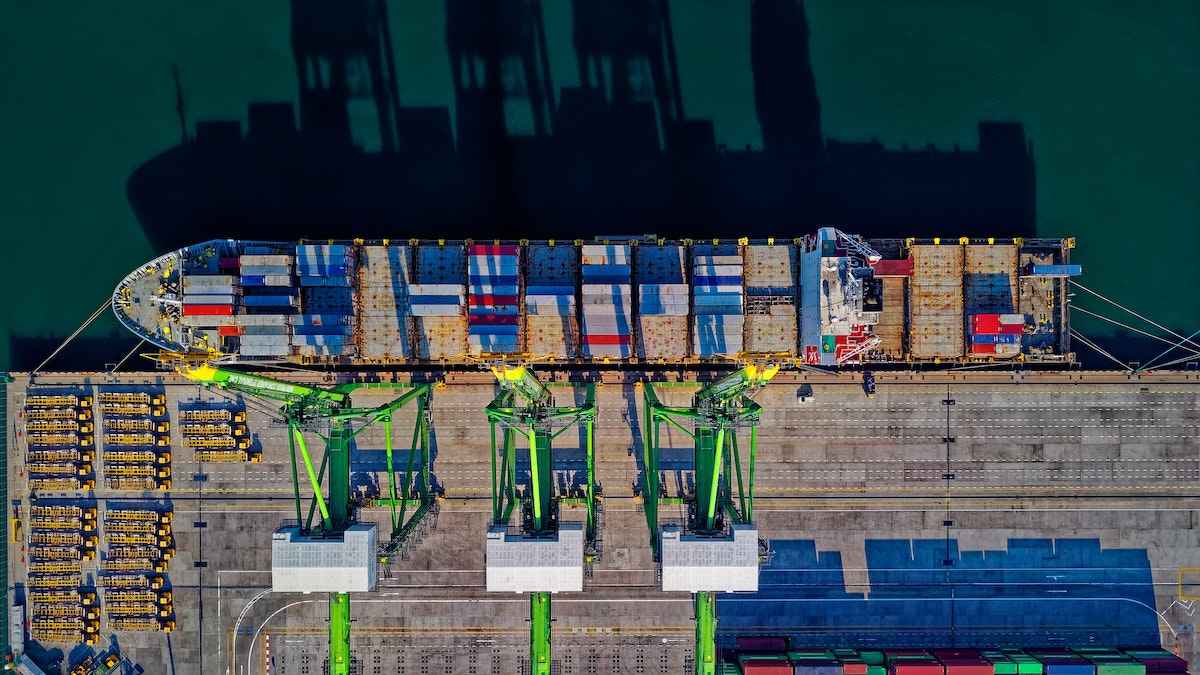
The AfCFTA will bring down trade barriers on the continent, harmonise trade regulations in all member states and in so doing create the largest single market in the world
CAIRO, Egypt, November 28, 2022/APO Group/ —
by Professor Patrick Utomi, Chairperson of the Pan-African Private Sector Trade & Investment Committee (PAFTRAC) (http://PAFTRAC.Afreximbank.com).
The launch this week of the 2022 Africa CEO Trade Survey Report 2022, commissioned by the Pan-African Trade and Investment Committee, was instructive for a number of reasons. The idea that we are now actively seeking the views of our enterprising men and women who provide the goods and services on which we rely is itself worthy of note. In the past, policy makers opted to operate without this context, with predictable results and so we must celebrate all involved for providing this critical angle to the all-important task of supporting businesses, boosting trade and ultimately improving lives and livelihoods on the continent.
The results of the survey themselves paint an interesting picture. It will come as no surprise that African CEOs are slightly apprehensive about the future. Operating in the long shadow of the pandemic, shaken by disruptions in delicate global supply chains, spooked by war and faced with a possible recession, only 50 per cent of CEOs surveyed said they felt confident about the future, a lot less than the 93 per cent who were confident about 2022 when they were asked in 2021. Dependant as we are on the outside world for much of what we consume, it is little wonder that these global crises are literally felt in our kitchens. We cannot carry on like this.
We must recognise the preponderance of micro-small and medium sized enterprise in the continent’s commercial landscape

This is why the confidence that CEOs have in the African Continental Free Trade Agreement is so heartening. When fully implemented, the AfCFTA will bring down trade barriers on the continent, harmonise trade regulations in all member states and in so doing create the largest single market in the world. The benefits from this would be incalculable. Our combined strength will make us an infinitely more attractive destination for investment, encourage value addition and according to the World Bank, raise incomes on the continent by 7 per cent and lift as many as forty million people out of poverty.
This is doable but it means that we have to listen closely to the people who run the businesses, especially the SMES on the continent, address their concerns, anticipate their needs and build an environment that spurs innovation and rewards their hard work. Thankfully, there are important clues in the report that can guide us. What CEOs are telling us is that they need a lot more information – and readily so – about the opportunities of AfCFTA and also about one another. They need facilitation of cross border trade, along with payment systems, that will enable them to take full advantage of trade area. They also need better trade infrastructure and logistics so they can, for example, move their goods from Lusaka to Abidjan as seamlessly as possible. And it goes without saying, they need policymakers across Africa to move quickly to realise this dream that finally seems tantalisingly within reach, almost six decades after decolonisation.
So those are the things we need to do. First of all, we must recognise the preponderance of micro-small and medium sized enterprise in the continent’s commercial landscape. A vast majority of the companies operating in Africa employ less than five hundred people and have less than USD 1 million in annual turnover. This recognition must inform the policies that we make, as we seek to support growth and investment. These companies, often run by women and people, are notoriously starved of capital which handicaps their expansion and compromises their sustainability. We will need to find creative ways to make long term capital to them. We will also have to assist them to achieve quality and standards compliance, improve packaging and gain access to lucrative markets.
Given its nature and objectives, cross-border transactions, payments and ease of movement will be critical to the AfCFTA. This means we must move quickly to formalise cross-border trade, assuring traders of the safety, security and enforceability of transactions, while also facilitating the free movement of people and disencumbering customs processes. I am encouraged by the launch of the Pan-African Payment and Settlements Systems (PAPSS), a home grown system through which traders can make and receive payments across currency lines. In addition, governments also need to invest in trade-enabling infrastructure, such as roads, ports and warehousing.
Information, as indicated by survey respondents, will be essential to this enterprise. Entrepreneurs are, rightfully, enthusiastic about the AfCFTA and the prospects that it represents. But they will need to be armed with as much information as possible so they can fully participate. A one-stop shop, such as the African Trade Gateway, a digital platform developed in partnership with Africa Export-Import Bank, is exactly the type of innovation that entrepreneurs will need and must be encouraged to harness in their quest for information.
Ultimately, a shared purpose and sense of dedication will be required from all of us for the success of the AfCFTA. After decades of trying, we are now truly on our way to a building a common market, achieving self-reliance and fundamentally transforming the nature of our economies. We can’t do this, however, without the entrepreneurs up and down our continent. We must listen to them, work with them and achieve our goals together.
Distributed by APO Group on behalf of Pan-African Private Sector Trade and Investment Committee (PAFTRAC).
With strategic, technical and roundtable discussions, AOG 2026 strengthens its position as Angola’s premier platform for industry dialogue, investment and project development
LUANDA, Angola, March 27, 2026/APO Group/ –The Angola Oil & Gas (AOG) Conference and Exhibition returns to Luanda this September as a bridge connecting global investors and project developers with Angolan projects and partners. At a time when global supply disruptions and geopolitics are sharpening consumer focus on Africa, Angola offers the stability, resource base and investment appeal needed to support long-term security. Reflecting this focus, AOG will once again feature a multi-track program designed to showcase Angolan opportunities to a global audience.
Across three primary tracks – the Strategic, Technical and Roundtables Track – AOG 2026 will bring together policymakers, operators, financiers and technology providers to address challenges and opportunities across the full investment value chain. The expanded program structure underscores the event’s commitment to facilitating targeted discussions that support project development, strengthen partnerships and address the most pressing challenges facing Angola’s oil and gas sector today.
Strategic Track
As Angola continues to position itself as a leading African investment destination, the AOG 2026 Strategic Track will provide a platform for high-level dialogue between government, operators and investors, focusing on the policies, partnerships and capital frameworks required to sustain production and drive new exploration. Taking place across the two-day main conference, the Strategic Track will address the macro and investment-driven themes shaping Angola’s oil and gas industry.
Sessions will cover investment trends, Angola’s upstream competitiveness, advancing deepwater frontier momentum and opportunities in building an Angolan gas economy. Additional discussions will examine oil trade and the impacts of geopolitics, financing solutions for independents, fuel supply security and refining and the economics of local content success.
Technical Track
Running alongside the Strategic Track, the Technical Track will feature a series of presentations and discussions addressing critical operational and technical challenges across Angola’s oil and gas sector. This track will focus on practical solutions and emerging technologies that are shaping the future of the industry.
Topics will include M&A trends and asset transactions, accelerating AI adoption in oil and gas operations, building the next generation workforce and developing decommissioning frameworks for ageing assets. By focusing on operational efficiency, technology deployment and workforce development, the Technical Track will provide valuable insights for companies looking to optimize performance and extend the life of Angola’s producing assets while preparing for the next generation of projects.
Roundtables Track
A strategic feature at AOG, the Roundtables Track will introduce a more interactive discussion format focused on some of the industry’s most complex and strategic issues. These sessions will bring together small groups of stakeholders for targeted discussions on ensuring global compliance, Angola’s licensing landscape, partnerships and the future of upstream development.
Additional topics will include resolving the dollar/kwanza conundrum, the role of local financial institutions in the oil and gas sector and strategies to strengthen collaboration between international investors and local companies. The introduction of the Roundtables Track reflects growing demand for more focused, solution-driven discussions that move beyond traditional conference formats and toward practical problem-solving and partnership building.
Additional Features: Pre-Conference
In addition to the main conference program, AOG 2026 will include a dedicated pre-conference agenda on September 8, setting the tone ahead of the main conference discussions. Pre-conference sessions will cover subsurface imaging and structural analysis, Angola’s fiscals in a global context and strategies for strengthening Angolan institutions.
Several industry-led workshops will also take place, with companies offering insights into the technologies, solutions and tools that are transforming Angola’s oil and gas sector. These sessions are designed to provide practical knowledge sharing while highlighting the role of technology and innovation in improving efficiency and supporting new project development.
With an expanded multi-track program and the introduction of the Roundtables Track, AOG 2026 continues to evolve into a platform designed to drive investment, strengthen partnerships and support the next phase of Angola’s oil and gas growth.
Distributed by APO Group on behalf of Energy Capital & Power.
The participation of Minister Ernesto Kesar at Caribbean Energy Week comes as the country advances new upstream projects, gas developments and regional energy cooperation
PARAMARIBO, Suriname, March 27, 2026/APO Group/ –Ernesto Kesar, Minister in the Ministry of Energy and Energy Industries of Trinidad and Tobago, has officially joined the upcoming Caribbean Energy Week (CEW), reinforcing the country’s commitment to upstream growth at a time of renewed momentum in the oil and gas sector.
As the twin-island country advances new gas supply projects, encourages exploration and strengthens regional energy ties, Minister Kesar’s participation at CEW 2026 is expected to serve as a launchpad for strengthened regional ties.
Minister Kesar’s participation comes amid a multi-billion-dollar investment surge in Trinidad and Tobago as operators advance projects, regional energy ties and strategic partnerships. At the helm of these efforts, the Ministry of Energy and Energy Industries continues to prioritize upstream investment, deepwater exploration and cross-border gas projects, positioning the country as a regional hub for natural gas production and LNG exports.
Recent milestones reflect this momentum, with several projects starting production and exploration kicking off across key basins. The bpTT-led Cypre gas project achieved first gas in April 2025, with peak production estimated at 45,000 barrels per day (bpd) – translating to around 250 million standard cubic feet of gas. The project comprised seven wells and will enhance the country’s overall export capacity. In partnership with EOG Resources, the company also started production at the Mento field in 2025, featuring a 12-slot, attended facility.
Looking ahead, bp’s Ginger gas development is on track for first gas production in 2027 following FID reached in 2025. With an expected capacity of 62,000 bpd, the project will feature four subsea wells tied back to the company’s existing Mahogany B platform. The company is also evaluating development options for its Frangipani exploration well which identified multiple stacked gas reservoirs in 2025. These initiatives will not only bring additional volumes online to support LNG exports and domestic capacity, but strengthen the country’s position as a regional hub for oil and gas.
Beyond projects, Trinidad and Tobago is advancing exploration efforts with a view to strengthen its reserves. The company awarded an ultra-deepwater exploration block to ExxonMobil in 2025, signaling the company’s return to the market after nearly two decades. The milestone not only paves the way for the development of Block TTUD-1, but opens the door to nearly $20 billion in potential investment. The move follows a 2025 licensing round launched by the Ministry of Energy and Energy Industries in 2025, aligning with national goals of revitalizing exploration across deepwater margins.
On a regional front, Trinidad and Tobago is streamlining cross-border collaboration. The country recently secured a license from the United States authorizing oil and gas activities with Venezuela. The approval allows Trinidad-based companies to pursue cross-border gas developments, paving the way for Venezuela to feed new gas volumes into Trinidad and Tobago’s existing LNG and processing infrastructure. The move will not only sustain gas exports but accelerate long-delayed projects such as the Dragon gas field – situated near the maritime border of the two countries.
Trinidad and Tobago is also assessing options to restart the Pointe-a-Pierre refinery, which has been closed since 2018 following the restructuring of state-owned Petrotrin. The government is currently in talks with various partners as well as Guyana to reopen the facility. If brought back online successfully, the facility would support regional energy security efforts, highlighting a strategic opportunity for global and regional investors.
As upstream momentum continues to build, the upcoming CEW 2026 offers a strategic platform to advance dialogue on regional gas monetization, energy security and investment opportunities. Minister Kesar’s participation reflects Trinidad and Tobago’s commitment to strengthening Caribbean energy ties, paving the way for new collaborations and sustained investment.
Distributed by APO Group on behalf of Energy Capital & Power.
CGTN’s special feature explores potential impacts of China’s 15th Five-Year Plan beyond its borders.
BEIJING, CHINA – Media OutReach Newswire – 27 March 2026 – As policymakers and business leaders convene at the Boao Forum for Asia Annual Conference, one of the most closely watched gatherings on the global calendar, attention is turning to China’s national development blueprint: the 15th Five-Year Plan. Beijing’s latest development roadmap arrives at a critical moment, as the world is grappling with geopolitical tensions, economic fragmentation and climate change. With these challenges mounting, many international observers are exploring how this blueprint will shape future development trajectories within China and beyond.
Achim Steiner, former administrator of the United Nations Development Programme, regards green transition, which takes center stage in China’s 15th Five-Year Plan, as one of the defining economic shifts of the coming decades. He emphasizes that China’s leadership on renewable energy, ranging from solar panels to electric vehicles, have not only driven down global costs, but also turned technologies like EVs that were once considered “luxury and privilege” into accessible tools for people’s daily lives. He noted such a giant leap in green technology represents a frontline opportunity for transformation on the African continent, where over 600 million people still lack electricity. Steiner believes the green mindset adopted by Beijing will help many developing nations to avoid catastrophic fallout from climate change. And as certain western nations waver on climate commitments, China’s approach to addressing global warming, in contrast, provides a compelling model of a responsible nation, which suggests that green growth can be a policy priority and allow for win-win progress.
Mohd Faiz Abdullah, executive chairman of the Institute of Strategic and International Studies in Malaysia, situates China’s development strategy within a regional context. He says that the cooperation between China and ASEAN has been contributing to regional and global growth. He described the global economic status quo as “increasingly fragmented,” adding that the key challenge is “not to help one individual economy grow,” but to achieve shared and sustained prosperity “at regional and global levels.” Such a joint task requires shared responsibility in a variety of crucial areas covered in China’s 15th Five-Year Plan, including advanced manufacturing, green transition and technological upgrading. In his view, the development vision demonstrated in China’s 15th Five-Year Plan is not solely inward-looking, but also a domestic model that can convert to outward impact to the wider world. Abdullah also highlighted that China and ASEAN have already formed one of the world’s most dynamic economic partnerships, characterized by expanding investment flows and deepening integration. He believes that the continued implementation of the Regional Comprehensive Economic Partnership will ensure ASEAN and China can work together to achieve shared economic progress for the next decade.
Justin Yifu Lin, former chief economist for the World Bank, argues that while the global economy is mired in uncertainty and turbulence, China remains a rare source of stability, certainty and development momentum. Since about 2008, he noted, China has contributed roughly 30 percent of global growth, underscoring its role as a key engine of the world economy. Acknowledging that challenges are universal rather than unique to China, Lin stressed that what matters is the ability to recognize both constraints and opportunities, and to turn the latter into tangible growth. He pointed to China’s continued potential in technological innovation and industrial upgrading, supported by its large talent pool, vast domestic market, comprehensive manufacturing base and effective coordination between market forces and government policy. While external risks such as supply chain disruptions and trade tensions persist, alongside domestic pressures, including aging and regional development imbalance, Lin suggests China still holds significant growth potential, possibly around 8 percent per year through 2035, if these challenges are well managed.
In a world increasingly defined by uncertainty, China’s 15th Five-Year Plan is deemed as an important source of direction and momentum. As the country aims for a good start to its next five-year development period, seeking to advance modernization through high-quality development, major tasks still lie ahead.
We use cookies on our website to give you the most relevant experience by remembering your preferences and repeat visits. By clicking “Accept”, you consent to the use of ALL the cookies.
This website uses cookies to improve your experience while you navigate through the website. Out of these, the cookies that are categorized as necessary are stored on your browser as they are essential for the working of basic functionalities of the website. We also use third-party cookies that help us analyze and understand how you use this website. These cookies will be stored in your browser only with your consent. You also have the option to opt-out of these cookies. But opting out of some of these cookies may affect your browsing experience.
Necessary cookies are absolutely essential for the website to function properly. These cookies ensure basic functionalities and security features of the website, anonymously.
Cookie
Duration
Description
cookielawinfo-checkbox-analytics
11 months
This cookie is set by GDPR Cookie Consent plugin. The cookie is used to store the user consent for the cookies in the category "Analytics".
cookielawinfo-checkbox-functional
11 months
The cookie is set by GDPR cookie consent to record the user consent for the cookies in the category "Functional".
cookielawinfo-checkbox-necessary
11 months
This cookie is set by GDPR Cookie Consent plugin. The cookies is used to store the user consent for the cookies in the category "Necessary".
cookielawinfo-checkbox-others
11 months
This cookie is set by GDPR Cookie Consent plugin. The cookie is used to store the user consent for the cookies in the category "Other.
cookielawinfo-checkbox-performance
11 months
This cookie is set by GDPR Cookie Consent plugin. The cookie is used to store the user consent for the cookies in the category "Performance".
viewed_cookie_policy
11 months
The cookie is set by the GDPR Cookie Consent plugin and is used to store whether or not user has consented to the use of cookies. It does not store any personal data.
Functional cookies help to perform certain functionalities like sharing the content of the website on social media platforms, collect feedbacks, and other third-party features.
Performance cookies are used to understand and analyze the key performance indexes of the website which helps in delivering a better user experience for the visitors.
Analytical cookies are used to understand how visitors interact with the website. These cookies help provide information on metrics the number of visitors, bounce rate, traffic source, etc.
Advertisement cookies are used to provide visitors with relevant ads and marketing campaigns. These cookies track visitors across websites and collect information to provide customized ads.