Connect with us
Anglostratits

Business

Congo Energy & Investment Forum (CEIF): CLG Workshop Offers Insight into Congo’s Legal Framework
Published

on

Congo

Legal experts from the pan-African group CLG shared insight into the Republic of Congo’s taxation, investment incentives and labor laws

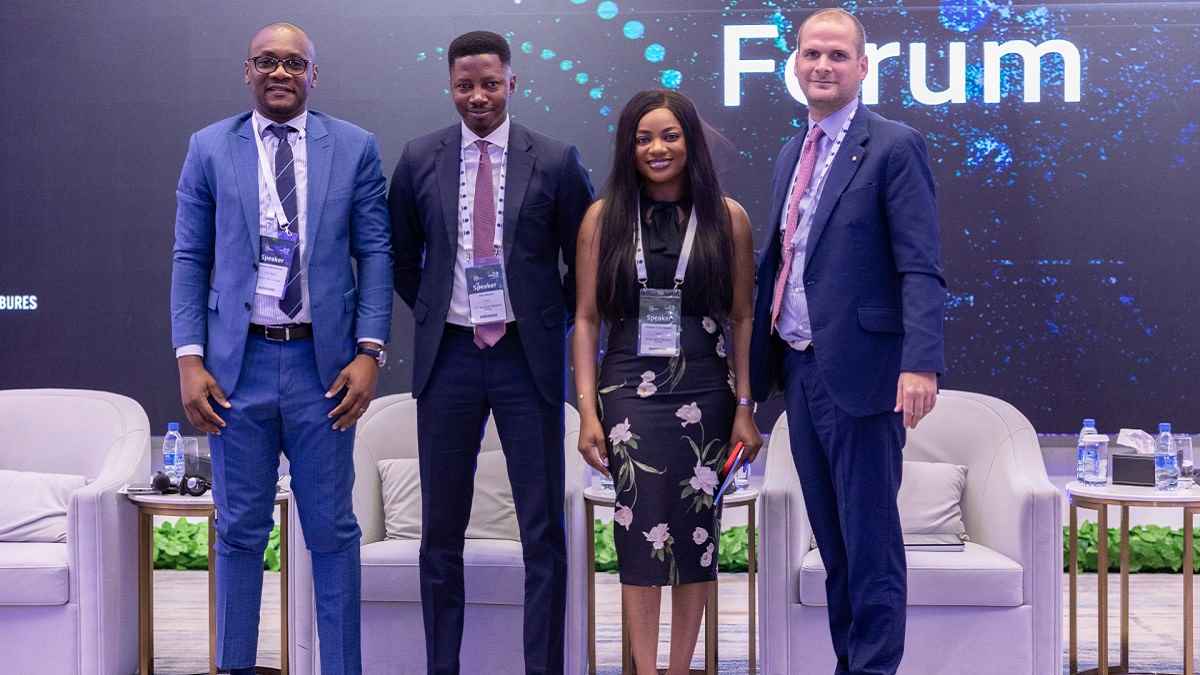
BRAZZAVILLE, Congo (Republic of the), March 24, 2025/APO Group/ –Pan-African legal firm CLG – formerly Centurion Law Group – led a workshop during the inaugural Congo Energy & Investment Forum (CEIF) on the country’s legal and fiscal frameworks. The workshop – Mastering Business in Congo: Challenges and Strategic Solutions for Success –  delved into strategies investors can deploy to navigate the Republic of Congo’s business environment as the country prepares to launch an international licensing round.

As a leading provider of specialized legal and tax advisory services, CLG – a Legal Partner of CEIF 2025 – caters to a diverse portfolio of multinational energy companies. With offices in the Republic of Congo, Germany, South Africa, Nigeria, Mauritius, Ghana, Cameroon, Equatorial Guinea, Namibia and South Sudan, the firm delivers bespoke solutions for a variety of challenges faced by oil and gas companies. The CLG workshop underscored how the firm’s expertise can support oil and gas projects in the Republic of Congo as the country targets 500,000 barrels per day of oil.

“Our goal is to provide solutions by interpreting regulations, ensuring companies can operate freely. We have advisors across several African countries,” stated Zion Adeoye, CEO and Group Managing Partner, CLG.

The country’s strong Central African presence and deep knowledge of the associated legal frameworks gives it an edge in the region’s energy landscape. According to Yves Ollivier, Managing Director, CLG Congo, the firm’s services in the region include M&A transactions, due diligence, legal secretariat services for oil and gas companies and expertise in intellectual property and immigration laws.

Our goal is to provide solutions by interpreting regulations, ensuring companies can operate freely

“We provide legal opinions in various fields, including employment law, corporate structuring and contract negotiations,” he explained.

In addition to these services, CLG has strong expertise in taxation. Daoudou Mohammad, Director: Tax and Legal, CLG Congo, explained that the firm assists companies with tax compliance, fiscal advisory services and global tax audits. “We conduct comprehensive tax reviews and offer targeted training upon request,” he said.

For the Republic of Congo, these services will play a key role in facilitating investment, advancing projects and realizing the country’s energy production goals. Given the complexity of the oil and gas sector, understanding the potential challenges associated with the industry is vital.

Oneyka Cindy Ojogbo, Deputy Managing Director & Partner, CLG, explained that, “Understanding all contractual details is crucial, especially in the gas sector. We have encountered cases where disputes arose due to poorly negotiated agreements. Anticipating potential legal issues is key to mitigating risks.”

Additional challenges include misunderstanding of the requisite taxation laws. Mohammad pointed out that many companies fail to consider available tax exemptions, leading to missed opportunities for fiscal optimization. “A thorough assessment of tax incentives can significantly reduce financial burdens. Companies should proactively evaluate their eligibility for exemptions,” he advised.

Distributed by APO Group on behalf of Energy Capital & Power.

Business

Utilities urged to close the performance gap in smart meter programmes

Published

on

performance

Improved revenue collection, accurate billing and clearer visibility of consumption remain persistent challenges for organisations that have invested in smart metering infrastructure

CAPE TOWN, South Africa, May 12, 2026/APO Group/ –Smart meters have already been deployed across many utilities and municipalities, yet the expected returns are still not being fully realised.


Improved revenue collection, accurate billing and clearer visibility of consumption remain persistent challenges for organisations that have invested in smart metering infrastructure.

To address this gap, ESI Africa, part of VUKA Group, and GridLens Energy will host a live webinar titled “Maximising smart meter returns” on Tuesday, 2 June 2026 from 14:00 to 15:00 SAST.

The webinar will take a practical look at where smart metering programmes underperform after deployment and what utilities, municipalities and energy users can do to improve outcomes from systems already in place.

Across the sector, common challenges include underutilised data, poor system integration, revenue leakage, billing inaccuracies and limited operational visibility. For many organisations, the issue is not whether to invest in smart metering, but how to extract measurable performance from the investment already made.

The session will bring together experts from GridLens Energy, Drakenstein Municipality and eThekwini Municipality to unpack the technical, financial and operational barriers that prevent smart metering programmes from delivering their full value.

Webinar details

Title: Maximising smart meter returns
Date: Tuesday, 2 June 2026
Time: 14:00 to 15:00 SAST
Registration: https://apo-opa.co/4dCRUcD

Expert speakers

  • Carson Dean, Founder, GridLens Energy
  • Hilton Smith, Chief Accountant: Water and Electricity Billing, Drakenstein Municipality, South Africa
  • Sindisiwe Shozi, Chief Engineer, eThekwini Municipality, South Africa

Key discussion points will include:

  • Why smart meter programmes often fail to deliver expected returns
  • Where value is lost across data, systems and operations
  • How to improve billing accuracy and reduce revenue leakage
  • The role of integration and interoperability in improving performance
  • Practical approaches to extracting more value from existing deployments

The webinar is designed for utilities, municipalities, metering teams, billing departments, revenue managers, infrastructure decision-makers, large commercial and industrial energy users, technology providers and system integrators.

Smart metering investment has already been made. The priority now is performance.

Register for the webinar here:
https://apo-opa.co/4dCRUcD

Distributed by APO Group on behalf of VUKA Group.

Continue Reading

Energy

Global Energy Bodies Converge at African Energy Week (AEW) 2026 to Shape the Continent’s Energy Future

Published

on

African Energy Chamber

From electrification to refining resilience and exploration strategy, leading international alliances will bring a systems-level approach to Africa’s evolving energy landscape at African Energy Week 2026

CAPE TOWN, South Africa, May 11, 2026/APO Group/ –As Africa accelerates efforts to balance energy security, industrial growth and decarbonization, African Energy Week (AEW) 2026 will convene a powerful cohort of global associations whose work is increasingly defining the trajectory of the continent’s energy systems. The participation of Nikki Martin, President & CEO of EnerGeo Alliance; Anibor Kragha, Executive Secretary of the African Refiners & Distributors Association (ARDA); and Carol Koech, Vice President for Africa at the Global Energy Alliance for People and Planet (GEAPP), signals a shift toward deeper coordination across the full energy value chain – from subsurface data and upstream investment to downstream infrastructure and universal energy access.


EnerGeo Alliance, under Martin’s leadership, has been advancing the role of geoscience and data-driven exploration in de-risking investments across frontier markets. Its recent strategic engagements, including partnerships supporting renewed exploration activity in countries such as Libya, reflect a broader push to bring technical rigor and investor confidence back into African upstream sectors. By strengthening the link between subsurface intelligence and policy decisions, EnerGeo is helping governments position their resources more competitively in a capital-constrained global market.


Complementing this upstream focus, ARDA has been at the forefront of reinforcing Africa’s downstream resilience. At its 2026 annual conference, the association underscored energy security as a top priority, with refiners across the continent moving to shield themselves from global market volatility and supply disruptions. This comes as Africa continues to expand refining capacity and reduce dependence on imported petroleum products, a shift that is critical not only for economic sovereignty but also for stabilizing domestic energy markets. ARDA’s work increasingly intersects with broader industrialization goals, positioning refining and distribution networks as key enablers of growth.


The participation of organizations like EnerGeo Alliance, ARDA and GEAPP reflects the increasing alignment we are seeing across the global energy landscape

Bridging these traditional energy systems with the continent’s long-term transition ambitions is GEAPP, where Koech leads the organization’s Africa strategy. The alliance has rapidly emerged as a central force in mobilizing blended finance for large-scale electrification and renewable deployment. In 2026, GEAPP and its partners surpassed $100 million in commitments to support Mission 300 – an initiative aimed at connecting 300 million Africans to electricity by 2030 – while simultaneously working to unlock far greater flows of public and private capital. Through technical assistance, project development and market-shaping interventions, GEAPP is helping translate high-level ambition into bankable projects across nearly two dozen countries.


“African Energy Week has always been about bringing together the right partners at the right time,” said NJ Ayuk, Executive Chairman of the African Energy Chamber. “The participation of organizations like EnerGeo Alliance, ARDA and GEAPP reflects the increasing alignment we are seeing across the global energy landscape. These are institutions that are not only shaping policy and investment, but actively delivering solutions on the ground – and their engagement at AEW 2026 will be instrumental in advancing Africa’s energy ambitions.”


As AEW continues to evolve into a platform for integrated energy dialogue, the inclusion of these global associations reinforces its role as a convening point for the partnerships that will define Africa’s next phase of growth. Their participation reflects the growing recognition that Africa’s energy future cannot be addressed through fragmented approaches, but through coordinated action across sectors, institutions and geographies.

Distributed by APO Group on behalf of African Energy Chamber.

Continue Reading

Business

From Megawatt (MW) to Gigawatt (GW): Why Africa Must Think in Grid-Scale Power to Compete in the Artificial Intelligence (AI) Economy

Published

on

African Energy Chamber

As AI infrastructure drives power demand into the gigawatt range, Africa must move beyond incremental energy planning – placing grid-scale generation at the center of discussions at African Energy Week 2026’s AI and Data Center Track

CAPE TOWN, South Africa, May 11, 2026/APO Group/ –The rapid expansion of artificial intelligence is fundamentally reshaping global energy demand, with implications that extend well beyond traditional power planning. Nowhere is this more apparent than in the growing energy footprint of data centers. Facilities that once required tens of megawatts are now being developed at 100–200 MW scale, with hyperscale campuses increasingly aggregating demand into the gigawatt range.


This shift presents a structural challenge for Africa. While the continent is rich in energy resources, its planning frameworks remain largely oriented around incremental, megawatt-scale additions – often tied to localized demand or short-term capacity gaps. In the context of AI-driven infrastructure, this approach is increasingly misaligned with the scale and concentration of future demand.

Africa’s data center sector, while growing, remains at an early stage. Operational capacity currently stands at approximately 300–400 MW, with projections reaching 1.5–2.2 GW by 2030. At the same time, demand is accelerating rapidly: electricity consumption from data centers is rising at 20–25% annually and is expected to reach around 8,000 GWh in the near term. This growth mirrors a broader global surge, with data center power demand projected to approach 945 TWh by 2030, driven largely by AI workloads.

This is ultimately about aligning Africa’s energy strategy with where global demand is heading

What distinguishes AI-related demand is not only its scale, but its concentration and consistency. Unlike many traditional industrial loads, data centers require uninterrupted, high-quality power, often with built-in redundancy. This places new demands on grid design, prioritizing stability, capacity and long-term scalability over incremental expansion.

Meeting these requirements will require a departure from conventional planning models. Rather than adding capacity in small increments, there is a growing case for developing gigawatt-scale generation aligned with emerging digital infrastructure hubs. This means integrating power generation, transmission and data center development into coordinated investment strategies, particularly in markets with strong resource bases and improving regulatory environments.

It also requires a shift in how excess capacity is viewed. In many African power systems, surplus generation has historically been treated as a financial inefficiency. In the context of AI and digital infrastructure, however, maintaining a margin of available capacity can enhance grid stability, reduce outages and provide the flexibility needed to support rapid load growth, while creating a foundation for broader industrial development.

A useful benchmark can be seen in Northern Virginia, the world’s largest data center market, where installed capacity has now exceeded 4 GW and more than 1 GW of new supply was added in a single year, reflecting the rapid pace at which hyperscale infrastructure is being deployed. Driven by major cloud and AI players, demand has tightened the market significantly, with vacancy rates approaching zero and most new capacity released well in advance. The scale and speed of development highlight how quickly data center demand is expanding – and underscore the level at which infrastructure must be planned.

These dynamics are increasingly shaping the policy conversation. At African Energy Week 2026, the AI and Data Center Track will focus on the infrastructure required to support this transition, with a particular emphasis on aligning energy planning with digital economy objectives. As AI infrastructure scales, reliable and abundant power is no longer a supporting factor, but a prerequisite.

“This is ultimately about aligning Africa’s energy strategy with where global demand is heading,” says NJ Ayuk, Executive Chairman of the African Energy Chamber. “If we continue to plan in megawatts, we will struggle to compete in an economy that is already moving at the gigawatt scale. Building larger, more resilient power systems is not just about meeting demand – it is about creating the conditions for investment, innovation and long-term growth.”

Distributed by APO Group on behalf of African Energy Chamber.

Continue Reading

Trending