Connect with us
Anglostratits

Business

Congo: CLG Experts Unpack Upcoming Gas Code and Investment Opportunities

Published

on

Congo-

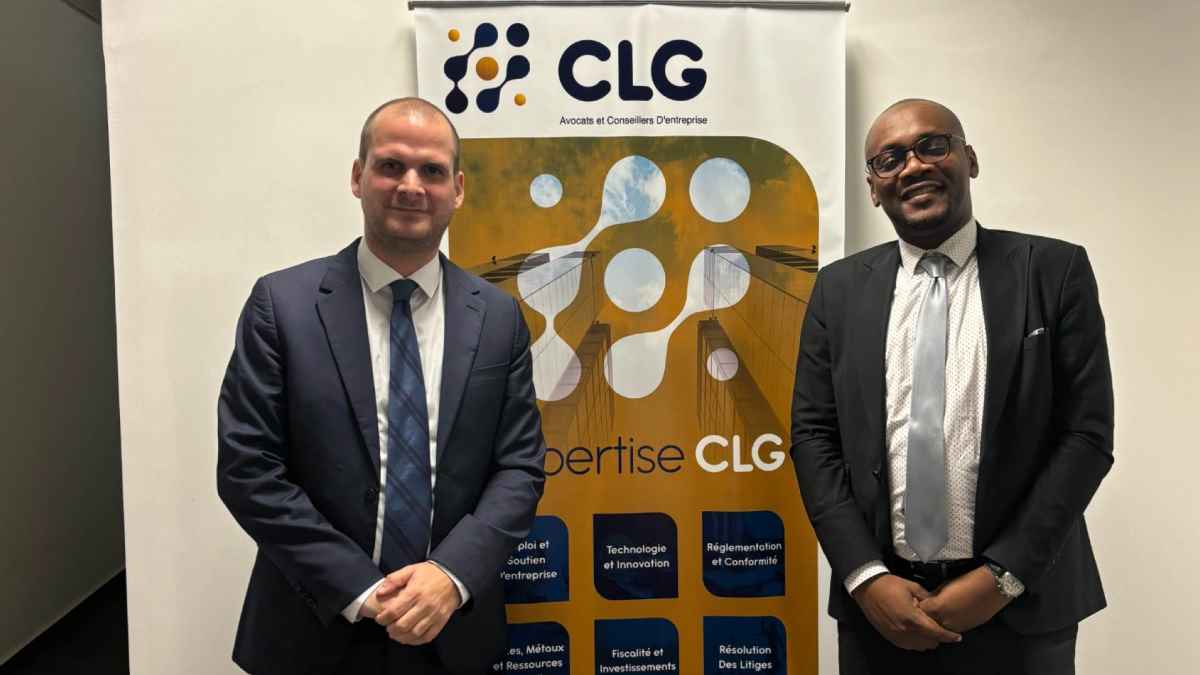
Speaking with ECP, Yves Ollivier, Managing Director and Daoudou Mohammad, Director of Tax & Legal at CLG, discussed Congo’s upcoming Gas Code, regulatory reforms and opportunities in the energy sector

BRAZZAVILLE, Republic of the Congo, February 12, 2025/APO Group/ –The matter of the gas code will undoubtedly be discussed at the Congo Energy & Investment Forum, taking place from March 24-26, 2025, in Brazzaville. This regulatory milestone aims to provide a clear and structured framework for gas exploration, production and commercialization, boosting investor confidence and unlocking the full potential of the country’s vast natural gas reserves. As part of the forum, CLG Congo, a leading legal and commercial advisory firm in the energy sector, will play a key role in discussions surrounding regulatory reforms. In an interview with Energy Capital & Power (ECP) (www.EnergyCapitalPower.com), Yves Ollivier, Managing Director and Daoudou Mohammad, Director of Tax & Legal at CLG, shared their insights on the country’s upcoming Gas Code, regulatory landscape and upcoming opportunities.


Please provide an overview of CLG’s current activities in the Congo, particularly in relation to the energy sector? 

CLG Congo is a leading provider of legal, tax, and commercial advisory services, working closely with oil and gas companies. In 2024, CLG was involved in Trident Energy’s acquisition of Chevron and TotalEnergies’ interests in the Lianzi, Nkosa and Nsoko 2 and Moho Bilondo fields. Trident now holds15,75% in Lianzi field, 85% in Nkosa and Nsoko 2 fields and 21.5% in Moho-Bilondo. To expand our client base, we actively participate in major energy events, such as African Energy Week in Cape Town and are honored to partner with Capital Energy & Power as legal counsel for CEIF 2025.

How does the Republic of Congo’s legislative framework impact foreign investment in hydrocarbons? 

Historically, about 80% of direct investments in the country come from oil and gas, reflecting its economic dependence on hydrocarbons. To enhance investment conditions, the government has created investment promotion structures, including a Public-Private Partnership (PPP) Agency and a dedicated Ministry for International Cooperation and for Public-Private Partnership.

The 2016 Hydrocarbons Code introduced competitive bidding for exploration rights, increasing transparency and investor confidence. However, a Gas Code is still needed to provide a specific legal framework for natural gas investments. The current draft, developed with international institutions, aims to secure foreign capital and streamline regulations for a more competitive and structured industry.

What fiscal incentives does Congo offer to attract energy investments? 

The government provides among others, corporate tax exemptions and progressive tax reductions for oil and gas projects, negotiated within the Production Sharing Contracts. Companies also benefit from customs incentives, such as the IM5 temporary import regime, allowing tax-free equipment imports under the condition of re-export. These measures lower entry costs for investors and enhance profitability.

What are the key expectations from the Gas Code and how could the regulatory framework improve investment conditions? 

The Gas Code, expected in 2025, will provide a clear legislative framework for gas monetization, fiscal terms, and resource management. The draft was presented to gas companies in late 2023, and after modifications, is set for final approval. Additionally, the Gas Master Plan, developed by SNPC and McKinsey, aims to boost investment and expand gas utilization in Congo.

Another key issue is the VAT decree (2023-1337), which extends VAT to previously exempt oil and gas operations. There are ongoing discussions between the government and industry players to find a compromise that suits all parties.

How does the regulatory framework impact local content development in the oil and gas industry? 

Despite 2019 local content decrees, enforcement remains a challenge. The law mandates 70% Congolese employment in management roles, but lacks clear compliance mechanisms. Companies try to follow the guidelines, but without effective monitoring, implementation varies. Strengthening verification processes is essential for sustainable workforce development in the sector.

What are your key expectations for the Congo Energy & Investment Forum 2025? 

We see this as an opportunity to engage with foreign investors and showcase Congo’s gas potential, which includes proven reserves of 284 billion cubic meters and significant ongoing projects such as Eni’s Tango FLNG and Wing Wah’s Banga Kayo Gas Project. The forum will allow direct dialogue with policymakers, enabling us to propose solutions for industry challenges such as the Gas Code finalization and fiscal reforms. We also aim to highlight investment opportunities and regulatory reforms. Discussing topics like the Gas Code, VAT decree, and Hydrocarbons Code updates is crucial to ensuring a competitive and attractive investment environment.

Distributed by APO Group on behalf of Energy Capital & Power.

Business

RusselSmith Formally Transitions to Arridex

Published

on

Nigeria

The change reflects the significant expansion of the organisation’s capabilities and the breadth of industries it now serves

LAGOS, Nigeria, June 12, 2026/APO Group/ –Arridex (www.Arridex.com), formerly RusselSmith, recently announced its formal change of name, registered with the Corporate Affairs Commission of Nigeria. The change reflects the significant expansion of the organisation’s capabilities and the breadth of industries it now serves, which extend well beyond the oil and gas services with which it began operations in the early 2000s.


Founded as an asset integrity company serving Nigeria’s oil and gas sector, the organisation has grown into a multi-sector industrial technology group operating across oil and gas, maritime, aerospace, defence, construction, and manufacturing. Its subsidiaries cover engineering and construction delivery, autonomous systems development, and advanced technology products, in addition to its industrial additive manufacturing and asset integrity operations.

Arridex is the name of the company built over two decades and raised intentionally to enable industrial resilience in Africa

The organisation holds Pioneer Status in additive manufacturing, granted by the Nigerian Investment Promotion Commission (NIPC), and is the first company qualified by the Nigerian Upstream Petroleum Regulatory Commission (NUPRC) for additive manufacturing deployment in the oil and gas sector. Both represent formal recognition of Arridex’s capabilities and its role in building indigenous industrial capacity at scale. With more than twenty years of continuous delivery, Arridex holds certification to ISO 9001:2015 and ISO 45001:2018, underpinning an integrated management system that governs its operations across all sectors, and has recorded zero lost time incidents across over seven million man hours of operations.

The name change coincides with a significant operational milestone. The Arridex Omnifactory, West Africa’s first multi-technology industrial additive manufacturing facility, has been commissioned in Lagos. The Omnifactory integrates multiple additive manufacturing technologies including Laser Powder Bed Fusion (L-PBF), Cold Spray, Fused Filament Fabrication (FFF), and Selective Laser Sintering (SLS) under one roof, enabling on-demand production of industrial components, spares, and improved part designs for critical industries. The Omnifactory’s large-format additive manufacturing capabilities also enable the production of large-scale structures, including full-size marine components. Its commissioning is the clearest measure of the distance that Arridex has travelled from its origins.

Africa’s critical industries have for decades depended on components and specialist expertise imported from outside the continent, with supply chains that routinely extend across multiple jurisdictions and lead times that affect operational continuity for asset owners when dealing with legacy parts. The Omnifactory manufactures industrial components and parts on demand in Lagos, helping to build operational resilience in critical industries.

Kayode Adeleke, Group Chief Executive Officer of Arridex, said: “The name RusselSmith defined what we were at the start. Arridex defines what we have built. The dependency of African industry on fragile supply chains is a structural problem that this continent has accepted for too long. The Omnifactory is a concrete answer to the challenge of manufacturing sovereignty. Arridex is the name of the company built over two decades and raised intentionally to enable industrial resilience in Africa.”

Arridex is a Designated Strategic Partner of the Commonwealth Enterprise and Investment Council (CWEIC) and serves clients across Nigeria and the wider African region. The organisation has a joint venture partnership with the Defence Industries Corporation of Nigeria (DICON) for military-grade additive manufacturing, is a member of the Manufacturers Association of Nigeria (MAN) and is also a member of the Defence Industries Association of Nigeria (DIAN). With the Omnifactory commissioning in June 2026, Arridex enters its next phase of operations under a name that reflects the full scope of what it has built.

Distributed by APO Group on behalf of Arridex.

Continue Reading

Events

New Quality, Shared Future – Beijing CBD Extends a Global Invitation for Cooperation

Published

on

Beijing

If there are only three days to understand China’s economic development, Beijing CBD is a good place to start.
BEIJING, CHINA – Media OutReach Newswire – 12 June 2026 – In mid-June this year, 2026 Beijing CBD Forum Annual Conference will be held as scheduled. Nearly ten thousand participants from five continents will gather here, with international speakers accounting for more than 50% of the lineup. Yet the Forum is but a window; the true landscape worth the world’s attention lies just outside – the central business district itself.

“International Density” on Seven Square Kilometers

In the core area of Beijing CBD – a mere seven square kilometers – nearly 16,000 foreign-funded institutions and 125 regional headquarters of multinational corporations (MNCs) are located. This represents half of all MNC headquarters resources in Beijing.

This is no coincidence. The district is one of China’s most internationally oriented, service-rich, and mature international business zones. From law firms and consultancies to financial institutions, the world’s top professional services firms have formed a complete ecosystem here.

What makes the area even more valuable for overseas companies and organizations is that policies here are not just written on paper – they are embedded in actual processes.

From pilot schemes on cross-border data flows, to facilitated access for foreign financial institutions, to one‑stop service desks for international talent – Beijing CBD has long served as a pilot zone for institutional opening‑up. Foreign enterprises find that issues they encounter here tend to be addressed and resolved more quickly.

During this year’s Beijing CBD Forum annual conference, the Ambassadors’ Roundtable Dialogue will establish a regular communication mechanism, and the “International Delegations’ China Tour” will allow overseas business representatives and zone managers to conduct in‑depth site visits and exchange experiences. What is even more noteworthy, however, is that such exchanges are not confined to the Forum – they continue year-round here.

Beijing CBD: A Sincere and Pragmatic Invitation

Artificial intelligence, the digital economy, green technologies – these areas, known as “new quality productive forces,” are not empty buzzwords here. The Forum includes dedicated sessions on technological innovation, financial opening‑up, law-business integration, cultural industries, and international consumption. Yet what truly deserves the attention of potential international partners is the industrial foundation behind these topics.

Beijing CBD is home to the densest concentration of foreign financial institutions and cross‑border capital in China. A large number of tech companies are engaged in cross‑sector collaboration with traditional industries here. High‑end professional services – international law, arbitration, compliance – are highly concentrated, providing support for both inbound and outbound business activities. Moreover, as the starting area of the city’s international demonstration zone for law-business integration, the district continues to focus on strengthening the rule of law in commercial affairs, improving its legal services framework, enhancing the resolution of international commercial disputes, and fostering a stable, transparent, predictable, and internationally competitive business environment. In the future, Beijing CBD will build a one‑stop legal and commercial service platform that integrates legal, auditing, intellectual property and other professional resources to precisely serve companies going global and managing cross‑border operations.

Here, you will find that its vitality derives mainly from genuine business judgments about market opportunities. For enterprises, the cooperation logic here is predictable, commercial, and sustainable.

Beijing CBD is not merely a striking poster – it is a real‑world district where hundreds of thousands of business people move every day, thousands of foreign‑funded institutions operate, and countless cross‑border transactions take place.

If you are looking for a stable gateway to the Chinese market, or a high-level hub to connect global resources with local applications, it deserves your consideration.

The Forum’s 2026 annual conference lasts only three days. But Beijing CBD is open all year round.


Continue Reading

Business

20th Islamic Development Bank (IsDB) Global Forum on Islamic Finance to Convene in Azerbaijan

Published

on

IsDBI

Marking its 20th edition, the forum serves as a flagship platform for high-level dialogue, convening policymakers, regulators, development practitioners, academics, and industry leaders to advance innovation and development in Islamic finance

The Islamic Development Bank Institute (IsDBI) (https://IsDBInstitute.org/) will host the 20th IsDB Global Forum on Islamic Finance in Baku, Azerbaijan on 17 June 2026 under the theme “Achieving Sustainable Prosperity through Islamic Finance,” in conjunction with the IsDB Group Annual Meetings.


Marking its 20th edition, the forum serves as a flagship platform for high-level dialogue, convening policymakers, regulators, development practitioners, academics, and industry leaders to advance innovation and development in Islamic finance. This year’s forum will focus on strengthening regional integration and unlocking sustainable growth across IsDB member countries through Islamic finance solutions.

The forum will examine how Islamic finance can help address structural development challenges, including “development traps” that constrain inclusive growth and resilience. It will also highlight innovative Islamic social finance mechanisms, particularly Awqaf Free Zones, as tools for mobilizing sustainable resources to support food and energy security.

Key highlights of the forum include keynote speeches, launch of a new report on the prospects of Islamic Finance in Azerbaijan alongside other flagship publications, announcement of a memorandum of understanding between IsDBI and Labuan Financial Services Authority, distinguished panel discussion sessions, and unveiling of top achievers in the Applied AI in Islamic Finance Competency Challenge.

H.E. Taleh Kazimov, Governor of the Central Bank of the Republic of Azerbaijan, will deliver the first keynote speech, followed by Eng. Adeeb Yousuf Al Aama, Chief Executive Officer of ITFC, whose speech will be on behalf of the IsDB Group. Dr. Sami Al-Suwailem, Acting Director General of IsDBI, will deliver the welcome remarks.

The first panel session will explore how Islamic finance can help countries overcome development barriers and achieve sustainable economic transformation. The panelists include Mr. Shahin Aydin Mahmudzade, Executive Director, Central Bank of Azerbaijan; Mr. Adnan Zaylani, Deputy Governor, Bank Negara Malaysia; Ms. Mihoko Kumamoto, Director, Division for Prosperity, UNITAR; Dr. Bambang Brodjonegoro, Dean, Asian Development Bank Institute; and Dr. Areef Suleman, Chief Economist, IsDB Group. The session will be moderated by Mr. Mustafa Adil, Head of Islamic Finance, London Stock Exchange Group.

The second panel session will examine innovative approaches to mobilizing Islamic social finance, particularly through Awqaf Free Zones, to address global food and energy challenges. The speakers include Mr. Valeh Alasgarov, Chairman of the Board, AFEZ Authority, Azerbaijan; Dr. Mansur Muhtar, Chairman of the Board, Bank of Industry, Nigeria; Professor Emeritus Dato’ Dr. Azmi Omar, President & CEO, INCEIF University; and Mr. Orkhan Vidadi oglu Mammadov, Chairman, Small and Medium Business Development Agency of Azerbaijan (KOBİA). The session will be moderated by Mr. Yahya Rehman, Associate Manager, IsDBI.

The forum is expected to generate actionable recommendations, strengthen partnerships, promote stakeholder collaboration, and advance innovative, AI-enabled tools to support the growth of Islamic finance globally.

More information about the forum is available on IsDBI website here.

Distributed by APO Group on behalf of Islamic Development Bank Institute (IsDBI).

Continue Reading

Trending