Connect with us

Business

Coal Could Provide African Small to Medium-sized Enterprises (SMEs) Much-Needed Fiscal Relief Amid Escalating Fuel Prices

Published

on

African Energy Chamber

With Brent crude escalating above $100 per barrel in March and diesel costs spiraling, coal is re-entering the conversation as a domestic, financeable power solution for small businesses under pressure

CAPE TOWN, South Africa, March 27, 2026/APO Group/ –Africa continues to face significant implications from the ongoing Gulf war, with Brent prices fluctuating from $81 per barrel on March 3 to $112 on March 12 and back down to $98 on March 25. But escalating crude prices bring challenges beyond imports, with African economies which rely heavily on diesel-fired power generation now faced with both unreliable supplies and heightened fuel costs. This challenge is most felt by small to medium-sized enterprises (SME), which now face a punishing rise in power costs at a time when margins are already under pressure.


In this environment, coal-fired power generation deserves renewed attention. With reserves estimated in the hundreds of billions of tons, Africa’s coal market stands to offer the fiscal relief many African SMEs require. As geopolitical tensions continue to mount across the Gulf and prices face even greater fluctuation in the near-term, the question is no longer whether coal-fired power generation is politically fashionable, but how African economies can utilize the resource to stabilize power costs, preserve foreign exchange and support business continuity.

Escalating Fuel Prices Pose Significant Challenge for African SMEs

Prices at the pump have escalated in recent weeks, leaving diesel-reliant businesses faced with even greater fiscal pressure. This comes as diesel generation has become a default for many SMEs operating across Africa, owing to unreliable grid infrastructure. Even the continent’s biggest economy South Africa has seen businesses move to diesel as constrained grid capacity and loadshedding impacts power access. Supply disruption at the Strait of Hormuz and escalating crude prices have placed further strain on the fuels so many African SMEs rely on.

Nigerian fuel prices have reached upwards of ₦1,000 per liter in March 2026, due to price hikes by the Dangote Refinery and fluctuations in international markets. This represents a 39.5% increase since February, the second highest increase globally. Zimbabwean fuel prices have surged to record highs, with diesel averaging $2.18 per liter and petrol also exceeding $2 per liter. The country currently features the highest fuel prices across all SADC nations. Botswana also faces potential fuel price increases, while Ugandan fuel prices continue to experience volatility, with prices varying by location and supplier.

When African businesses are being crushed by imported fuel costs, using domestic coal to keep factories running and SMEs alive is not a step backward

Why Coal Matters for SME Competitiveness

Coal offers the lifeline so many African SMEs need. Countries such as Nigeria, Zimbabwe, Botswana and Uganda all possess significant coal reserves and the shift to coal-fired power generation can not only help reduce the dependence on imported fuels but create a more predictable electricity cost structure for local businesses. Nigeria holds 9.8 billion cubic meters (bcm) of coal reserves, Zimbabwe is home to 502 million cubic meters (mcm), Botswana has 1.6 bcm and Uganda possesses 800 mcm.

For African SMEs, affordable and reliable electricity is often the difference between expansion and stagnation. Coal-fired power can offer a lower-cost alternative that supports manufacturing and commercial growth. It also opens the door to more bankable long-term planning, while offering stability during times of global supply shocks. With many African countries already integrating coal within their broader energy systems, scaling up generation and distribution could directly impact sovereign resilience.

“When African businesses are being crushed by imported fuel costs, using domestic coal to keep factories running and SMEs alive is not a step backward – it is a rational act of economic self-defense,” states NJ Ayuk, Executive Chairman, African Energy Chamber.

AEW 2026 Puts Coal Back into the Conversation

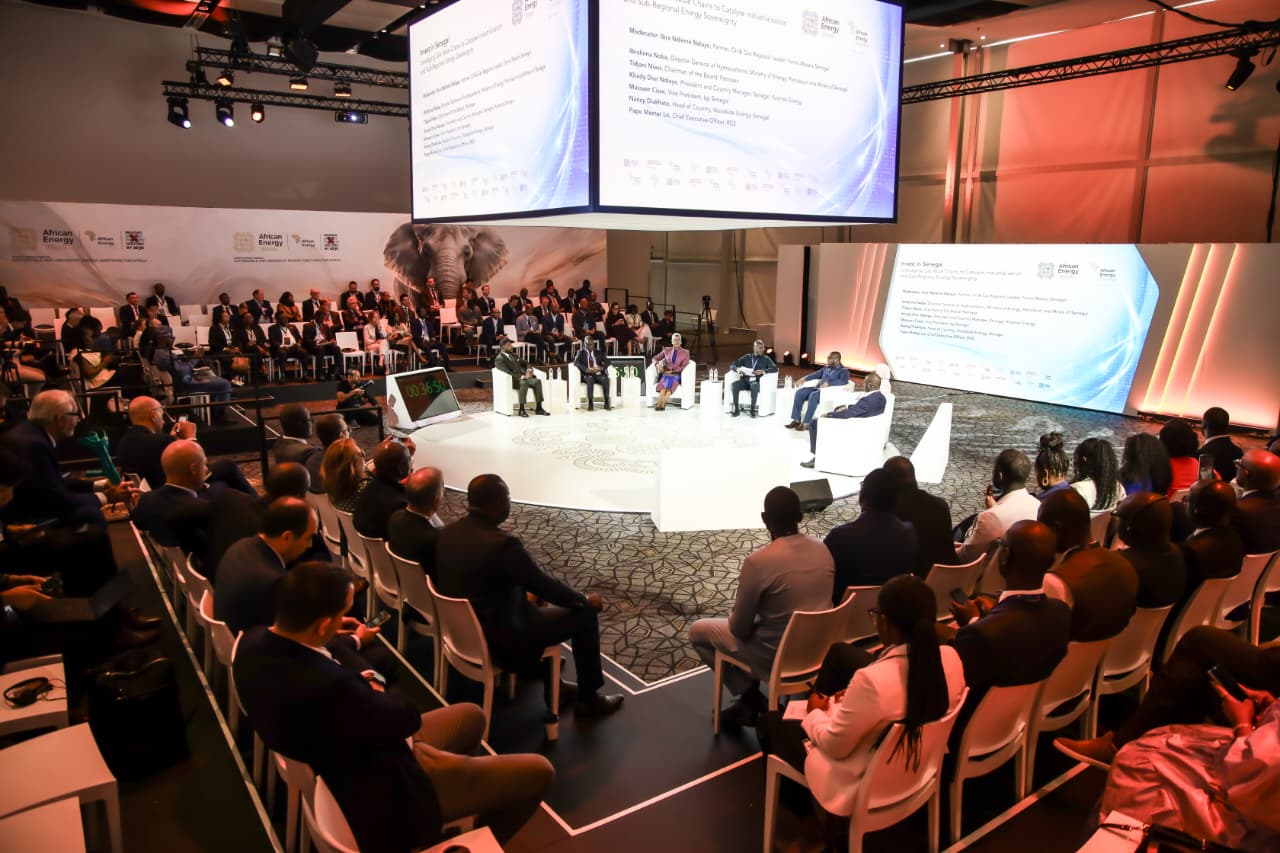
This is precisely why African Energy Week (AEW): Invest in African Energies 2026 remains such an important platform. Over the past several years, the event has hosted discussions around coal, including the application of clean coal technologies and the role of coal in broader power generation strategies. At a time when energy security, industrialization and affordability are moving back to the center of policymaking, those conversations are becoming more urgent.

Rather than approaching coal through an ideological lens, AEW 2026 provides a venue to examine where and how it can fit into Africa’s power mix in practical terms. That includes discussions around cleaner technologies, efficiency gains, financing models and the role coal can play in supporting productive sectors that cannot function on intermittent or high-cost power alone. AEW 2026 returns to Cape Town from October 12-16, 2026.


Distributed by APO Group on behalf of African Energy Chamber.

Business

West African Development Bank (BOAD) and PROPARCO Launch a Landmark €200 Million Cross-Financing Operation to Boost the Private Sector in the West African Economic and Monetary Union (WAEMU) Region

Published

on

This structure directly addresses current challenges related to reforming the global financial architecture by introducing an innovative and catalytic financial instrument

Together with BOAD, we are reaching a major milestone in our commitment to boosting financing for African economies, particularly within the WAEMU region

NAIROBI, Kenya, May 14, 2026/APO Group/ –On the sidelines of the Africa Forward summit, the West African Development Bank (BOAD) (www.BOAD.org) and PROPARCO, a subsidiary of the AFD Group, announced the signing of an unprecedented €200 million financing agreement (equivalent to approximately CFAF 131 billion). Structured by Galite as a cross-currency transaction between the euro (EUR) and the CFA franc (XOF), this operation is a global first in both its nature and ambition.


This structure directly addresses current challenges related to reforming the global financial architecture by introducing an innovative and catalytic financial instrument. It enables:

More efficient allocation of resources through expanded access to the XOF market, helping diversify financing options for local businesses;

Greater stability through support for the WAEMU region’s foreign exchange reserves, ensuring stronger macroeconomic resilience;

Direct impact through the financing of transformative private-sector projects, a key driver of job creation in the region.

Françoise Lombard, Chief Executive Officer of PROPARCO, stated:

“Together with BOAD, we are reaching a major milestone in our commitment to boosting financing for African economies, particularly within the WAEMU region. This initiative is fully aligned with the momentum to reform the development finance architecture by providing a tangible solution to increase the mobilization of local-currency resources in support of the private sector and local economies.

I am delighted by this partnership, which embodies a truly win-win approach and reflects our shared determination to act with ambition and pragmatism to sustainably support the development of the private sector across WAEMU economies, particularly our clients in the region, to whom we will be able to offer more loans denominated in CFA francs.”

Serge Ekué, President of BOAD, stated:

“The partnership between BOAD and PROPARCO reflects the quality and depth of our strategic cooperation.

Through this initiative, BOAD is reaffirming its role as a mobilizer of resources by attracting additional investment for the benefit of the region. Expanding the range of available financing tools is essential to sustainably support the transformation of WAEMU economies.

This transaction marks an important milestone in our collective ability to channel greater financing toward projects delivering strong economic and social impact across Africa.”


Distributed by APO Group on behalf of Banque Ouest Africaine de Développement (BOAD).

Continue Reading

Business

Governor of the Central Bank of Egypt and President of Afreximbank Hold a Press Briefing on Egypt’s Ongoing Preparations to Host the 33rd Afreximbank Annual Meetings in Alamein

Published

on

The briefing underscored the strong strategic partnership between Egypt and Afreximbank, while highlighting the Bank’s support for key sectors, including financial services, trade, industrial infrastructure, manufacturing, oil and gas, telecommunications, power, and construction

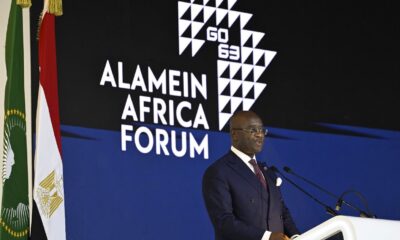
H.E. Mr. Hassan Abdalla, Governor of the Central Bank of Egypt (CBE), and Dr George Elombi, President and Chairman of the Board of Directors of Afreximbank (www.Afreximbank.com), held a joint press briefing at the CBE’s headquarters on 13 May 2026 to address preparations for 33rd Afreximbank Annual Meetings (AAM2026). The AAM2026 will be held under the patronage of H.E. President Abdel Fattah El-Sisi, President of the Arab Republic of Egypt, in Alamein city from 21 to 24 June 2026.

Attended by over 100 local and international media representatives, both in person and virtually, the briefing provided updates on preparations for AAM2026, expected participation, and Egypt’s role as host country for one of Africa’s leading annual gatherings focused on advancing the continent’s economic transformation.


In his remarks, H.E. Mr. Hassan Abdalla, Governor of the Central Bank of Egypt, reaffirmed Egypt’s commitment to the successful hosting of the AAM2026 and emphasised the country’s readiness to host the event as well as its long-standing partnership with Afreximbank to support Africa’s economic development, trade and investment.


Mr Abdalla said: “Egypt is honoured to host the 33rd Afreximbank Annual Meetings in Alamein, reflecting our continued commitment to supporting Africa’s economic integration, trade expansion, and sustainable development.”

He also noted that these Meetings represent a high-level platform for dialogue and the exchange of views on the future of African economic and financial cooperation.

He added: “The Meetings extend beyond conventional discussions to advance key continental priorities, including trade finance, regional integration, and the pressing need to reform the global financial architecture to better reflect the development needs of emerging economies.

Dr. George Elombi, President and Chairman of the Board of Directors of Afreximbank, expressed his appreciation to H.E. Mr. Hassan Abdalla for his strong support and commitment to hosting AAM2026 in Alamein and for the efforts by all relevant institutions in coordinating these meetings in Egypt.


“Egypt and Afreximbank share a common vision to accelerate Africa’s economic development, industrialisation, and widespread economic prosperity across the continent.


“AAM2026 will provide a valuable opportunity to strengthen partnerships, unlock investment opportunities, and advance discussions on intra-African trade, Africa’s financial sovereignty, and its economic resilience in an increasingly complex global environment”.

Egypt and Afreximbank share a common vision to accelerate Africa’s economic development, industrialisation, and widespread economic prosperity across the continent


Dr Elombi added that “Through our Annual Meetings, Afreximbank aims to identify priority projects and actionable programmes that will accelerate the transformation of Africa’s trade infrastructure. Africa’s pace of growth will be driven by industrialisation and intra-African trade, and achieving this will require significant improvements in processing, logistics, and importantly, policy support from governments.”


The briefing underscored the strong strategic partnership between Egypt and Afreximbank, while highlighting the Bank’s support for key sectors, including financial services, trade, industrial infrastructure, manufacturing, oil and gas, telecommunications, power, and construction.


Additionally, the press briefing outlined the significant opportunities associated with Egypt hosting AAM2026, including enhancing the country’s position as a regional financial and business hub, supporting the Meetings, Incentives, Conferences and Exhibitions (MICE) sector, creating new opportunities for Egyptian businesses, investors and the broader private sector, as well as providing a major boost to tourism in Alamein.


Dr Elombi said that the Bank has provided approximately US$9.5 billion in financing to Egypt over the past three years. He also referenced the groundbreaking of the Afreximbank African Trade Centre (AATC) in New Administrative Capital in December 2025, noting that the landmark US$250 million development will strengthen Egypt’s role as a regional hub for trade facilitation, payments, logistics, and SME development.


Dr Elombi further outlined plans for the proposed pan-African Gold Bank, an initiative designed to formalise Africa’s gold value chains, strengthen central bank reserves, and reduce the continent’s dependence on offshore refining and external trading centres.


Over the years, Afreximbank’s Annual Meetings have become one of the leading platforms for shaping dialogue on Africa’s economic future and advancing intra-Africa trade. The 33rd Afreximbank Annual Meetings are expected to bring together Heads of State, government ministers, central bank governors, business leaders, academics, entrepreneurs, private sector investors, and development partners. They will deliberate on the key issues shaping Africa’s economic future and trade agenda, while advancing practical solutions for the continent.


The AAM2026 programme will offer policy discussions, plenary sessions, business and investment forums, deal-signing ceremonies, major announcements, networking events, bilateral meetings, and forums on intra-African trade and the African Continental Free Trade Area (AfCFTA). It will also feature presentations on trade finance, industrialisation, energy, infrastructure, and digital transformation.

Distributed by APO Group on behalf of Afreximbank.

Continue Reading

Business

DHL Express Sub-Saharan Africa (SSA) celebrates its 53rd Transported Asset Protection Association’s (TAPA) Facility Security Requirements (FSR) certification

Published

on

DHL Express SSA is the most TAPA certified company in the Region and was the first company in the TAPA EMEA Region to attain multi-site certification for a Region

LAGOS, Nigeria, May 14, 2026/APO Group/ —
  • Increases TAPA certifications across the Region, total of 53 sites across Sub-Saharan Africa
  • DHL Express the most TAPA-certified company in SSA
  • Lekki contributes to DHL Express surpassing the 500 facility milestone in TAPA certifications worldwide
  • Part of global €250 million investment in world-class security infrastructure by DHL Express


DHL Express (www.DHL.com) has announced that its Service Center in Lekki (Nigeria) has officially been certified according to the Transported Asset Protection Association’s (TAPA) Facility Security Requirements (FSR). This certification contributes to the over 500 TAPA certified sites globally and increase the certifications across Sub-Saharan Africa to 53 sites across 19 countries as part of a multi-site certification.


As the world’s most TAPA-certified logistics provider, DHL Express continues to set the benchmark for world-class supply chain security. The certification of 53 facilities in SSA strengthens a network that has already exceeded 500 TAPA-certified facilities globally, supported by a worldwide EUR250 million investment in advanced, industry-leading security technologies and processes. DHL Express SSA is the most TAPA certified company in the Region and was the first company in the TAPA EMEA Region to attain multi-site certification for a Region.


Anthony Beckley, VP Network Operations and Aviation at DHL Express SSA said: “Security is a cornerstone of DHL’s operations and a critical enabler of trade across Sub‑Saharan Africa. By continuously strengthening security standards at our facilities across the region, we help protect our customers’ shipments while building confidence in the supply chains that connect Africa to the world. As African businesses expand their reach into global markets, they rely on trusted, resilient, and world‑class logistics partners. We are proud to support this growth through industry‑leading security practices, underscored by our achievement of 500 TAPA certifications worldwide.”

Security is a cornerstone of DHL’s operations and a critical enabler of trade across Sub‑Saharan Africa


TAPA (Transported Asset Protection Association) certification is a comprehensive process of membership, verification, and auditing designed to ensure the security of customer shipments throughout the supply chain. It is based on rigorous standards such as FSR (Facility Security Requirements) and TSR (Transport Security Requirements), which can be achieved through independent audits or, for Level 3 (basic), via self-certification by a registered Authorised Auditor (AA), followed by submission of documentation to TAPA for validation and issuance of a certificate typically valid for three years. The Security Requirements established by the Association are recognised worldwide as industry benchmarks, making TAPA certification an essential mark of excellence for customers seeking the highest levels of reliability and protection.


This achievement not only affirms DHL Express as the global leader in secure logistics but also highlights Nigeria’s strategic contribution to the company’s security excellence in SSA.


Adrian Whelan, SVP and Head of Global Security at DHL Express, commented: “The TAPA certification of Lekki and the 53 sites TAPA certified across the SSA Region highlights DHL Express’ commitment to providing our customers in Africa with world-class security infrastructure. Customers want to ship their valuable goods through a secure and resilient supply chain, and DHL Express provides the most secure and resilient supply chain, not only in SSA but globally”.


The TAPA FSR certification is a central element of the broader security strategy of DHL Express. As global supply chains become increasingly complex, certified operations ensure consistent protection, risk mitigation, and resilience across the entire DHL network.


The achievement of the TAPA FSR certification was formally celebrated on May 13 during an event hosted at the DHL Express Lekki facility in Lagos, Nigeria. The event brought together private and public sector partners who share the aim of building resilient, transparent, and high-standard logistics ecosystems across SSA.

Distributed by APO Group on behalf of DHL Express.


Continue Reading

Trending

Exit mobile version