Connect with us

Energy

African Mining Week (AMW) to Unlock Zimbabwe’s $12B Mining Vision Through Direct Investor Partnerships

Published

on

Etu Energias

A dedicated country spotlight at African Mining Week 2026 will showcase regulatory reforms and project developments across Zimbabwe’s mining value chain

CAPE TOWN, South Africa, June 25, 2026/APO Group/ –African Mining Week 2026 – The Most Influential Mining Conference in Africa – will connect Zimbabwean regulators and mining stakeholders with global investors to advance partnerships, as the country accelerates efforts to build a $12 billion mining industry by 2030.

Taking place from October 14 – 16 in Cape Town, AMW 2026 will feature a dedicated Zimbabwe Country Spotlight, showcasing lucrative opportunities across the country’s mining value chain. The country spotlight will feature high-level panel discussions, exclusive networking sessions and project showcases, connecting global investors and service providers with senior decision-makers from the Ministry of Mines and Mining Development of Zimbabwe, the Chamber of Mines of Zimbabwe and leading mining companies operating across the country.

The spotlight comes at a pivotal moment for Zimbabwe, as the country seeks fresh capital to unlock value from more than 60 known mineral occurrences spanning gold, lithium, platinum group metals, chrome, coal and rare earths.

https://apo-opa.co/43Z71HR

In a major move to improve investment competitiveness, Zimbabwe reduced mining-related license and permit fees in May 2026, lowering operational costs for investors while streamlining market participation. Registration fees for dealing in precious stones have been reduced from $15,000 to $10,000, while export permit fees have been cut from $1,875 to $500. New licensing categories – including permits for gold jewellery manufacturing and lithium processing plants – have also been introduced as part of a broader strategy to promote investments across in-country value addition projects. The reduction in fees for beneficiation projects follows the April 2026 introduction of export quotas for lithium concentrates ahead of a planned 2027 ban on concentrate exports. The shift is already reshaping the country’s lithium industry, with Zhejiang Huayou Cobalt achieving Zimbabwe’s first export shipment of lithium sulphate salts in April 2026.

https://apo-opa.co/4w3X7R3

https://apo-opa.co/4uTlYpG


https://apo-opa.co/44ziVZ3


Coming into this picture, AMW 2026’s Zimbabwe Country Spotlight will provide investors with direct insights into these evolving regulatory frameworks, highlighting emerging investment and partnership prospects in lithium processing and across the mining value chain.

Zimbabwe’s gold sector is also positioned for renewed growth amid sustained high global gold prices (averaging $5,000 per ounce). In line with this momentum, Zimbabwe’s sovereign wealth fund, Mutapa Investment Fund, is seeking $250 million to expand gold mining operations. Against this backdrop, AMW 2026 offers a timely platform for investors to engage with one of Africa’s most prospective brownfield gold markets and explore opportunities across exploration, mine expansion and processing infrastructure.

https://apo-opa.co/4eCDMiU


AMW 2026’s strong emphasis on artisanal and small-scale mining (ASM) formalization also aligns closely with Zimbabwe’s national mining development strategy. In May 2026, Zimbabwe certified 300 small-scale miners following completion of training programs safety, compliance and productivity. Supported by funding from Mutapa Gold Resources – a subsidiary of Mutapa Investment Fund – the initiative aims to train and formalize 1,500 ASM players.


https://apo-opa.co/44rhsUH

As the official platform where Africa’s mining opportunities are discussed and maximized, AMW 2026 will provide stakeholders with market intelligence on Zimbabwe’s evolving mining landscape and investment outlook.

Distributed by APO Group on behalf of Energy Capital & Power.

Energy

South Sudan, Uganda, Kenya and Djibouti to Headline South Sudan Oil & Power (SSOP) 2026 Ministerial Panel

Published

on

The Ministerial Panel will feature ministerial representatives from South Sudan, Kenya, Djibouti and Uganda

JUBA, South Sudan, November 10, 2026/APO Group/ –Senior energy and government representatives from South Sudan, Uganda, Kenya and Djibouti will participate in a ministerial panel at South Sudan Oil & Power (SSOP) 2026, taking place November 24-25 in Juba. The discussion will focus on strengthening regional energy cooperation, advancing cross-border infrastructure and attracting investment into East Africa’s petroleum sector.


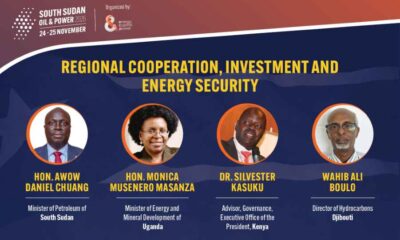
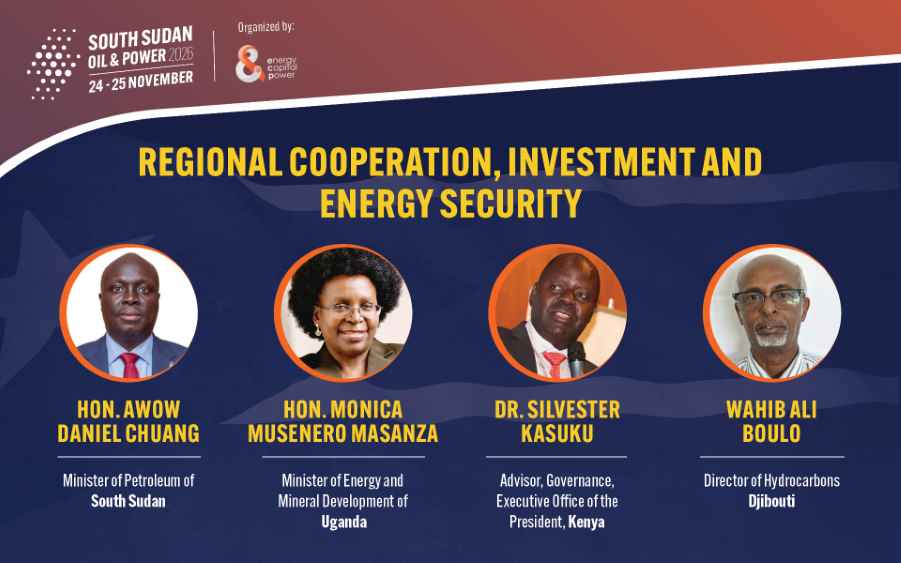
Titled Regional Cooperation, Investment and Energy Security, the panel will feature Awow Daniel Chuang, Minister of Petroleum of South Sudan; Monica Musenero Masanza, Minister of Energy and Mineral Development of Uganda; Silvester Kasuku, Advisor, Governance, Executive Office of the President, Kenya; and Wahib Ali Boulo, Director of Hydrocarbons, Djibouti.

Their participation comes as East Africa enters a new exploration and production cycle, backed by the start of upstream projects in Uganda and Kenya, a drive to strengthen cross-border trade by Djibouti and efforts to increase crude production in South Sudan. Regional cooperation is supporting these activities and SSOP 2026 will provide a platform to explore East Africa’s broader energy renaissance.

Minister Chuang joins the event as South Sudan opens its upstream market to international investors. Under efforts to raise production from 174,000 barrels per day (bpd) to around 230,000 bpd in the near term, the country is inviting investors to support brownfield development, accelerate exploration and expand refining capacity. Around 14 blocks are currently available.

Uganda is also promoting investment in exploration as the country prepares to start oil production from the Kingfisher and Tilenga oilfields in June 2027. The fields represent the country’s entry into commercial oil production. Crude will be exported via the East African Crude Oil Pipeline, currently 92% complete, which connects the fields to Tanzania’s Port of Tanga. To sustain upstream investment, the country also plans to launch a licensing round in 2026/2027.

https://apo-opa.co/4kJJLXP

https://apo-opa.co/4sOQOQW

Kenya is preparing to join East Africa’s oil producers as the country prepares for first production from the South Lokichar Basin in December 2026. Developed by Gulf Energy, the project targets 20,000 bpd in its first phase and 50,000 bpd in its second. The project coincides with investments in the downstream sector. In late-September 2026, Nigeria’s Dangote Group launched construction activities at a 700,000-bpd refinery in Lamu. A South Sudanese delegation, led by Minister Chuang, attended the groundbreaking ceremony.

https://apo-opa.co/4kJ16QA

https://apo-opa.co/4BV1kKL

As regional neighbors prepare for commercial oil production, Djibouti continues to strengthen its cross-border partnerships. The country signed an agreement with South Sudan in 2025 to develop the White Nile Trade Corridor, which aims to establish river and dry-port infrastructure in Juba, Bor, Malakal and Renk, connecting South Sudan to international trade routes through Djibouti. Boulo’s participation at SSOP 2026 creates new pathways for strengthened regional ties.

https://apo-opa.co/3WvoZ4h

Returning for its seventh edition under the theme Resource Renaissance – Energy-Fueled Growth for a New Generation, SSOP 2026 will provide a platform for policymakers, national oil companies, investors and infrastructure developers to examine how regional partnerships can strengthen energy security and accelerate project development.

For more information, visit www.SouthSudanOilPower.com.

Distributed by APO Group on behalf of Energy Capital & Power.


Continue Reading

Energy

Mauritania’s New Energy and Petroleum Minister Confirmed for MSGBC 2026

Published

on

Mohamed Ould Abdel Vetah takes office as Mauritania opens power generation to private investors

DAKAR, Senegal, November 9, 2026/APO Group/ –Mohamed Ould Abdel Vetah, Mauritania’s newly appointed Minister of Energy and Petroleum, has confirmed his participation at MSGBC Oil, Gas & Power 2026 in Dakar. Minister Vetah was appointed on October 10 in a new 29-member government, having previously served as Minister of Petroleum, Energy and Mines from 2016 to 2020. His participation at the upcoming summit offers delegates direct engagement with the official responsible for Mauritania’s gas and power agenda as the country seeks to attract capital across its evolving energy and hydrocarbon sectors


Minister Vetah joins the event as Mauritania enters a new investment cycle anchored by efforts to scale gas monetization, incentivize exploration and open new opportunities in renewable energy and power development. The country has been an LNG exporter since early 2025, when the Greater Tortue Ahmeyim (GTA) project, developed jointly with Senegal, shipped its first cargo. The project is now operating at full capacity, and gas is also set to anchor domestic power supply, with national utility Somelec and state miner SNIM having signed power purchase agreements with Saudi Arabia’s TAQA and Egypt’s GoGas Holding. The agreements fit within a gas-to-power program tied to the country’s Banda field and targeted for 2028.


Mauritania has committed to a fully private power generation model in which independent power producers develop all new plants, with two gas-fired projects in development expected to add a combined 550 MW to the grid. Renewables are scaling in parallel, led by a 220 MW solar-wind plant with 370 MWh of battery storage, developed under a 15-year concession with Somelec and slated to begin commercial production in the final quarter of 2026.


Minister Vetah’s career spans Mauritania’s gas sector and regional energy cooperation. During his previous term, Mauritania and Senegal signed the GTA gas sales agreement with bp and Kosmos Energy in 2020, and before entering government he served as General Manager of state gas company SOMAGAZ and as a consultant to TotalEnergies E&P Mauritania. Most recently, he spent nearly four years as High Commissioner of the Organization for the Development of the Senegal River.


Regional cooperation has been an early priority for the minister, who was received in Dakar by Senegalese President Bassirou Diomaye Faye on October 16 and reaffirmed his commitment to cooperation between the two countries. At MSGBC Oil, Gas & Power 2026, Minister Vetah will speak during the event’s Ministerial Dialogue, titled ‘Executing the MSGBC Region’s Energy Strategy’ and the Mauritania National Spotlight.

Organized by Energy Capital & Power, MSGBC Oil, Gas & Power 2026 takes place December 1-3 at the Centre International de Conférences Abdou Diouf (CICAD) in Dakar under the High Patronage of President Bassirou Diomaye Faye. For more information and registration, visit www.MSGBCOilGasAndPower.com.


Distributed by APO Group on behalf of Energy Capital & Power.


Continue Reading

Energy

Africa’s nuclear debate moves from ambition to execution

Published

on

The execution challenge extends beyond reactor technology

CAPE TOWN, South Africa, November 9, 2026/APO Group/ –Nuclear energy is returning to strategic power-sector discussions as countries consider how to secure reliable, low-carbon baseload electricity while expanding variable renewable generation.


For African governments assessing nuclear power, the debate has moved beyond the broad question of whether the technology should form part of the energy mix. Attention is on the practical requirements of implementation, including:

  • reactor selection,
  • regulation,
  • finance,
  • skills and training,
  • projecting structures, and
  • long-term institutional capacity.

These issues are examined in the Industry Insights Nuclear Energy Volume, created by VUKA Group through its trusted media house, ESI Africa. The volume considers which nuclear technologies are leading the generation market, why other technologies are struggling, and which African countries have progressed furthest in translating nuclear intent into practical programmes.

Download Industry Insights Nuclear Energy Volume (https://apo-opa.co/4zB4Fx9)

The execution challenge extends beyond reactor technology

Technology selection remains an important part of any nuclear programme. The volume examines the reactor types available to the market and the technologies that are likely to attract attention once South Africa’s bidding and procurement processes begin.

Detailed coverage of the AP1000 and VVER-1200 places these designs within their development and operating contexts. The volume also considers the mined minerals supporting the nuclear energy future and the wider resource requirements behind the fuel cycle.

Reactor selection, however, is only one part of delivery. Nuclear programmes also require credible governance, regulatory capacity, appropriate skills, financing structures and sustained policy commitment.

The volume reflects this wider view by bringing together technology, markets and the practical conditions needed to advance projects.

Africa’s nuclear pathways are developing at different speeds

Several features within the volume examine Africa’s race for atomic power and the countries moving furthest towards implementation.

The coverage considers why nuclear energy is becoming an execution question for governments rather than a purely philosophical discussion. It also examines the cost of excluding nuclear power from long-term planning and what must happen to move programmes from a national vision towards bankable reality.

Each country will need to assess nuclear development against its own electricity demand, financial position, regulatory environment and institutional capabilities. Comparing progress across African markets can nevertheless help decision-makers understand the different pathways available and the foundations that need to be established before procurement or construction begins.

Financing determines whether policy becomes a programme

Nuclear development involves large capital requirements and long planning and delivery periods. The structure of a programme is therefore as significant as its technical case.

Projects must be supported by clear ownership arrangements, credible institutions and financing models suited to their development timelines. Governments and utilities must also consider how risks will be allocated and how programmes will retain continuity across planning, procurement, construction and operation.

The volume’s focus on moving the conversation from vision to bankable reality places finance within this broader delivery system. It examines the conditions needed before nuclear ambition can become an investable infrastructure proposition.

Understanding Africa’s emerging nuclear market

The ESI Africa on-demand webinar Africa’s emerging nuclear power market extends the discussion by examining the factors influencing nuclear development across the continent.

It provides a further resource for stakeholders assessing the direction of the market, the technologies under consideration and the requirements associated with implementing new nuclear programmes.

Watch Africa’s emerging nuclear power market on-demand (https://apo-opa.co/4ztOrpf)

Nuclear within Africa’s wider energy conversation

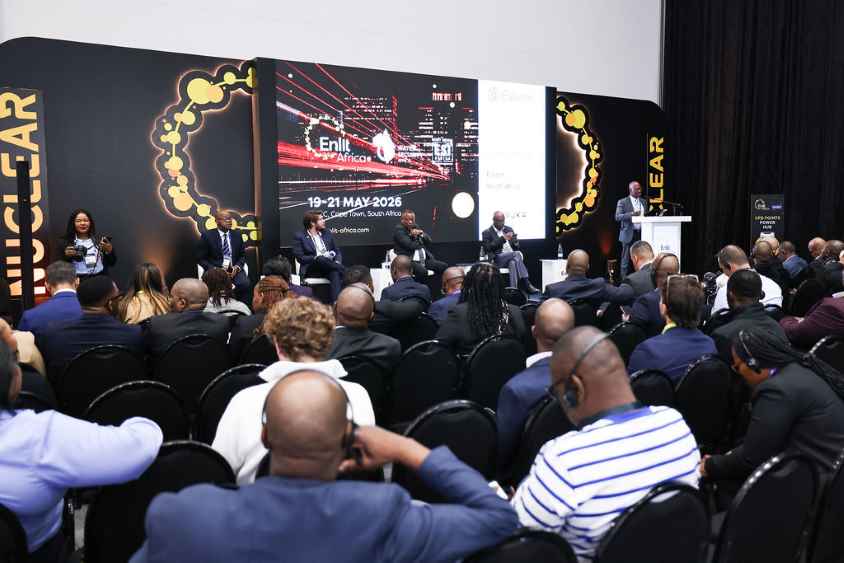
Nuclear energy will form part of the wider discussion around generation, investment and electricity-system development at Enlit Africa, taking place from 11 to 13 May 2027 at the CTICC in Cape Town, South Africa. As the host media partner, ESI Africa will once again conduct in-person studio interviews at the event.

The event brings together stakeholders from across the power and energy sector to examine the policies, technologies, investments and delivery models influencing Africa’s electricity future.

Explore Enlit Africa 2027 (https://apo-opa.co/4BQA003)

Connecting infrastructure plans with capital

Large infrastructure programmes require more than national ambition. Projects need to be structured, tested and connected with organisations able to finance and support their delivery.

The Project & Investment Network, in partnership with African Infrastructure Elites: Projects and People annual magazine, hosted at Enlit Africa 2027 connects project owners with investors, financiers, developers, offtakers and solution providers. Its focus is on strengthening project propositions, building bankability and moving viable African energy and water projects closer to implementation.

Submit a project to the Project & Investment Network (https://apo-opa.co/4fkfxHk)

Recognising infrastructure leadership and delivery

African Infrastructure Elites: People and Projects 26/27 documents the projects, partnerships and people contributing to infrastructure delivery across the continent.

As Host Media Partner of the Project & Investment Network, the publication connects the investment discussion with evidence of implementation and achievement. Readers can join the waiting list for the forthcoming edition.

Join the African Infrastructure Elites 26/27 waiting list (https://apo-opa.co/4C87zLx)

ESI Africa’s next related sector discussion will continue through the Smart Solutions & Data Centres Volume 2027, examining the technologies and infrastructure systems influencing growing digital demand.

Explore Smart Solutions & Data Centres Volume 2027 (https://apo-opa.co/4An2hKo)

Distributed by APO Group on behalf of VUKA Group.


Continue Reading

Trending

Exit mobile version