Connect with us

Tech

Thailand Launches FastPass Program, Unlocking USD 21 billion in Strategic High-Tech Investment

Published

on

Anutin Charnvirakul

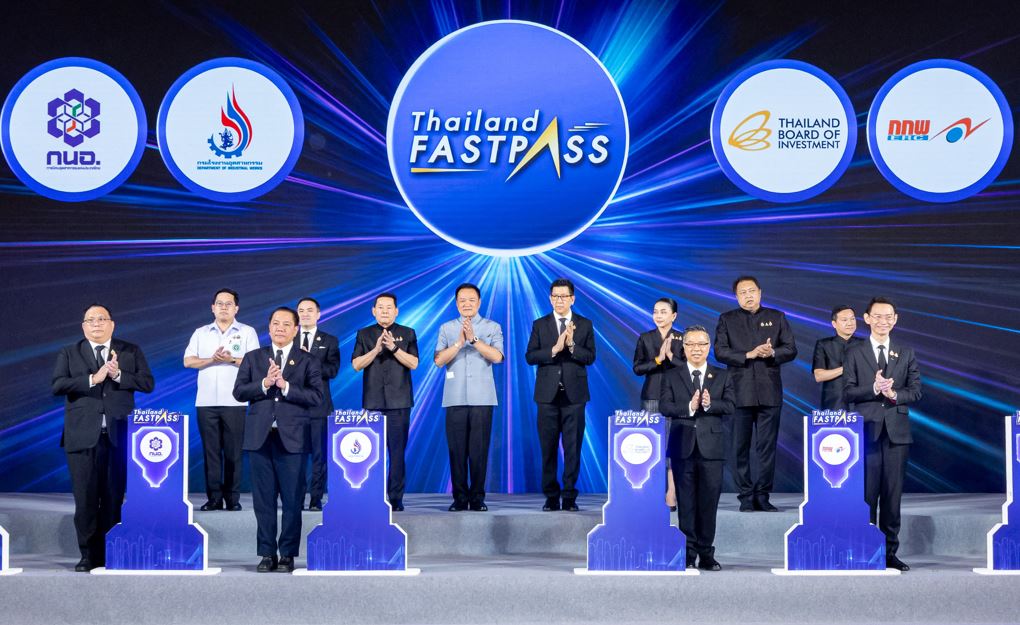
BANGKOK, THAILAND – Media OutReach Newswire – 23 June 2026 – Prime Minister Anutin Charnvirakul formally launched Thailand FastPass at Government House, mobilizing over USD 21 billion (approximately 700 billion baht) in strategic high-tech investment. The program integrates eight government agencies to cut regulatory approval timelines by up to 50 percent, accelerating approved investments from license to operating factory.

FastPass targets high-value sectors including advanced electronics, aerospace technology, precision machinery and automation systems, and recycled plastics.

By coordinating eight key government agencies—including Thailand’s Board of Investment (BOI), the Department of Industrial Works, the Customs Department, the Office of Natural Resources and Environmental Policy and Planning (ONEP), the Industrial Estate Authority of Thailand (IEAT), the Energy Regulatory Commission, the Metropolitan Electricity Authority, and the Provincial Electricity Authority—the initiative removes historical friction in permitting, environmental approvals, and infrastructure connectivity.


At the ceremony, the eight agencies formalized their coordination by signing a memorandum of understanding (MOU) committing to reduce approval and licensing timelines by 20 to 50 percent across key investment milestones, including factory permits, free-zone processing, environmental impact assessments, and power grid connections.

The ceremony drew more than 300 attendees, including foreign diplomats, international chambers of commerce, and multinational executives.

“In today’s global economy, speed is the ultimate competitive differentiator,” said Mr. Anutin Charnvirakul, Prime Minister of Thailand. “The Thai government is shifting from regulator to active business facilitator. By removing regulatory hurdles, increasing speed, and ensuring policy transparency, we are driving physical investments that will generate next-generation employment and secure Thailand’s long-term regional competitiveness.”

The push to turn approved projects into physical factories follows a historic surge in investment applications. BOI received a record USD 54.5 billion (approximately 1.8 trillion baht) in investment applications in 2025. Momentum has carried into 2026, with first-quarter applications already exceeding USD 30.3 billion (approximately 1 trillion baht).

The USD 21 billion total spans two FastPass cohorts. In the first phase, FastPass resolved regulatory bottlenecks for 76 previously approved projects valued at over USD 14.4 billion (approximately 474 billion baht). Today’s ceremony launched the second cohort: 25 projects from 23 companies worth USD 6.7 billion (approximately 223 billion baht), each receiving a formal Thailand FastPass certificate.

“We are focusing heavily on ‘realized investment’ entering the actual economy,” said Mr. Ekniti Nitithanprapas, Deputy Prime Minister and Minister of Finance. “The FastPass mechanism is designed to deliver immediate, concrete economic results in the short term, while laying down long-term structural benefits that will distribute wealth across our broader economy. These 25 pilot projects from 23 companies are projected to generate over 13,000 high-skilled jobs. Combined with the 76 projects cleared under FastPass in the preceding phase, total investment mobilized by the program exceeds 700 billion baht.”

This mechanism converts corporate capital into domestic benefits across five key dimensions: driving investment-led GDP growth, generating high-skilled careers, transferring technical know-how, integrating local SMEs, and creating localized economic multipliers within regional communities.

“The FastPass program fundamentally changes how Thailand works with global investors,” said Mr. Narit Therdsteerasukdi, Secretary-General of the BOI. “We put eight agencies into one pipeline. Permit timelines that once stretched for months can now be cut by up to half. That gets factories built, creates high-skilled jobs, and pulls Thai suppliers into global supply chains.”

Global corporations participating in the FastPass program cited Thailand’s strategic location, modern infrastructure, robust supply chains, skilled workforce, and favorable investment policies as the key drivers for their expansion.

“Thailand possesses the talent, infrastructure, and policy support necessary for next-generation industries,” said Mr. Simon Gwozdz, CEO of Equatorial Space (Thailand) Co., Ltd., a developer of low-Earth orbit space launch vehicles. “The BOI’s one-stop coordination significantly reduces regulatory complexity.”

“The availability of raw materials, infrastructure, and proactive government support were critical in our decision to anchor our regional operations here,” said Mr. Donald Carpenter, CFO of U.S.-based PureCycle Technologies, Inc. “The FastPass mechanism directly improves our operational efficiency.”

“The speed of obtaining factory licenses under the scheme has accelerated our operational readiness, creating a smoother path to scale,” said Mr. Larry Foo of SAM Precision (Thailand), a Malaysia-based manufacturer of precision components for the semiconductor industry.

“The depth of Thailand’s electronics supply chain and supportive state policies were critical to our investment decision,” said Mr. Kris Leetavorn, Director of Advanced Connection Technology, a high-density printed circuit board (PCB) manufacturer. “The FastPass program drastically simplifies state coordination, allowing us to hit aggressive deployment timelines.”

To demonstrate Thailand’s readiness for advanced industries, the government showcased technologies currently being deployed or manufactured in Thailand, including humanoid robotics, LiDAR sensor systems, aerospace technology, and advanced electronics.

“Thailand FastPass proves what is possible when all agencies move in the same direction—approved investments actually get built,” Mr. Narit concluded. “The world is reshuffling supply chains. Investors need clarity and speed. Thailand is ready to deliver both. We will keep expanding FastPass to cover more permits and more strategic industries, creating quality jobs, strengthening supply chains, and raising Thailand’s long-term competitiveness.”

USD conversion based on a reference exchange rate of approximately 33 baht per USD (Bank of Thailand, June 2026).

Thailand Board of Investment
Established in 1966, the Office of the Board of Investment (BOI) has continuously played an essential role for over 60 years in promoting value-adding investment for the country, from both foreign and Thai investors, to enhance national competitiveness and drive sustained economic growth and long-term national competitiveness.

Investment Services Center, PR Section, The Office of the Board of Investment (BOI)

555 Vibhavadi-Rangsit Road, Chatuchak Bangkok 10900 Tel. +66 (0) 2553 8111, Fax: +66 (0) 2553 8222


Business

RS South Africa Supports Next-Generation Edge Artificial Intelligence (AI) With NVIDIA Jetson Orin Nano 2

Published

on

New compact robotics computer opens new possibilities for intelligent machines, robotics and vision AI

JOHANNESBURG, South Africa, September 21, 2026/APO Group/ –RS (https://apo-opa.co/4doxsf6) is supporting the NVIDIA Jetson Orin Nano 2 robotics computer, a new entry-level edge AI platform designed to deliver next-generation AI performance in a compact, power-efficient format. The platform is expected to become available in the first half of 2027.

The NVIDIA Jetson Orin Nano 2 delivers twice the inference performance of the NVIDIA Jetson Orin Nano Super while maintaining the same compact form factor and 40 W power envelope. It also consumes 40% less power at equivalent performance, making it well suited to applications where computing capability, energy efficiency and physical footprint are important considerations.


These capabilities have the potential to support the development of smarter, more autonomous equipment and systems for South African industrial and engineering organisations, particularly where real-time processing and decision-making are required at the edge.


More performance for intelligent machines

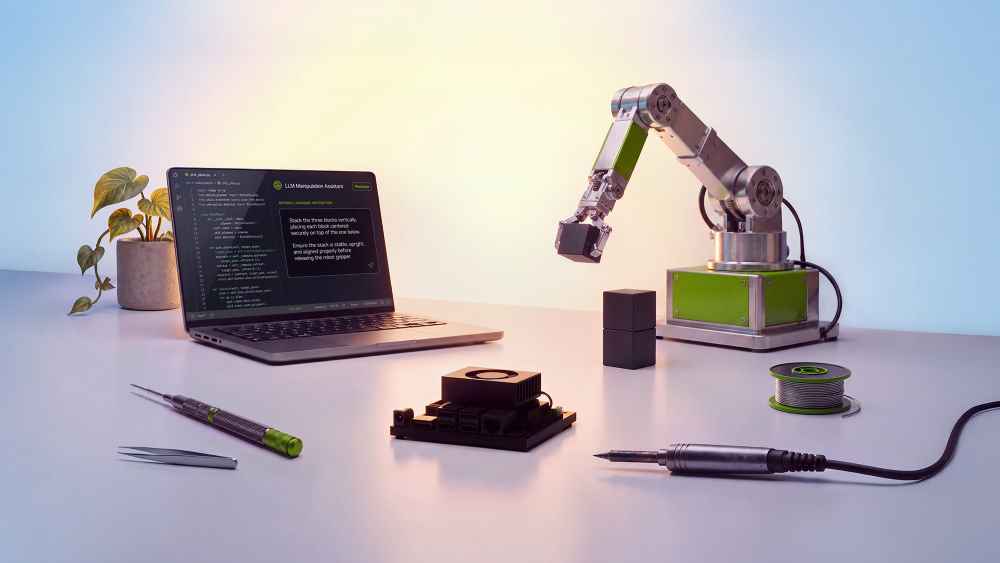
The NVIDIA Jetson Orin Nano 2 features improved Tensor Cores and higher memory bandwidth, delivering 78 TOPS of AI compute, 8 GB of memory and an eight-core Arm CPU. This combination enables a new generation of applications including delivery and inspection drones, robots and vision AI systems, with enhanced AI and video-processing capabilities. The platform is powered by NVIDIA’s open AI software stack, Jetson agent skills and a broad AI ecosystem, helping developers build and deploy AI-enabled applications more quickly.


Supporting South Africa’s AI and automation ambitions

This exciting product launch is a testament to the strong and successful partnership RS and NVIDIA have built since the introduction of the first Orin Nano™ in 2023

RS’s support for the NVIDIA Jetson Orin Nano 2 builds on its established relationship with NVIDIA and its role as a strategic global distribution partner. “As South African businesses increasingly explore how AI, robotics and automation can improve the way industrial systems operate, access to capable edge computing platforms will become increasingly important,” comments Erick Wessels, Sales Director, RS South Africa.


The NVIDIA Jetson Orin Nano 2 brings substantial AI performance into a compact and energy-efficient platform, giving local developers and engineering teams new opportunities to explore intelligent machines, robotics and vision-based applications. “We look forward to supporting customers in South Africa as they investigate the possibilities this technology can unlock,” adds Wessels.


This exciting product launch is a testament to the strong and successful partnership RS and NVIDIA have built since the introduction of the first Orin Nano™ in 2023,” explains Richard Curtin, SVP, Global AIoT Suppliers and Design Solutions, RS.


As a strategic global distribution partner, we are well positioned to help customers worldwide access and scale this latest AI innovation, and we encourage them to stay close to RS and RS DesignSpark for further announcements and early ordering opportunities,” says Curtin.


A platform for the next generation of edge AI

The NVIDIA Jetson Orin Nano 2 represents the next step in making high-performance AI computing accessible in a compact form factor. By combining increased inference performance with improved energy efficiency and an extensive AI software ecosystem, it is designed to help developers accelerate the transition from AI experimentation to practical deployment.


RS will support customers as they explore the opportunities presented by the platform, with further announcements and information on early ordering opportunities to follow ahead of its planned availability in the first half of 2027.

Distributed by APO Group on behalf of RS South Africa.


Continue Reading

Events

Huawei Cloud Rolls Out Enterprise AI Products Across the Board, Building an Open Agentic Cloud

Published

on

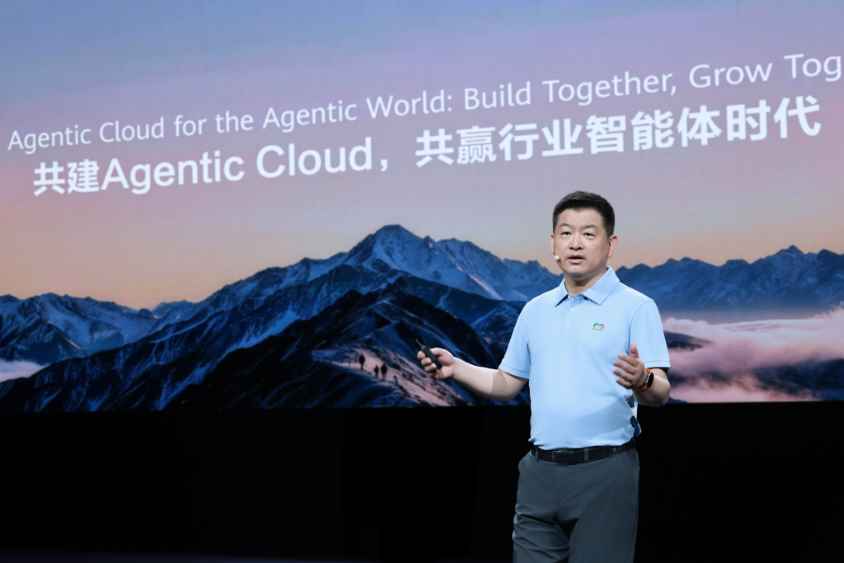
SHANGHAI, CHINA – Media OutReach Newswire – 18 September 2026 – On September 18, Dr. Peter Zhou, Director of the Board at Huawei and CEO of Huawei Cloud, delivered a keynote titled “The Agentic Cloud for the Agentic World: Build Together, Grow Together” at HUAWEI CONNECT 2026. He shared Huawei Cloud’s latest progress. He announced the global launch of the latest AI Cluster Service (AICS), a key step in Huawei Cloud’s strategy to strengthen the silicon bedrock on the cloud and reinforce the foundation for agentic AI. The keynote also highlighted the Agentic Model as a Service (MaaS) platform, which brings together diverse models to accelerate model capabilities as services at scale. The AgentArts enterprise-grade agent platform already serves over 100 enterprises. The Industry AI Foundry has accumulated more than 1,000 industry assets, with over 1,000 projects deployed. The Industry AI Foundry now includes two new zones, Smart Government Zone and AI Hardware Zone, to drive agents toward large-scale adoption. These efforts, taken together, are building a thriving AI ecosystem on the cloud.


Building Agentic Infra for agents
Dr. Peter Zhou also highlighted that in the agentic era, infrastructure no longer simply exists to provide compute. Instead, its purpose has expanded to making every token more efficient, coordinating general and AI compute, enabling models to keep learning, and, more importantly, running agents securely and reliably within real production environments. Huawei Cloud has defined Agentic Infra, a new paradigm around efficient tokens, enhanced memory, unified general & AI scheduling, and secure autonomy. To date, Agentic Infra has served over 3,500 customers.

The latest AICS is built on a five-level fast recovery mechanism with full-chain observability. It supports over 40 days of stable training on cloud and is capable of fault recovery within 10 minutes. Furthermore, supported by coordinated optimization across scheduling, cache, and algorithms, it delivers 20% higher token throughput than the previous generation of compute service. The latest AICS will be commercially available in China on September 30 and in markets outside China on November 30.
The Context Memory Storage (CMS) solution addresses the needs of long-horizon agent tasks for memory capacity and access efficiency. It provides a petabyte-scale memory space, twice the storage capacity of comparable industry products, and supports high-speed terabyte-scale memory reads with 50% higher performance than industry peers.
Agentic MaaS brings together diverse models, enabling developers to invoke state-of-the-art (SOTA) models from leading providers with just one click and no deployment required. At the event, MiniMax demonstrated its advanced multimodal model, which, combined with Huawei Cloud, delivers open, cutting-edge multimodal capabilities.

Building an enterprise-grade agent platform to help enterprises develop and use agents effectively
Huawei Cloud is advancing its enterprise-grade agent platform through a dual approach: commercial and open source. Built on AgentArts and its open-source edition openJiuwen, the platform opens up more than 5,000 general Model Context Protocol (MCP) assets and over 1,000 industry-specific MCP assets, making it easier for enterprises to develop, use, and manage agents. To date, the platform has served more than 100 customers, including the Shenzhen Longgang District Government, China Southern Power Grid, Guangzhou Laboratory, the University of Science and Technology of China, Kingsoft Office, Sichuan Yingu Carbon Sink Renewable Resources Co., Ltd., Changsha Thunder Cloud Network Technology Co., Ltd., and KingMed Diagnostics. At the event, Kingsoft Office shared its implementation practices based on Huawei Cloud’s agent platform. By deeply integrating the agent platform with the WPS 365 Document Center and WPS Comate, Kingsoft Office has built vertical office agents that are now deployed across multiple industries, including finance and government.

Huawei Cloud has announced that AgentArts will be commercially available in markets outside China on December 30. To date, the openJiuwen open-source community has surpassed 50,000 stars and 3.29 million downloads. Together with Chinasoft International, iSoftStone Group, and Beiming Software, Huawei Cloud has launched partner commercial editions and shared a broad market space, helping partners thrive on Huawei Cloud’s silicon bedrock.

Advancing the Industry AI Foundry to accelerate AI adoption at scale across industries
Through the Industry AI Foundry, Huawei Cloud brings together assets such as industry scenarios, models, data, knowledge, and agents, turning industry know-how from isolated project experience into reusable industry capabilities. It has built five industry-specific zones — Smart Healthcare Zone, Embodied AI Zone, AI for Science (AI4S) Zone, Smart Manufacturing Zone, and Smart Finance Zone — with over 1,000 industry-specific assets and more than 1,000 deployed projects.

Two new zones have been launched within the Industry AI Foundry: Smart Government Zone and AI Hardware Zone. The Smart Government Zone has already brought together 24 founding partners, covering a range of scenarios such as government office operations, public services, urban governance, and industry development. The AI Hardware Zone has onboarded 15 core partners, covering more than 20 device types, including AI glasses, AI toys, and AI recording cards, along with over 10 scenario templates and more than 110 scenario skills.

From infrastructure and enterprise-grade agent platforms to industry ecosystems, Huawei Cloud is committed to building an open agentic cloud, with open infrastructure to power AI, an open platform to support enterprises in effectively developing and using agents, and an open industry ecosystem to accelerate AI adoption at scale. Ultimately, Huawei Cloud looks to move forward with customers and partners to build and grow together in the agentic era.

Themed Advancing the Agentic World, HUAWEI CONNECT 2026 will delve into AI across three dimensions: strategy, technology, and ecosystems. You can expect an in-depth look at our latest strategic initiatives, and we’ll also be unveiling our all-new digital and intelligent infrastructure products, scenario-specific solutions for industries, and development tools. The event will run from September 17 to 19 at the Shanghai World Expo Exhibition & Convention Center and Shanghai Expo Center. For more information, please visit HUAWEI CONNECT 2026 online at www.huawei.com/en/events/huaweiconnect


Continue Reading

Tech

Huawei Pioneers a New Computing Architecture for the AI Era: Making One Million Processors Work as One Computer

Published

on

SHANGHAI, CHINA – Media OutReach Newswire – 17 September 2026 – Huawei today announced the Peerium Computing Architecture, a new computing architecture for the AI era. The architecture enables processors at the million scale to work as one computer, meeting the ever-growing demand for AI compute.

The Peerium Computing Architecture achieves strong scaling to the million-processor level through nested parallelism, unified memory addressing, and peer interconnect. It breaks through the Turing paradigm with the introduction of Nested BSP (Nested Bulk Synchronous Parallel), extends the von Neumann single-machine architecture, and overturns the master–slave architecture that has prevailed for decades, so that a million processors truly become one larger computer.


UnifiedBus (UB) is the key interconnect technology that makes the Peerium Computing Architecture possible. Built on a single open protocol, UB is a high-speed bus that scales without limit to connect CPUs, NPUs, memory, SSDs, network interface cards (NICs), and switches. With UB, peer interconnect is achieved across compute, storage, and networking.

The Atlas 950 SuperPoD and SuperPoD-based SuperClusters are the first-generation product built on the Peerium Computing Architecture. An Atlas 950 SuperCluster with 256,000 cards is already being deployed, and the Atlas 960 system based on near-packaged optics (NPO) is currently under testing.

Eric Xu, Huawei’s Rotating Chairman, said, “In the AI era, Huawei is drawing on the Peerium Computing Architecture we pioneered to continuously build the SuperPoDs and SuperPod-based SuperClusters that meet customer needs for training and inference, making computing power available everywhere and intelligence accessible to all.”
The issuer is solely responsible for the content of this announcement.


Continue Reading

Trending

Exit mobile version