LIMA, PERU – Media OutReach Newswire – 18 November 2024 – Chinese President Xi Jinping has wrapped up his state visit to Peru, where he addressed the 31st APEC Economic Leaders’ Meeting and gave a written speech at the APEC CEO Summit. At these key meetings, President Xi emphasized China’s commitment to fostering an inclusive, balanced, innovative and green global economy.
This year’s APEC adopted the theme “Empower. Include. Grow.” Against a backdrop of global uncertainties, Xi highlighted pressing challenges facing the Asia-Pacific region and presented China’s proposals to enhance the region’s development while building a shared future for its nations.
Reform and opening up “Asia-Pacific cooperation is confronted with challenges, such as rising tendencies of geopolitics, unilateralism and protectionism. At this historic crossroads, we Asia-Pacific countries carry greater responsibilities on our shoulders,” Xi said at the APEC Economic Leaders’ Meeting on November 16.
Earlier this month, the seventh Hongqiao International Economic Forum released the World Openness Report 2024, which measured the openness levels of 129 economies from 2008 to 2023 and showed that the world’s opening-up level declined over the past year.
In his written speech at the APEC CEO Summit on November 15, Xi highlighted the necessity of global economic governance reform and economic globalization to empower the Asia-Pacific economy for long-term growth. Economic globalization has always been the general trend, he said.
China has continued to push for reform and opening up. It has introduced measures to advance the process of opening up in sectors such as telecommunications, education and healthcare. Additionally, China remains active in advancing regional agreements, such as the Regional Comprehensive Economic Partnership (RCEP), and pursuing membership of the Comprehensive and Progressive Agreement for Trans-Pacific Partnership (CPTPP) and the Digital Economy Partnership Agreement (DEPA).
The signing of a protocol to upgrade the China-Peru Free Trade Agreement and ongoing negotiations for the China-ASEAN Free Trade Area 3.0 also reflect China’s commitment to fostering cross-border trade and economic collaboration.
Inclusive development Global prosperity and stability cannot be achieved when the rich get richer and the poor poorer, Xi said in the written speech, noting true development means common development of all countries. “We should pursue economic globalization that is people-centered and delivers more balanced development and more equal opportunities, so that different countries, classes and communities can all benefit from development,” he said.
This philosophy aligns with China’s domestic and international actions. China’s domestic achievements in poverty alleviation stand out as a key example. Over the past four decades, nearly 800 million people have been lifted out of poverty, marking one of the largest anti-poverty initiatives in history.
Internationally, China has supported developing nations through the Belt and Road Initiative (BRI), which spans infrastructure, energy and trade projects. For instance, BRI project Chancay Port. The mega project, which was inaugurated on November 14 with President Xi and Peruvian President Dina Boluarte attending the opening ceremony via video link, connects Peru to regional markets and boosts its economic development.
At the APEC meetings, China proposed initiatives aimed at enhancing household incomes and supporting small and medium-sized enterprises across the region. These steps are designed to foster a more inclusive economic landscape, enabling diverse countries, communities and social groups to share in development outcomes.
Innovation-driven growth “We should make full use of artificial intelligence and other emerging technologies to rev up the world economy and stimulate its growth with the current technological revolution,” Xi said in the written speech at the APEC CEO Summit.
China’s contributions to technology and innovation have had far-reaching impacts. It has been responsible for over 40 percent of the annual additions to global renewable energy capacity since 2013. In 2023, the newly installed capacity in China accounted for more than half of the world’s total, according to a white paper released by China’s State Council Information Office.
In the digital realm, China’s leadership in 5G technology has enabled rapid advancements in telecommunications and smart city development. Shenzhen, often referred to as China’s “Silicon Valley,” has become a global hub for innovation, housing companies like Huawei and Tencent.
During the APEC meetings, China unveiled its plans for a Global Cross-Border Data Flow Cooperation Initiative and proposed measures to support digital trade, green supply chains and AI collaboration. These initiatives aim to create a more sustainable and innovation-driven growth model for the Asia-Pacific region.
ACG CEO Paulo J. Cruz to Speak at the Angola Access & Investment Conference 2026 in Luanda on How Sport and Entertainment Districts Can Drive Inclusive Economic Growth Across Africa
Cruz joins heads of state, ministers, ambassadors, and CEOs from over 60 international markets at one of Angola’s flagship investment conferences, connecting sport infrastructure to job creation, accessibility, and sustainable development
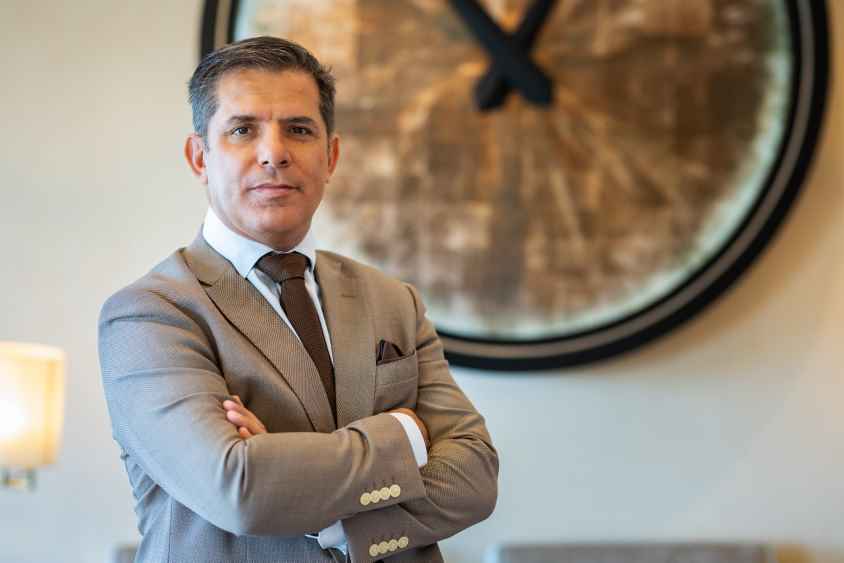
LUANDA, Angola, October 14, 2026/APO Group/ –African Collaborations Group (ACG) (www.ACGafrica.com), the leading strategic project origination and collaboration platform focused on the industrialisation of sport in Africa through the origination of bankable sport and entertainment district ecosystems, today announced that its CEO, Paulo J. Cruz, will speak at the Angola Access & Investment Conference 2026 (AAIC) (www.aaic.ao) in Luanda, Angola, from 14 to 17 October 2026.
The AAIC is organised by Expo Connect Angola in partnership with Skyliam Properties, the Cópia Group, and Angolan Business Beyond Borders, with the support of the Angola-Mozambique Chamber of Commerce and Industry (CCIAM) and the Angolan Ministry of Tourism and the Ministry of Telecommunications, Information Technologies, and Social Communication. The conference brings together heads of state, ministers, ambassadors, CEOs, investors, development banks, and business leaders from over 60 international markets.
Mr Cruz will address how ACG’s origination of integrated sport and entertainment districts contributes directly to inclusive economic growth. His intervention will focus on how sport infrastructure, when designed as a financially self-sustaining urban ecosystem, becomes a catalyst for large-scale job creation, skills development, accessible infrastructure, and long-term economic diversification.
Sport infrastructure has the power to be one of the most inclusive economic assets a country can build
The AAIC’s focus on accessibility and inclusion aligns directly with ACG’s approach to sport and entertainment district development. A Victory District™ is designed from inception to serve the widest possible community: creating permanent employment across dozens of professions, providing professional sport training facilities for young athletes, and generating economic activity that benefits surrounding neighbourhoods year-round.
“Sport infrastructure has the power to be one of the most inclusive economic assets a country can build,” said Paulo J. Cruz, CEO of ACG. “A Victory District™ does not just create stadiums. It creates thousands of permanent jobs, from hospitality to broadcast production, from sport coaching to facility management. It creates training pathways for young athletes. And it creates an urban ecosystem that generates economic activity 365 days a year. That is inclusive growth in practice, not in theory. I am honoured to share that vision at the AAIC alongside some of Africa’s most influential investors and decision-makers.”
The AAIC programme includes official MoU signing ceremonies, B2B investment rounds, VIP executive networking with senior government and business leaders across 10 dedicated Business Lounges, and the inauguration of Angola’s first assistive technology factory. The conference covers priority sectors including energy, mining, accessible tourism, agriculture, logistics, health, and infrastructure.
ACG’s Victory District™ framework is designed to originate integrated, mixed-use sport and entertainment districts that move beyond single-venue development models. Each district combines stadiums, indoor arenas, training academies, hotels, conference centres, retail, entertainment, residential, and commercial space within a single masterplanned development, financed by private and institutional capital without reliance on public subsidy.
Mr Cruz brings more than 28 years of experience across Africa, the Middle East, and Europe in originating, structuring, and delivering large-scale infrastructure, urbanisation, and real estate development initiatives. Prior to ACG, he served as Senior Vice President at DAMAC Group, the largest private real estate developer in the Middle East, and as Group CEO of LandAfrique, a pan-African development platform focused on industrial parks, infrastructure, housing, and power projects across Sub-Saharan Africa.
Distributed by APO Group on behalf of African Collaborations Group (ACG).
The country is promoting new hydrocarbons contracts, upstream and refining opportunities, and technical partnerships with Africa to attract investment and strengthen local energy sector capabilities
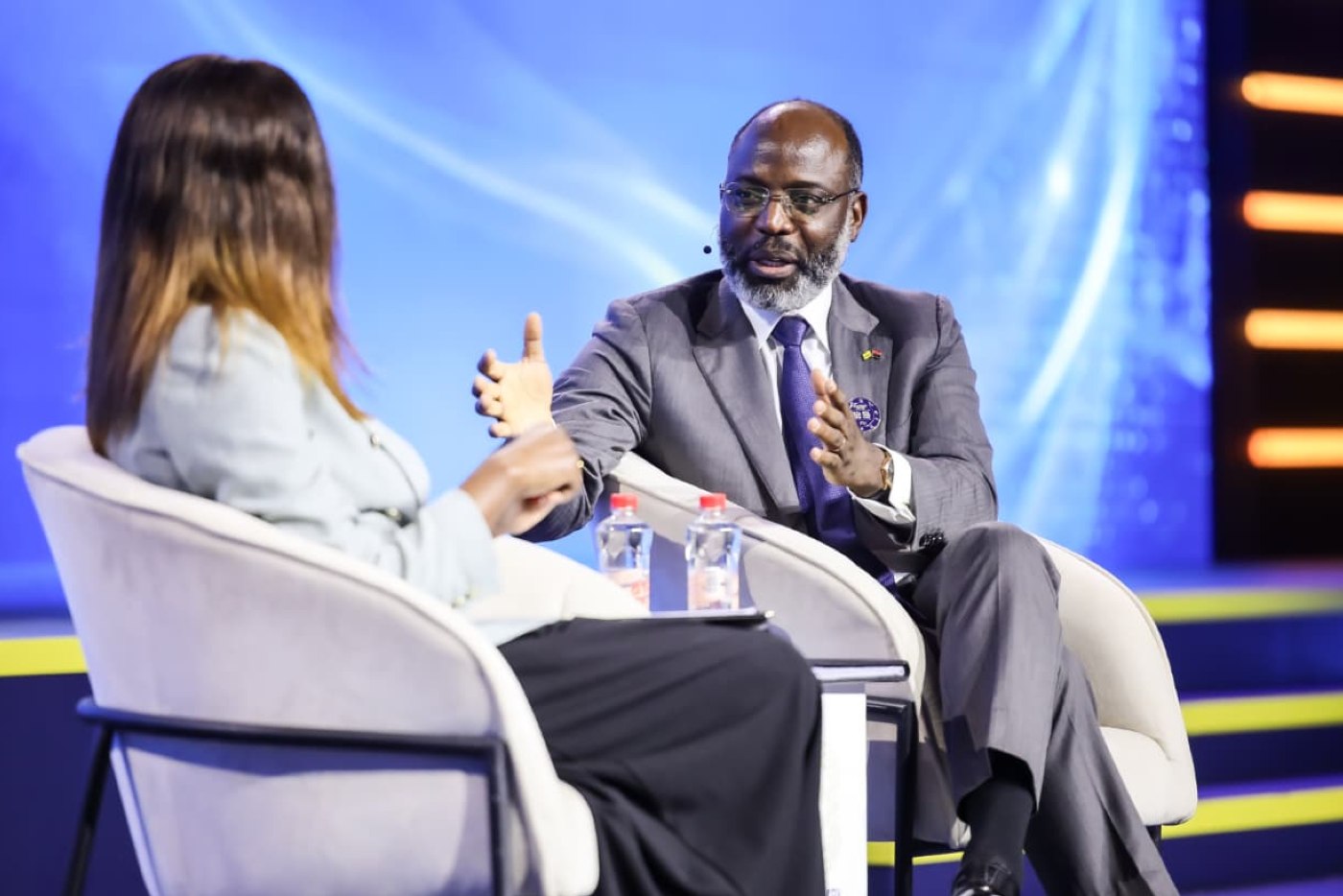
CAPE TOWN, South Africa, October 14, 2026/APO Group/ –Venezuela is seeking to attract international investment into its oil and gas sector while building stronger energy partnerships with African countries. Revised hydrocarbon legislation offers new entry routes for private operators, while cooperation on technical training could help African markets draw on Venezuela’s industry expertise. These opportunities featured at the Venezuela Global Investment Forum during African Energy Week (AEW) 2026 in Cape Town.
Ricardo Gomez, Venezuela’s Vice Minister of Commercial Policy, outlined the country’s investment proposition, highlighting 303 billion barrels of proven oil reserves and 193 trillion cubic feet of natural gas.
“Venezuela combines a large hydrocarbon resource base with refining infrastructure and a market that needs reliable energy,” he said. “The opportunities extend from upstream projects to downstream and refining.”
The country’s amended Organic Hydrocarbons Law introduces new ways for international companies to enter the market. Hydrocarbon production participation contracts allow private operators to manage designated assets, oversee operations and market production under negotiated terms. Agreements can extend for 25 years, offering a longer investment horizon for field development and rehabilitation.
Restructured joint venture companies provide another route, retaining majority state ownership while allowing international partners to take on operational responsibilities through approved agreements. Direct ministerial contracts and strategic alliances offer additional opportunities in field redevelopment, oilfield services and infrastructure.
Venezuela is seeing a lot of interest as a result of aggressive fiscal and regulatory changes that are making the country more attractive
Potential investments span heavy-oil production in the Orinoco Belt, mature onshore fields, offshore gas, pipeline rehabilitation, export terminals and refinery upgrades. Venezuela’s target of signing 105 definitive oil contracts by year-end reflects its wider effort to attract operators and accelerate project development.
Scott Gilbert, CEO and Executive Director of Corcel Plc and Non-Executive Chairman of Apertura Energy, highlighted investor interest in the changing regulatory environment. “Venezuela is seeing a lot of interest as a result of aggressive fiscal and regulatory changes that are making the country more attractive,” he said.
Alongside these commercial opportunities, Venezuela is promoting its technical expertise through the Venezuelan University of Hydrocarbons (UVH). Celia Bejarano, the university’s President, explained how the institution trains engineers and geologists in geophysics, reservoir engineering, well management, natural gas and petrochemicals.
“The Venezuelan University of Hydrocarbons was created to deliver a specialized institution where the country can train its own recruits to develop its own premier resources,” Bejarano said.
Through its Africa-Venezuela Energy Partnership with the African Energy Chamber (AEC), UVH is advancing technical training, knowledge exchange and workforce development. The initiative could help African energy projects apply Venezuela’s experience in heavy-oil production and offshore engineering while strengthening local capabilities. Rene Awambeng, founder and managing partner of Premier Invest, highlighted this opportunity for African developers.
“When we are developing our assets here, we always import talent,” he said. “With the Venezuelan University of Hydrocarbons, we can actually leverage Venezuela’s immense experience to support local content development here in Africa.”
Also speaking during the discussion, NJ Ayuk, Executive Chairman of the AEC, emphasized the strategic value of closer ties between the regions. “Our energy industry has an amazing ally in Venezuela,” he said, describing the country as “open for business and ready to partner with Africa.”
Distributed by APO Group on behalf of African Energy Chamber.
Katambi-2 appraisal, infill drilling and downstream construction frame the national oil company’s priorities as it marks its 50th anniversary
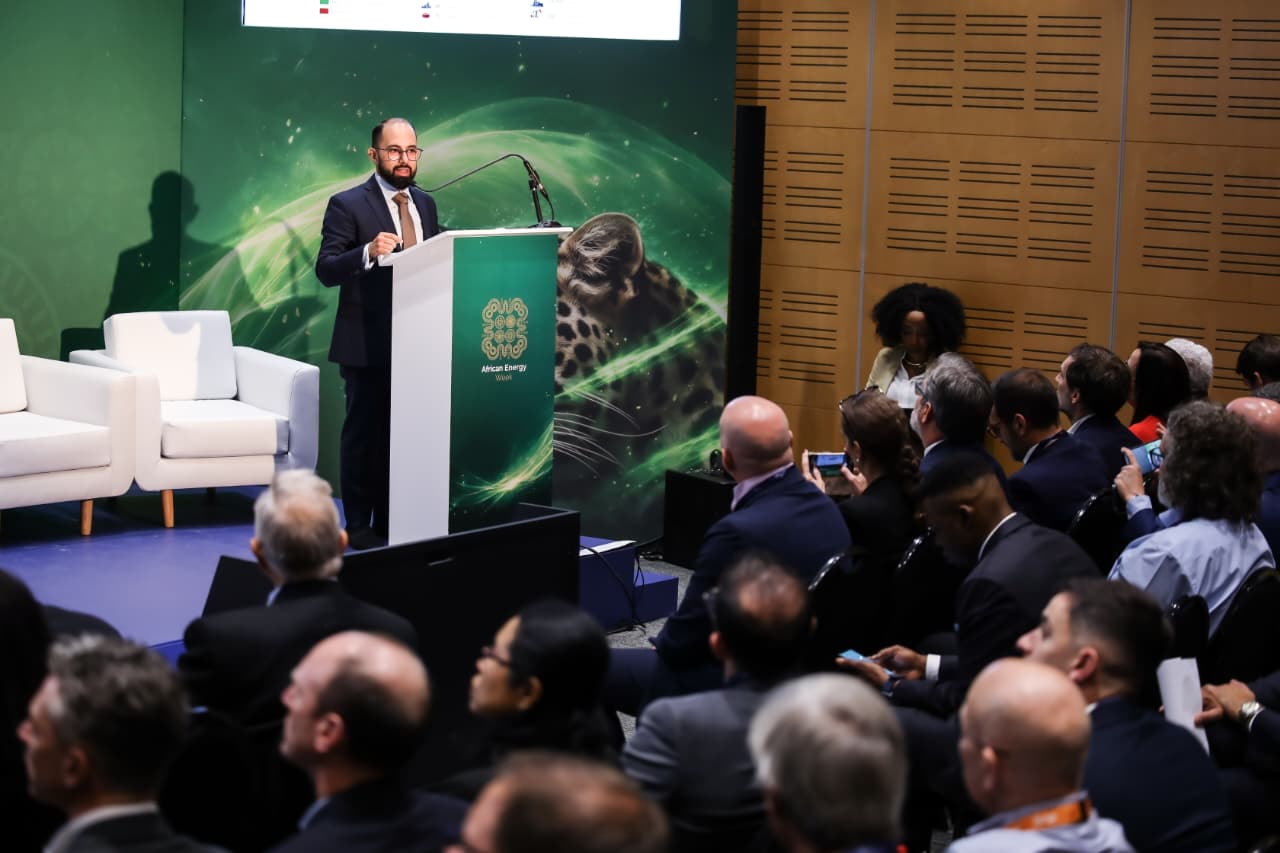
CAPE TOWN, South Africa, October 14, 2026/APO Group/ –Angolan National Oil Company Sonangol is advancing plans for an initial public offering (IPO) while expanding its upstream portfolio and investing in Angola’s domestic refining capacity, as the national oil company charts its next phase of growth following its 50th anniversary in 2026. Speaking at the opening ceremony of African Energy Week (AEW) 2026, Executive Board Member Osvaldo Inácio reaffirmed the company’s commitment to privatization, alongside efforts to increase production, progress new developments and translate Angola’s oil and gas resources into broader economic growth.
“We want to make sure that we do it in a way that, when you buy your shares, you are happy with the performance of those shares. We are doing the internal work required to make sure that when we get to that point, it’s a successful story,” he said.
We want to make sure that we do it in a way that, when you buy your shares, you are happy with the performance of those shares
Sonangol’s 50th anniversary comes as Angola’s NOC develops opportunities across exploration, producing assets and domestic processing. Its next investment phase requires capital and technical partners to turn appraisal results into developments while delivering refinery infrastructure and expanding the value retained from Angola’s oil and gas production.
“We are thinking about what the next 50 years will be like, focusing on producing to transform. We are not only looking at managing resources but how we translate those resources into overall development in the country,” he said.
Sonangol’s September account of its Katambi-2 work in Block 24 described a completed formation test in a non-associated gas reservoir, providing further evidence for assessment of the field’s development potential. In its producing portfolio, the company and its partners also reported approximately 100 meters of net oil pay at PAC 416 in Block 3/05, as part of a program intended to increase operated production. The results give Sonangol a technical basis for future investment, while appraisal, development design and commercial arrangements remain necessary steps.
“If you look at our portfolio, we have both operated and non-operated assets. The focus is on making sure we are doing everything we can to make sure those assets are still producing at the highest rate possible. New developments such as Block 3/05 are advancing. We are also part of Kaminho with TotalEnergies,” Inácio shared.
Downstream, Angola’s government reported in September that the Lobito refinery was approximately 26% physically complete, with around $1.6 billion invested and completion envisaged for 2029. A potential petrochemical complex was under study. Alongside Cabinda’s initial 30,000-bpd refining phase, Lobito gives Sonangol’s diversification program a concrete industrial focus, with financing, construction progress and product marketing central to the next stage.
Distributed by APO Group on behalf of African Energy Chamber.
We use cookies on our website to give you the most relevant experience by remembering your preferences and repeat visits. By clicking “Accept”, you consent to the use of ALL the cookies.
This website uses cookies to improve your experience while you navigate through the website. Out of these, the cookies that are categorized as necessary are stored on your browser as they are essential for the working of basic functionalities of the website. We also use third-party cookies that help us analyze and understand how you use this website. These cookies will be stored in your browser only with your consent. You also have the option to opt-out of these cookies. But opting out of some of these cookies may affect your browsing experience.
Necessary cookies are absolutely essential for the website to function properly. These cookies ensure basic functionalities and security features of the website, anonymously.
Cookie
Duration
Description
cookielawinfo-checkbox-analytics
11 months
This cookie is set by GDPR Cookie Consent plugin. The cookie is used to store the user consent for the cookies in the category "Analytics".
cookielawinfo-checkbox-functional
11 months
The cookie is set by GDPR cookie consent to record the user consent for the cookies in the category "Functional".
cookielawinfo-checkbox-necessary
11 months
This cookie is set by GDPR Cookie Consent plugin. The cookies is used to store the user consent for the cookies in the category "Necessary".
cookielawinfo-checkbox-others
11 months
This cookie is set by GDPR Cookie Consent plugin. The cookie is used to store the user consent for the cookies in the category "Other.
cookielawinfo-checkbox-performance
11 months
This cookie is set by GDPR Cookie Consent plugin. The cookie is used to store the user consent for the cookies in the category "Performance".
viewed_cookie_policy
11 months
The cookie is set by the GDPR Cookie Consent plugin and is used to store whether or not user has consented to the use of cookies. It does not store any personal data.
Functional cookies help to perform certain functionalities like sharing the content of the website on social media platforms, collect feedbacks, and other third-party features.
Performance cookies are used to understand and analyze the key performance indexes of the website which helps in delivering a better user experience for the visitors.
Analytical cookies are used to understand how visitors interact with the website. These cookies help provide information on metrics the number of visitors, bounce rate, traffic source, etc.
Advertisement cookies are used to provide visitors with relevant ads and marketing campaigns. These cookies track visitors across websites and collect information to provide customized ads.











 Energy3 days ago
 Business3 days ago
 Business3 days ago
 Business2 days ago
 Energy3 days ago
 Business2 days ago
 Business2 days ago