

Business
Challenges and Opportunities – Global Survey Results on Women’s Tech Careers
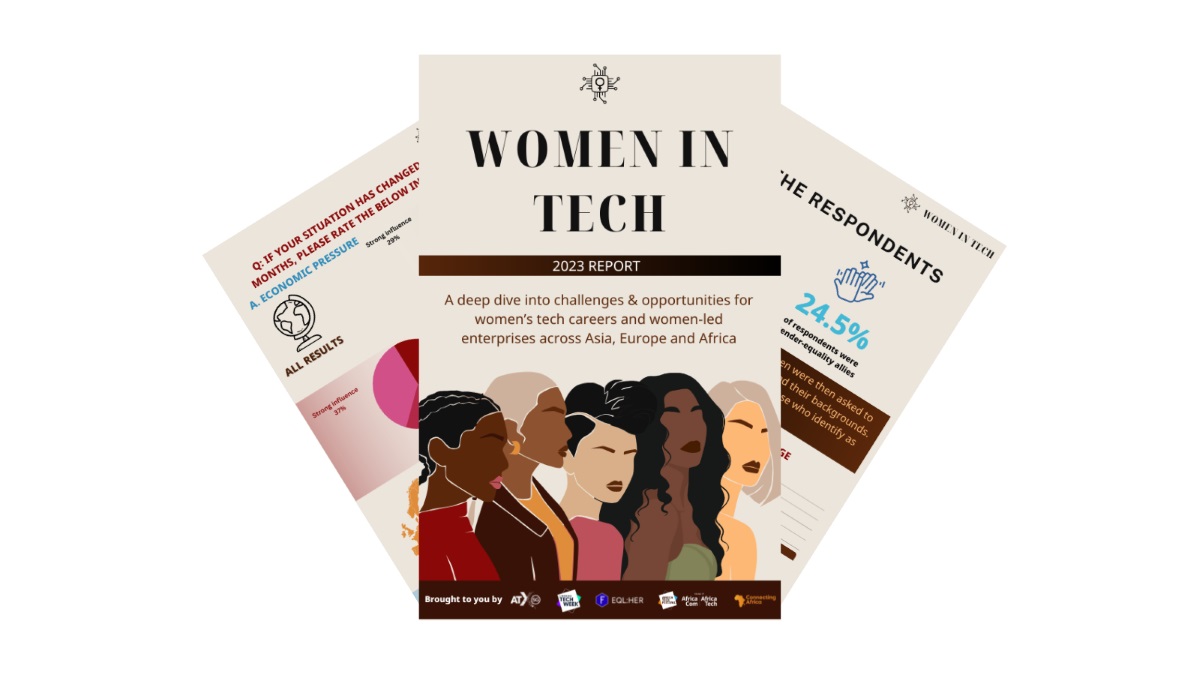
New survey reveals COVID, cost of living crisis, skills shortages and lack of mentorship have negatively affected women’s career development in the past 2 years
CAPE TOWN, South Africa, March 8, 2023/APO Group/ —
52% believe women’s careers in tech suffered due to COVID-19 & cost-of-living crisis; 32% of those in the tech sector say they haven’t received a promotion for over 24 months; 68% see a skills shortage as a key barrier to entry; 21% of women in Africa tech roles are working more than one job to make ends meet; women still need better pay and better flexible working opportunities.
A new global survey of women and allies ahead of International Women’s Day (IWD) today, 8 March, held under the theme “DigitALL: Innovation and technology for gender equality’”, reveals that parity for women in technology-related positions and industries is still a way off, and suggests that COVID-19 has had a major role to play in blocking women’s advancement, along with a skills shortage, and that women are further hampered in their progression by a cost-of-living crisis and lack of access to funding.
The survey entitled, ‘A deep dive into challenges & opportunities for women’s tech careers and women-led enterprises across Asia, Europe and Africa’, attracted respondents from those three regions, with 45% of respondents who live and work in Africa, 38% based in Europe and 17% in Asia. The survey, conducted by global tech event Africa Tech Festival (http://www.AfricaTechFestival.com/) and tech news portal Connecting Africa (http://www.ConnectingAfrica.com/) in conjunction with London Tech Week and Asia Tech X Singapore, is part of a new annual benchmark survey mapping barriers faced by women in business, perceptions around why they cannot move forward, as well as potential solutions and opportunities to bridging the equality divide.

Challenges
The survey found that over half (56%) of respondents believed that when it came to the recent pandemic and to economic challenges in general, it was women who missed out on work opportunities, were forced to scale down work and take time off to care for children, as well as undertaking more household chores.
26% of the respondents believe women are more likely than men to have been denied access to financial support from governments, whilst a further 26% perceive women as shouldering most of the burden of childcare or care of other dependants in their households whilst juggling work responsibilities.
These compounded the challenges women in the increase of the cost of living, with a little over 2/3 of European and Asian women respondents’ employment situation was impacted by the cost-of-living crisis. However, that number increases to almost 81% of African women. The cost-of-living crisis seems to have a bigger impact in Africa than in Asia and Europe.
Working more than one job is increasingly commonplace – 15% revealed they used to be self-employed or own a business but have now taken another job whilst running their business on the side, with 21% of African respondents confirming they are now working two or more jobs, a greater proportion than their counterparts in Europe and Asia.
Whilst women still experience gender bias in the tech sector, overall, unemployment in the tech ecosystem was found to be less than other surveyed industry sectors, with just 2% of women tech workers across the three regions targeted made redundant over the past 24 months. 12% of those respondents are now working full time when they used to be unemployed and a further 16% are now working full-time up from their part time roles.
73% of women respondents across the three continents have seen their employment situation in the tech sector impacted by a lack of career development opportunities, with 32% revealing they had a pay loss and/or haven’t received a promotion for more than 24 months, although this could be due to the pervading economic climate.
Lack of funding and support for women in tech
The survey shows that women are still a long way from achieving equality when it comes to obtaining funding. Having a greater amount of women-focused business events and awards is perceived as one of the most powerful initiatives, which has helped women-led start-ups get better access to funding over the last 24 months. This is closely followed by more women in tech being championed in the press. African women, however, seem to struggle the most, with 19% saying it is now significantly more difficult to access funding.
We need to focus from the grassroots up and empower Africa’s young women to follow paths into STEM careers by providing better funding
Other factors that could lead to better support for women-led business and to encourage more women to enter the field, include the presence of more women-led venture capital funds and women-focused accelerator programmes.
Underlining this, and on a continent that is increasingly reliant on the start-up ecosystem for economic sustainability, Africa is where women (41%) struggle the most to launch a new business, whilst 68% of respondents believe skills shortage to be the biggest obstacle to women entering the sector.
Sadly, 40% of African women respondents believed it was more difficult for women to secure a pay rise in tech, whilst 41% said it was more difficult for women to achieve senior leadership or board positions.
Commenting on the reality of the situation in Africa, Paula Gilbert, Connecting Africa Editor, said: “Africa is making strides towards more gender parity in the tech and telecoms industry but there is still a lot that needs to be done to have true equality in the sector. When it comes to investment, the proportion of funding going to female-founded and female-led start-ups in Africa, remains incredibly low and representation at a C-suite and board level remains skewed towards male leaders.
“We need to focus from the grassroots up and empower Africa’s young women to follow paths into STEM careers by providing better funding, access to skills programmes and mentorship opportunities. That said, there is no silver bullet to cure this problem, it needs to be approached on all sides to break down the biases that women face on a daily basis and break the cycle for the next generation.”

Solutions
Speaking to Gilbert’s point, women would like to see better visibility and promotion of STEM career opportunities for women to help more women break into and thrive in the tech industry. This would help achieve more gender equity with their male counterparts in the sector, as well as more equal pay between genders and better flexible work opportunities.
Women also believe that there need to be more mentorship programmes for women, as well as opportunities to participate in panel discussions and debates and the development of female role models, which will assist in encouraging more women to enter STEM related businesses.
James Williams, Director, Events, Connecting Africa, Informa Tech, agrees women should be given more representation saying: “International Women’s Day is an incredibly important date in our calendar at Africa Tech Festival. In recent years, many African nations have led the way in female representation and empowerment, from government through to enterprise sectors but there’s no doubt there is some way to go to achieve gender parity across tech and telecoms. That said, given the successes we witness at Africa Tech Festival each year, I truly believe it’s an area Africa can lead the world in, and we are pleased to play our small part in making that happen!”
Given that women bore the brunt of the parenting role and household care, women also believe that more support at work for parents and having flexible working hours and arrangements would help level the playing fields.
This year’s International Women’s Day theme is ‘Innovation and technology for gender equality’ and according to the survey 5G, 4G and Mobile Technology is perceived as the most important innovation over the last 10 years. This has had the biggest impact on gender equality (28% of all respondents), with Edtech being the number one innovation that African women say has helped them.
Distributed by APO Group on behalf of Africa Tech Festival.









Business
ACG CEO Paulo J. Cruz to Speak at the Angola Access & Investment Conference 2026 in Luanda on How Sport and Entertainment Districts Can Drive Inclusive Economic Growth Across Africa

Business
Venezuelan Oil and Gas Opportunities Take Center Stage at African Energy Week (AEW) 2026
Business
Sonangol Cites Commitment to Privatization as Company Charts Next Growth Phase
-

 Energy3 days ago
Venezuela Takes Its Africa Energy Partnership to Cape Town for African Energy Week (AEW) 2026
-
Energy3 days ago
Africa’s Dealmakers Convene as 10,000 Attendees Kick Off African Energy Week (AEW) 2026 in Cape Town
-

 Business3 days ago
African leaders call for capital mobilisation and regional integration to drive growth at inaugural Alamein Africa Forum in Egypt
-
 Business3 days ago
Islamic Development Bank Institute and Universal Postal Union Launch ‘Prosper MSMEs’ to Expand Islamic Digital Financial Services through Postal Networks
-

 Business2 days ago
Verdant Capital Hybrid Fund (VCHF) publishes inaugural Annual Impact Report: investees estimated to have created over 316,000 jobs
-
 Energy3 days ago
History Will Be Signed in Abuja This Tuesday
-

 Business2 days ago
Kholo Capital provides R275 million (US$17 million) mezzanine debt funding to DCC Holdings to support refinancing and future growth
-
 Business2 days ago
Bank NXT extends collaboration with Network International to modernize payments infrastructure