A major step in the company’s efforts to support the sustainable development of blockchain technology
PARIS, France, September 22, 2022/APO Group/ —
Binance (www.Binance.com), the world’s largest cryptocurrency exchange by trading volume, is pleased to announce the creation of its new Global Advisory Board (GAB), comprised of distinguished experts in public policy, government, finance, economics, and corporate governance.
The Global Advisory Board, chaired by former US Senator and Ambassador to China, Max Baucus, recently convened in Paris, France. The board’s purpose is to advise Binance on some of the most complex regulatory, political, and social issues the entire crypto industry faces as it grows and evolves at a fast pace.
“For the past five years, Binance has been at the forefront of pioneering the exciting new world of crypto, blockchain, and Web3,” said Binance founder and CEO Changpeng Zhao. “In that time, we’ve tackled complex issues no one even knew existed. We’ve maintained our focus throughout on delivering compliance solutions that protect the interests of crypto users, while keeping a brisk pace of socially-beneficial innovation. The GAB represents the next big step forward in our journey to share the benefits of modern finance and the blockchain with the entire world.”
“The blockchain and crypto industry can act as a true catalyst for growth and economic opportunities. For the cities that are willing to partner with companies like Binance in order to create progressive regulations and an effective Web3 environment, I expect it to enable a number of investments into the space. I look forward to working with a number of experts as part of Binance’s Global Advisory Board in order to collaborate,” said South Africa’s Leslie Maasdorp.
Prior to joining Binance’s Global Advisory Board, Leslie has served as the Vice President and Chief Financial Officer of the New Development Bank, Former MD & President for Southern Africa at Bank of America Merrill Lynch, Former Vice Chairman of Barclays Capital and Former International Adviser to Goldman Sachs.
Binance is harnessing the GAB’s unrivaled collective experience and expertise to benefit the sustainable development of the industry as a whole, by weighing in on the toughest and most sensitive regulatory and compliance issues facing crypto, blockchain, and Web3.
“We always put our users first, and that’s served as a very effective North Star for us over the past five years of unprecedented, exciting growth,” Zhao said. “With the GAB, we’re supercharging our ability to manage regulatory complexity by tapping into the highest level of expertise available anywhere in the world. This collaboration between Binance and the leading experts of the GAB is a testament to our focus on compliance, transparency and ensuring a collaborative relationship with the world’s regulators as they develop sensible regulations worldwide.”
The GAB’s roster includes:
Max BacusUSA
Former U.S. Ambassador to the People’s Republic of China; Former U.S. Senator Montana; Former Chairman of Senate Committee on Finance
Ibukun AwosikaNigeria
First Female Chairman, First Bank of Nigeria; Founder, The Chair Centre group; Chairman, Nigerian Advisory Board, for Impact Investing and Convention on Business Integrity; Member G7 International Task Force for impact investing; Author of several books
HyungRin BangKorea
Advisor of the Korea Presidential Committee; PR/Communications Advisor of Yoon Seuk-Yul’s 2022 Presidential Campaign; Former CEO, SoftForum Inc.; Former Executive Director, Hyundai; Former Executive Director, Samsung;
Bruno BezardFrance
Managing Partner of Cathay Capital; Former Vice Minister of Finance; Former Economic Advisor to the French Prime Minister; Former head of the French Treasury
Leslie MaasdorpSouth Africa
Vice President and Chief Financial Officer of the New Development Bank; Former MD & President for Southern Africa at Bank of America Merrill Lynch; Former Vice Chairman of Barclays Capital; Former International Adviser to Goldman Sachs.
Henrique de Campos Meirelles Brazil
Former Minister of the Economy, Former President of the Central Bank of Brazil, Former Chair of J&F’s board of directors, Former Member of the Board of Directors of Azul Brazilian Airlines, Former President, Bank Boston; Former President of Global Banking, Fleetboston Financial; Former Board member, Raytheon Corporation, Bestfoods and Champion International. Former Member of the Council of Lloyd’s of London; Former Chairman of Lazard Americas.
Adalberto PalmaMexico
Honorary Board Member of The Aspen Institute Mexico; Former Senior Advisor at the Chief of Staff Office to the President of Mexico; Director of Business Development at BEworksMX Consulting; Former President of the CNBV; Founding Chairman of The Center for Excellency in Corporate Governance. Independent Director of the Institute for Savings Protection; President of Bankers Trust Mêxico, Colombia and Venezuela; Managing Director of Citibank Mexico.
David PlouffeUSA
Business, Non-Profit and Political strategist; Author, Member of Various Boards of Directors; Former Campaign Manager Senior Advisor to President Obama in the White House
Christin SchäferGermany
Founder and Managing Director of acs plus; Former Group Risk Operating Officer, Erste Group Bank; Former Global Head of Quantitative Solutions, Deutsche Bank, Member of the Data Ethics Commission, German Federal Government
Lord VaizeyUK
Member of the House of Lords; Former Minister and Member of Parliament
David WrightEurope
Chair, EUROFI; Former Secretary General, IOSCO, Former European Commission; Dep DG Financial markets, European Commission
GAB Quotes:
Max Baucus: “Of all the technologies with the potential to create positive disruption, the world of crypto, blockchain, and Web3 is among the most exciting and the most promising. That’s why it is a great pleasure to participate in setting up the Binance Global Advisory Board, and bringing the group’s unrivaled collective expertise to bear in solving complex problems with a socially positive outcome.”
Lord Ed Vaizey: “Blockchain and Web3 technologies promise to be foundational to the future of the internet and the financial system at large. The next few years will be vital in setting the tone for the future of this nascent industry around the world. Helping the Binance Global Advisory Board chart a path through these challenges is a privilege and I look forward to working more closely with the impressive group that Binance has brought together.”
David Wright: “Cryptocurrencies are increasingly challenging traditional finance. As they grow and the regulatory landscape evolves, the GAB will advise Binance how to define and shape the optimal global and regional development of future financial services, traditional and blockchain-enabled, and I look forward to working with distinguished GAB colleagues on these complex challenges.”
Bruno Bézard: “The cryptocurrency industry is at a crossroads as regulation begins to solidify globally. Binance has brought together a group that is as global as the industry it represents, and brings together some of the world’s leading experts across the financial and political worlds. It is an honor to be invited to join them.”
Christin Schäfer: “With Web3, and the underlying blockchain technologies, come profoundly new ways of interacting with the internet and dealing with data. The Global Advisory Board that Binance has built brings together experts that can help guide the company and industry at large through managing the risks and challenges ahead.”
Ibukun Awosika (Nigeria): “The transparency and accountability with which Binance seeks to deliver services to its clients is impressive. As a company of the future, Binance must continue to evolve, build and find solutions in real time. I am proud to play a role as a member of its Global advisory board and to be a part of truly transforming the web3 economy.”
Leslie Maasdorp (South Africa): “The blockchain and crypto industry can act as a true catalyst for growth and economic opportunities. For the cities that are willing to partner with companies like Binance in order to create progressive regulations and an effective Web3 environment, I expect it to enable a number of investments into the space. I look forward to working with a number of experts as part of Binance’s Global Advisory Board in order to collaborate.”
Henrique de Campos Meirelles (Brazil): “Blockchain technology and cryptocurrencies are going to set the tone of the financial services of the future, with great benefits to the economies, financial inclusion and the quality of service that people have access to worldwide. The Binance Global Advisory Board, being composed of leading experts in many areas, will have a relevant role in helping this nascent and growing industry establish itself as regulations across the world evolve, so that we work to build a safe and sustainable ecosystem for all.”
Adalberto Palma Gómez (Mexico): “Cryptocurrencies and the whole blockchain ecosystem will increasingly impact people’s lives and benefit society with more democratic and accessible services to all. As the market grows and adoption scales, the Binance Global Advisory Board will help not only the platform but also all the industry evolve so that its future is sustainable and secure to societies. It is a privilege to work with this group and be part of this transforming moment.”
HyungRin Bang (Korea): “With the cryptocurrency and blockchain industry entering into new phases globally, it is inspiring to be part of the Binance Global Advisory Board, where esteemed experts from different fields join to discuss the industry’s sustainability. As an advocate of information and technology, Korea has substantially grown its domestic cryptocurrency and blockchain industry. I wish to add value to the GAB with insights I learned witnessing the growth of technology throughout my career.”
New facility expands in-country drilling and completion fluids capability, advancing the next phase of SLB’s growth in Mozambique
PEMBA, Mozambique, October 9, 2026/APO Group/ –SLB (NYSE: SLB) (www.SLB.com) announced the opening of a new fluids systems plant in Pemba, Mozambique. The new facility strengthens in-country capacity to prepare, store and deliver drilling and completion fluids for offshore operations, reinforcing the infrastructure needed as Mozambique’s offshore activity grows and its role as a strategic energy hub for East Africa continues to expand.
The commissioning of the plant, also known as a liquid mud plant, coincides with SLB marking 70 years of operations in Mozambique. It reflects the company’s long-term commitment to investing in people, infrastructure and capability that support the country’s long-term offshore energy development plans.
With an initial storage capacity of 21,000 barrels, the liquid mud plant provides a scalable platform for future growth, supporting multiple customers and rising offshore activity while improving logistics and enhancing operational flexibility.
As SLB marks 70 years in Mozambique, this investment reflects our confidence in the country’s future and our commitment to supporting its energy ambitions
“As SLB marks 70 years in Mozambique, this investment reflects our confidence in the country’s future and our commitment to supporting its energy ambitions,” said Miguel Baptista, Central, East and Southern Africa, Managing Director, SLB. The new liquid mud plant strengthens local energy infrastructure, expands opportunities for local content development, and enhances our ability to support customers as they deliver some of Africa’s most significant offshore energy resources.”
The liquid mud plant project was delivered with strong local participation and that momentum is expected to continue into operations. During project delivery, more than 100 jobs were created in Pemba with nationals representing 80% of the workforce, reflecting a focus on building local capability.
The project was delivered with a strong focus on safety, operational integrity, and quality, achieving more than 67,000 hours worked without a recordable safety incident.
This key infrastructure strengthens SLB’s ability to support consistent service quality and enhance supply chain readiness for increasing offshore activity across Mozambique, supporting customers execute safely and efficiently while developing local skills and expertise.
Key Points:
SLB has commissioned a new fluids system plant in Pemba, expanding in-country drilling and completion fluids capability for offshore operations.
With an initial storage capacity of 21,000 barrels, the facility provides a scalable platform to support growing offshore activity in Mozambique.
The investment marks the next phase of SLB’s growth in Mozambique, strengthening local capability and supporting long-term offshore energy development.
Battery energy storage systems (BESS) are becoming critical system infrastructure, supporting flexibility, reducing avoidable curtailment, shifting energy into periods of demand and strengthening security of supply
JOHANNESBURG, South Africa, October 9, 2026/APO Group/ –The South African Energy Storage Association (SAESA) (www.SAESA.org.za) welcomes the prioritisation of 4,600 MW of battery energy storage under the first Integrated Resource Plan (IRP) 2025 Section 34 determination.
The timing is significant. Recent Integrated Energy Plan (IEP) modelling and assumptions discussions highlighted a fundamental shift that South Africa’s energy planning now needs to capture: we cannot plan the future power system by counting megawatts of generation alone.
We must plan for when energy is available, where it is available, how it moves through a constrained grid and how it is stored and dispatched when the system needs it most.
The announcement reinforces that shift. Battery energy storage systems (BESS) are becoming critical system infrastructure, supporting flexibility, reducing avoidable curtailment, shifting energy into periods of demand and strengthening security of supply.
For SAESA, the message for the IEP is clear: storage, flexibility and system services must be modelled as integral components of South Africa’s future electricity architecture, with their contribution considered from the outset of generation planning.
“The IEP must plan the power system we are becoming, not simply model the power system we have inherited,” says SAESA.
The IEP must plan the power system we are becoming, not simply model the power system we have inherited
Partnership with C&I Energy + Storage Summit
SAESA is an association partner of the C&I Energy + Storage Summit, created by VUKA Group, taking place on 28–29 October 2026 at The Maslow Hotel, Sandton, Johannesburg.
The summit brings together commercial and industrial energy users, project developers, financiers, regulators and solution providers to explore practical approaches to energy security, procurement and storage deployment.
For businesses assessing how storage can support their operations, the event offers an opportunity to meet SAESA and engage with the wider energy community on the decisions shaping South Africa’s evolving electricity system.
Commercial and industrial energy decision-makers are invited to apply to attend as hosted buyers. Qualifying buyers receive complimentary summit access and curated opportunities to engage with industry partners.
Meet SAESA at C&I Energy + Storage Summit: Join the Hosted Buyer Programme
The Hosted Buyer Programme connects commercial and industrial energy decision-makers with solution providers shaping South Africa’s evolving private energy market.
Qualified energy buyers receive complimentary access to the summit and curated engagement with industry partners exploring energy procurement, storage deployment and project development.
Expanding credible rating coverage can improve the information available to investors and support the development of deeper domestic and regional capital markets
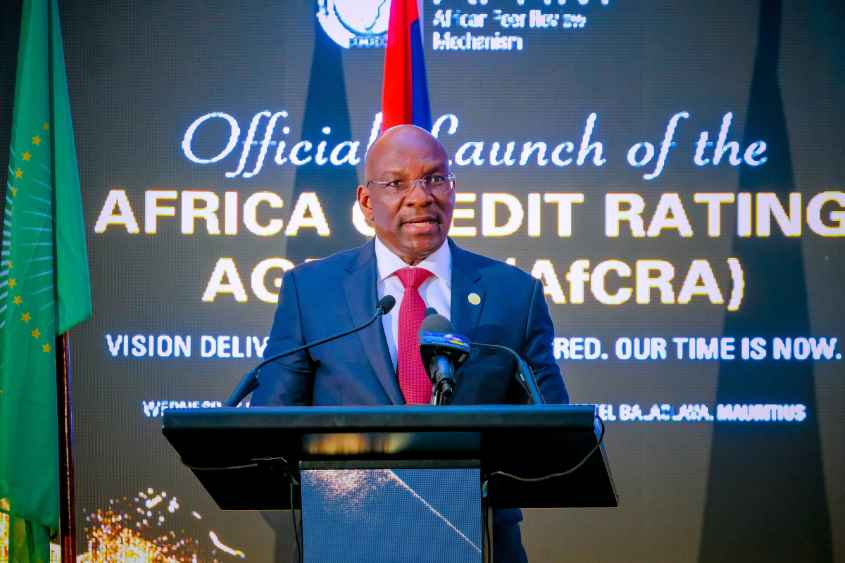
PORT LOUIS, Mauritius, October 8, 2026/APO Group/ –African Export-Import Bank (Afreximbank) (www.Afreximbank.com) welcomes today’s launch of the Africa Credit Rating Agency (AfCRA), an important milestone in strengthening Africa’s financial architecture and expanding the continent’s capacity to generate credible, independent analysis of African credit risk.
Credit ratings play an important role in determining access to capital, influencing investor perceptions and shaping the cost at which governments, institutions and businesses can finance development. It is therefore essential that assessments of African credit risk are independent, rigorous and evidence-based, while reflecting a complete understanding of the structures, institutions and economic realities being assessed.
The establishment of AfCRA adds an important African-led source of credit opinion to the market. Its value will not be measured by whether it produces more favourable ratings, but by the credibility of its analysis, the quality of its data and transparency of its methodology, and its ability to deepen understanding of African sovereigns, sub-sovereigns and corporate credit.
This is particularly important given that many African issuers remain unrated, while local-currency and sub-sovereign markets continue to have limited rating coverage. Expanding credible rating coverage can improve the information available to investors and support the development of deeper domestic and regional capital markets.
AfCRA must set a new benchmark for the continent, maintain its independence, and remain wholly owned and controlled by Africans
Alongside fellow members of the Alliance of African Multilateral Financial Institutions (AAMFI), Afreximbank has consistently maintained that African Multilateral Financial Institutions should be assessed on the basis of their fundamentals, performance, legal frameworks, mandates and operating models. Ensuring that these institutional characteristics are properly understood is essential to achieving informed, balanced and credible assessments of African risk.
Commenting on the uniqueness of the African market, and need for AfCRA’s rating methodology to reflect this, Mr Denys Denya, Senior Executive Vice President, Afreximbank, said: “The rating methodology AfCRA develops must recognise the uniqueness of our environment and its institutional structures. The Agency must set its own standards and not follow those set elsewhere — it must build a unique identity that conforms to an ‘African best practice.”
Highlighting the need for the autonomy of the Africa Credit Rating agency as it takes off, Mr Denya added: “Most importantly, AfCRA must set a new benchmark for the continent, maintain its independence, and remain wholly owned and controlled by Africans. We must all use it, and in return expect a complete assessment of where we (Africa) stand: the strengths the market has ignored, and the weaknesses we still need to fix.”
AfCRA should therefore be seen as complementary to existing international and regional rating agencies, broadening the range of credible analysis available to investors and issuers while strengthening competition, transparency and analytical capacity within Africa’s credit markets.
As Africa seeks to mobilise the scale of capital required for industrialisation, trade, infrastructure and economic transformation, credible African institutions that improve information, strengthen market confidence and deepen the continent’s financial markets will become increasingly important.
Afreximbank congratulates the African Union, the African Peer Review Mechanism (APRM) and all those involved in bringing AfCRA from concept to launch, and looks forward to the contribution the Agency will make to deeper, more transparent and more efficient African capital markets.
Distributed by APO Group on behalf of Afreximbank.
We use cookies on our website to give you the most relevant experience by remembering your preferences and repeat visits. By clicking “Accept”, you consent to the use of ALL the cookies.
This website uses cookies to improve your experience while you navigate through the website. Out of these, the cookies that are categorized as necessary are stored on your browser as they are essential for the working of basic functionalities of the website. We also use third-party cookies that help us analyze and understand how you use this website. These cookies will be stored in your browser only with your consent. You also have the option to opt-out of these cookies. But opting out of some of these cookies may affect your browsing experience.
Necessary cookies are absolutely essential for the website to function properly. These cookies ensure basic functionalities and security features of the website, anonymously.
Cookie
Duration
Description
cookielawinfo-checkbox-analytics
11 months
This cookie is set by GDPR Cookie Consent plugin. The cookie is used to store the user consent for the cookies in the category "Analytics".
cookielawinfo-checkbox-functional
11 months
The cookie is set by GDPR cookie consent to record the user consent for the cookies in the category "Functional".
cookielawinfo-checkbox-necessary
11 months
This cookie is set by GDPR Cookie Consent plugin. The cookies is used to store the user consent for the cookies in the category "Necessary".
cookielawinfo-checkbox-others
11 months
This cookie is set by GDPR Cookie Consent plugin. The cookie is used to store the user consent for the cookies in the category "Other.
cookielawinfo-checkbox-performance
11 months
This cookie is set by GDPR Cookie Consent plugin. The cookie is used to store the user consent for the cookies in the category "Performance".
viewed_cookie_policy
11 months
The cookie is set by the GDPR Cookie Consent plugin and is used to store whether or not user has consented to the use of cookies. It does not store any personal data.
Functional cookies help to perform certain functionalities like sharing the content of the website on social media platforms, collect feedbacks, and other third-party features.
Performance cookies are used to understand and analyze the key performance indexes of the website which helps in delivering a better user experience for the visitors.
Analytical cookies are used to understand how visitors interact with the website. These cookies help provide information on metrics the number of visitors, bounce rate, traffic source, etc.
Advertisement cookies are used to provide visitors with relevant ads and marketing campaigns. These cookies track visitors across websites and collect information to provide customized ads.















 Business5 days ago
 Business4 days ago
 Energy5 days ago
 Business5 days ago
 Events5 days ago