Connect with us
Anglostratits

Energy

Back Contact Solar Technology Set to Usher in the Next Industrial Leap for Global Photovoltaics

Published

on

Back Contact

Back Contact (BC) solar technology is emerging as the cornerstone of the next industrial phase for solar photovoltaic (PV) projects by combining record-setting efficiency with lower production costs.

By 2030, PV is expected to account for more than 70% of new renewable energy capacity, making it the single largest renewable power source worldwide. By 2050, cumulative installations could reach 18,200GW, meeting nearly half of global electricity demand.

However, the industry continues to face challenges including overcapacity, falling prices, and growing pressure to innovate for higher yields and reduced carbon footprints.

BC Technology: From Laboratory Concept to Industrial Mainstream

BC solar cells position all electrical contacts on the rear surface of the cell, eliminating front-side metal shading and significantly boosting light absorption.

This design enables mass-production efficiencies above 27%, outperforming conventional tunnel oxide passivated contact (TOPCon) cells by approximately 1.6 percentage points — a gain that has historically marked major market-wide technology transitions.

Through sustained research and process innovation, BC technology has evolved from a high-cost, niche solution to a scalable, industrial mainstream option.

Three Breakthroughs Driving Industrialization

  1. Laser Patterning replacing photolithography, reducing manufacturing costs by over 60% and increasing throughput fortyfold.
  2. Wet-process Simplification, cutting chemical steps from ten to three and halving processing time.
  3. Zero-busbar and Parallel Soldering, reducing silver usage by 30% and improving both module reliability and efficiency.


Record Efficiency and Verified Reliability

In March 2025, BC cells achieved a world-record efficiency of 27.81%, only 1.3% below the theoretical silicon limit. Field data from more than 30 demonstration projects across Asia and Europe confirm that BC modules deliver 1.2% to 3.2% higher power generation than TOPCon under clear conditions, and up to 33% higher output under partial shading.

This performance advantage, combined with lower material intensity, positions BC modules as a sustainable and cost-efficient solution for investors and developers operating under tightening carbon-footprint regulations.

The BC Decade: 2025–2035

Industry analysts forecast that BC modules will capture more than 60% of global PV market share by 2030. The technology’s superior efficiency and shading tolerance make it particularly suited for urban rooftops, floating solar installations, desert-based systems, and other high-value commercial applications.

As global energy transitions accelerate, BC solar technology is set to lead the PV sector from price-based to value-based competition — where energy yield, reliability, and lifecycle sustainability define success.

Webinar Invitation

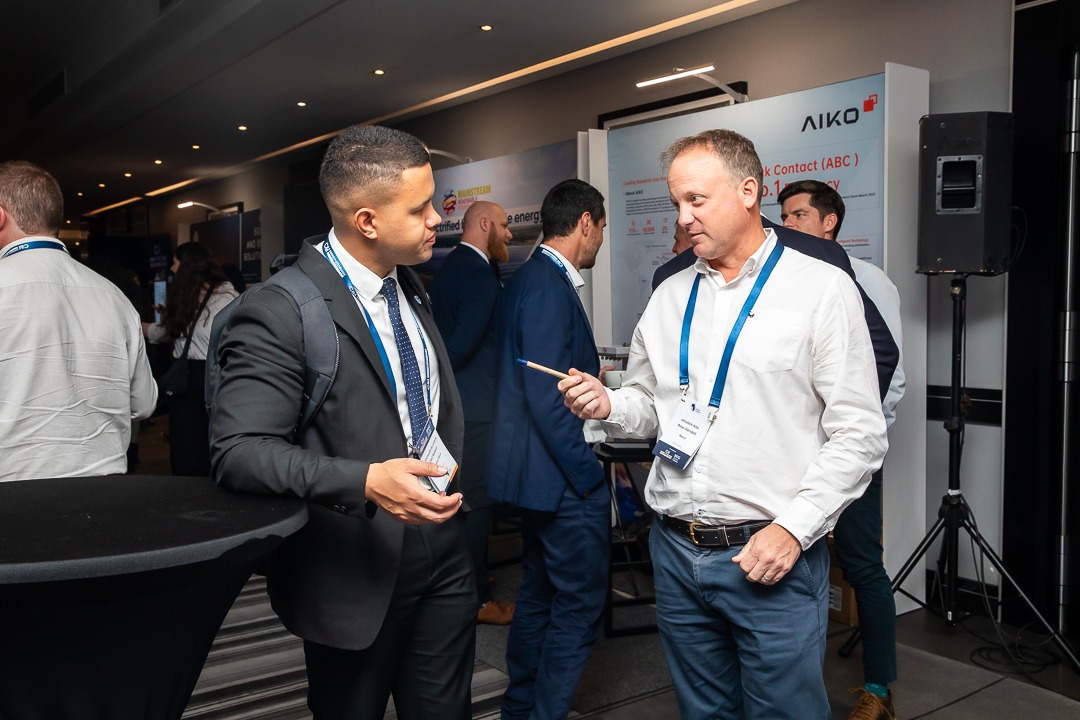
Industry professionals, project developers, financiers, and renewable energy policymakers are invited to join a technical webinar hosted by solar technology experts.

Date: Thursday, 27 November 2025
Time: 2:00–3:00 PM SAST
Topic: Back Contact (BC) Solar Technology — Fundamentals and Practical Advantages

Register here: https://apo-opa.co/4ntstvR

Distributed by APO Group on behalf of VUKA Group.

Home  Facebook

Business

From Megawatt (MW) to Gigawatt (GW): Why Africa Must Think in Grid-Scale Power to Compete in the Artificial Intelligence (AI) Economy

Published

on

African Energy Chamber

As AI infrastructure drives power demand into the gigawatt range, Africa must move beyond incremental energy planning – placing grid-scale generation at the center of discussions at African Energy Week 2026’s AI and Data Center Track

CAPE TOWN, South Africa, May 11, 2026/APO Group/ –The rapid expansion of artificial intelligence is fundamentally reshaping global energy demand, with implications that extend well beyond traditional power planning. Nowhere is this more apparent than in the growing energy footprint of data centers. Facilities that once required tens of megawatts are now being developed at 100–200 MW scale, with hyperscale campuses increasingly aggregating demand into the gigawatt range.


This shift presents a structural challenge for Africa. While the continent is rich in energy resources, its planning frameworks remain largely oriented around incremental, megawatt-scale additions – often tied to localized demand or short-term capacity gaps. In the context of AI-driven infrastructure, this approach is increasingly misaligned with the scale and concentration of future demand.

Africa’s data center sector, while growing, remains at an early stage. Operational capacity currently stands at approximately 300–400 MW, with projections reaching 1.5–2.2 GW by 2030. At the same time, demand is accelerating rapidly: electricity consumption from data centers is rising at 20–25% annually and is expected to reach around 8,000 GWh in the near term. This growth mirrors a broader global surge, with data center power demand projected to approach 945 TWh by 2030, driven largely by AI workloads.

This is ultimately about aligning Africa’s energy strategy with where global demand is heading

What distinguishes AI-related demand is not only its scale, but its concentration and consistency. Unlike many traditional industrial loads, data centers require uninterrupted, high-quality power, often with built-in redundancy. This places new demands on grid design, prioritizing stability, capacity and long-term scalability over incremental expansion.

Meeting these requirements will require a departure from conventional planning models. Rather than adding capacity in small increments, there is a growing case for developing gigawatt-scale generation aligned with emerging digital infrastructure hubs. This means integrating power generation, transmission and data center development into coordinated investment strategies, particularly in markets with strong resource bases and improving regulatory environments.

It also requires a shift in how excess capacity is viewed. In many African power systems, surplus generation has historically been treated as a financial inefficiency. In the context of AI and digital infrastructure, however, maintaining a margin of available capacity can enhance grid stability, reduce outages and provide the flexibility needed to support rapid load growth, while creating a foundation for broader industrial development.

A useful benchmark can be seen in Northern Virginia, the world’s largest data center market, where installed capacity has now exceeded 4 GW and more than 1 GW of new supply was added in a single year, reflecting the rapid pace at which hyperscale infrastructure is being deployed. Driven by major cloud and AI players, demand has tightened the market significantly, with vacancy rates approaching zero and most new capacity released well in advance. The scale and speed of development highlight how quickly data center demand is expanding – and underscore the level at which infrastructure must be planned.

These dynamics are increasingly shaping the policy conversation. At African Energy Week 2026, the AI and Data Center Track will focus on the infrastructure required to support this transition, with a particular emphasis on aligning energy planning with digital economy objectives. As AI infrastructure scales, reliable and abundant power is no longer a supporting factor, but a prerequisite.

“This is ultimately about aligning Africa’s energy strategy with where global demand is heading,” says NJ Ayuk, Executive Chairman of the African Energy Chamber. “If we continue to plan in megawatts, we will struggle to compete in an economy that is already moving at the gigawatt scale. Building larger, more resilient power systems is not just about meeting demand – it is about creating the conditions for investment, innovation and long-term growth.”

Distributed by APO Group on behalf of African Energy Chamber.

Continue Reading

Business

Angola Strengthens Global Investment Drive Across Oil, Gas and Mineral Resources

Published

on

Angola

With sweeping reforms across the extractive sector, Angola is entering a new phase defined by transparency, regulatory modernisation, value addition, and international partnership

LONDON, United Kingdom, May 8, 2026/APO Group/ –At a defining moment in Angola’s economic transformation, the Critical Minerals Africa Group (CMAG) (https://CMAGAfrica.com), together with the Government of Angola and the Ministry of Mineral Resources, Petroleum and Gas of the Republic of Angola (MIREMPET), will convene global investors, policymakers, and industry leaders in London for the Angola Oil, Gas & Mining Investment Conference on 14 May 2026.


More than a conference, this gathering represents a strategic international engagement at a time when Angola is actively reshaping its economic future and positioning itself as one of Africa’s most compelling destinations for long-term investment in natural resources, infrastructure, and industrial development.

With sweeping reforms across the extractive sector, Angola is entering a new phase defined by transparency, regulatory modernisation, value addition, and international partnership. The country’s leadership is sending a clear message to global markets: Angola is open for investment and ready to build transformational partnerships that support sustainable growth and economic diversification.

This is not simply about resource development, it is about building long-term industrial growth, strengthening energy and mineral supply chains, and shaping Angola’s future

The event will be headlined by H.E. Diamantino Azevedo, Minister for Mineral Resources, Oil and Gas of Angola, whose leadership since 2017 has been central to advancing Angola’s mineral and hydrocarbons agenda. Under his stewardship, Angola has accelerated institutional reform, strengthened governance frameworks, promoted private sector participation, and prioritised sustainable resource development.

As global demand intensifies for critical minerals, energy security, and resilient supply chains, Angola is uniquely positioned to become a strategic partner to international investors and industrial economies. The country’s vast untapped mineral wealth, significant oil and gas reserves, expanding infrastructure ambitions, and commitment to economic diversification present a rare investment window for global stakeholders.

Speaking ahead of the event, Veronica Bolton Smith, CEO of the Critical Minerals Africa Group said:

“Angola stands at a pivotal point in its national development. The reforms taking place across the country’s extractive sectors are creating unprecedented opportunities for responsible international investment and strategic partnership. This is not simply about resource development, it is about building long-term industrial growth, strengthening energy and mineral supply chains, and shaping Angola’s future as a globally competitive investment destination. We believe this moment represents one of the most important opportunities for international partners to engage with Angola’s leadership and participate in the country’s next chapter of economic transformation.”

The event is expected to attract a distinguished international audience, including sovereign representatives, institutional investors, mining and energy executives, infrastructure developers, development finance institutions, and strategic partners seeking direct engagement with Angola’s leadership.

Distributed by APO Group on behalf of Critical Minerals Africa Group (CMAG).


Continue Reading

Business

African Union (AU) Commissioner Mataboge Joins African Energy Week (AEW) 2026 as Continent Scales Interconnected Energy Infrastructure

Published

on

African Energy Chamber

Lerato Mataboge’s participation reflects the African Union’s commitment to transforming African energy systems, prioritizing African-led innovation and priorities

CAPE TOWN, South Africa, May 7, 2026/APO Group/ –Lerato D. Mataboge, Commissioner for Infrastructure and Energy at the African Union (AU), has joined the upcoming African Energy Week (AEW) Conference and Exhibition – taking place October 12-16 in Cape Town – as a speaker. Her participation puts the AU’s institutional voice at the center of the event at a moment when the continental body is moving from policy architecture to execution, and growing increasingly vocal about the conditions it will and will not accept from international partners.


Mataboge has been among the clearest African voices pushing back on the terms of the global energy transition debate. At the World Economic Forum in Davos in January 2026, she challenged the prevailing narrative, arguing that baseload power is a non-negotiable prerequisite for African industrialization and that the continent cannot be assessed by the same benchmarks applied to economies that already have reliable electricity. Africa holds around 20% of the world’s identified uranium resources yet accounts for less than 1% of global nuclear electricity consumption, a disparity she has cited as emblematic of a broader pattern of resource wealth that has yet to translate into energy sovereignty.

Commissioner Mataboge is the institutional link between Africa’s continental energy ambitions and the investors and developers who can make them real

Speaking in Cape Town in March, Mataboge noted that Africa has approximately 245 GW of installed generation capacity, while electricity consumption averages around 600 kWh per person per year, roughly five times below the global average. Closing the gap means connecting between 90 and 100 million additional people to electricity annually, requiring roughly $200 billion in annual investment by 2030 against a current annual investment level of approximately $45 billion.

Mataboge’s mandate at the AU is to build the institutional architecture that can begin to mobilize that capital at scale. She is overseeing the operationalization of the African Single Electricity Market (AfSEM), which aims to integrate the continent’s fragmented regional power pools into a unified electricity market, alongside the Continental Power Systems Masterplan and the Ten-Year Infrastructure Investment Plan for Cross-Border Connectivity, the AU’s master pipeline for transmission and generation projects. These frameworks have been in development for years, but the challenge has been turning them into bankable propositions that attract private capital. At AEW 2026, that case will be made to the investors and developers who can act on it.

“Commissioner Mataboge is the institutional link between Africa’s continental energy ambitions and the investors and developers who can make them real,” said NJ Ayuk, Executive Chairman of the African Energy Chamber. “Her message is clear – that Africa will not subordinate its development needs to external financing conditions that were never designed with this continent in mind. AEW is the right room to have that conversation, and the right moment.”

AEW 2026 – Africa’s premier energy event – convenes Africa’s foremost policymakers, financiers, developers and operators to advance the continent’s energy agenda. Commissioner Mataboge’s address will place the AU’s institutional framework, and the financing gap it is working to close, at center stage.

Distributed by APO Group on behalf of African Energy Chamber.

Continue Reading

Trending