Connect with us

Business

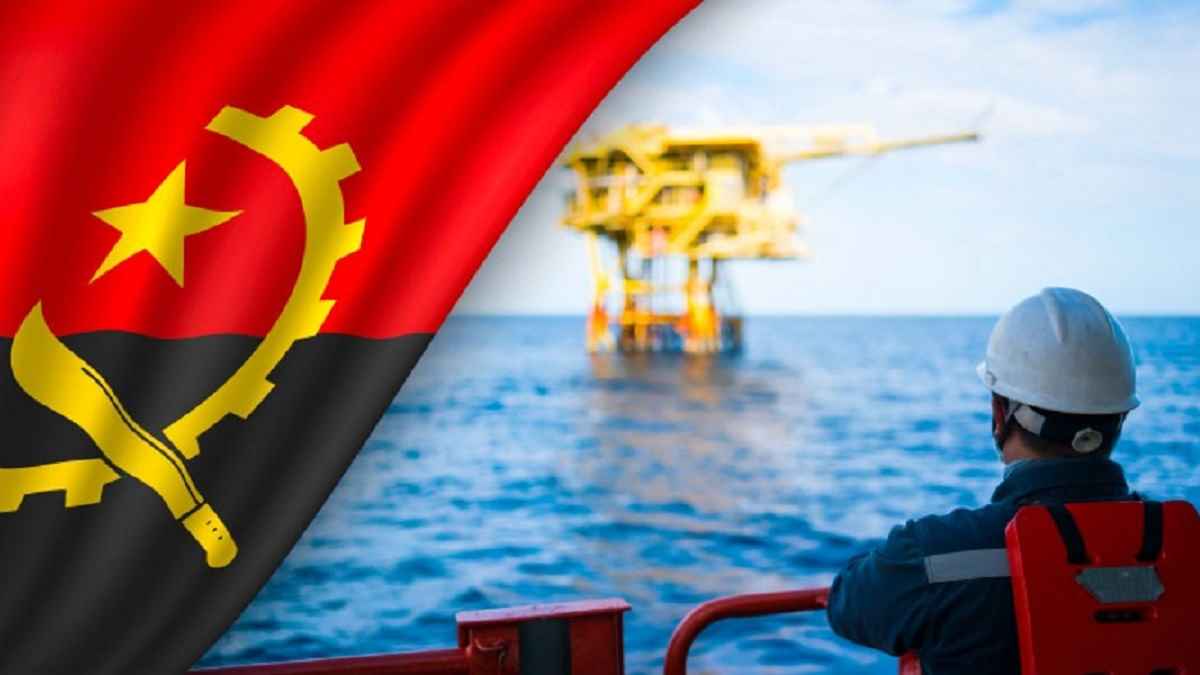
Angola’s Plan to Improve Oil Industry Performance is Already Yielding Fruit with Fast-Tracking Sustainable Oil Development

Published

on

Oil Industry

The country’s crude yields peaked in 2008 at slightly less than 2 million barrels per day (bpd) and now stand at around 1.10-1.15 million bpd

JOHANNESBURG, South Africa, July 17, 2023/APO Group/ — 

By NJ Ayuk, Executive Chairman, African Energy Chamber (www.EnergyChamber.org).

Angola has been in the petroleum business for a long time. It extracted its first barrels of crude oil in the mid-1950s, when development operations started at Benfica, an onshore field in the Cuanza basin, and became an even more prominent player after international oil companies (IOCs) started making major discoveries in the offshore zone in the late 1960s.

Since then, the country has worked its way up through the ranks to become one of the biggest crude oil producers in Africa. Sometimes it even tops the list of the continent’s largest producers. In August 2022, for example, it surpassed Nigeria and attained the top spot for the first time since 2017. While that rise was temporary, Angola became the continent’s No. 1 producer again in May of this year. Even if Nigeria surpasses it again, these instances serve as illustrations of Angola’s ability to sustain output at significant levels.

Production challenges

Even so, it’s worth noting that Angola’s oil sector faces significant challenges.

The country’s crude yields peaked in 2008 at slightly less than 2 million barrels per day (bpd) and now stand at around 1.10-1.15 million bpd. The government has said it wants to push production levels up to 1.3 million bpd, but it will not necessarily have an easy time doing so. This is because the decline in output has been structural in nature. That is, it stems partly from the maturation of many large offshore oil fields, partly from IOCs’ failure to launch enhanced oil recovery (EOR) projects to stem the downward trend, and partly from inadequate investment in upstream capacity. These trends are not easy to reverse, even though officials in Luanda have made some efforts to attract new investors and to encourage exploration through such measures as new licensing rounds.

Nevertheless, it would be a mistake to assume that the long-term decline in crude output is a sign that Angola’s oil industry is destined to keep shrinking to the point of insignificance. The country is taking steps to raise production, not just to push yields up to 1.3 million bpd but also to stabilize them at that level.

Diamantino Pedro Azevedo Minister of Mineral Resources, Oil and Gas, has brought Working together with ANPG and Sonangol leadership have been able to leverage both the power of government and the power of the business community to achieve overdue changes. These efforts are commendable, and I believe they will be successful — especially since IOCs are working with the national oil company (NOC), Sonangol, to accelerate new developments.

Building on Existing Infrastructure

We look forward to seeing the country rack up more successes in the years to come, starting with its push to raise crude oil output to 1.3 million bpd

In a number of cases, this collaboration has focused on making use of existing infrastructure to streamline development. I’ll mention two examples here, starting with Azule Energy, a company that BP of Great Britain and Italy’s Eni established last year to consolidate their Angolan portfolios.

Azule Energy may be relatively new, but it already has a track record of success with respect to working with Sonangol to push upstream operations forward. Indeed, the joint venture has focused specifically on bringing new reserves online as quickly as possible and has developed a strategy for doing so. This strategy is known as Infrastructure-Led Exploration (ILX), and Eni has described it as a means of using subsea tie-backs, which connect new deposits to existing production facilities as quickly as possible. This fast-track approach minimizes the time that greenfield projects spend waiting in the pipeline between discovery and development. It also maximizes sustainability, as reducing the need for new construction helps to lessen the environmental impact of upstream operations.

Azule Energy has already racked up a number of successes thanks to ILX. In late 2021 and early 2022, for example, it succeeded in bringing three new sections of the ultra-deepwater Block 15/06 on stream within a period of just seven months: Cuica, Cabaca, and Ndungu. Moreover, it put itself in a position to ramp production up quickly by employing a tactic of “appraisal whilst producing” – that is, by allowing appraisal wells to be used for development whenever possible rather than maintaining a distinction between the two types of wells. In the case of Ndungu, this was spectacularly successful, as it allowed the company to discover additional resources and raise its reserve estimate for the field from the initial level of 250-300 million barrels of oil equivalent (boe) to 800 million-1 billion boe.

ILX is on track to score yet another success within the next few years at Agogo. This field, also located within Block 15/06, is the next target in Azule Energy’s development pipeline. It is slated to come on stream in 2026, and the company’s contractor, Saipem of Italy, has already begun construction of a new subsea production network there for the Early Phase 2 development project. This new network will eventually be connected to an FPSO that will support a development hub capable of supporting additional production of 175,000 bpd.

Fast-Tracking Oil Development

Meanwhile, Azule Energy is not the only IOC trying to ramp up production as rapidly as possible in cooperation with Sonangol. TotalEnergies of France has been following a similar path by emphasizing short-cycle development projects that extend its subsea production network in a low-impact manner by using tie-backs to link new fields to nearby floating production, storage, and offloading (FPSO) vessels.

One such project is CLOV Phase 3, which targets the Cravo, Lirio, Orquidea, and Violeta fields within Block 17. TotalEnergies made a final investment decision (FID) on this project in June 2022, and it said at the time that CLOV Phase 3 was expected to carry a price tag of USD850 million. It also noted, though, that it would be able to trim its costs by as much as 20% because of the decision to use standardized equipment to establish production networks.

CLOV Phase 3 is slated to be the first upstream Angolan project to benefit from TotalEnergies’ use of standardized subsea equipment. However, the French major does hopes to take the same approach to future short-cycle development initiatives. In the meantime, CLOV Phase 3 is expected to boost Angola’s oil output by 30,000 bpd once it comes online in 2024.

Long-Term Goals

These brief mentions do not reveal the whole picture, as they do not illuminate all of the paths that Sonangol is taking to intensify cooperation with its foreign partners. But they do offer two examples of the work that the country has been doing to counter the long-term decline in oil production levels. More specifically, they demonstrate the gains that can be made when stakeholders work to make the most of what they already have.

But the point is not just to increase crude production and keep an existing industry afloat. Angola also sees the oil sector as a vehicle capable of laying a foundation for the country’s eventual transition to renewable energy in a way that maximizes the gains for citizens. To achieve this end, it is trying to generate as much revenue as possible from the development of its offshore oil reserves so that the proceeds can be used to grow the country’s economy. It is also seeking to ensure that IOCs share training and technology, thereby contributing to the development of a more highly skilled labor force and the expansion of local capacity for the support of complex projects. Additionally, it is working to reduce energy poverty by building new refineries that will improve local access to high-quality fuels.

Once again, the AEC commends Angola for these efforts. We look forward to seeing the country rack up more successes in the years to come, starting with its push to raise crude oil output to 1.3 million bpd and eventually achieving a just and sustainable energy transition, in which renewable and low-carbon forms of energy are both abundant and easily accessible.

Distributed by APO Group on behalf of African Energy Chamber.

Events

As global power structures shift, Invest Africa convenes The Africa Debate 2026 to redefine partnership in a changing world

Published

on

The Africa Debate 2026 will provide a platform for this essential, era-defining discussion, convening leaders to explore how Africa and its partners can build more balanced, resilient and sustainable models of cooperation

LONDON, United Kingdom, February 5, 2026/APO Group/ –As African economies assert greater agency in a rapidly evolving global order, Invest Africa (www.InvestAfrica.com) is delighted to announce The Africa Debate 2026, its flagship investment forum, taking place at the historic Guildhall in London on 3 June 2026.

Now in its 12th year, The Africa Debate has established itself as London’s premier platform for African investment dialogue since launching in 2014, convening over 800 global decision-makers annually to shape the future of trade, finance, investment, and development across the continent.

Under the theme “Redefining Partnership: Navigating a World in Transition”, this year’s forum will focus on Africa’s response to global economic realignment with greater agency, ambition and economic sovereignty.

The Africa Debate puts Africa’s priorities at the centre of the conversation, moving beyond traditional narratives to focus on ownership, resilience and long-term value creation.

“Volatility is not new to Africa. What is changing is the opportunity to respond with greater agency and ambition,” says Invest Africa CEO Chantelé Carrington.

“This year’s edition of The Africa Debate asks how we strengthen economic sovereignty — from access to capital and investment to financial and industrial policy — so African economies can take greater ownership of their growth. Success will be defined by how effectively we turn disruption into leverage and partnership into shared value.”

The Africa Debate 2026 will provide a platform for this essential, era-defining discussion, convening leaders to explore how Africa and its partners can build more balanced, resilient and sustainable models of cooperation.

Key challenges driving the debate

Core focus areas for this year’s edition of The Africa Debate include:

This year’s edition of The Africa Debate asks how we strengthen economic sovereignty — from access to capital and investment to financial and industrial policy

Global Realignment & New Partnerships

How shifting geopolitical and economic power structures are reshaping Africa’s global partnerships, trade dynamics and investment landscape.

Financing Africa’s Future

The growing need to reform the global financial architecture, new approaches to development finance, as well as the strengthening of market access and financial resilience of African economies in a changing global system.

Strategic Value Chains

Moving beyond primary exports to build local value chains in critical minerals for the green economy. Also addressing Africa’s energy access gap and mobilising investment in renewable and transitional energy systems.

Digital Transformation & Technology

Unlocking growth in fintech, AI and digital infrastructure to drive productivity, inclusion, and the next phase of Africa’s economic transformation.

The Africa Debate 2026 offers a unique platform for high-level dialogue, deal-making, and strategic engagement. Attendees will gain actionable insights from leading policymakers, investors and business leaders shaping Africa’s economic future, while building strategic partnerships that define the continent’s next growth phase.

Registration is now open (http://apo-opa.co/46b19gj).

Distributed by APO Group on behalf of Invest Africa.

Continue Reading

Business

Zion Adeoye terminated as Chief Executive Officer (CEO) of CLG due to serious personal and professional conduct violations

Published

on

After a thorough internal and external investigation, along with a disciplinary hearing chaired by Sbongiseni Dube, CLG (https://CLGglobal.com) has made the decision to terminate Zion Adeoye due to serious personal and professional conduct violations. This process adhered to the Code of Good Practice of the Labour Relations Act, ensuring fairness, transparency, and compliance with South African law.

Mr. Adeoye has been held accountable for several serious offenses, including:

  • Making malicious and defamatory statements against colleagues
  • Extortion
  • Intimidation
  • Fraud
  • Misuse of company funds
  • Theft and misappropriation of funds
  • Breach of fiduciary duty
  • Mismanagement

His actions are in direct contradiction to our firm’s core values. We do not approve of attorneys spending time in a Gentleman’s Club. CLG deeply regrets the impact this situation has had on our colleagues and continues to provide full support to those affected.

We want to express our gratitude to those who spoke up and to reassure everyone at the firm of our unwavering commitment to maintaining a respectful workplace. Misconduct of any kind is unacceptable and will be addressed decisively.

We recognize the seriousness of this matter and have referred it to the appropriate law enforcement, regulatory, and legal authorities in Nigeria, Mauritius, and South Africa. We kindly ask that the privacy of the third party involved be respected.

Distributed by APO Group on behalf of CLG.


Continue Reading

Business

The International Islamic Trade Finance Corporation (ITFC) Strengthens Partnership with the Republic of Djibouti through US$35 Million Financing Facility

Published

on

This facility forms part of the US$600 million, three-year Framework Agreement signed in May 2023 between ITFC and the Republic of Djibouti, reflecting the strong and growing partnership between both parties

JEDDAH, Saudi Arabia, February 5, 2026/APO Group/ –The International Islamic Trade Finance Corporation (ITFC) (https://www.ITFC-IDB.org), a member of the Islamic Development Bank (IsDB) Group, has signed a US$35 million sovereign financing facility with the Republic of Djibouti to support the development of the country’s bunkering services sector and strengthen its position as a strategic regional maritime and trade hub.

The facility was signed at the ITFC Headquarters in Jeddah by Eng. Adeeb Yousuf Al-Aama, Chief Executive Officer of ITFC, and H.E. Ilyas Moussa Dawaleh, Minister of Economy and Finance in charge of Industry of the Republic of Djibouti.

The financing facility is expected to contribute to Djibouti’s economic growth and revenue diversification by reinforcing the competitiveness and attractiveness of the Djibouti Port as a “one-stop port” offering comprehensive vessel-related services. With Red Sea Bunkering (RSB) as the Executing Agency, the facility will support the procurement of refined petroleum products, thus boosting RSB’s bunkering operations, enhancing revenue diversification, and consolidating Djibouti’s role as a key logistics and trading hub in the Horn of Africa and the wider region.

We look forward to deepening this partnership, creating new opportunities, and leveraging collaborative programs to advance key sectors and drive sustainable economic growth

Commenting on the signing, Eng. Adeeb Yousuf Al-Aama, CEO of ITFC, stated:

“This financing reflects ITFC’s continued commitment to supporting Djibouti’s strategic development priorities, particularly in strengthening energy security, port competitiveness, and trade facilitation. We are proud to deepen our partnership with the Republic of Djibouti and contribute to sustainable economic growth and regional integration.”

H.E. Ilyas Moussa Dawaleh, Minister of Economy and Finance in charge of Industry of the Republic of Djibouti, commented: “Today’s signing marks an important milestone in the development of Djibouti’s bunkering services and reflects our strong and valued partnership with ITFC, particularly in the oil and gas sector. This collaboration supports our ambition to position Djibouti as a regional hub for integrated maritime and logistics services. We look forward to deepening this partnership, creating new opportunities, and leveraging collaborative programs to advance key sectors and drive sustainable economic growth.”

This facility forms part of the US$600 million, three-year Framework Agreement signed in May 2023 between ITFC and the Republic of Djibouti, reflecting the strong and growing partnership between both parties.

Since its inception in 2008, ITFC and the Republic of Djibouti have maintained a strong partnership, with a total of US$1.8 billion approved primarily supporting the country’s energy sector and trade development objectives.

Distributed by APO Group on behalf of International Islamic Trade Finance Corporation (ITFC).

Continue Reading

Trending

Exit mobile version