Connect with us
Anglostratits

Energy

Amapá’s Strategic Push into Caribbean Energy: Brazil’s Northern Frontier in Spotlight at Caribbean Energy Week (CEW) 2026

Published

on

Caribbean

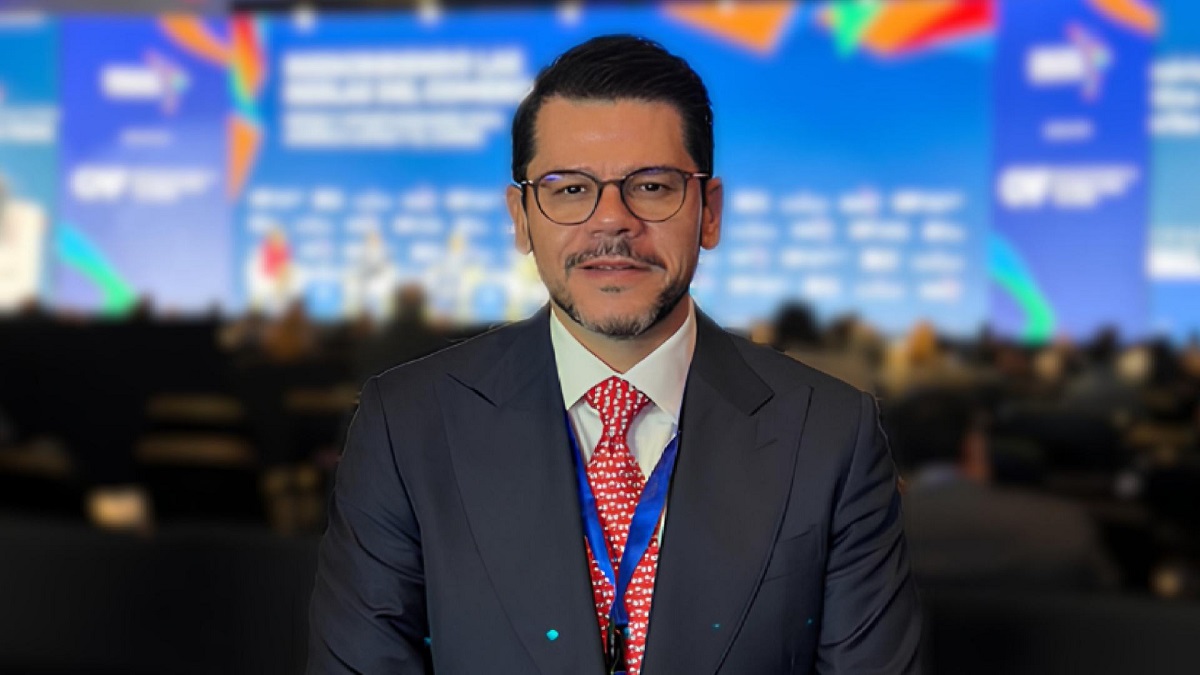
At Caribbean Energy Week in Paramaribo, the Amapá Economic Development Agency – led by President Wandenberg Pitaluga Filho – will outline how Brazil’s northern state is building ports, logistics and exploration capacity to connect with regional energy investment flows

PARAMARIBO, Suriname , Marc 19, 2026/APO Group/ –The Amapá Economic Development Agency will bring Brazil’s northern frontier into Caribbean energy conversations at Caribbean Energy Week (CEW) 2026, where Wandenberg Pitaluga Filho, the agency’s president, is set to address delegates on strategic investment, logistics and cross‑border energy opportunities.


Amapá’s interest in the energy sector has grown alongside federal exploration initiatives in Brazil’s Equatorial Margin – a deepwater frontier stretching along the northern Atlantic coast that includes the offshore area north of the state. In October 2025, Brazilian state‑owned oil firm Petrobras received an environmental operating license from the country’s environmental regulator IBAMA to drill an exploratory well in Block FZA‑M‑059, located roughly 175 km off the coast of Amapá. The operation, focused on gathering geological data, marks a significant milestone for northern Brazil’s entry into frontier exploration.


This milestone reflects broader efforts by Amapá to tie its economic development strategy to emerging energy opportunities. The state government and the Amapá Economic Development Agency have actively engaged with industry players and engineering firms on logistics and port infrastructure planning, including feasibility studies for offshore support facilities that could serve oil and gas operations. In late 2025, Amapá officials held technical meetings with DTA Engenharia Portuária to evaluate possible offshore port locations between Santana and Calçoene – a project aimed at creating dedicated logistics capacity for offshore energy activity.


For Caribbean energy stakeholders, Amapá’s combination of exploration progress and infrastructure planning shows how subnational actors can turn geographic proximity and federal initiatives into regional linkages. With offshore developments in Suriname and Guyana ramping up to the north, Amapá’s emerging ports, logistics hubs and service‑support capacity could become a key bridge for integrating Brazilian capabilities into the Caribbean energy value chain.


Brazil itself remains a heavyweight in the energy landscape. As Latin America’s largest oil producer with deep technical expertise and a robust oilfield services ecosystem, the country’s industrial and logistics networks could complement Caribbean basin operations, offering scale and synergies for complex offshore campaigns.


Through its participation at CEW 2026, the Amapá Economic Development Agency will present these opportunities to international investors and regional policymakers, with discussions expected to focus on strengthening cross‑border trade, expanding port infrastructure, and fostering collaboration between Brazilian companies and operators active in the Guyana–Suriname basin.

With offshore exploration ramping up along Brazil’s northern coast and growing investment in Guyana and Suriname, regional collaboration is increasingly central to the Caribbean energy landscape. Amapá’s participation at CEW positions the state as a practical partner in connecting production, services and investment across borders, integrating Brazil’s northern frontier into the emerging Caribbean energy corridor and demonstrating its role in building the infrastructure and partnerships that will shape the region’s next wave of development.

Join us in shaping the future of Caribbean energy. To participate in this landmark event, please contact sales@energycapitalpower.com.

Distributed by APO Group on behalf of Energy Capital & Power.

Energy

International Energy Forum (IEF) Chief to Bring Global Energy Perspective to Libya Energy & Economic Summit (LEES) 2027

Published

on

Etu Energias

Secretary General of the International Energy Forum (IEF) Jassim Alshirawi is set to bring international energy policy expertise to discussions on Libya’s multi-billion-dollar investment pipeline and production expansion strategy

TRIPOLI, Libya, November 5, 2026/APO Group/ –International Energy Forum (IEF) Secretary General Jassim Alshirawi will participate as a speaker at the Libya Energy & Economic Summit (LEES) 2027, taking place in Tripoli on January 23–25. His participation will bring international energy policy expertise to discussions on Libya’s production ambitions, infrastructure development and integration into global energy markets.


Libya is pursuing a $36 billion energy investment program to expand production, develop infrastructure and attract international capital. The country aims to increase oil output to two million barrels per day by 2030–31, creating investment opportunities across upstream operations, gas development and downstream infrastructure. Delivering these ambitions will require financing, technical expertise and sustained cooperation between domestic institutions and international energy companies.

Alshirawi’s experience in international energy cooperation offers relevant perspectives as Libya works to strengthen its position in global markets. The IEF brings together energy-producing and consuming countries to facilitate dialogue on market stability, security of supply and investment. These priorities intersect with Libya’s efforts to mobilize capital, develop its hydrocarbon resources and establish the infrastructure required to support long-term production growth.

Appointed the IEF’s sixth Secretary General, Alshirawi assumed office on January 1, 2025, following his election on June 25, 2024. He brings more than 40 years of experience across the public and private energy sectors, including senior executive positions at Bahrain Petroleum Company and Bahrain’s Ministry of Oil, alongside advisory responsibilities to Bahrain’s oil and gas minister.

His professional background also includes contributions to Bahrain’s renewable energy and energy efficiency planning. Before becoming Secretary General, Alshirawi served seven years on the IEF Executive Board and nine years in its International Support Group, building extensive experience in institutional cooperation and international energy policy.

Libya became the IEF’s 72nd member country in January 2023, strengthening its participation in international energy dialogue and the Joint Organisations Data Initiative. Membership provides a platform for engagement on energy data transparency and market developments, supporting Libya’s efforts to deepen international cooperation as it pursues investment and production targets.

LEES 2027 will bring government representatives, national oil companies, international operators, investors and financial institutions to Tripoli to examine commercial opportunities across Libya’s energy sector. Alshirawi’s participation will contribute an international policy perspective to discussions on financing, infrastructure integration and the partnerships required to advance the country’s energy development objectives.

For more information about LEES 2027, visit www.LibyaSummit.com. To sponsor or participate as a delegate, contact sales@energycapitalpower.com.

Distributed by APO Group on behalf of Energy Capital & Power.


Continue Reading

Business

South Sudan Seeks Technical Partnerships to Accelerate Oil & Gas Development

Published

on

Etu Energias

South Sudan’s energy renaissance is creating strategic entry points for local service companies as operators pursue production growth, brownfield expansion and new exploration frontiers

JUBA, South Sudan, November 5, 2026/APO Group/ –South Sudan’s plans to increase crude production from approximately 174,000 barrels per day (bpd) to 230,000 bpd in the near term are creating opportunities for both local and international service companies across exploration, engineering, logistics, infrastructure development and technical support. With 14 exploration blocks available and a longer-term production target of 450,000 bpd, expanding domestic supplier capacity and strengthening partnerships with international operators will be critical to supporting the country’s petroleum development ambitions.


The upcoming South Sudan Oil & Power (SSOP) conference – scheduled for November 24–25, 2026, in Juba – will connect service providers, engineering contractors, technology leaders, legal advisors and training institutions with project developers. Returning for its seventh edition, SSOP 2026 will feature technical workshops, high-level panel discussions and project showcases designed to translate market opportunities into tangible projects across the upstream, midstream and downstream sectors.

Strategic Frameworks Drive Exploration and Downstream Infrastructure

Recent bilateral and corporate milestones demonstrate South Sudan’s commitment to combining international expertise with physical infrastructure development. In July 2026, the Ministry of Petroleum signed a memorandum of understanding with UAE-based Bianchi Gold Trading Investment Company, establishing a strategic framework for cooperation across exploration, midstream storage, refining, technical studies and workforce capacity building. As these initiatives progress, they could generate demand for engineering contractors, technical consultants, construction firms and equipment suppliers.

https://apo-opa.co/481LnEQ

Meanwhile, the South African National Petroleum Company (SANPC), through its subsidiary Strategic Fuel Fund, is advancing exploration preparations at Block B2 in Greater Jonglei State. Following an aerial geophysical survey covering approximately 47,000 km² in 2024, the company has pursued terrain reconnaissance services to support a planned 2D seismic campaign. These activities illustrate opportunities for geophysical specialists, surveying companies, logistics providers and other technical contractors. SANPC CEO Godfrey Moagi is speaking at SSOP 2026.

https://apo-opa.co/4jSHs4p

Beyond exploration, South Sudan’s proposed petroleum infrastructure developments offer further potential for service companies. National oil company Nile Petroleum Corporation is pursuing a proposed 350-kilometre crude pipeline connecting the Tharjiath oilfields in Block 5A with the Paloch oilfields in Blocks 3 and 7, alongside refinery development and downstream expansion plans. If advanced, these projects would require engineering, construction, equipment supply and operational support.

Local Content Framework Supports Domestic Participation

South Sudan’s Petroleum Act provides a framework for increasing domestic participation in the oil and gas industry. The Act is designed to ensure that oil and gas activities benefit local communities, while supporting domestic enterprises through employment, procurement and equity partnerships. Local Content Regulations put into effect in 2019 further strengthen these obligations, positioning local companies at the forefront of the country’s oil and gas expansion.

https://apo-opa.co/4jUct89

The government has also sought to improve oversight, while strengthening its own technical capacity. In May 2026, the Ministry of Petroleum partnered with the African Legal Support Facility and international law firm Pinsent Masons to deliver specialized technical workshops for government officials. The training enhances local expertise in petroleum contract negotiations, fiscal framework design and regulatory compliance, ensuring that incoming investments align with national value retention goals.

https://apo-opa.co/4jZgV5A

SSOP 2026 Connects Service Companies with Project Opportunities

As South Sudan seeks to expand production and develop petroleum infrastructure, service companies will play an important part in delivering the technical capabilities required to move projects forward. SSOP 2026 provides a bridge between the country’s leading operators and service companies seeking to expand their footprint across the market.

Through dedicated technical sessions and executive networking opportunities, the conference will provide opportunities for companies to identify potential contracts, establish local and international partnerships and position themselves for future work across exploration, production optimization, refining and petroleum transportation.

For more information, visit https://SouthSudanOilPower.com.

Distributed by APO Group on behalf of Energy Capital & Power.


Continue Reading

Business

Standard Bank, Mozambique Oil and Gas Chamber Position Micro, Small and Medium-Sized Enterprises (MSMEs) at the Center of Major Energy Projects

Published

on

African Energy Chamber

As multi-billion-dollar LNG projects advance toward FID and commissioning, Standard Bank and the Mozambique Oil and Gas Chamber are positioning local SMEs at the forefront of project development

JOHANNESBURG, South Africa, November 5, 2026/APO Group/ –Standard Bank and the Mozambique Oil and Gas Chamber have signed a memorandum of understanding (MoU) to support the development and integration of micro, small and medium-sized enterprises (MSME) across the country’s energy value chain. Combining business capacity building, access to finance and connections with major operators, the partnership aims to help Mozambican companies compete for contracts as multi-billion-dollar projects advance toward commissioning.


Representing the voice of the African energy sector, the African Energy Chamber (AEC) recognizes the partnership as a vital step toward strengthening local participation across the energy sector. Signed in Maputo this week, the MoU addresses one of the biggest challenges faced by the industry: ensuring that domestic companies have the financial resources, technical capabilities and commercial connections needed to benefit from large-scale investments. By bringing financial institutions and leading operators together, the initiative offers a practical model for translating Mozambique’s growing energy investment pipeline into sustainable opportunities for local businesses.

“Mozambique is attracting billions of dollars into LNG development, but the true measure of success will be how much of that investment reaches local companies, creates jobs and builds lasting industrial capacity. Standard Bank and the Mozambique Oil and Gas Chamber are demonstrating exactly the kind of partnership Africa needs to turn major energy investments into opportunities for African businesses,” states NJ Ayuk, Executive Chairman of the AEC.

A Mozambican entrepreneur should not lose a contract simply because they cannot access working capital or meet procurement requirements without support

The partnership comes as Mozambique advances a series of major LNG projects toward commissioning. TotalEnergies’ Mozambique LNG project, designed to produce 13.1 million tons per annum (mtpa), is targeting first production by 2029. Development is progressing, with more than 4,000 workers currently mobilized at the Afungi site. ExxonMobil is also advancing the Rovuma LNG project toward a 2028-start. The company recently selected an engineering and procurement contractor for the planned 18.6-mtpa project.

Meanwhile, at African Energy Week 2026, Eni announced that it would begin drilling at the $7.2 billion Coral Norte FLNG project in early November. With a planned capacity of 3.6 mtpa, the project will double Mozambique’s LNG output to approximately 7 mtpa. Eni currently produces from the Coral Sul project, which came online in 2022. These projects are not only cementing the country’s position as a global LNG exporter, but are creating a substantial pipeline of opportunities for local MSMEs.

Stepping into this picture, the recent partnership between Standard Bank and the Mozambique Oil and Gas Chamber positions local companies at the forefront of these projects. According to Florival Mucave, President of the Mozambique Oil and Gas Chamber, the partners “aim to ensure that, as business opportunities emerge in connection with the supply chains of LNG projects, Mozambican companies not only know about these opportunities but are also increasingly prepared.”

Financing is at the core of the MoU. Mucave cited a MozUp 2024 study which showed that out of 104 suppliers surveyed, only 27% had bank loans, while 84% relied on informal financing avenues that covered about half of their business needs. The partnership addresses this challenge by connecting companies directly to financiers, while providing broader support across training and business preparation.

“A Mozambican entrepreneur should not lose a contract simply because they cannot access working capital or meet procurement requirements without support. We commend Standard Bank and the Mozambique Oil and Gas Chamber for moving beyond commitments to local content and putting practical solutions in place to help domestic businesses compete and grow,” Ayuk added.

Distributed by APO Group on behalf of African Energy Chamber.


Continue Reading

Trending