Connect with us
Anglostratits

Business

Alfa Romeo “MILANO” History in a name

Published

on

Alfa Romeo

In April 2024 in Milan, Alfa Romeo will unveil to the world the first Sport Urban Vehicle in its history, which will also be available in a 100% electric version

Egalement disponible en Français

POISSY, France, January 18, 2024/APO Group/ — 

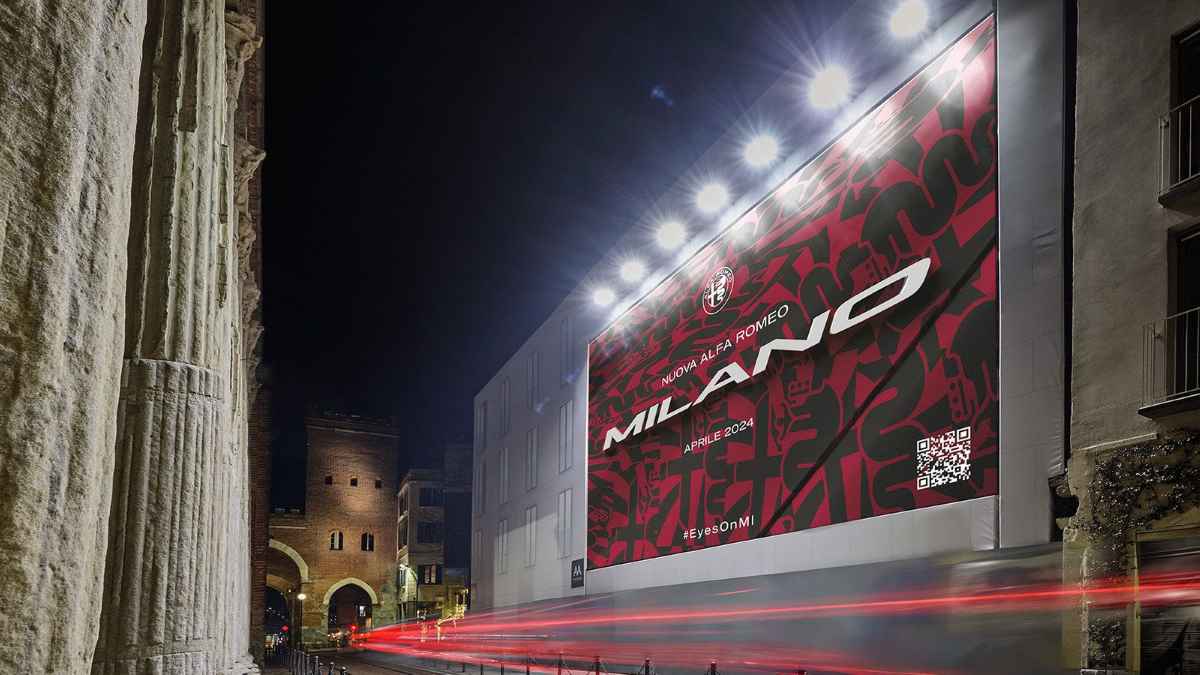
Its name will be MILANO. Alfa Romeo (www.AlfaRomeo.com) has chosen a name with a strong historical value for the brand’s first Sport Urban Vehicle, faithful to its sporting DNA, which will also be available in a 100% electric version; A clear tribute to its hometown, ambassador of Made in Italy around the world, international capital of design, symbol of innovation and sustainability, and leader in the automotive transition to electric; Since 1910, the Alfa Romeo logo has consisted of the Cross, the historical symbol of the capital of Lombardy, and the Biscione serpent, the coat of arms of the noble Visconti family. For over 60 years (from 1910 through 1972), the city’s name formed an integral part of the logo; Alfa Romeo MILANO will be unveiled to the international press in April 2024, in Milan itself; Alfa Romeo will be taking advantage of this opportunity to take stock of the founding of Stellantis in 2021: solidity and discipline in the implementation of the announced plan, full compliance with the transition process to electric, quality targets achieved and acknowledged globally; Finally, a focus on 2023, now coming to an end with figures showing solid global growth: up 34% compared to 2022 in the year to date to November.

In April 2024 in Milan, Alfa Romeo will unveil to the world the first Sport Urban Vehicle in its history, which will also be available in a 100% electric version. It will be named MILANO, a genuine tribute to the city where it all began on June 24, 1910.

With Alfa Romeo MILANO, the brand rejoins the B-segment, the biggest in Europe, with a new proposal that fully embodies the brand’s DNA of noble Italian sportiness.  The first 100% electric Sport Urban Vehicle that represents the new gateway to the Alfa Romeo world for everyone, Alfisti fans and beyond, who has been awaiting the brand’s return to the segment.

Jean-Philippe Imparato | Alfa Romeo CEO

With the arrival of MILANO in 2024, Alfa Romeo completes a line-up capable of meeting the desires of all our enthusiasts and much more. MILANO is intended as a symbolic ‘welcome back’ to all our Alfisti fans. As owners of the Giulietta and Mito, they have been waiting to confirm their love for Alfa Romeo. It also serves as a ‘welcome’ to anyone looking for a unique sporting experience in this segment and the distinctive beauty of Italian design.

MILANO is the first milestone in the brand’s transition process to electric and, like the Tonale, has the important task of further strengthening Alfa Romeo’s global presence.

The choice of the name “MILANO”, encapsulated in the brand’s history.

Little marks the identity of an automaker more than its identifying logo.

Since 1910, the Alfa Romeo emblem has included two of the symbols that identify Milan: The cross, the historical symbol of the capital of Lombardy, and the Biscione serpent, the coat of arms of the noble Visconti family and one of the city’s most iconic emblems. For over 60 years (1910–1972), the name MILANO featured in the lower part of the logo. Through 1918, it was accompanied by the acronym “A.L.F.A.” (Anonima Lombarda Fabbrica Automobili), then from 1919 by “ALFA ROMEO.”

Always a symbol of the avant-garde, Milan now acts as an international manifesto of modernity, innovation, and sustainability. Considered one of the icons of the arts and of Made in Italy around the world, Milan has always played a crucial cultural role in the fields of fashion, design, and music.

Alfa Romeo has chosen Milan, its home, to embark on a new, exciting, and daring chapter in its history: reinterpreting sportiness in the 21st century.

This decision therefore goes beyond the iconic names of past models and those of mountain passes used more recently, to link up once again with its Italian origins. Its bold ambition is to export around the world the values that have always made it a unique brand.

The brand’s balance sheet, almost three years after Stellantis was founded

MILANO is the first milestone in the brand’s transition process to electric and, like the Tonale, has the important task of further strengthening Alfa Romeo’s global presence

The brand’s commercial performance in 2023 serves as natural recognition of the work of a team whose solidity and discipline has enabled them to pursue the strategies of a long-term product plan decided on when Stellantis was founded in 2021. One by one, the most important goals achieved during this period have been:

  • Bringing the brand back to profitability. This objective was achieved in the second half of the same year, 2021.
  • An approved and funded long-term product plan, named by Alfa Romeo as “From 0 to 0”, with the bold objective to go from “0” electrified vehicles in 2021 to a line-up with “0” emissions in 2027, to become the fastest transition to electric in the entire automotive landscape. With one new product every year:

2022 – The Tonale Hybrid and Plug-In Hybrid Q4 made their debut.

2023 – Alfa Romeo returned to the world of ‘custom-built cars,’ presenting the 33 Stradale (BEV – ICE).

2024 – debut of the first 100% electric Alfa Romeo (Alfa Romeo MILANO).

2025 – unveiling of the first vehicle exclusively available in a 100% electric version.

2027 – The Alfa Romeo range will be 100% electric.

  • Uncompromising quality standards guide all the brand’s strategic actions with great rigor, and the results were immediately acknowledged globally. Indeed, in November 2022 Alfa Romeo ranked first among the premium brands in the J.D. Power Sales Satisfaction Index, rising nine positions in the rankings and obtaining 25 points more than in 2021, the sharpest improvement in the premium segment.

One year later, Alfa Romeo took the top step on the podium in the overall rankings of premium brands and third place in the entire industry, according to the J.D. Power U.S. Initial Quality Study (IQS). It rose by 24 places, the largest growth recorded in the IQS research into the industry.

  • Increase in residual value, made possible by a strict stock management policy and line-up strategy.

Evident growth in 2023

All this served as a suitable foundation for the outstanding commercial performance Alfa Romeo is recording ahead of the end of an intense and challenging 2023:

 up 34% compared to 2022 in the year to date to November, a figure that confirms the solid growth in global sales.

Europe has contributed a robust increase of 53%.

Middle East & Africa is confirmed as the region experiencing the fastest growth, with a rise of 95%. Also contributing with growth of 6%, the India Asia Pacific region, where Alfa Romeo is strengthening its presence in Singapore and Hong Kong.

In North America, the Tonale’s debut in September was greeted with great enthusiasm, and likewise in China where the line-up has now been completed by the arrival of the Tonale. Both regions represent areas of strategic importance, where Alfa Romeo is making major investments to create the ideal conditions for growth.

The History of Milan in the Alfa Romeo Logo

Little marks the identity of an automaker more than the brand name on the grille. For A.L.F.A. first, later for Alfa Romeo, the coat of arms was intended to reaffirm the manufacturer’s origins in Milan. Over the years, its variations reflected the events that took place in the history of the company and of Italy. The cross of the Municipality of Milan, the Visconti Biscione serpent, and the Alfa Romeo lettering (A.L.F.A. only through 1918) have always remained the brand’s hallmarks since its foundation.

On June 24, 1910, the new company A.L.F.A. (Anonima Lombarda Fabbrica Automobili) was officially registered and the managing director Ugo Stella asked Giuseppe Merosi to draw up a coat of arms to adorn the radiator of its future cars. The history books tell us that the young draughtsman Romano Cattaneo told Merosi that he had been struck by the Visconti Biscione serpent he had seen on the Torre della Filarete in Piazza Castello as he waited for the #14 tram one morning. The Piacenza designer not only took on the suggestion but sketched the coat of arms there and then for his associate. At the same time, he added a red cross on a white background, surrounding the whole thing with a blue roundel bearing the lettering “A.L.F.A.” and “MILANO” in gold, separated by two Savoy knots. The sketch was approved by the nobleman Ugo Stella, and Cattaneo himself was entrusted with the final design for production. The first major change was in 1919: the company passed under the control of Nicola Romeo and the lettering “ALFA ROMEO” appeared on the coat of arms. In 1925, the GP Tipo P2 won the first Grand Prix World Championship, and a laurel wreath was added around the brand’s symbol to celebrate. After World War 2, the coat of arms underwent a complete overhaul: the Savoy knots gave way – with the advent of the Italian Republic – to two wavy lines, whereas the coat of arms was stylized and made of die-cast metal, painted in a single color. From 1950, the enameled brass branding returned in the 1900, replaced in 1960 by an identical version made of plastic. In 1972, when the Alfasud plant opened in Pomigliano d’Arco, the “MILANO” lettering disappeared. At the same time, the Biscione serpent was simplified, with its second coil no longer rolled round itself. In 1982, a further stylization was added: the laurel wreath gave way to a line of gold. On June 24, 2015, a new evolution of the logo was unveiled during the launch of the Giulia at the recently opened Alfa Romeo Museum.

Distributed by APO Group on behalf of Alfa Romeo.

Business

Aurionpro expands its multi-country transaction banking engagement with Diamond Trust Bank (DTB)

Published

on

Aurionpro

Aurionpro’s upgraded iCashpro platform for DTB delivers a unified digital experience across payments, trade, virtual accounts, and real-time reporting, enhancing straight-through processing, visibility, and control for both the bank and its corporate customers

MUMBAI, India, April 30, 2026/APO Group/ –Aurionpro Solutions Limited (www.AurionPro.com) (BSE: 532668 | NSE: AURIONPRO)a global leader in banking technology, announced the expansion and upgrade of its transaction banking engagement with Diamond Trust Bank (DTB), to modernize and enhance the bank’s corporate transaction banking capabilities across multiple countries.

Download Document: https://apo-opa.co/4edHUaC

This multi-country transaction banking upgrade covering Kenya, Uganda, and Tanzania aligns with DTB’s intent to enhance customer experience, streamline operations, and support growing transaction volumes as it expands its regional corporate banking footprint. DTB continues to focus on building a more agile, ‘digital-first’ banking experience, particularly around payments for its corporate customers across Africa, and is now well positioned to scale these capabilities. As part of its broader transformation agenda, the bank has been steadily investing in platforms that enhance scale, reliability, and service consistency across markets.

Through this partnership, we are proud to lead the next era of transformation in transaction banking, helping DTB enhance operational agility

Aurionpro’s upgraded iCashpro platform for DTB delivers a unified digital experience across payments, trade, virtual accounts, and real-time reporting, enhancing straight-through processing, visibility, and control for both the bank and its corporate customers. By enabling DTB to standardize and scale its transaction banking operations across countries, the platform ensures consistent service levels, stronger control, and improved efficiency. It also supports enhanced user experience, advanced security, and the flexibility to introduce new features as DTB expands its regional transaction banking footprint.

Murali Natarajan (https://apo-opa.co/48trPdk), Managing Director & CEO, DTB Kenya   commented: “We are delighted to strengthen and broaden our partnership with Aurionpro Solutions as part of DTB’s ongoing digital transformation journey across multiple markets. Our focus on innovation, operational excellence, and customer-centricity continues to guide our technology investments. This upgrade strengthens our transaction banking capabilities, enabling us to deliver greater value to our customers through robust digital channels and seamlessly integrated experiences.”

Ashish Rai, Group CEO, Aurionpro Solutions, commented: “We are pleased to deepen our multi-country engagement with Diamond Trust Bank and support the next phase of its transaction banking modernization. As DTB continues to scale across markets, platform resilience and consistency become paramount. Through this partnership, we are proud to lead the next era of transformation in transaction banking, helping DTB enhance operational agility, deliver superior experiences to corporate customers, and create long-term value across geographies.”

He added, “Aurionpro’s iCashpro lays a strong digital foundation for transaction & wholesale banks across the globe to grow their corporate and SME client portfolio today, while creating a clear roadmap for next- generation capabilities in AI-driven insights, advanced automation and API-led connectivity for businesses in Kenya and across Africa.”

Distributed by APO Group on behalf of Aurionpro Solutions Ltd.


Continue Reading

Business

Minerals Council Chief Executive Officer (CEO) Joins African Mining Week (AMW) as South Africa Improves Sectorial Investment Climate

Published

on

Energy Capital

Minerals Council CEO to share insights on policy, infrastructure and investment trends shaping South Africa’s mining industry

CAPE TOWN, South Africa, April 30, 2026/APO Group/ –The upcoming African Mining Week (AMW) conference will feature Mzila Mthenjane, CEO of the Minerals Council of South Africa, as a speaker. Scheduled for October 14 – 16, 2026 in Cape Town, the event will bring together global investors, policymakers and industry leaders, with Mthenjane’s participation highlighting the council’s commitment to engaging international stakeholders and promoting investment across South Africa’s mining sector.

His participation comes at a critical moment as the Minerals Council works closely with government on finalizing the Mineral Resources Development Bill 2025, a policy framework aimed at strengthening the country’s mining investment climate and the sector’s contribution to GDP. According to the council, the revised legislation will support new investment across the value chain as South Africa seeks to mobilize R2 trillion over the next five years to unlock its critical minerals potential.

The policy reforms come amid shifting production trends in the sector. In 2025, South Africa recorded declines in gold and platinum group metals output of 1.9% and 4.1%, respectively. The new regulatory framework is expected to strengthen public-private partnerships and stimulate investment, enabling South Africa to increase production and capitalize on strong global commodity prices. Increased private sector investments is crucial with South Africa seeking targeting to unlock an estimated R40 trillion in untapped iron ore potential as well as maintain its position as the world’s leading producer of chrome and manganese.

At AMW 2026, Mthenjane is expected to outline these trends, providing insights into how the council is contributing to addressing challenges disrupting the sector. Infrastructure and energy costs remain key concerns for industry players. To support the energy-intensive sector, South Africa approved a 35% reduction in electricity tariffs for major ferrochrome producers, helping stabilize an industry that has faced significant cost pressures after electricity prices surged by roughly 900% since 2008.

Logistics constraints are also a priority area for reform. South Africa’s economy is losing an estimated R1 billion per day due to inefficiencies across rail and port infrastructure. As a result, the government is considering measures supported by the Minerals Council to increase private sector participation in logistics. Planned reforms include rail modernization initiatives targeting 250 million tons of freight capacity by 2029, alongside port upgrades and private operator participation aimed at strengthening mineral exports and improving supply chain efficiency.

Beyond infrastructure and policy reforms, the Minerals Council is advocating for stronger exploration investment to support long-term industry growth.

At AMW, Mthenjane is expected to highlight these developments and outline the steps required to reinforce South Africa’s position in the global minerals supply chain. His insights will offer investors and stakeholders a timely perspective on opportunities within the country’s mining sector.

Distributed by APO Group on behalf of Energy Capital & Power.

Continue Reading

Energy

Seychelles Targets Energy Investment Push as Minister Jérémie Joins African Energy Week (AEW) 2026 as a Speaker

Published

on

African Energy Chamber

Seychelles energy minister will speak at AEW 2026, positioning her to highlight reforms, renewable projects and investment opportunities as the island nation advances its transition toward a diversified energy system

CAPE TOWN, South Africa, April 29, 2026/APO Group/ –Marie-May Jérémie, Minister of Environment, Climate, Energy and Natural Resources for Seychelles will participate as a speaker at this year’s African Energy Week (AEW) 2026, taking place from October 12–16 in Cape Town. Her participation underscores the country’s growing role in shaping Africa’s small-island energy transition agenda.

Minister Jérémie’s presence at AEW 2026 comes at a critical time as Seychelles accelerates efforts to reduce its heavy reliance on imported fossil fuels. The event provides a platform to attract investment, strengthen policy alignment and showcase bankable projects, positioning the country as a viable destination for private-sector participation in island energy systems.

Seychelles is demonstrating how policy reform and innovation can unlock investment in constrained environments

In May last year, international finance institution the World Bank approved the Renewable Energy Acceleration Program, a seven-year initiative aimed at modernizing the grid and increasing renewable energy penetration to 15% by 2030. The program focuses on unlocking private capital while strengthening transmission infrastructure to accommodate variable renewable energy sources.

Project development is gaining traction in the country, particularly in innovative technologies suited to Seychelles’ land constraints. The 5.8 MW Seysun Lagoon floating solar PV project, developed by independent renewable power producer Qair, is under construction and expected online in 2026.

Alongside renewables, Seychelles continues to pursue upstream opportunities to diversify its economy. The government approved new exploration entrants in 2025 and extended exiting petroleum agreements, while securing an infrastructure partnership with China. Multilateral estimates suggest over $800 million in investment will be required over the next 25 years.

Regulatory reform is central to this transition, with Seychelles introducing an independent power producer framework to open the market to private developers. Standardized power purchase agreements, grid access reforms and strengthened public-private partnership structures are being implemented to improve transparency, reduce risk and accelerate project bankability across solar, storage and emerging wind opportunities.

“Minister Jérémie’s participation highlights the strategic importance of island nations in Africa’s broader energy transition,” says NJ Ayuk, Executive Chairman, African Energy Chamber. “Seychelles is demonstrating how policy reform and innovation can unlock investment in constrained environments. Her insights will be critical to advancing dialogue on resilient, low-carbon energy systems across the continent.”

Distributed by APO Group on behalf of African Energy Chamber.

Continue Reading

Trending