Connect with us
Anglostratits

Business

Africa’s wind energy industry expected to diversify as interest to harness the continent’s wind grows (By Paul Sinclair)

Published

on

Wind Energy

More recently, natural resources and extractive industries have provided an additional driver of wind energy adoption in Africa

JOHANNESBURG, South Africa, July 14, 2022/APO Group/ — 

By Paul Sinclair, Vice President of Energy & Director of Government Relations, Africa Oil Week and Green Energy Summit Africa (Green-Energy-Africa.com)

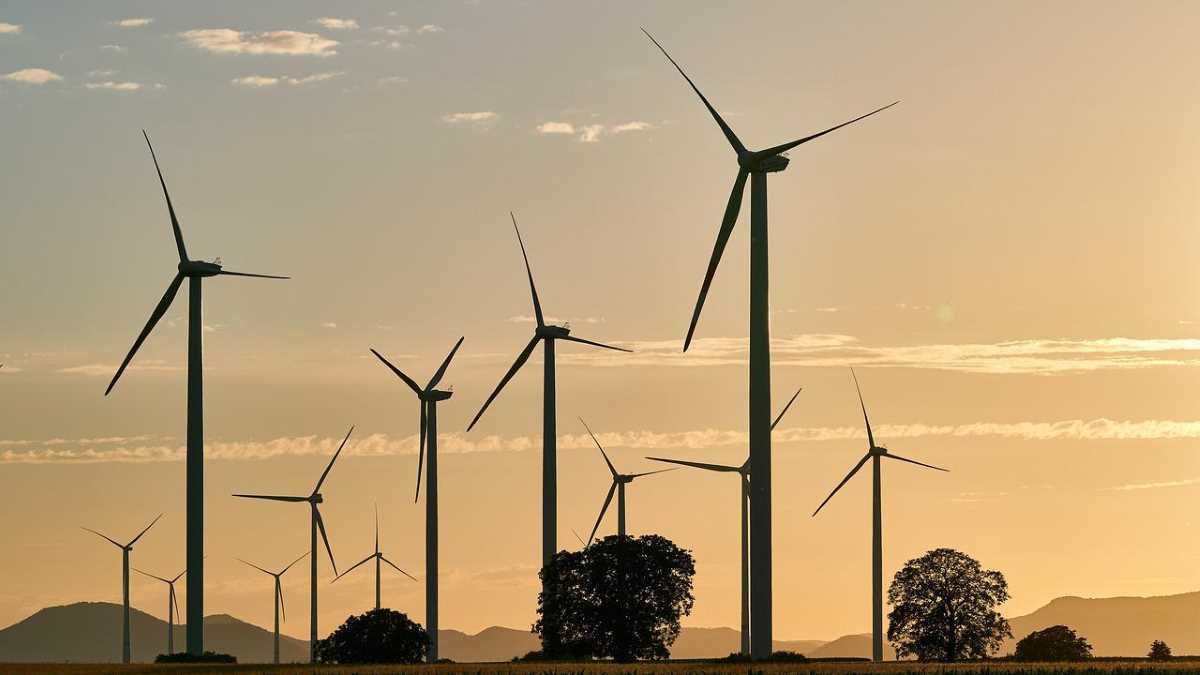
Outside of a limited number of countries, wind turbines have remained a rare sight in Africa. But this is not for lack of potential. In 2020, a study by the International Finance Corporation (IFC) found that continental Africa possesses an onshore wind potential of almost 180,000 TWh/annum, enough to satisfy the entire continent’s electricity needs 250 times over. As the continent continues to seek ways to expand energy access, the adoption of wind as a source of energy is expected to accelerate.

Where the wind blows

So far, only Morocco, Egypt, and South Africa have been truly successful in harnessing their wind potential and attracting private capital to set up wind parks. Through its widely acclaimed Renewable Energy Independent Power Producer Procurement (REIPPP) program, South Africa has already commissioned 34 wind farms with and installed capacity of over 3.3 GW, according to the country’s IPP Office.

And this is far from over. In 2021, the South African Ministry of Mineral Resources and Energy announced 25 successful bidders under its REIPPP Bid Window 5, including 12 wind farms with a total capacity of 1,600 MW. Projects agreement for these facilities are expected to be signed before the end of 2022. The country also opened in April 2022 the REIPPP Bid Window 6, which will allocate a maximum capacity of 1,600 MW of wind, with projects ranging from 50 MW to 240 MW.

Up north, Morocco and Egypt continue to drive wind energy developments. The latter has an installed wind generation capacity of almost 1.5 GW across 13 wind farms according to its Ministry of Energy. It now expects to commission another 2 GW by 2025 with an additional 14 wind farms. 

On the other side, Egypt has seen fewer but bigger projects. Its four wind farms have a current installed capacity of 1.6 GW. The most recent one, West Bakr, was commissioned by Lekela Power in November 2021.

The role of development and multilateral finance

Across the rest of the continent, multilateral and development finance institutions (DFIs) have played a key role in supporting the emergence of the wind sector.

West Africa has increasingly harnessed its wind potential with facilities commissioned in Cabo Verde (Cabeólica, 2011), Senegal (Taiba Ndiaye, 2019), and Mauritania (Boulenouar, 2020). The projects received significant backing from the likes of the Africa Finance Corporation (AFC), the U.S. International Development Finance Corporation (DFC), and the Arab Fund for Economic & Social Development (AFESD).

They have successfully laid the ground for more projects to follow. In December 2021, the U.S. DFC notably provided funding for a feasibility study to expand Senegal’s 158.7 MW Taiba Ndiaye Wind Farm by another 100 MW.

The emergence of Africa’s hydrogen industry will also be supporting the growth of its wind sector

East Africa is also joining the game, led by Kenya. After the expansion of the Ngong facility in 2014, the country commissioned the 310 MW Lake Turkana Wind Farm in 2017 and the 100 MW Kipeto Wind Farm in 2021. The African Development Bank (AfDB) was the mandated lead arranger on Lake Turkana’s debt package and managed to attract several leading European DFIs to finance the project. On its side, Kipeto was mostly funded by the U.S. DFC. 

After its success in Cabo Verde, the AFC has moved east where it is the lead developer on Djibouti’s Red Sea Wind Power Project in Ghoubet. The 60 MW facility is now nearing completion and is the country’s very first independent power producer (IPP).

An ideal choice to cut carbon emissions

More recently, natural resources and extractive industries have provided an additional driver of wind energy adoption in Africa. Publicly listed oil & gas and mining companies seeking to decarbonize their portfolio and cut carbon emissions across their operations are indeed looking at wind.

In March 2022, Savannah Energy executed an agreement with the Ministry of Petroleum, Energy and Renewable Energies of the Republic of Niger to develop the country’s first wind farm. Savannah Energy, operator of some of the most prolific oil blocks in Niger, is planning to construct and operate the 250 MW facility in the Tahoua Region. The wind farm will be structured as an IPP and is currently in feasibility study. It is expected to be sanctioned in 2023 for a potential commissioning in 2025.

In Zambia, First Quantum Minerals (FQM) entered into a new partnership with Chariot and Total Eren earlier this year to develop 430 MW of solar and wind power for its mining operations. The company notably operates Africa’s biggest copper mine by production in Zambia and seeks to reduce its carbon footprint by 30% by 2025.

In South Africa, Anglo American is embarking on an even bigger project with EDF Renewables. Both companies signed a Memorandum of Understanding in March this year to work together on the development of a new regional renewable energy ecosystem (RREE). The scheme is expected to be designed to meet Anglo American’s operational electricity requirements in South Africa through the supply of 100% renewable electricity by 2030. It notably seeks to develop a network of on-site and off-site solar and wind farms with storage totaling up to 5 GW to power Anglo American’s operations.

The hydrogen opportunity

Equally important, the emergence of Africa’s hydrogen industry will also be supporting the growth of its wind sector. 

Last year, the Chariot Energy Group signed a memorandum of understanding (MoU) with the Mauritanian Ministry of Petroleum, Mines & Energy to progress Project Nour, a potential green hydrogen development of up to 10 GW. Under the MoU, Project Nour has been given exclusivity over 14,400km2 of onshore and offshore area in Mauritania where pre-feasibility and feasibility studies will be conducted to generate solar and wind power used in electrolysis to split water and produce green hydrogen and oxygen.

In Namibia, the government issued in late 2021 a notice of award to HYPHEN Hydrogen Energy, the joint-venture of Nicholas Holdings Limited and ENERTRAG South Africa (Pty) Ltd, to develop southern Africa’s first gigawatt scale green hydrogen project.

The $9.4bn scheme will be located within the Tsau//Khaeb National Park, which is amongst the top five resource rich locations in the world for co-located onshore wind and solar, according to Hyphen. The project’s full development targets 300,000 metric tons of green hydrogen production a year from 5GW of renewable generation capacity and 3GW electrolyser.

Distributed by APO Group on behalf of Green Energy Africa.

Events

As global power structures shift, Invest Africa convenes The Africa Debate 2026 to redefine partnership in a changing world

Published

on

Debate

The Africa Debate 2026 will provide a platform for this essential, era-defining discussion, convening leaders to explore how Africa and its partners can build more balanced, resilient and sustainable models of cooperation

LONDON, United Kingdom, February 5, 2026/APO Group/ –As African economies assert greater agency in a rapidly evolving global order, Invest Africa (www.InvestAfrica.com) is delighted to announce The Africa Debate 2026, its flagship investment forum, taking place at the historic Guildhall in London on 3 June 2026.

Now in its 12th year, The Africa Debate has established itself as London’s premier platform for African investment dialogue since launching in 2014, convening over 800 global decision-makers annually to shape the future of trade, finance, investment, and development across the continent.

Under the theme “Redefining Partnership: Navigating a World in Transition”, this year’s forum will focus on Africa’s response to global economic realignment with greater agency, ambition and economic sovereignty.

The Africa Debate puts Africa’s priorities at the centre of the conversation, moving beyond traditional narratives to focus on ownership, resilience and long-term value creation.

“Volatility is not new to Africa. What is changing is the opportunity to respond with greater agency and ambition,” says Invest Africa CEO Chantelé Carrington.

“This year’s edition of The Africa Debate asks how we strengthen economic sovereignty — from access to capital and investment to financial and industrial policy — so African economies can take greater ownership of their growth. Success will be defined by how effectively we turn disruption into leverage and partnership into shared value.”

The Africa Debate 2026 will provide a platform for this essential, era-defining discussion, convening leaders to explore how Africa and its partners can build more balanced, resilient and sustainable models of cooperation.

Key challenges driving the debate

Core focus areas for this year’s edition of The Africa Debate include:

This year’s edition of The Africa Debate asks how we strengthen economic sovereignty — from access to capital and investment to financial and industrial policy

Global Realignment & New Partnerships

How shifting geopolitical and economic power structures are reshaping Africa’s global partnerships, trade dynamics and investment landscape.

Financing Africa’s Future

The growing need to reform the global financial architecture, new approaches to development finance, as well as the strengthening of market access and financial resilience of African economies in a changing global system.

Strategic Value Chains

Moving beyond primary exports to build local value chains in critical minerals for the green economy. Also addressing Africa’s energy access gap and mobilising investment in renewable and transitional energy systems.

Digital Transformation & Technology

Unlocking growth in fintech, AI and digital infrastructure to drive productivity, inclusion, and the next phase of Africa’s economic transformation.

The Africa Debate 2026 offers a unique platform for high-level dialogue, deal-making, and strategic engagement. Attendees will gain actionable insights from leading policymakers, investors and business leaders shaping Africa’s economic future, while building strategic partnerships that define the continent’s next growth phase.

Registration is now open (http://apo-opa.co/46b19gj).

Distributed by APO Group on behalf of Invest Africa.

Continue Reading

Business

Zion Adeoye terminated as Chief Executive Officer (CEO) of CLG due to serious personal and professional conduct violations

Published

on

CLG

After a thorough internal and external investigation, along with a disciplinary hearing chaired by Sbongiseni Dube, CLG (https://CLGglobal.com) has made the decision to terminate Zion Adeoye due to serious personal and professional conduct violations. This process adhered to the Code of Good Practice of the Labour Relations Act, ensuring fairness, transparency, and compliance with South African law.

Mr. Adeoye has been held accountable for several serious offenses, including:

  • Making malicious and defamatory statements against colleagues
  • Extortion
  • Intimidation
  • Fraud
  • Misuse of company funds
  • Theft and misappropriation of funds
  • Breach of fiduciary duty
  • Mismanagement

His actions are in direct contradiction to our firm’s core values. We do not approve of attorneys spending time in a Gentleman’s Club. CLG deeply regrets the impact this situation has had on our colleagues and continues to provide full support to those affected.

We want to express our gratitude to those who spoke up and to reassure everyone at the firm of our unwavering commitment to maintaining a respectful workplace. Misconduct of any kind is unacceptable and will be addressed decisively.

We recognize the seriousness of this matter and have referred it to the appropriate law enforcement, regulatory, and legal authorities in Nigeria, Mauritius, and South Africa. We kindly ask that the privacy of the third party involved be respected.

Distributed by APO Group on behalf of CLG.


Continue Reading

Business

The International Islamic Trade Finance Corporation (ITFC) Strengthens Partnership with the Republic of Djibouti through US$35 Million Financing Facility

Published

on

ITFC

This facility forms part of the US$600 million, three-year Framework Agreement signed in May 2023 between ITFC and the Republic of Djibouti, reflecting the strong and growing partnership between both parties

JEDDAH, Saudi Arabia, February 5, 2026/APO Group/ –The International Islamic Trade Finance Corporation (ITFC) (https://www.ITFC-IDB.org), a member of the Islamic Development Bank (IsDB) Group, has signed a US$35 million sovereign financing facility with the Republic of Djibouti to support the development of the country’s bunkering services sector and strengthen its position as a strategic regional maritime and trade hub.

The facility was signed at the ITFC Headquarters in Jeddah by Eng. Adeeb Yousuf Al-Aama, Chief Executive Officer of ITFC, and H.E. Ilyas Moussa Dawaleh, Minister of Economy and Finance in charge of Industry of the Republic of Djibouti.

The financing facility is expected to contribute to Djibouti’s economic growth and revenue diversification by reinforcing the competitiveness and attractiveness of the Djibouti Port as a “one-stop port” offering comprehensive vessel-related services. With Red Sea Bunkering (RSB) as the Executing Agency, the facility will support the procurement of refined petroleum products, thus boosting RSB’s bunkering operations, enhancing revenue diversification, and consolidating Djibouti’s role as a key logistics and trading hub in the Horn of Africa and the wider region.

We look forward to deepening this partnership, creating new opportunities, and leveraging collaborative programs to advance key sectors and drive sustainable economic growth

Commenting on the signing, Eng. Adeeb Yousuf Al-Aama, CEO of ITFC, stated:

“This financing reflects ITFC’s continued commitment to supporting Djibouti’s strategic development priorities, particularly in strengthening energy security, port competitiveness, and trade facilitation. We are proud to deepen our partnership with the Republic of Djibouti and contribute to sustainable economic growth and regional integration.”

H.E. Ilyas Moussa Dawaleh, Minister of Economy and Finance in charge of Industry of the Republic of Djibouti, commented: “Today’s signing marks an important milestone in the development of Djibouti’s bunkering services and reflects our strong and valued partnership with ITFC, particularly in the oil and gas sector. This collaboration supports our ambition to position Djibouti as a regional hub for integrated maritime and logistics services. We look forward to deepening this partnership, creating new opportunities, and leveraging collaborative programs to advance key sectors and drive sustainable economic growth.”

This facility forms part of the US$600 million, three-year Framework Agreement signed in May 2023 between ITFC and the Republic of Djibouti, reflecting the strong and growing partnership between both parties.

Since its inception in 2008, ITFC and the Republic of Djibouti have maintained a strong partnership, with a total of US$1.8 billion approved primarily supporting the country’s energy sector and trade development objectives.

Distributed by APO Group on behalf of International Islamic Trade Finance Corporation (ITFC).

Continue Reading

Trending