Connect with us
Anglostratits

Business

Africa’s Growth Problem Isn’t Capital; It’s Leadership without Collaboration (By Ray Langa)

Published

on

Langa

In this opinion piece, Langa challenges business leaders to confront why continental scale remains elusive despite abundant capital, talent and ambition

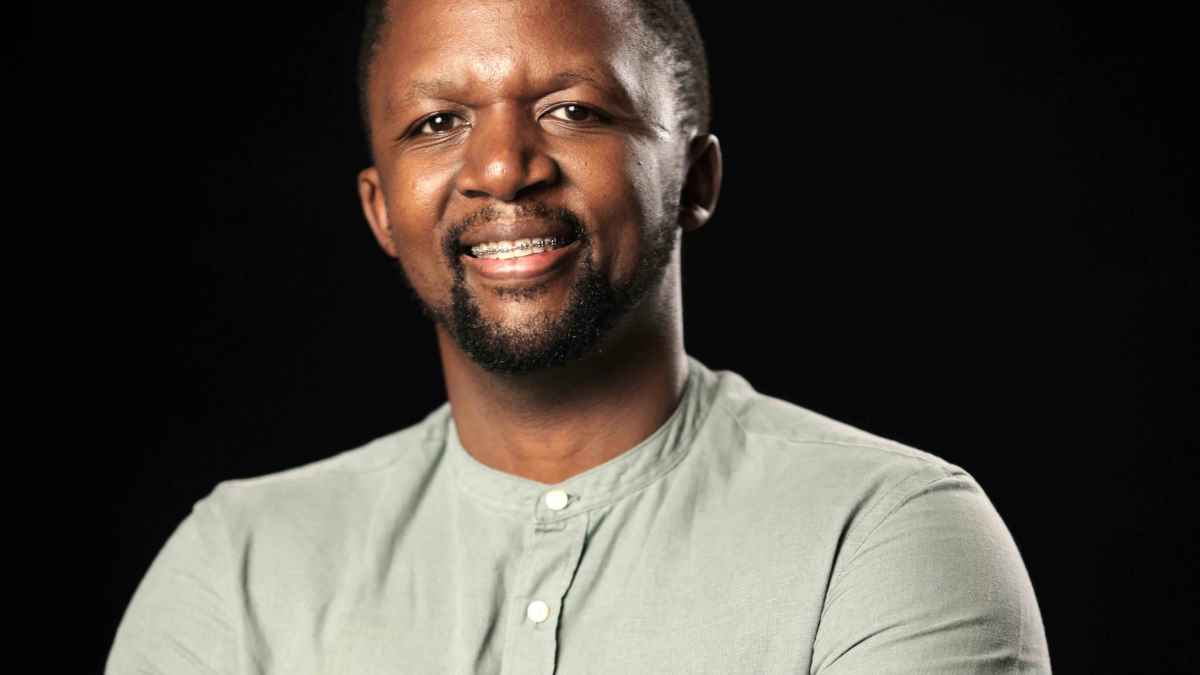
JOHANNESBURG, South Africa, February 13, 2026/APO Group/ —By Ray Langa, Group Chief Executive of Leagas Delaney South Africa (www.LeagasDelaney.co.za) and Dark Arts Studio.

Africa doesn’t have a capital problem: it has a collaboration problem. For decades, we’ve convinced ourselves that more investment is the answer, but Ray Langa, Group Chief Executive of Leagas Delaney South Africa (www.LeagasDelaney.co.za), argues we’ve been asking the wrong question. The continent’s real constraint isn’t money but the leadership discipline we’ve yet to master: building together across borders. In this opinion piece, Langa challenges business leaders to confront why continental scale remains elusive despite abundant capital, talent and ambition.

For many years, Africa’s growth conversation has centred on capital, how much of it we lack, how little of it flows into the continent, and how dependent our future is on attracting more of it.

Capital matters. We all know that.

But perhaps we’ve also leaned on capital as an easier explanation than the one that asks more of us.

Because when we look honestly at where growth stalls across the continent, it increasingly feels as though Africa’s most binding constraint is not money, but how we lead together.

Across our markets, we see talent, ambition, creativity and resilience in abundance. Africa today holds significant domestic capital across pension funds, insurance pools and sovereign institutions. Yet true scale, regional, durable and repeatable remains rare.

That tension is worth sitting with. Not to assign blame, but to ask a harder question: what are we not doing collectively that no amount of capital can solve on its own?

When capital fragments, leadership is usually the reason

Capital tends to follow confidence, coordination and clarity. When those conditions exist, money accelerates progress. When they don’t, capital fragments, funding isolated successes instead of shared systems. Many of us have seen this first-hand.

Despite growing investment and ambition, intra-African trade still represents a small portion of our total trade compared to other regions. A continent with extraordinary proximity in challenges and opportunity continues to trade outward more than inward.

It’s tempting to blame infrastructure, regulation or history and undoubtedly all of these matter. But over time, it becomes harder to ignore the role leadership plays in maintaining fragmentation long after the reasons for it should have expired.

Not because Africa cannot collaborate but because collaboration has rarely been treated as a core leadership discipline.

Leadership that stops at borders limits scale

If we’re honest, many of us were taught to lead within boundaries: company lines, sector lines, national borders. Growth was framed outward to Europe, the UK or the US rather than across the continent.

And yet, paradoxically Africa’s most compelling opportunity is continental.

Shared demographics. Adjacent markets. Familiar consumer pressures. Complementary strengths. These conditions should make collaboration almost inevitable. Instead, they are often complicated by ego, fear, and a sense of scarcity that quietly shapes decision-making.

Strong leadership in Africa today may be less about control, and more about coordination. The ability to align interests, share risk and build ecosystems rather than empires.

Without that, scale remains fragile, no matter how much capital enters the system.

What listening at scale has taught me

I work in advertising, an industry often mistaken for being about messaging, when in reality it is about listening.

I’ve had the privilege of working with brands that speak to millions of people across African markets, cultures and income groups. That role creates a kind of proximity to everyday realities that is difficult to gain elsewhere. How people make choices, where trust breaks down, what they aspire to, and what they worry about.

Over time, patterns begin to emerge.

When brands succeed across markets, it’s rarely because of creativity alone. It’s because teams align around shared insight, collaborate across borders and execute with consistency and discipline. When brands fail, it’s almost always fragmentation, disconnected thinking, siloed leadership and competing priorities.

Working at that scale has challenged many of my own assumptions about leadership. It has made one thing clear, people across Africa are often more connected in their realities than the leaders and systems built to serve them.

Many partnerships struggle not because collaboration is impossible, but because accountability feels uncomfortable

That gap between lived experience and leadership behaviour is where collaboration quietly breaks down.

Collaboration isn’t soft, it’s something we’re still learning

We often talk about collaboration in Africa as a value, something cultural, aspirational even intuitive. But lived experience suggests it may be one of the hardest leadership disciplines we’ve yet to master.

Many partnerships struggle not because collaboration is impossible, but because accountability feels uncomfortable. Roles blur. Standards drift. Underperformance is tolerated in the name of harmony. Trust erodes quietly.

When collaboration works, it’s usually because leadership is clear, expectations are shared, and responsibility is taken seriously. Conditions we don’t always sustain consistently.

This tension is visible even in our most ambitious continental initiatives. Agreements are signed. Intent is declared. But execution often lags behind aspiration, not for lack of capability, but for lack of sustained, collective leadership attention.

Why collaboration often matters more than competition, for now

Competition has its place. In mature, integrated markets, it sharpens performance and drives innovation.

But in fragmented environments like many of ours, uncoordinated competition can dilute impact, splitting scarce talent, duplicating effort and slowing category development.

Collaboration, when done well, does something different. It pools capability, accelerates entry into new markets, builds resilience and strengthens credibility.

This isn’t an argument against competition. It’s an argument for sequence.

Collaboration helps build the market.

Competition then helps sharpen it.

At this stage of Africa’s development, collaboration may not be idealism at all, it may simply be pragmatic leadership.

Belief comes before scale

Underlying many of these challenges is belief. Not belief in individuals, but belief in collective African capability.

Too often, we look outward for validation before fully backing one another inwardly. Cross-border partnerships within Africa are treated as harder than partnerships across oceans. That mindset subtly reinforces dependency and delays confidence.

Belief changes behaviour. It shapes how willing we are to share, to trust, to take risks together.

Without it, collaboration remains rhetorical.

Choosing a different leadership posture

Africa doesn’t need more declarations about unity. Many of us already agree on the destination.

What may be required now is a shift in posture, a willingness to lead in ways that prioritise coordination over control, shared outcomes over individual wins, and long-term ecosystem building over short-term advantage.

The next phase of African growth is likely to be led by those willing to:

  • Think continent before country
  • Build coalitions rather than empires
  • Hold one another accountable within collaboration
  • See scale as something created together, not claimed alone

Capital will follow that kind of leadership. It always does.

Africa’s future won’t be determined by how much money arrives, but by how deliberately we choose to work together with what we already have.

Africa’s growth problem isn’t capital.

It’s leadership without collaboration and that’s something we can choose to change, together.

Distributed by APO Group on behalf of Leagas Delaney South Africa.


Business

Nigeria signs Intra-African Trade Fair 2027 host agreement; gears up for Africa’s biggest marketplace

Published

on

Nigeria

Nigeria to host the fifth Intra-African Trade Fair 2027 (IATF2027) from 5 to 11 November 2027

LAGOS, Nigeria, March 10, 2026/APO Group/ –The Federal Republic of Nigeria has today signed the host agreement for the fifth Intra-African Trade Fair 2027 (IATF2027), taking over the baton from Algeria which hosted the highly successful fourth edition that recorded US$49.94 billion in trade and investment deals.

The agreement signing ceremony was held in Lagos, the designated ‘host city’, in partnership with African Export-Import Bank (Afreximbank), the African Union Commission and the African Continental Free Trade Area (AfCFTA) Secretariat, reinforcing Nigeria’s central role in advancing Intra-African trade and economic integration across the continent.

Scheduled to take place from November 5 – 11, 2027, IATF2027 is targeting over US$50 billion in trade and investment deals, 100,000 visitors, 2,500 exhibitors, and participation from more than 100 countries. The Fair will be held under the theme “Global Africa, Smart Trade- From Market Access to Market Power” featuring diverse programme notably the trade exhibitions; AfCFTA-focused trade and investment forum; the Global Africa Day to strengthen ties with Africa’s diaspora; a B2B (Business-to-Business) & B2G (Business-to-Government) platform; Creative Africa Nexus (CANEX) to showcase Africa’s creative economy; the Sub Sovereign Governments Network for regional and local governments integration; special days for countries, public and private sector to showcase their trade and investment potential, tourism and cultural highlights; Africa Automotive Show; AU Youth Start-up pavilion for African youth start-ups; and the Africa Research & Innovation Hub (ARIH) for academia and researchers.

In just four editions since 2018, IATF has cumulatively generated over US$167 billion in trade and investment deals and welcomed more than 180,000 visitors from 132 countries. This strategic partnership creates a uniquely African framework that blends policy direction, financial backing, and trade facilitation. IATF benefits from continent-wide institutional alignment, setting it apart in both structure and purpose.

Delivering his opening remarks, H.E. Chief Olusegun Obasanjo, Chairperson of the IATF2027 Advisory Council and Former President of the Federal Republic of Nigeria, underscored the strategic importance of the Fair in shaping Africa’s economic sovereignty.

“The signing of this host agreement marks a momentous milestone for Nigeria and for the continent. Bringing IATF2027 to Lagos is historically significant, as this city hosted the Lagos Plan of Action adopted in 1980, which championed Africa’s industrialisation and economic self-sufficiency. We have to work hard to keep moving towards the Africa we want. I am confident that IATF2027 will surpass all previous editions in both scope and impact as we advance our shared goal for a unified African marketplace under the AfCFTA,” he remarked.

Commenting on Nigeria’s expanding footprint in intra-African commerce, H.E. Dr. Jumoke Oduwole, Federal Minister of Industry, Trade and Investment, highlighted Nigeria’s rising contribution to continental trade flows.

Together, we must align our markets, our industries and our talent to deliver the prosperous Africa we envision

Today, as the international trading system faces profound challenges, we must remain resolute in our commitment to mutually beneficial, rules-based trade. As we prepare to host Africa’s largest marketplace in Lagos in 2027, we have an opportunity not only to reflect on our reality but to design the future of African trade integration and economic transformation. The work ahead of us under the AfCFTA is not only expansive but also existential for our survival and prosperity. IATF 2027 will therefore be a defining moment in accelerating and transforming intra-African trade and investment. Together, we must align our markets, our industries and our talent to deliver the prosperous Africa we envision,” she affirmed.

Appreciating Nigeria’s longstanding partnership and leadership in advancing intra-African trade, Dr. George Elombi, President and Chairman of the Board of Directors of Afreximbank, commended the Government’s commitment to the AfCFTA vision, noting that Nigeria’s scale, entrepreneurial depth, and industrial capacity make it a natural host for the 2027 edition.

“Nigeria’s vibrant entrepreneurial spirit gives us confidence that IATF2027 in Lagos will be a remarkable event that strengthens trade and investment across the continent. The trade fair is about building a strong pan-African single market and expanding intra-African trade beyond the levels we see today. Our collective duty is to use this platform to build value chains, create jobs and generate prosperity for our people. When Africans decide to work together, as they will at IATF 2027, the opportunities for transformation are limitless,” he highlighted.

Nigeria remains central to the success of AfCFTA, not only because of its market size but also due to its resource base and industrial potential. As a leading producer of oil and gas, solid minerals, including limestone, iron ore, gold, and lithium, and key agricultural commodities, Nigeria combines industrial capacity with a vibrant SME sector and a dynamic role in intra-African trade. This unique mix positions the country to drive value chains that power regional integration and strengthen the continent’s economic resilience.

Describing Nigeria as a major contributor to African Union growth and regional economic transformation, H.E. Francisca Tatchoup Belobe, AU Commissioner for Economic Development, Trade, Tourism, Industry and Minerals, highlighted the importance of aligning industrial policy, mineral development, and trade facilitation to unlock Africa’s full potential.

“When we launched the IATF in 2018, it was a bold experiment in connectivity. It was not only a commercial event, but rather a strategic tool to increase intra-African trade, which remains stubbornly low. As we prepare for the fifth edition of the IATF, we must ensure that it propels intra-African trade and helps Africa reposition itself in the global trade landscape. We should therefore aim very high in 2027, especially as the IATF takes place in Nigeria, the most populous African country and one of the continent’s largest economies. Let us make IATF 2027 a defining moment that ignites new momentum for Africa’s investment, industrialisation and trade,” she said.

Reflecting on the broader continental impact, Cynthia E. Gnassingbé-Essonam, Director of Private Sector Engagement and Communications at AfCFTA Secretariat, who represented H.E. Wamkele Mene, Secretary General, AfCFTA Secretariat, emphasised that Nigeria’s host of IATF2027 reinforces collective efforts to operationalise the AfCFTA and deepen regional value chains.

“Today’s ceremony marks an important milestone in our collective efforts to advance the objectives of the African Continental Free Trade Area. The Intra-African Trade Fair has established itself as Africa’s premier marketplace for trade and investment, bringing together businesses, investors and policymakers from across the continent and the diaspora. Nigeria’s host of IATF 2027 is both timely and significant, and we are confident it will deliver an impactful trade fair that reflects the ambition of the AfCFTA and the aspirations of African businesses,” she commended.

For more information about IATF2027 please visit www.IntrAfricanTradeFair.com

Distributed by APO Group on behalf of Afreximbank.

Continue Reading

Events

TECNO and Tonino Lamborghini Announce a New International Collaboration

Published

on

TECNO

TECNO (www.TECNO-Mobile.com), the AI-driven innovative technology brand, today at the Mobile World Congress (MWC) announced a new collaboration with Tonino Lamborghini, the Italian lifestyle experience brand renowned for its heritage, boldness and uncompromised spirit. The partnership is born from a shared vision of innovation and modern lifestyle experience.

More than a collaboration, this partnership is an expression of a lifestyle shaped by design, technology and attitude, where Italian aesthetics meet advanced technological innovation to accompany everyday moments with purpose, boldness, and personality.

This collaboration represents a natural evolution for both brands. TECNO reinforces its leadership of merging cutting-edge technology with bold and elegant design through a partnership that conveys character, reliability and high-end user performance. Tonino Lamborghini gains an opportunity to expand into new categories while staying true to its core values of quality, identity and sophistication.

Products developed as part of this collaboration will feature exclusive design elements inspired by Tonino Lamborghini’s iconic style, paired with TECNO’s cutting-edge technological solutions. The result is a refined yet functional offering, designed for an international audience with a strong appreciation for both aesthetics and user experience.

“This partnership is built on the same pursuit of excellence and commitment to their missions. TECNO has shaped the digital experience of hundreds of millions worldwide, and the partnership is another milestone in our relentless journey to reimagine performance and aesthetics,” said Jack Guo, General Manager of TECNO.

“This collaboration brings together two complementary worlds: our design language and TECNO’s technological know-how. Together, we have created a project that interprets contemporary lifestyle with coherence and vision,” commented Dr. Tonino Lamborghini, Founder of Tonino Lamborghini S.p.a.

The first products of the TECNO x Tonino Lamborghini line was officially launched at MWC 2026 Barcelona, marking a new chapter in technology and gaming experiences. The collaboration will extend across gaming devices, mobile phones, laptops, earphones, and tablets, creating a complete smart ecosystem infused with the iconic Tonino Lamborghini design.

Tonino Lamborghini TECNO TAURUS (MEGA MINI G1 Pro)

This collaboration brings together two complementary worlds: our design language and TECNO’s technological know-how

Tonino Lamborghini TECNO TAURUS (MEGA MINI G1 Pro) is the second generation of TECNO Mini gaming PCs, following the success of the MEGA Mini G1, the world’s first and smallest water-cooling gaming PC. The latest model continues to redefine what a compact gaming system can be, empowering both creative professionals and gaming enthusiasts to harness the full capabilities of the latest applications.

A sleek, all-metal body accented with dazzling RGB lighting highlights the impactful Tonino Lamborghini design and color. The Intel® Core™ i9-13900HK processor boasts an impressive 14 cores and 20 threads, with a clock speed reaching up to 5.4 GHz.

The newly upgraded NVIDIA® GeForce RTX™ 5060 8GB GDDR 7 discrete graphics card boasts 145W of total graphics power. Adopting the NVIDIA Blackwell architecture, it brings game-changing realism of path tracing, cinematic quality visuals at unprecedented speed, ultimate responsiveness and 614 AI TOPS.

The CPU and GPU performance can be monitored via a real-time screen on body, and even in intense computing environments, the mini PC remains silently cool with approximately 10,000mm² pure copper water-cooled cold plate and a triple-fan setup.

Connectivity is equally robust, with 15 ports, WiFi 6E and Bluetooth 5.4. Power is supplied through an external 330W GaN (Gallium Nitride) power adapter.

The device represents the first product line of the TECNO x Tonino Lamborghini collaboration and the next step in high-performance, lifestyle-focused technology.

TECNO POVA Metal Tonino Lamborghini Limited Edition

TECNO POVA Metal Tonino Lamborghini Limited Edition is the world’s first-ever full-metal unibody 5G phone. The phone captures the most distinctive elements of both POVA series and Tonino Lamborghini with uninterrupted curves and an ultra-thin 0.99mm bezel. The Rear Dot Matrix features a 241-pixel independent LED matrix that showcases signature Tonino Lamborghini design elements. It can be personalized to display call alerts, notifications, and other dynamic visuals. Complementing this is a pulse light strip that adds an extra layer of motion and energy to the overall design. Adding to the memorable design is a Snapdragon® processor.

Tonino Lamborghini TECNO AIoT Ecosystem

TECNO also displays a full concept AIoT Ecosystem, which will include laptops, tablets and wearables. Inspired by the iconic aesthetics of Tonino Lamborghini, it features a unified design language marked by sharp geometry and a sleek, modern silhouette. Light in weight and high in performance, the devices will fit users’ daily life for work, creativity, study and daily communications, while fully expressing their individuality.

Mobile World Congress 2026 is from March 2 to 5 in Barcelona, Spain at Fira Gran Via. Visitors may experience the collaboration at the TECNO Booth, located at Stand 7A40, Hall 7.

Distributed by APO Group on behalf of TECNO Mobile.


Continue Reading

Energy

Staatsolie to Chart Suriname’s Offshore Future at Caribbean Energy Week 2026

Published

on

Energy Capital

The national oil company will showcase its role in shaping offshore investment opportunities, recent exploration milestones and initiatives to prepare Suriname’s private sector for the country’s emerging oil and gas boom

PARAMARIBO, Suriname, March 9, 2026/APO Group/ –Suriname’s national oil company Staatsolie is set to highlight the country’s expanding offshore opportunities at the inaugural Caribbean Energy Week (CEW) 2026, taking place March 30 to April 1 in Paramaribo. Offshore Exploration Manager Sharista Kalapnat-Kisoensingh is expected to speak on Staatsolie’s strategic offshore initiatives, alongside sessions on the company’s Enterprise Development Center (EDC), which aims to strengthen the local private sector and prepare Surinamese businesses for participation in the country’s growing oil and gas industry.

Staatsoilie has been at the center of Suriname’s offshore oil boom. The company’s declaration of the Sloanea field as commercial in November 2025 marked a major milestone, highlighting the basin’s growing hydrocarbon potential. Staatsolie’s seismic survey program with TGS and BGP Offshore, launched late last year, is generating critical geological insights across multiple offshore blocks, while new production sharing agreements for Blocks 9 and 10 are attracting further international investment. Together, these initiatives position Staatsolie not just as a producer, but as a strategic enabler – coordinating development, structuring investment opportunities, and shaping Suriname’s broader offshore growth agenda.

Further supporting the sector’s growth, Staatsolie launched an Open-Door Offering in late 2025, making roughly 60% of Suriname’s offshore acreage available under flexible exploration agreements. Alongside its 20% stake in the $10.5 billion GranMorgu development on Block 58 – which is set to generate over $1 billion in local content expenditure – Staatsolie is driving Suriname’s evolution from a modest onshore producer into a globally relevant offshore player with significant investment, production and local economic potential.

At CEW 2026, Staatsolie’s sessions will also highlight the EDC, a flagship initiative to prepare Suriname’s private sector for offshore participation. As GranMorgu and other developments advance toward production, the EDC will ensure that local companies are equipped to capture opportunities arising from exploration, construction, and supply chain activities.

Staatsolie’s upstream operations already account for roughly 9.5% of Suriname’s GDP and 32% of government revenues, figures expected to rise as offshore production ramps up. Kisoensingh’s participation is expected to outline how the company is managing Suriname’s offshore growth, supporting private sector engagement and positioning the country as an emerging hub in regional energy markets.

Join us in shaping the future of Caribbean energy. To participate in this landmark event, please contact sales@energycapitalpower.com.

Distributed by APO Group on behalf of Energy Capital & Power.


Continue Reading

Trending