Connect with us

Business

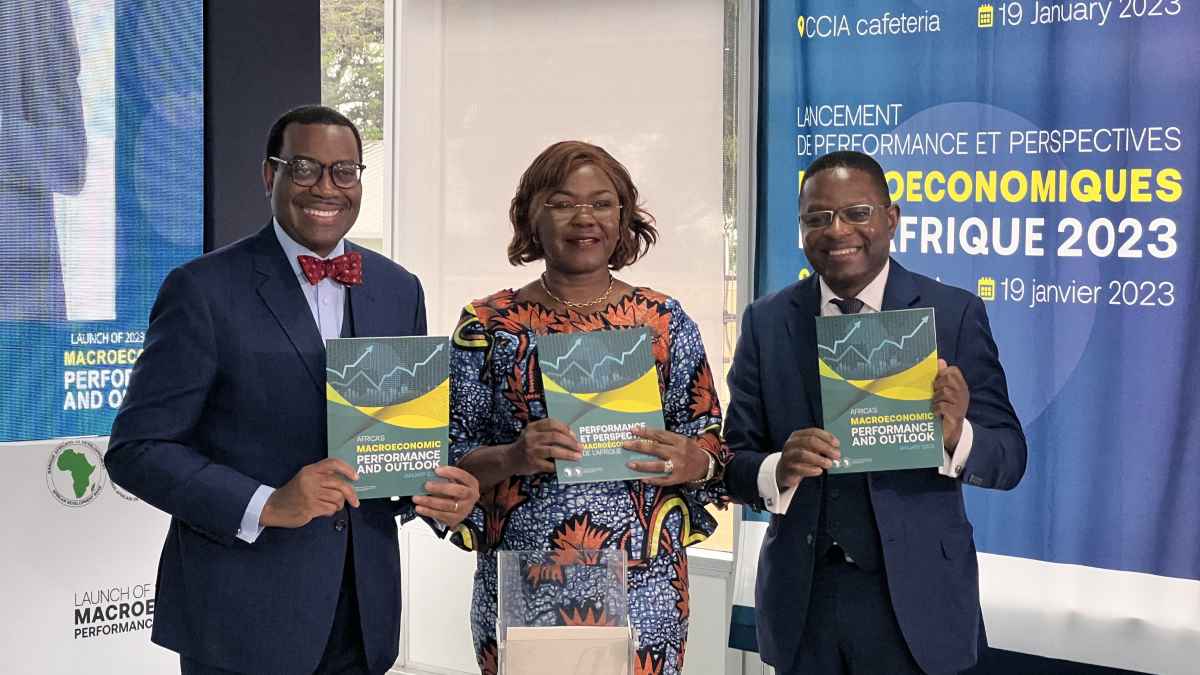
Africa’s economic growth to outpace global forecast in 2023-2024 – African Development Bank Biannual Report

Published

on

economic growth

African Development Bank’s new report calls for bold policy actions to help African economies mitigate compounding risks

ABIDJAN, Ivory Coast, January 19, 2023/APO Group/ — 

Africa is set to outperform the rest of the world in economic growth over the next two years, with real gross domestic product (GDP) averaging around 4% in 2023 and 2024.

This is higher than projected global averages of 2.7% and 3.2%, the African Development Bank Group said in Africa’s Macroeconomic Performance and Outlook (http://bit.ly/3iLJF4C) report for the region, released in Abidjan on Thursday.

With a comprehensive regional growth analysis, the report shows that all the continent’s five regions remain resilient with a steady outlook for the medium-term, despite facing significant headwinds due to global socio-economic shocks. It also identified potential risks and called for robust monetary and fiscal measures, backed by structural policies, to address them.

The Macroeconomic Performance and Outlook report will be released in the first and third quarters of each year. It complements the bank’s existing annual African Economic Outlook (http://bit.ly/3lMe67I) report, which focuses on key emerging policy themes relevant to the continent’s development.

The report shows that estimated average growth of real GDP in Africa slowed to 3.8% in 2022, from 4.8% in 2021 amid significant challenges following the Covid-19 shock and Russia’s invasion of Ukraine. Despite the economic slowdown, 53 of Africa’s 54 countries posted positive growth. All the five regions of the continent remain resilient with a steady outlook for the medium-term.

However, the report sends a cautionary note on the outlook following current global and regional risks. These risks including soaring food and energy prices, tightening global financial conditions, and the associated increase in domestic debt service costs. Climate change—with its damaging impact on domestic food supply and the potential risk of policy reversal in countries holding elections in 2023—pose equally challenging threats.

The report advocates bold policy actions at national, regional, and global scales to help African economies mitigate the compounding risks.

In remarks during the launch, African Development Bank Group President Dr. Akinwumi Adesina said the release of the new report came at a time when African economies, faced with significant headwinds, were proving their resilience.

“With 54 countries at different stages of growth, different economic structures, and diverse resource endowments, the pass-through effects of global shocks always differ by region and by country. Slowing global demand, tighter financial conditions, and disrupted supply chains therefore had differentiated impacts on African economies,” he said. “Despite the confluence of multiple shocks, growth across all five African regions was positive in 2022—and the outlook for 2023–24 is projected to be stable.”

Niale Kaba, Minister of Planning and Development of Côte d’Ivoire, said: “The release of this report by our bank, the African Development Bank Group, at this time of the year is an excellent opportunity for Africa and its global partners. We need these regular updates to assess our countries’ macroeconomic performance and prospects. This reliable information will help decision-making and risk management for potential investors in Africa.”

Africa’s pre-Covid-19 top five performing economies are projected to grow by more than 5.5% on average in 2023-2024 and to reclaim their position among the world’s 10 fastest-growing economies. These countries are Rwanda (7.9%), Côte d’Ivoire (7.1%), Benin (6.4%), Ethiopia (6.0%), and Tanzania (5.6%).

Despite the confluence of multiple shocks, growth across all five African regions was positive in 2022—and the outlook for 2023–24 is projected to be stable

Other African countries are projected to grow by more than 5.5% in the 2023-24 period. They are the Democratic Republic of Congo (6.8%), The Gambia (6.4%), Mozambique (6.5%), Niger (9.6%), Senegal (9.4%), and Togo (6.3%).

At the launch, economist Jeffrey Sachs, Director of the Center for Sustainable Development at Columbia University commended the report which he said showed that African economies are growing and growing consistently.

Sachs, who is also United Nations Secretary-General Antonio Guterres’ Advocate for Sustainable Development Goals, said: “Africa can and will rise to growth of 7 percent or more per year consistently in the coming decades.  What we’ll see, building on the resiliency we see in this report, is a real acceleration of Africa’s sustainable development so that Africa will be the fast-growing part of the world economy. Africa is the place to invest.”

Bold policy actions to help African economies mitigate the compounding risks

The report advocates robust measures to address the risk. These include a mix of monetary, fiscal, and structural policies including: 

  • Timely and aggressive monetary policy tightening in countries with acute inflation, and cautious policy tightening in countries where inflationary pressures are low. Coordination with fiscal policy will further strengthen the levers to ease inflationary pressures.
  • Enhancing resilience by boosting intra-Africa trade, especially in manufacturing products to cushion economies from volatile commodity prices. 
  • Accelerating structural reforms to build tax administration capacity and investments in digitalization and e-governance to enhance transparency, reduce illicit financial flows, and scale up domestic resource mobilization. 
  • Improving institutional governance and enacting policies that can leverage the private sector financing especially in climate-proof and pandemic-proof greenfield projects—and mobilizing Africa’s resources for inclusive and sustainable development. 
  • Taking decisive action to reduce structural budget deficits and the accumulation of public debt in countries facing a high risk of debt distress or already in debt distress.

Overview of economic outlook across regions

Despite the confluence of multiple shocks, growth across all five African regions was positive in 2022—and the outlook for 2023–24 is projected to be stable.

  • Central Africa –Bolstered by favorable commodity prices, growth is estimated to have been the continent’s fastest at 4.7%, up from 3.6% in 2021. 
  • Southern Africa –Growth decelerated the most, to about 2.5% in 2022 from 4.3% in 2021. This slowdown reflects subdued growth in South Africa, as higher interest rates, weak domestic demand, and persistent power outages weighed on the economy.
  • West Africa –Growth is estimated to have slowed to 3.6% in 2022 from 4.4% in 2021. This reflects decelerations in Côte d’Ivoire and Nigeria, the region’s two largest economies. Nigeria’s growth in 2023—though hit by Covid-19, insecurity, and weak oil production despite higher international oil prices—could benefit from ongoing efforts to restore security in the restive oil-producing region.
  • North Africa –Growth is estimated to have declined by 1.1 percentage points to 4.3% in 2022 from 5.4% in 2021 because of sharp contraction in Libya and the drought in Morocco. Growth is projected to stabilize at 4.3% in 2023, supported by an expected strong rebound in the two countries and sustained growth elsewhere in the region.
  • East Africa –Growth is estimated to have moderated to 4.2% in 2022 from 5.1% in 2021. However, it is projected to recover to the pre-pandemic average above 5.0% in 2023 and 2024. While the production structure in East Africa is relatively diversified, countries in the region are largely net importers of commodities. They thus bear the brunt of high international prices in addition to recurrent climate shocks and insecurity, particularly in the Horn of Africa.

In his presentation, African Development Bank Acting Chief Economist and Vice President Kevin Urama observed that Africa is still a favorable destination for investments in human capital, infrastructure, private sector development, and natural capital.

Urama said: “Africa has a significant role to play in driving inclusive growth and sustainable development globally. There are many smart investment opportunities in key sectors: agriculture, energy markets, minerals, health infrastructure and pharmaceutical industries, light manufacturing, transport and logistics, digital economy and more. The continent remains a treasure trove for smart investors globally.”

For more information and to download the report, click here (https://bit.ly/3iLJF4C).

Distributed by APO Group on behalf of African Development Bank Group (AfDB).

Business

Sierra Leone Set to Showcase Offshore Ambitions with Petroleum Directorate of Sierra Leone (PDSL) Joining African Energy Week (AEW) 2026 as Strategic Partner

Published

on

Sierra Leone is advancing offshore exploration, preparing a new licensing round and finalizing the formation of a new national oil company ahead of its Strategic Partnership with AEW 2026

CAPE TOWN, South Africa, March 26, 2026/APO Group/ –The Petroleum Directorate of Sierra Leone (PDSL) has joined African Energy Week (AEW) 2026 – scheduled to take place in Cape Town from October 12–16 – as a Strategic Partner. The Directorate will be positioned to leverage the event to highlight its open acreage, competitive fiscal framework and upstream integration plans to international investors, signaling Sierra Leone’s emergence as a frontier exploration hotspot in the MSGBC basin and across the wider Gulf of Guinea.


Italian energy major Eni and other international players have engaged in detailed geological studies across Sierra Leone’s offshore basin, underscoring rising confidence in the country’s hydrocarbon potential. Backed by enhanced 3D seismic reprocessing and basin-wide prospectivity studies, the PDSL is accelerating data-led de-risking efforts to unlock prospects such as Vega and attract fresh upstream capital.


A central focus for investors is the anticipated resumption of offshore drilling in 2026 – the country’s first campaign in nearly a decade. Following the conclusion of its fifth licensing round, which offered 56 offshore blocks, Sierra Leone is preparing to drill new wells targeting an estimated multi-billion-barrel resource base, supported by improved subsurface imaging and strengthened regulatory oversight.


PDSL’s participation at AEW 2026 reflects Sierra Leone’s serious commitment to unlocking its offshore potential through transparency, strong fiscal terms and data-driven de-risking

Sierra Leone is also in the final stages of establishing its first state-owned national oil company, which will hold a mandatory 10% carried interest in all exploration licenses. The government is targeting an overall 25–30% participation in projects, balancing national value capture with competitive terms for international operators.


Downstream integration is also gathering pace, with the 105–126 MW Nant gas-to-power plant in Freetown, developed by Anergi Group and TCQ Power, expected to nearly double national generation capacity when it comes online in 2027. In parallel, PDSL is spearheading plans for Sierra Leone’s first refinery to reduce reliance on roughly 15,000 barrels per day of imported refined products.


“PDSL’s participation at AEW 2026 reflects Sierra Leone’s serious commitment to unlocking its offshore potential through transparency, strong fiscal terms and data-driven de-risking,” said NJ Ayuk, Executive Chairman, African Energy Chamber, adding, “Their strategic vision aligns with Africa’s broader push for energy security, industrialization and investor partnership.”


With drilling set to resume, a national oil company nearing launch and integrated gas-to-power and refining projects advancing, Sierra Leone is entering a defining phase. At AEW 2026, PDSL is expected to present a clear message: the basin is open, the data is ready, and the opportunity is real.

Distributed by APO Group on behalf of African Energy Chamber.

Continue Reading

Business

Critical Mineral Projects to Watch Ahead of Invest in African Energy (IAE) 2026

Published

on

The Uganda Chamber of Energy and Minerals, with both its CEO and governing council chairperson confirmed for Paris, will serve as the primary interface for investors seeking access to Uganda’s licensing framework and project pipeline

CAPE TOWN, South Africa, March 26, 2026/APO Group/ –Governments from West, Central and Southern Africa, with delegations confirmed for the Invest in African Energy (IAE) Forum in Paris next month, are each advancing critical mineral projects that span processing deals, development-stage assets and frontier exploration plays, giving investors a range of entry points across the minerals value chain.

Nigeria – Alumina Refinery & Lithium Processing

Nigeria struck a $1.3 billion deal with the Africa Finance Corporation in early March covering three components: construction of a one-million-ton-per-year alumina refinery, a national geoscience mapping program, and a joint investment vehicle to accelerate exploration and production across priority leases. Projected at 95% utilization over 20 years, the refinery is expected to add $1.2 billion to GDP annually and generate approximately $8 billion in foreign exchange earnings over its lifespan.

Separately, a $600 million lithium processing plant in Nasarawa State is at the commissioning stage, backed by ongoing mapping of lithium-bearing pegmatite belts across Kwara, Ekiti and Kaduna states. New mining licenses now require a local processing commitment covering at least 30% of output before export, a condition that directly shapes the investment structures available to foreign partners. Nigeria’s energy minister is among the confirmed delegations at IAE in Paris.

Zambia – Copperbelt Expansion & Cobalt Refinery


Copper output in Zambia is on course to clear one million tons in 2026, supported by First Quantum Minerals’ completed $1.25 billion S3 plant expansion at Kansanshi and Barrick Gold’s $2 billion program to double output at Lumwana by 2028. Several additional projects, including Sinomine’s Kitumba Mine and KoBold Metals’ Mingomba deposit, are also coming online this year, making Zambia one of the few places globally adding significant incremental copper supply in the near term.

Africa’s first cobalt sulfate refinery is targeting commissioning in Zambia in 2026, adding downstream processing capacity alongside the copper ramp-up. The Lobito Corridor, backed by a $553 million US Development Finance Corporation loan for Angola’s Benguela rail link, reduces export costs across the Copperbelt and improves project bankability for both mines and processing facilities seeking long-term offtake commitments.

Senegal – Falémé Integrated Iron Project

Senegal’s Falémé iron district in the Kédougou region holds over 600 million tons of probable reserves, including oxide ore at around 59% iron content and primary magnetite at roughly 45% Fe. The government launched the Falémé Integrated Iron Project as a phased program targeting 15 to 25 million tons per year at peak output, with national iron ore company MIFERSO conducting ongoing reserve verification.

The mineral export port at Bargny is operational and rail rehabilitation linking Kédougou to the coast is progressing under the Emerging Senegal Plan. The project is actively seeking a technical development partner. With port and rail infrastructure advancing independent of any single mining operator, Falémé carries lower logistics risk than comparable iron ore projects requiring greenfield corridor construction, which affects how financiers assess project bankability and timelines to first revenue.

Equatorial Guinea – Rio Muni Mineral Exploration

Equatorial Guinea’s Rio Muni mainland offers early-stage exposure to gold, bauxite, base metals, coltan and iron ore across largely underexplored onshore territory. The Ministry of Mines and Hydrocarbons has been opening the sector since its first public tender in 2019, with exploration contracts now in place and state geological mapping advancing in partnership with Rosgeo. Minister Antonio Oburu Ondo will address investors at IAE, with the minerals program expected to feature in bilateral meetings.

Uganda – Rare Earths & Minerals Sector Opening

Uganda holds rare earth deposits in ionic adsorption clay formations — a deposit type the IEA has flagged for low capital intensity relative to hard rock alternatives — alongside gold mineralization across greenstone belts in the West Nile, Karamoja and Mubende regions. The Uganda Chamber of Energy and Minerals, with both its CEO and governing council chairperson confirmed for Paris, will serve as the primary interface for investors seeking access to Uganda’s licensing framework and project pipeline, at the same time as the country’s Tilenga and Kingfisher oil developments move toward first oil.

Distributed by APO Group on behalf of Energy Capital & Power.

Continue Reading

Business

APO Group Takes Gold at 2026 SABRE Awards – Second Consecutive Win Across Different Clients and Sectors

Published

on

Recognition spans technology, global sport, and culture, reflecting APO Group’s cross-sector communications performance across Africa

JOHANNESBURG, South Africa, March 26, 2026/APO Group/ –APO Group (www.APO-opa.com), the pan-African communications consultancy integrating advisory, execution, and proprietary news distribution, has won gold in the Northern Africa category at the 2026 Africa SABRE Awards for its campaign, GITEX Africa Morocco 2025: A Media-Fuelled Journey for Tech Excellence.


Delivered for GITEX Africa, the campaign generated more than 3,600 media clippings across African and global outlets, positioning the event as the continent’s leading technology and startup platform, while reinforcing Morocco’s emerging status as a regional technology hub.

Being honoured at the SABRE Awards is particularly meaningful because it reflects the impact of communication designed specifically for how African markets work

APO Group was a finalist in two additional categories for campaigns delivered for international organisations operating across Africa:

  • The Africa Flag 2025 Tournament: Raising the Game in Cairo – National Football League (Media Relations category)
  • Broadcasting Greatness: Elevating African Hoops and Culture at BAL 2025 – Basketball Africa League (BAL) (Media, Arts & Entertainment category)

The SABRE Awards recognise excellence in branding, reputation management, and engagement across the global communications industry. This latest accolade adds to APO Group’s growing record at these prestigious awards, following its win in 2025 for a campaign delivered for Canon Central and North Africa, as well as multiple finalist placements for campaigns supporting leading institutions such as GITEX Africa, Africa’s Business Heroes, and the Global Africa Business Initiative.


“Being honoured at the SABRE Awards is particularly meaningful because it reflects the impact of communication designed specifically for how African markets work,” said Bas Wijne, Chief Executive Officer at APO Group. “Successful pan-African campaigns combine strategic planning and strong local execution, together with a clear understanding of how different markets, media environments, and audiences connect with a story. It’s about designing communications that deliver measurable outcomes and help organisations engage effectively and confidently across Africa’s diverse media landscape.”

In addition to its SABRE Awards success, APO Group has received multiple major industry honours over the past year, including Gold and Bronze at the Davos Communications Awards for excellence in strategic communications and campaign execution. The company was also named Africa’s Leading PR Agency – 2025 by Brands Review Magazine and Best Public Relations & Media Consultancy Agency of the Year – 2025 by World Business Outlook.Operating across 54 African countries, APO Group provides communications advisory services, public relations, and media distribution through its proprietary newswire, Africa Newsroom, which places content on more than 250 Africa-focused news platforms worldwide.

Distributed by APO Group on behalf of APO Group.

Continue Reading

Trending

Exit mobile version